

Q&A
Eugene Rumer
{
  "authors": [
    "Eugene Rumer"
  ],
  "type": "legacyinthemedia",
  "centerAffiliationAll": "dc",
  "centers": [
    "Carnegie Endowment for International Peace",
    "Carnegie Russia Eurasia Center"
  ],
  "collections": [
    "The End of Arms Control?"
  ],
  "englishNewsletterAll": "ctw",
  "nonEnglishNewsletterAll": "",
  "primaryCenter": "Carnegie Endowment for International Peace",
  "programAffiliation": "russia",
  "programs": [
    "Russia and Eurasia"
  ],
  "projects": [],
  "regions": [
    "North America",
    "United States",
    "Russia"
  ],
  "topics": [
    "Political Reform",
    "Security",
    "Global Governance",
    "Foreign Policy"
  ]
}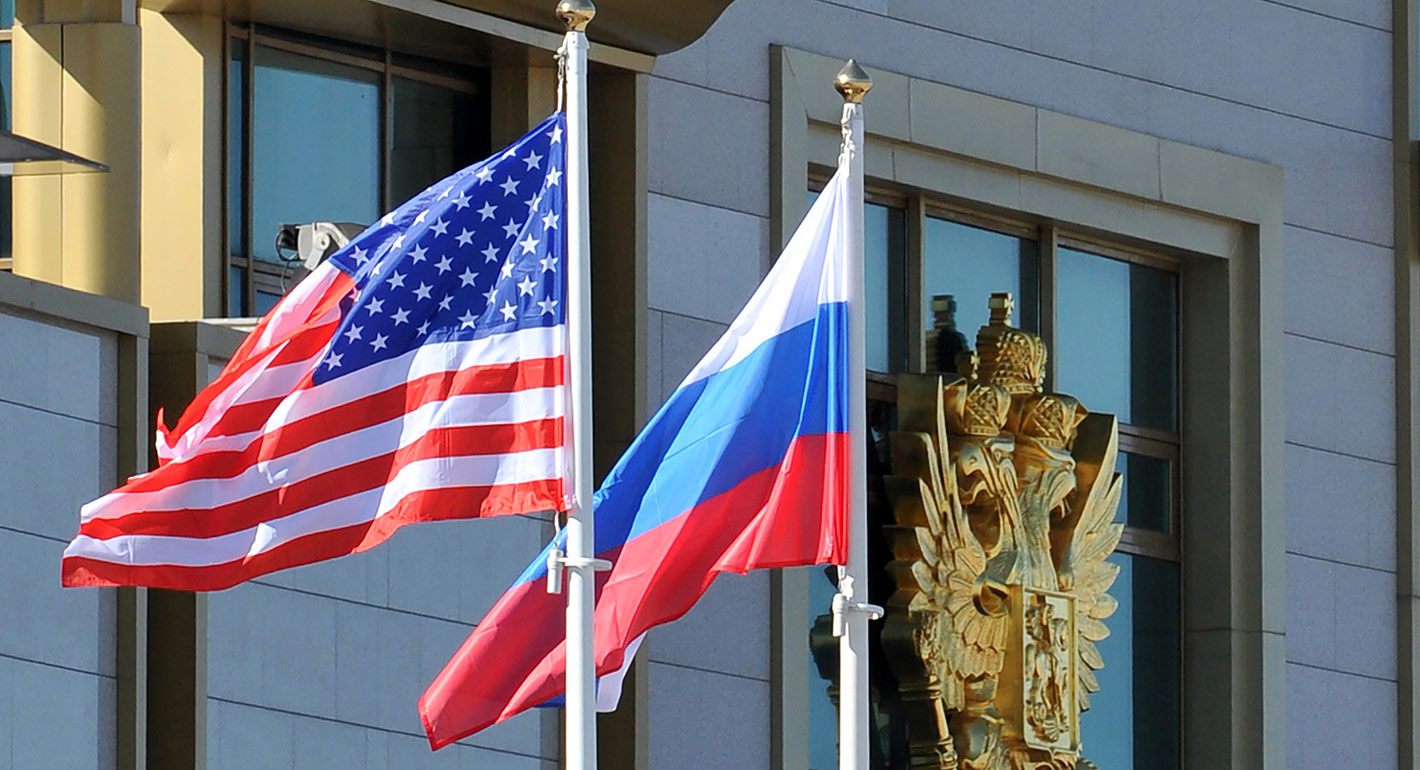
Source: Getty
The fate of the INF Treaty is a wake-up call to arms controllers and strategists on both sides of the East-West divide.
Source: Defense One
Neither the Trump administration nor the Russian government appears the least bit interested in saving the Intermediate-Range Nuclear Forces Treaty. Both have their reasons, and the arms-control community would do well to drop its appeals on behalf of the INF and take a hard look at what has changed.
U.S. accusations of Russian INF violations first became known publicly in 2014. In the past few weeks, the Trump administration released a dossier detailing the intelligence behind its claims. Since 2014, the Russian government has repeatedly denied the accusations and countered that the United States itself was in violation of the treaty. However, the majority of governments on both sides of the Atlantic and independent arms control experts agree that Russia has violated the treaty. Most also find the Russian counter-claim to be dubious.
Since the Obama administration first charged that Russia violated the treaty by testing the banned missile the Kremlin has proceeded to actually deploying it. Russian actions have made it clear that the initial violation was no mere oversight, but a deliberate move.
The Kremlin has always had the option of withdrawing from the treaty, as the United States did with the Anti-Ballistic Missile Treaty in 2002. But that would have triggered widespread international criticism. Instead, the Kremlin left it to the United States to make the first move. The Trump administration obliged, handing Mr. Putin a major public relations victory. Instead of mounting an effective public relations campaign focused on Russian INF violations, the United States has painted itself as the offender.
Mr. Pompeo’s Dec. 4 ultimatum to the Kremlin is intended to kill, rather than save the treaty. There is zero chance that the Kremlin will back down under U.S. pressure from the course it embarked on years ago. The Trump administration’s reasons for killing the treaty—aside from the fact that in the four years since Russian violations were first made public Russia has proceeded from testing the missile to deploying it—are obvious. President Trump doesn’t like treaties that he did not negotiate. NAFTA, the Trans-Pacific Partnership, even the North Atlantic Treaty are in his view deeply flawed and do not serve American interests. The INF Treaty is important to U.S. European allies, in particular Germany, which has been a frequent target of Trump’s ire. That is probably one more strike against the treaty in the President’s eyes. His National Security Advisor John Bolton is a long-time critic of arms control and has argued consistently for getting the United States out of the web of treaties that he says deny it the freedom to provide for its own defense. Finally, some U.S. defense experts claim, the United States needs intermediate-range missiles to counter China.
The Kremlin too has its reasons for disliking the INF Treaty, which bans land-based, but not air- or sea-based intermediate-range missiles. Russian defense planners have always viewed the former as an essential part of their arsenal, while NATO and the United States in particular have had a clear advantage in the latter systems. The dissolution of the Warsaw Pact and the break-up of the Soviet Union along with the expansion of NATO have fundamentally changed the geography of Russian threat perceptions. Successive rounds of NATO enlargement have pushed the NATO-Russia boundary much further to the east and removed the strategic depth that for centuries has been essential to Russian defense planning.
Without the buffer of the Warsaw Pact and the western republics of the USSR, the Russian heartland is now within a few minutes’ flying time of U.S. air- and sea-based weapons, which are allowed under the INF Treaty. Absent their land-based intermediate-range missile arsenal, Russian defense planners think they have few means to counter that threat. Top Russian officials, including Putin, have complained about the INF Treaty for years. Trump’s announcement of his decision to withdraw from it was a gift to them, shifting the blame on the United States as the offender.
With this confluence of interests between the Kremlin and the White House, the INF Treaty is doomed. The carrot-and-stick approach advocated by some experts—boosting NATO’s missile defenses, threatening Russia with conventional air- and sea-based offensive systems, while also offering it assurances about U.S. systems it claims violate the INF Treaty—will not be enough. Threatening Russia with air- and sea-based offensive systems will further demonstrate to the Russians that the treaty favors the United States. U.S. assurances that its systems that Russia claims violate the INF Treaty in fact do not, will fall far short of what Russian defense planners want—the ability to deter or defend against NATO’s threat to the Russian heartland.
It is impossible to separate the fate of the INF Treaty from the geography of the NATO-Russia standoff. NATO expansion has provided a robust security guarantee to the countries of Eastern and Central Europe—a guarantee they wanted as a hedge against precisely the kind of Russia they are dealing with today. But Russia rejects the European security order with NATO at its core, and the alliance’s expansion has resulted in a new climate of insecurity along its eastern edge. The asymmetry of the INF Treaty, which allows some intermediate-range systems, but not others, has doomed it in the eyes of Russian defense planners confronted with the new map of NATO and ever-improving U.S. offensive capabilities.
The fate of the INF Treaty is a wake-up call to arms controllers and strategists on both sides of the East-West divide. The arms control framework built during the Cold War is growing obsolete. It does not keep up with the rapid pace of technological change and the new geography of threats. It can still perform a useful function and serve as a platform from which to expand the conversation about managing the arms race in the new century. But in and of itself that framework is no panacea and could even distract from what is urgently needed—a conversation about strategic stability in an environment that both sides are ill-prepared to handle.

Director and Senior Fellow, Russia and Eurasia Program
Rumer, a former national intelligence officer for Russia and Eurasia at the U.S. National Intelligence Council, is a senior fellow and the director of Carnegie’s Russia and Eurasia Program.
Recent Work
Eugene Rumer
Eugene Rumer
Carnegie does not take institutional positions on public policy issues; the views represented herein are those of the author(s) and do not necessarily reflect the views of Carnegie, its staff, or its trustees.

In an interview, Rozina Ali discusses her new book on the rise and manifestations of Islamophobia in the United States.

Michael Young

While the EU and European governments are embracing the much-lauded middle-power moment, this entails three difficult conundrums.

Richard Youngs

The middle power moment will not be defined by sovereign states alone, and California stands out for its potential contributions to international cooperation.


Ian Klaus, Stewart Patrick

Ex-president Gurbanguly Berdimuhamedov remains interested in politics, but his son Serdar, Turkmenistan’s current president, is becoming increasingly independent and willing to break with his father’s legacy. If their covert rivalry goes too far, both risk losing power.

Galiya Ibragimova

Europe is facing rising populism internally as well as external pressures from Russia, China, Turkey, and the United States.

Dimitar Bechev