• Research
  • Emissary
  • About
  • Experts
Carnegie Global logoCarnegie lettermark logo
DemocracyIran
  • Donate
{
  "authors": [
    "Matt Ferchen"
  ],
  "type": "legacyinthemedia",
  "centerAffiliationAll": "",
  "centers": [
    "Carnegie Endowment for International Peace",
    "Carnegie China"
  ],
  "collections": [
    "China and the Developing World",
    "China’s Foreign Relations"
  ],
  "englishNewsletterAll": "",
  "nonEnglishNewsletterAll": "",
  "primaryCenter": "Carnegie China",
  "programAffiliation": "",
  "programs": [],
  "projects": [],
  "regions": [
    "North America",
    "South America",
    "East Asia",
    "China"
  ],
  "topics": [
    "Economy"
  ]
}

Source: Getty

In The Media
Carnegie China

Why Did China Stand By Maduro in Venezuela?

Beijing has long been concerned about its exposure to Venezuela’s slow-motion descent into crisis. There’s also a broader story about China’s efforts to promote itself as a leader of international development and South-South ties.

Link Copied
By Matt Ferchen
Published on Feb 5, 2019

Source: Washington Post

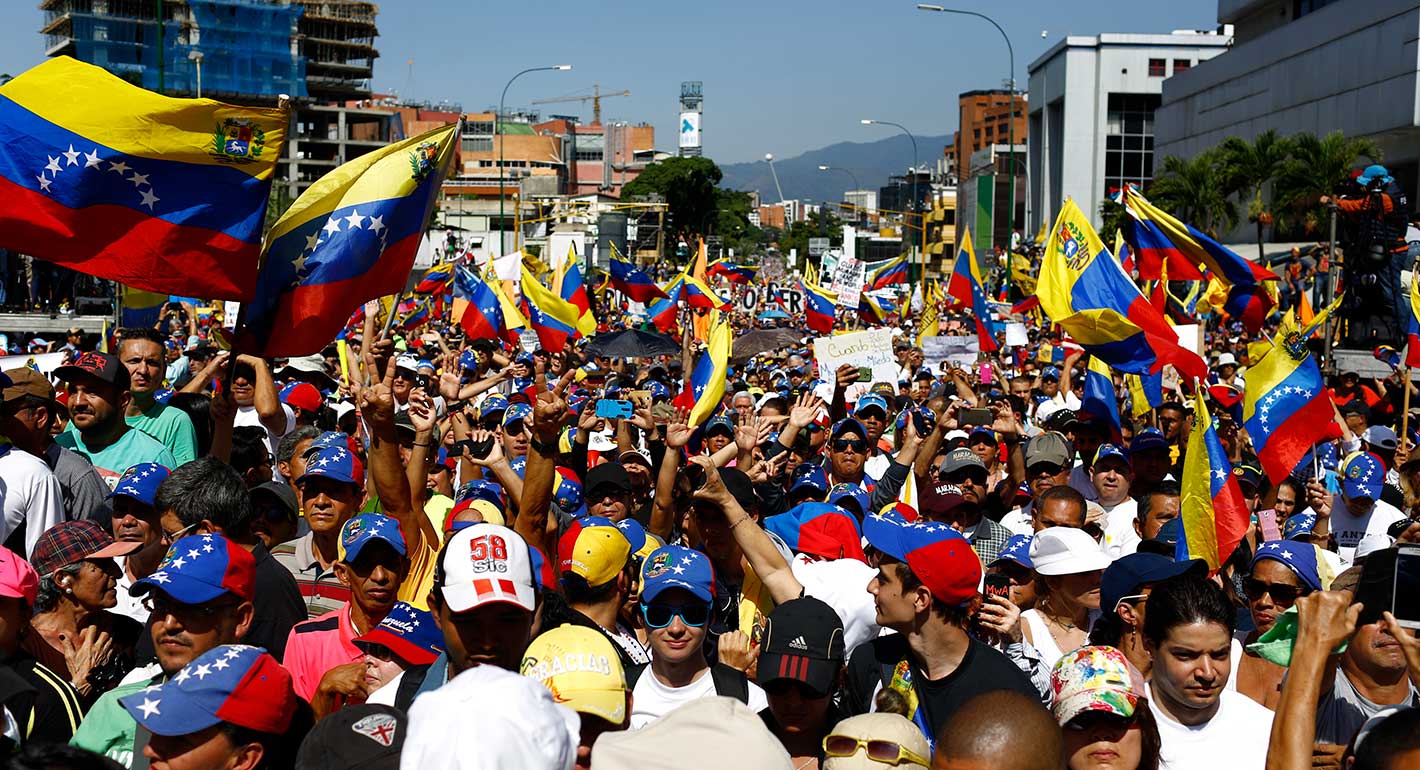
National Assembly leader Juan Guaidó, who declared himself Venezuela’s interim president two weeks ago, urged Beijing this weekend to abandon China’s support for incumbent President Nicolás Maduro. The United States, Canada and Australia, along with several of Venezuela’s Latin American neighbors and now a number of European countries, have recognized Guaidó as the legitimate democratic representative of Venezuela.

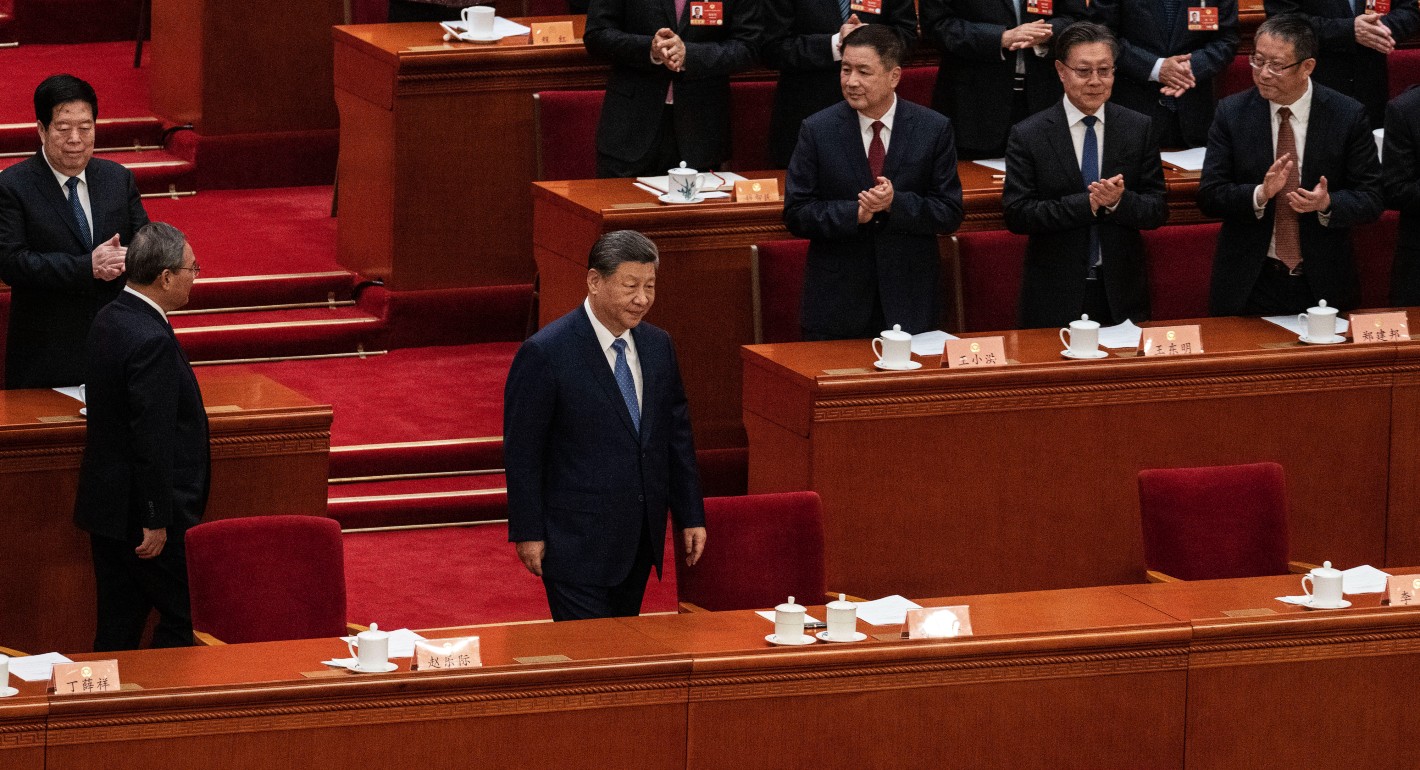
But two countries — China and Russia — stand out for their opposition to outside interference in Venezuela and their support for the status quo under Maduro.

China and Venezuela have a troubled relationship

Beijing has long been concerned about its exposure to Venezuela’s slow-motion descent into crisis. The standoff between Maduro and Guaidó as to who is the country’s legitimate leader has once again prompted questions about how China got involved in such a dysfunctional relationship with Venezuela. There’s also a broader story here about China’s efforts to promote itself as a leader of international development and South-South ties.

The short answer is that the troubled China-Venezuela relationship is the outcome of misplaced Chinese assumptions about the economic and political risks of engaging in massive loans-for-oil deals — and a subsequent unwillingness to acknowledge and learn from those original miscalculations.

Here’s what you need to know about China’s proclaimed hopes for stability and support for Venezuelan sovereignty:

1. China rapidly expanded its commodity trading in Latin America

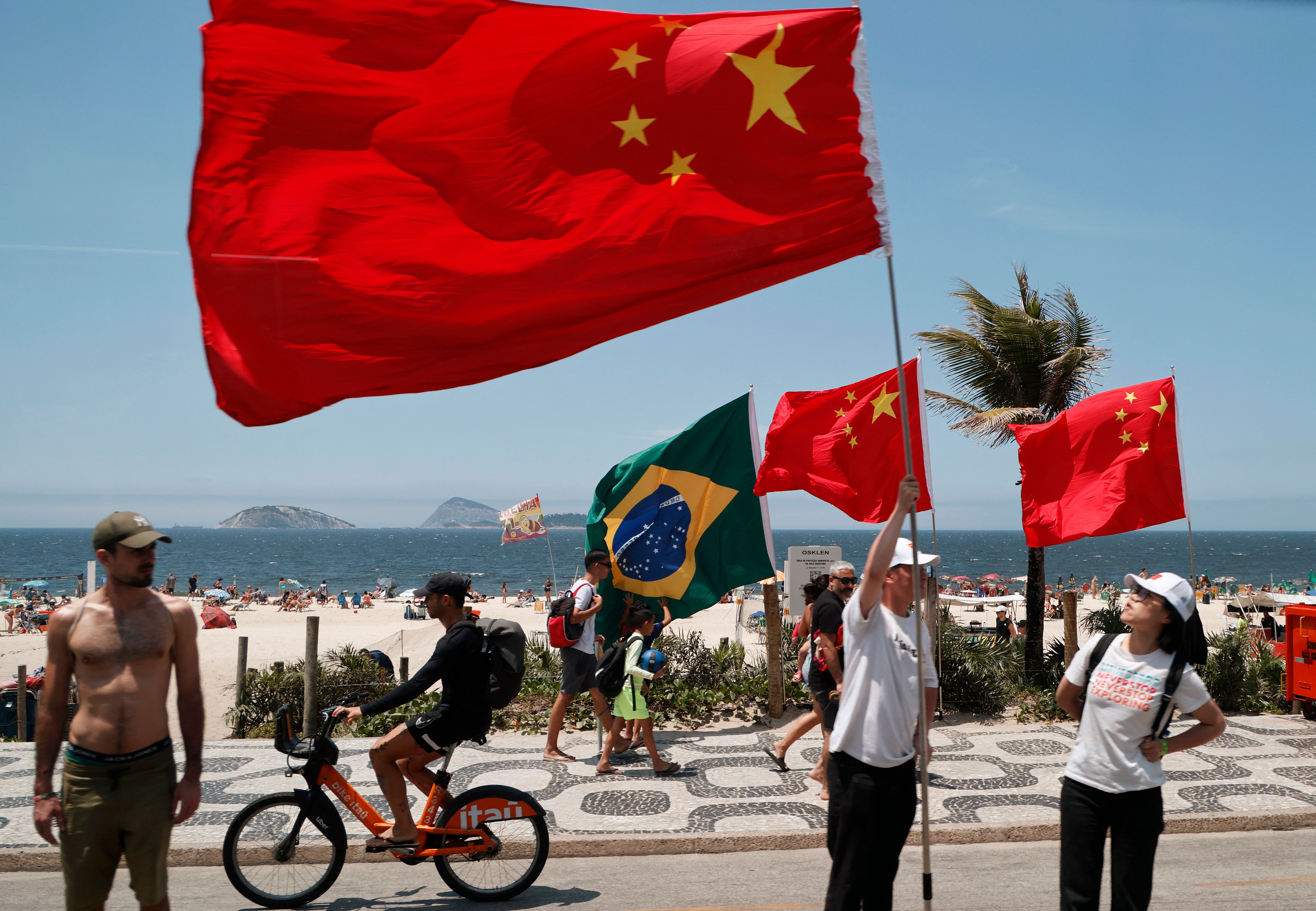
The boom in commercial relations between China and Latin America began in the early 2000s. Buoyed by rapidly expanding Chinese demand for abundant South American mineral, agricultural and energy commodities, China quickly became the top or No. 2 trading partner of many countries across the continent. Iron ore, copper and soy products dominated trade between China and countries such as Brazil, Chile and Argentina. For China and Venezuela, oil was at the heart of the burgeoning bilateral relationship.

By the early 2000s, China was already one of the world’s top oil importers and was looking to expand and diversify its supply sources. After Hugo Chávez became president in 1999, Venezuela increasingly declared its intentions to diversify its own oil trade relationships away from overdependence on the United States and specifically toward partners in Asia such as China and India. Venezuela was South America’s top oil producer, and industry analysts by 2011 came to believe Venezuela had the world’s largest oil reserves, ahead of even Saudi Arabia.

China and Venezuela increasingly pursued a state-to-state, loans-for-oil structure for their partnership. On the Chinese side, the key institution was the China Development Bank (CDB), which lent more than $55 billion to Venezuela from 2007 to 2016. On the Venezuelan side, the key partners were Chávez and the state-owned oil firm, PDVSA, which agreed to service the loans through guaranteed oil sales to China.

Chávez died of cancer in 2013, and the price of oil crashed the following year, but there were already signs that all was not well in the China-Venezuela relationship. For example, annual flows of Venezuelan oil exports to China rarely came close to the amounts promised by politicians on both sides. China’s national oil companies were also frustrated in their efforts to gain preferential access to upstream investment opportunities in Venezuela’s oil-rich Orinoco Belt.

2. Beijing miscalculated the political risk

In the wake of Chávez’s death and the dramatic drop in oil prices beginning in 2014, questions mounted. Could Venezuela continue to service its debts to China? And why, despite those concerns, has China persisted in its support of the Maduro government? The answers lie in a combination of misplaced assumptions about the stability of China-Venezuela relations — and a gamble that supporting the status quo in Venezuela is less risky than any public backing of economic or political change there.

As I explained in a 2011 article, Chinese diplomats and researchers consistently portrayed Beijing’s expanding commodity-based ties with South America as “complementary” and “mutually beneficial” — and, therefore, as naturally self-reinforcing and stable. In the case of China-Venezuela relations, Chinese officials and think tank scholars have consistently relied on the purported virtuous circle between development and stability to explain the built-in soundness of the relationship.

3. Chinese officials held fast to the belief in complementary development

Specifically, they argued that because of China’s vast oil import needs and because of Venezuela’s abundant supplies of oil, the relationship was based on a rock-solid commercial complementarity that could outlast the challenges presented by Venezuela’s deepening economic crisis. China continues to tout this comparative-advantage argument even amid growing Venezuelan turmoil.

In the case of Venezuela, such Chinese assumptions were bolstered by confidence that the relationship was on a sound political footing. Chávez’s popularity and command of Venezuelan politics, and his direct support for the “comprehensive strategic partnership,” reassured Beijing that all was in order.

When Chavez died — and the country was hit by oil price and production woes shortly thereafter — the country’s descent into crisis accelerated. Yet China refused to acknowledge that anything was amiss. Granted, starting around 2016, China scaled back its lending to Venezuela, but at every step of the deepening crisis, the official Chinese response has been to repeat its hopes for Venezuelan “stability” and “development.”

4. Beijing is now taking a gamble

Even as Venezuela’s political crisis entered its latest stage last month, a combination of calculations continued to drive China’s reluctance to join calls for political change — or even to openly acknowledge that the China-Venezuela relationship is in troubled waters. China’s official response to U.S. and other international recognition of Guaidó as Venezuela’s legitimate leader has emphasized China’s long-standing noninterference foreign policy principle.

And it’s likely that China continues to hope its financial and diplomatic support for Venezuela ultimately will pave the way for future oil-based trade and investment opportunities. By sitting on the fence as the United States and Russia trade barbs over the future of Venezuela’s political leadership, China may be hoping that its efforts to appear a pragmatic partner to Caracas will pay off with greater future access to Venezuela’s oil reserves. For China to portray its long financial and political support for Chávez and Maduro as purely practical rather than also ideological will probably be easier said than done in a country as polarized as Venezuela.

Originally published as Why did China Stand by Maduro in Venezuela? at The Monkey Cage at The Washington Post on February 5. Reprinted here with permission.

About the Author

Matt Ferchen

Former Nonresident Scholar, Carnegie-Tsinghua Center for Global Policy

Ferchen specializes in China’s political-economic relations with emerging economies. At the Carnegie–Tsinghua Center for Global Policy, he ran a program on China’s economic and political relations with the developing world, including Latin America.

    Recent Work

  • Q&A
    How China Is Reshaping International Development

      Matt Ferchen

  • Article
    Why Unsustainable Chinese Infrastructure Deals Are a Two-Way Street

      Matt Ferchen, Anarkalee Perera

Matt Ferchen
Former Nonresident Scholar, Carnegie-Tsinghua Center for Global Policy
Matt Ferchen
EconomyNorth AmericaSouth AmericaEast AsiaChina

Carnegie does not take institutional positions on public policy issues; the views represented herein are those of the author(s) and do not necessarily reflect the views of Carnegie, its staff, or its trustees.

More Work from Carnegie Endowment for International Peace

  • Commentary
    Emissary
    In Its Iran War Debate, Washington Has Lost the Plot in Asia

    The United States ignores the region’s lived experience—and the tough political and social trade-offs the war has produced—at its peril.

      Evan A. Feigenbaum

  • Commentary
    China Financial Markets
    What GDP Means in a Soft Budget Economy Like China

    The GDP measure is an attempt to measure value creation in an economy. This measure, however, can vary greatly between economies that have disciplinary mechanisms that force them to recognize investment losses quickly and economies that don’t, and can postpone this recognition for many years.

      Michael Pettis

  • A White man in a tan jacket stands with his back to the camera, plugging in an electric car to a row of green and white chargers.
    Commentary
    Emissary
    Some Countries Are Better Prepared for an Energy Crisis This Time

    As the Iran war shocks oil prices, countries that have invested in renewables, EVs, and battery development since the 2022 Russian invasion of Ukraine are seeing the value of their investments.

      • Noah  Gordon ​​​​

      Noah Gordon

  • Article
    Rewiring the South Caucasus: TRIPP and the New Geopolitics of Connectivity

    The U.S.-sponsored TRIPP deal is driving the Armenia-Azerbaijan peace process forward. But foreign and domestic hurdles remain before connectivity and economic interdependence can open up the South Caucasus.

      • Areg Kochinyan

      Thomas de Waal, Areg Kochinyan, Zaur Shiriyev

  • A Black man pulls a trolley. He is small in the bottom center of the frame; in the background are stacks of large, colorful shipping containers and the parts of a large crane or similar piece of equipment.
    Article
    Africa’s Global Economic Edge: Advancing Strategic Sectors

    In key sectors such as critical minerals, specialty agriculture, and fintech, Africa can become a global powerhouse by investing more in manufacturing, value-add, and scaling.

      • Kholofelo Kugler

      Kholofelo Kugler, Georgia Schaefer-Brown

Get more news and analysis from
Carnegie Endowment for International Peace
Carnegie global logo, stacked
1779 Massachusetts Avenue NWWashington, DC, 20036-2103Phone: 202 483 7600Fax: 202 483 1840
  • Research
  • Emissary
  • About
  • Experts
  • Donate
  • Programs
  • Events
  • Blogs
  • Podcasts
  • Contact
  • Annual Reports
  • Careers
  • Privacy
  • For Media
  • Government Resources
Get more news and analysis from
Carnegie Endowment for International Peace
© 2026 Carnegie Endowment for International Peace. All rights reserved.