

Paper
The nuclear relationship between China and the United States is increasingly shaped by widening perception gaps rather than deliberate strategic design.
Tong Zhao
{
  "authors": [
    "Mareena Robinson Snowden"
  ],
  "type": "other",
  "centerAffiliationAll": "dc",
  "centers": [
    "Carnegie Endowment for International Peace"
  ],
  "collections": [
    "Korean Peninsula"
  ],
  "englishNewsletterAll": "ctw",
  "nonEnglishNewsletterAll": "",
  "primaryCenter": "Carnegie Endowment for International Peace",
  "programAffiliation": "NPP",
  "programs": [
    "Nuclear Policy"
  ],
  "projects": [],
  "regions": [
    "East Asia",
    "North Korea"
  ],
  "topics": [
    "Nuclear Policy",
    "Arms Control"
  ]
}
Source: Getty
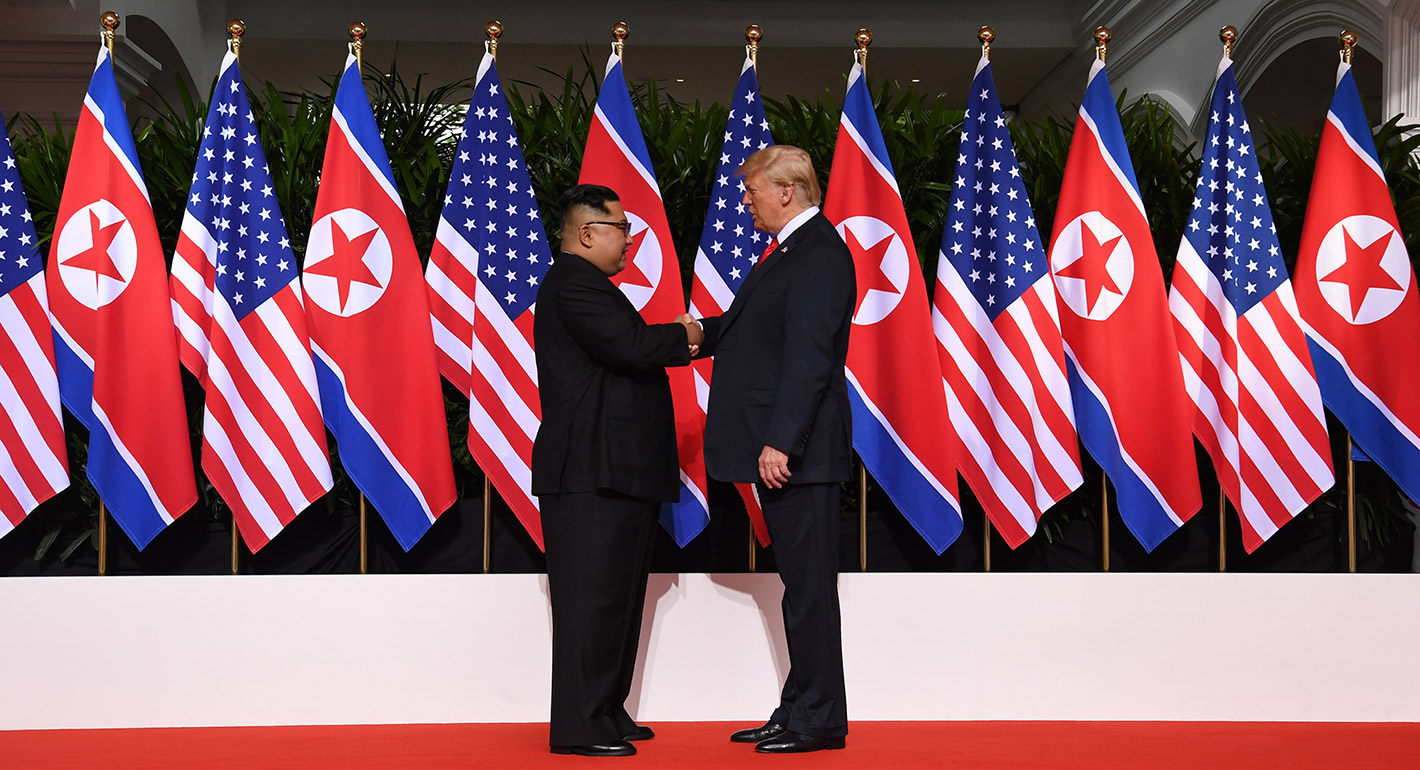
Implementing an agreement on the denuclearization of North Korea will require a creatively designed verification scheme. The probabilistic approach to verification could be a solution to the need to design a credible, implementable agreement to which the United States and North Korea could agree.
Source: Arms Control Today
Although U.S.-North Korean talks have stalled, North Korean leader Kim Jong Un has abided by an apparent moratorium on nuclear testing, keeping alive hopes that an agreement can be reached to denuclearize North Korea. Implementing such an agreement with North Korea, if one can be negotiated, would constitute an unprecedented challenge for the international community.
Verifying such an agreement would require building a monitoring regime that goes well beyond traditional international safeguards and bilateral arms control approaches while accommodating legitimate North Korean concerns over intrusiveness, which would practically preclude “anytime, anywhere” inspections. Creativity will be needed to design a verification scheme to which the United States and North Korea could agree and that could be implemented in affordable and practical ways and that politicians would deem credible.
The full version of this article is available in the September 2019 edition of Arms Control Today.
Former Stanton Nuclear Security Fellow, Nuclear Policy Program
Mareena Robinson Snowden was a Stanton nuclear security fellow with the Nuclear Policy Program at the Carnegie Endowment for International Peace.
Carnegie does not take institutional positions on public policy issues; the views represented herein are those of the author(s) and do not necessarily reflect the views of Carnegie, its staff, or its trustees.

The nuclear relationship between China and the United States is increasingly shaped by widening perception gaps rather than deliberate strategic design.

Tong Zhao

A look at why states without nuclear weapons are seeking naval nuclear propulsion, whether they can legally and technically deliver it, what it will cost them, and what responsible stewardship of the capability would look like.

Jamie Kwong

U.S. trading partners in Asia are closely watching the dispute for signs of how it may affect their own interests.

Barbara Weisel
Congress should ask tough questions about the agreement’s more unique features and whether they advance U.S. interests or compromise them.

Jane Darby Menton

Nuclear and maritime communities face a long and challenging journey to deploy commercial nuclear applications at sea.

Jamie Kwong, Toby Dalton