

Commentary
Andrei Kolesnikov
{
  "authors": [
    "Andrei Kolesnikov"
  ],
  "type": "legacyinthemedia",
  "centerAffiliationAll": "",
  "centers": [
    "Carnegie Endowment for International Peace",
    "Carnegie Russia Eurasia Center"
  ],
  "collections": [
    "Inside Russia"
  ],
  "englishNewsletterAll": "",
  "nonEnglishNewsletterAll": "",
  "primaryCenter": "Carnegie Endowment for International Peace",
  "programAffiliation": "",
  "programs": [],
  "projects": [],
  "regions": [],
  "topics": []
}
Source: Getty
The combination of aggressive conformism and petty indifference is the basis of the regime’s popular support.
Source: Moscow Times
When the regime requires an outstanding display of loyalty, conformism is elevated to principle and a virtue that officials vie aggressively with each other to demonstrate.
They race ahead of the heavily bedecked train to meet the arriving government officials with a band and the traditional salt and bread.
College deans ready to reveal the names of students involved in anti-government protests, officials and lawmakers who have polished their newly-minted bills to a totalitarian sheen. Police officers, investigators, prosecutors and judges — all eager to report, with Stakhanovite zeal, how they have exceeded their quotas for imprisonments and fines.
Three recent examples of such superlative efforts include a law enabling the authorities to label individuals, and not just organizations, as foreign agents; an initiative by Ruslan Golubovsky, the unassuming deputy director of the Consular Department of the Foreign Ministry who proposed extending the current prohibition against U.S. citizens adopting Russian children to adoptive parents of all nationalities; and a fine of approximately $10,000 against the international Memorial Foundation for failing to label itself as a foreign agent on its Instagram account — bringing the total fines against vital human rights organization to $35,000.
Judge Maria Sizintseva who, interestingly, was only 15 years old when President Vladimir Putin first came to power, was the one who fined Memorial.
All of these are manifestations of an aggressive and prohibitive conformism. What’s more, Putin didn’t have a direct hand in any of it:
He did not call Sizintseva and instruct her to cripple the country’s most important organization for preserving the memory of millions of Stalin’s victims. But the system is so designed that it spurs officials to vie with each other in coming up with new repressive actions and laws — considered signs of loyalty by a repressive regime.
Cruelty and pettiness have now become the norm and officials need no order from above to outdo each other with initiatives that are obsequious in their aggressiveness. This system, with its judges, investigators, officials, FSB agents, Kremlin-orchestrated volunteer brigades, United Russia party members, trolls, bots, snoops, riot police, etc. now works on autopilot.
Countless “little Putins” try to guess how the “big Putin” in the Kremlin would behave in their place — adding their own mix of stupidity and cruelty into the brew — producing a toxic mix of injustice and inhumanity. This has recreated the atmosphere of the 1940s — now transposed into Russia’s authoritarian state capitalism.
The average citizen quickly learns how to conform when an authoritarian regime holds power. If you keep your head down and don’t venture into the city center at the wrong time of day, you can avoid getting detained as a suspicious character.
But sometimes the regime requires more than simple obedience — and when it does, people feel it like some sort of sixth sense. When that happens, conformism becomes active and aggressive and is elevated to the level of principle and virtue.
What the authorities so eloquently call an “active citizen” should, in fact, be called an “aggressive conformist.” This combination of aggressive conformism and petty indifference is the basis of the regime’s popular support.
Hannah Arendt described this phenomenon in her 1954 essay, “The Threat of Conformism.” “Freedom can dwindle away through some sort of general agreement,” she wrote, “in some almost intangible process of mutual adjustment….The danger of conformism and its threat to freedom is inherent in all mass societies.”
Self-censorship can be worse and more destructive than censorship from without. Aggressive and voluntary conformism can be worse and more destructive than the norms of behavior that totalitarian regimes impose by force.
The Russian authorities rely on a segment of the population that Samuel Greene and Graeme Robertson, in their book “Putin v. The People” referred to as “greengrocers.” Without their cold indifference, authoritarian leaders would be unable to rule.
With the coming of democracy and the free market, people abandoned their duties as citizens and assumed the self-absorbed role of consumers.
The ruling regime that began taking shape in 2000 has thrived on this change. The result: democracy is gone and the market has constricted substantially. The ordinary citizen, who preferred to adapt and conform rather than chafe at the ever-tightening noose, bears no less responsibility for the current situation than do the authoritarian leaders.
Ordinary Russians chose these leaders of their own free will in the early 2000s. Ever since, they could only watch through dull glass as events unfolded — not unlike how Marcello Clerici in “The Conformist” by Bernardo Bertolucci watched through a car window as Anna Quadri pounded her fists against the glass and cried out for help.
Former Senior Fellow, Carnegie Russia Eurasia Center
Kolesnikov was a senior fellow at the Carnegie Russia Eurasia Center.
Recent Work
Andrei Kolesnikov
Andrei Kolesnikov
Carnegie does not take institutional positions on public policy issues; the views represented herein are those of the author(s) and do not necessarily reflect the views of Carnegie, its staff, or its trustees.
Rather than consolidating Russian society, the conflict in Ukraine has exacerbated existing divisions on a diverse array of issues, including support for the regime. Put another way, the impression that Putin now has the full support of the Russian public is simply incorrect.
Denis Volkov, Andrei Kolesnikov
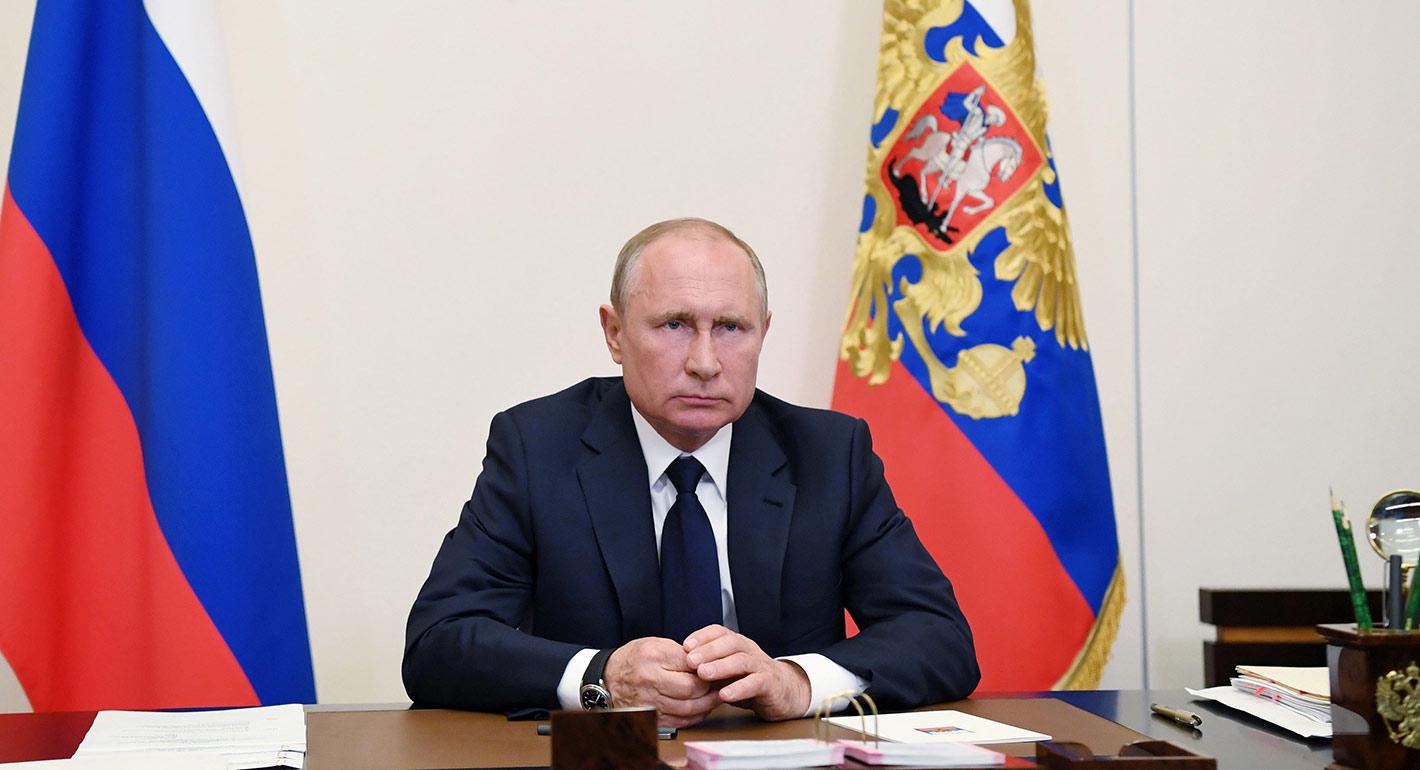
Russia’s ineffective response to the coronavirus reveals the hazards of a system that cultivates self-interest and cronyism over strong state capacity and administration.
Nate Reynolds
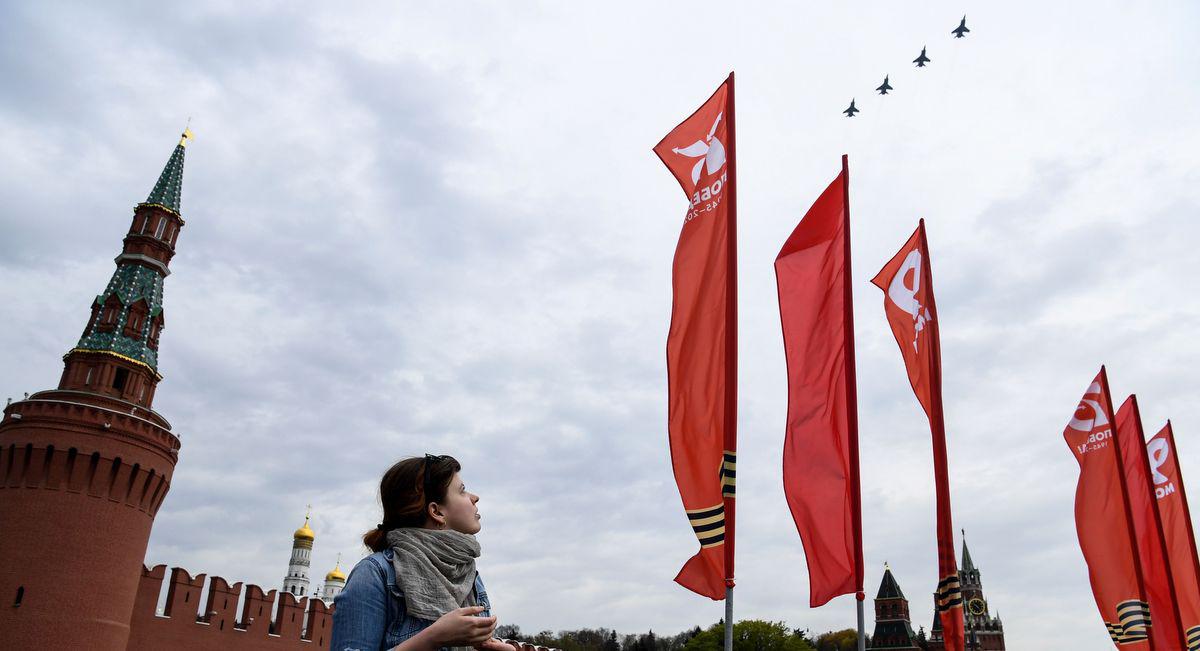
The foundation of the current Kremlin ideology is a defensive narrative: that we have always been attacked and forced to defend ourselves. Another line of defense is history.
Andrei Kolesnikov
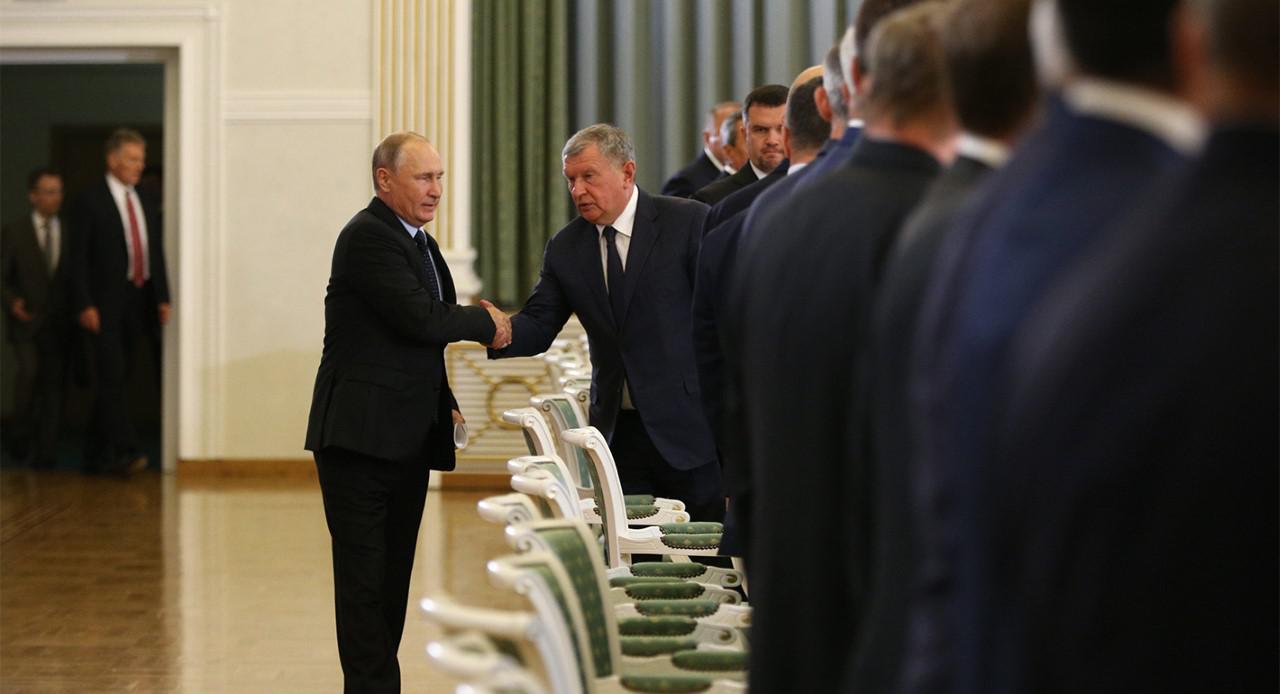
The pandemic has revealed a truth of the Russian government. Vladimir Putin has become increasingly disengaged from routine matters of governing and prefers to delegate most issues.

Tatiana Stanovaya
The fight against the new coronavirus in Russia is being led not by politicians oriented on the public mood, but by managers serving their boss. This is why the authorities’ actions appear first insufficient, then excessive; first belated, then premature.
Tatiana Stanovaya