

Commentary
It should address the shortcomings of previous crisis communication efforts and adapt to the demands of frontier AI.
Lucy Luo
{
  "authors": [
    "Christopher Hill"
  ],
  "type": "legacyinthemedia",
  "centerAffiliationAll": "dc",
  "centers": [
    "Carnegie Endowment for International Peace"
  ],
  "collections": [],
  "englishNewsletterAll": "asia",
  "nonEnglishNewsletterAll": "",
  "primaryCenter": "Carnegie Endowment for International Peace",
  "programAffiliation": "AP",
  "programs": [
    "Asia"
  ],
  "projects": [],
  "regions": [
    "North America",
    "United States",
    "East Asia",
    "South Korea",
    "North Korea"
  ],
  "topics": [
    "Security",
    "Foreign Policy"
  ]
}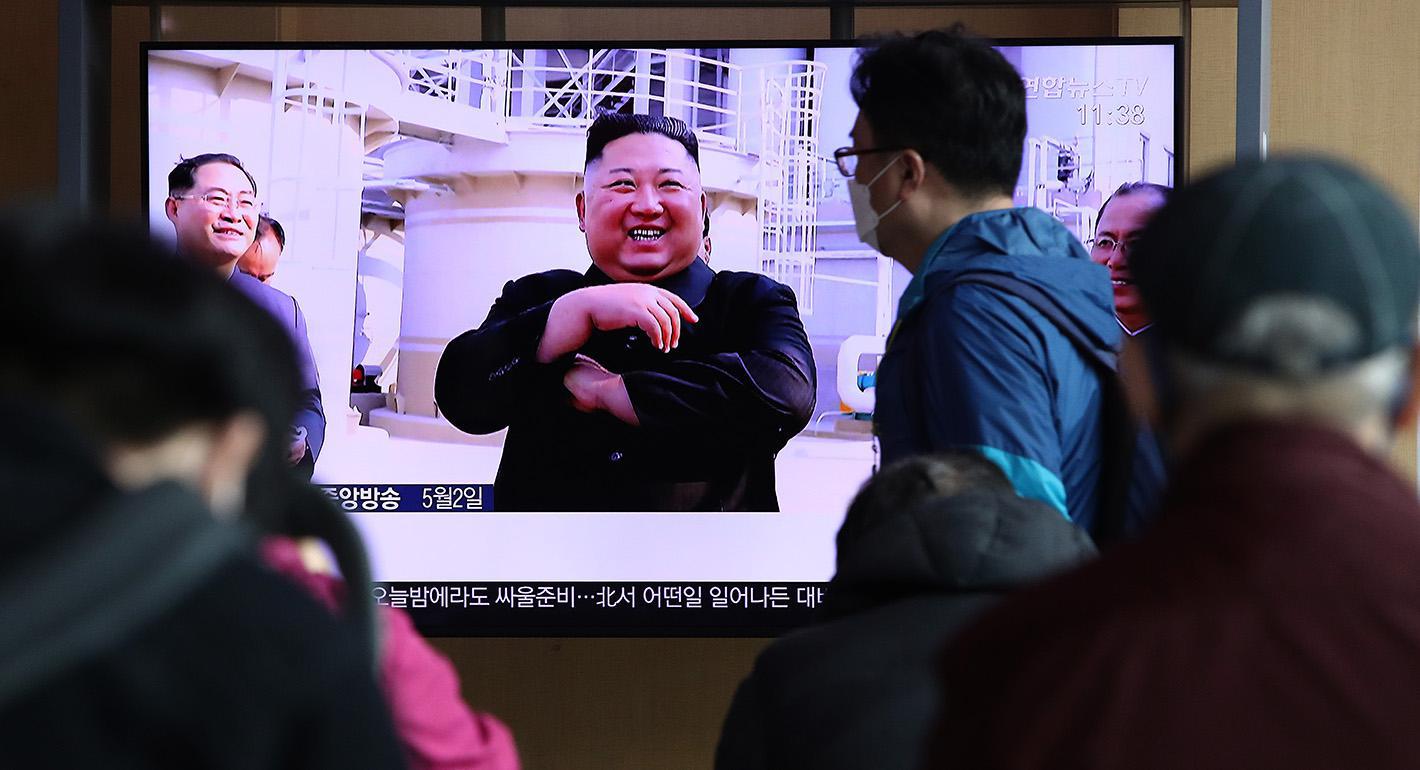
Source: Getty
When North Korea wants a crisis on the peninsula, it does not allow a peace process with the U.S. president to get in the way.
Source: Hill
When North Korea wants a crisis on the peninsula, it does not allow a peace process with the American president to get in the way. North Korea has announced it is cutting off all contact with its southern neighbor during a month that marks the second anniversary of the Singapore meeting between President Trump and North Korean leader Kim Jong Un.
The recent North Korean action to halt all contact with the Republic of Korea is part of a longer arc, whose intended azimuth is always predictable: delegitimize the Seoul government, regardless of which party is in power, and reassure the North Korean people that they continue to carry the torch of Korea-ism, not the highly successful country to their south.
However, given the twists and turns of the Trump administration, its whiplash-like pronouncements of how it conducts relations with friend and foe alike, this latest gambit by Pyongyang represents another time-honored effort: to test how solid is the relationship between Washington and Seoul.
What is important this time is that the same experiment actually may generate a different result.
Thanks to Singapore, and the February 2019 summit in Hanoi and one on the demilitarized zone between North and South Korea last summer, the North Koreans have reason to be pleased. They gave up little. Perhaps some missile tests, and a moratorium on nuclear tests, but in return they received international standing, helped rebuild their relationship with China (and Russia), and saw the sanctions regime further weakened.
They also received a gold mine in terms of their understanding of Donald Trump. For starters, they confirmed that he is no stickler for detail, and that he appears far more interested in the marketing of a meeting than its actual result. They know that Trump is highly unlikely to read up on the negotiating history of the process, to ask questions of those who have gone before him, or show any interest in building on past achievements. His willingness in Singapore to embrace as his own the North Korean position that U.S. troops in South Korea are impediments to peace and should be withdrawn was breathtaking in the ease with which he used shopworn phraseology such as “hostile war games” in describing U.S.-ROK exercises.
The North Koreans also have learned that, in addition to shunning details and background, Trump apparently has little interest in listening to his staff. Their treatment of Secretary of State Mike Pompeo is a case in point. Pompeo, unlike just about any other adviser not in the Trump family, has a reputation for being influential with Trump. Thus, for Pyongyang, the task became to discredit anything and everything about Pompeo and to reinforce in Trump’s mind that he alone can solve the problem. They appear to have succeeded.
The Singapore meeting of two years ago never created the promised momentum for peace, primarily because it was clear in its aftermath, as well in its lead-up, that this was little more than an effort to enshrine the U.S. president as a courageous and imaginative world statesman, willing to set sail into uncharted waters in pursuit of an elusive goal that none of his predecessors had achieved.
In the meantime, as South Korea took on the COVID-19 pandemic with the vigor and competence that the Trump administration has lacked, Trump increasingly seemed to chafe at any mention of South Korea’s success, apparently seeing it as a competitor rather than a model in fighting the virus. The U.S. and South Korea had their first fatality from COVID-19 at about the same time in the latter half of February. Korea has held its cases to 232 per million, and deaths equaling 5 per million, while the U.S. has had 6,183 cases per million and 345 deaths per million.
Rather than admire, much less learn from, South Korea’s relative success, the Trump administration has stepped up the pressure to force South Korea to pay more for the basing of U.S. troops, asking for an immediate increase from $1 billion to $4.8 billion. The unspoken threat is that the U.S. might start withdrawing troops from the peninsula if South Korea does not ante up the support payments. In early April, as a sign of possible additional measures, the Trump administration furloughed 4,000 Korean workers from U.S. bases, a move that caught public attention in Korea, if not in the U.S.
When North Korea tries to bully the South Koreans, the traditional response from the U.S. has been to support Seoul and show the importance it attaches to the alliance. To a limited extent, the State Department did some of that when it expressed “disappointment” with Pyongyang and urged them to return to talks. But, while no one wants an overreaction from Washington, the Trump administration does need to do some clear thinking about the importance of having allies, and what needs to be done to hold them closer.
Former Nonresident Senior Fellow, Asia Program
Ambassador Christopher Robert Hill is currently an adjunct professor at Columbia SIPA. He is a former career diplomat, a four-time ambassador, nominated by three presidents, whose last post was as ambassador to Iraq.
Carnegie does not take institutional positions on public policy issues; the views represented herein are those of the author(s) and do not necessarily reflect the views of Carnegie, its staff, or its trustees.

It should address the shortcomings of previous crisis communication efforts and adapt to the demands of frontier AI.

Lucy Luo
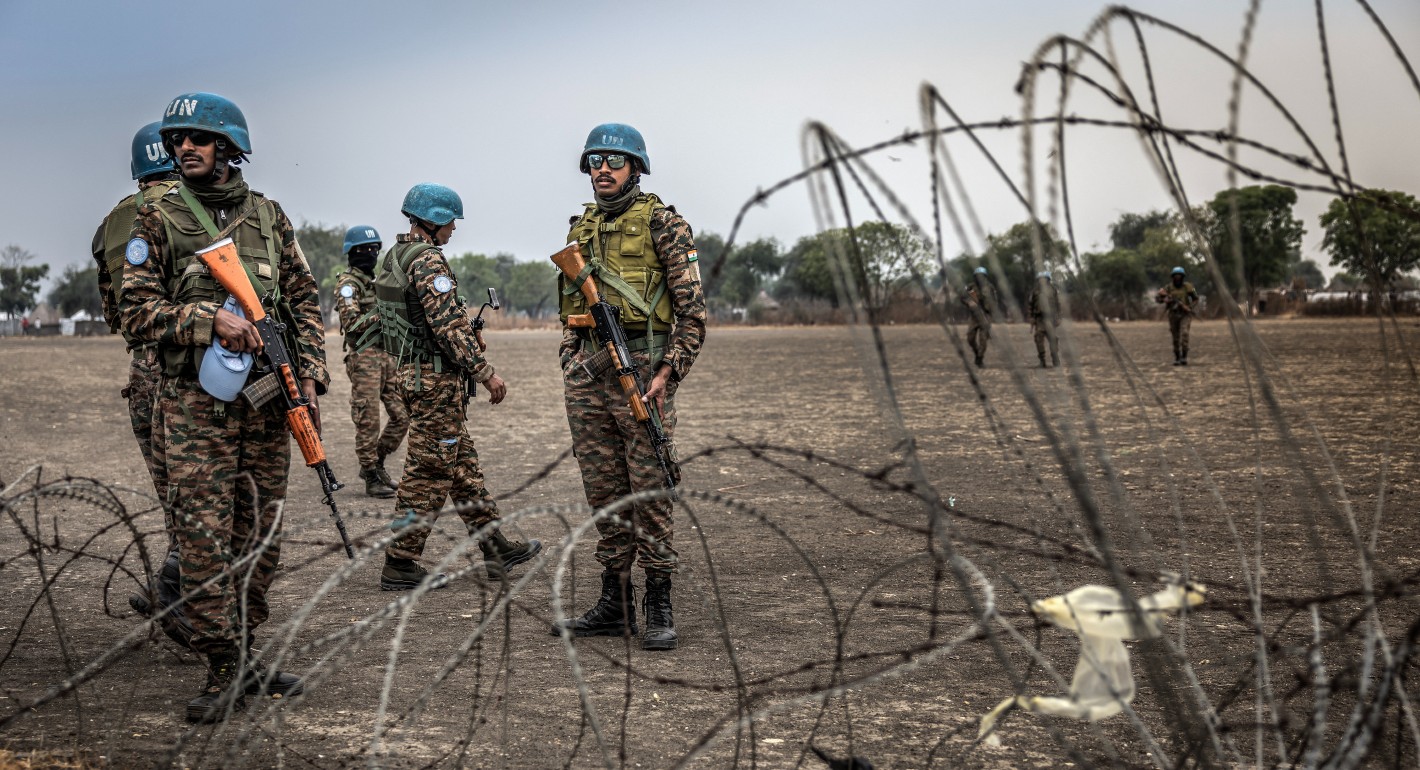
Washington’s decision to support some UN functions while letting others wither is pulling the organization apart at the seams.

Stewart Patrick, Theodore Zaritsky

While there are notable demographic, economic, and geographic divides over AI, there is also substantial alignment between Republicans and Democrats.


Ian Klaus, Mark Baldassare, Rachel George, …

Are Germany’s economic, industrial, and political struggles becoming a liability for the EU’s ability to rise to the geopolitical moment?

Rym Momtaz, ed.

China’s police training infrastructure construction projects provide benefits to recipient countries, promote China’s image as a major global security provider, and are likely to reinforce alignment between Beijing’s security priorities and those of countries in the Global South.


Cameron Waltz, Sheena Chestnut Greitens, Kim Nguyen, …