

Research
- +4
Milan Vaishnav, Rahul Verma, Rukmini S., …
{
  "authors": [
    "Christophe Jaffrelot"
  ],
  "type": "legacyinthemedia",
  "centerAffiliationAll": "dc",
  "centers": [
    "Carnegie Endowment for International Peace"
  ],
  "collections": [],
  "englishNewsletterAll": "ctw",
  "nonEnglishNewsletterAll": "",
  "primaryCenter": "Carnegie Endowment for International Peace",
  "programAffiliation": "SAP",
  "programs": [
    "South Asia"
  ],
  "projects": [],
  "regions": [
    "South Asia",
    "India"
  ],
  "topics": [
    "Political Reform",
    "Democracy",
    "Foreign Policy"
  ]
}
Source: Getty
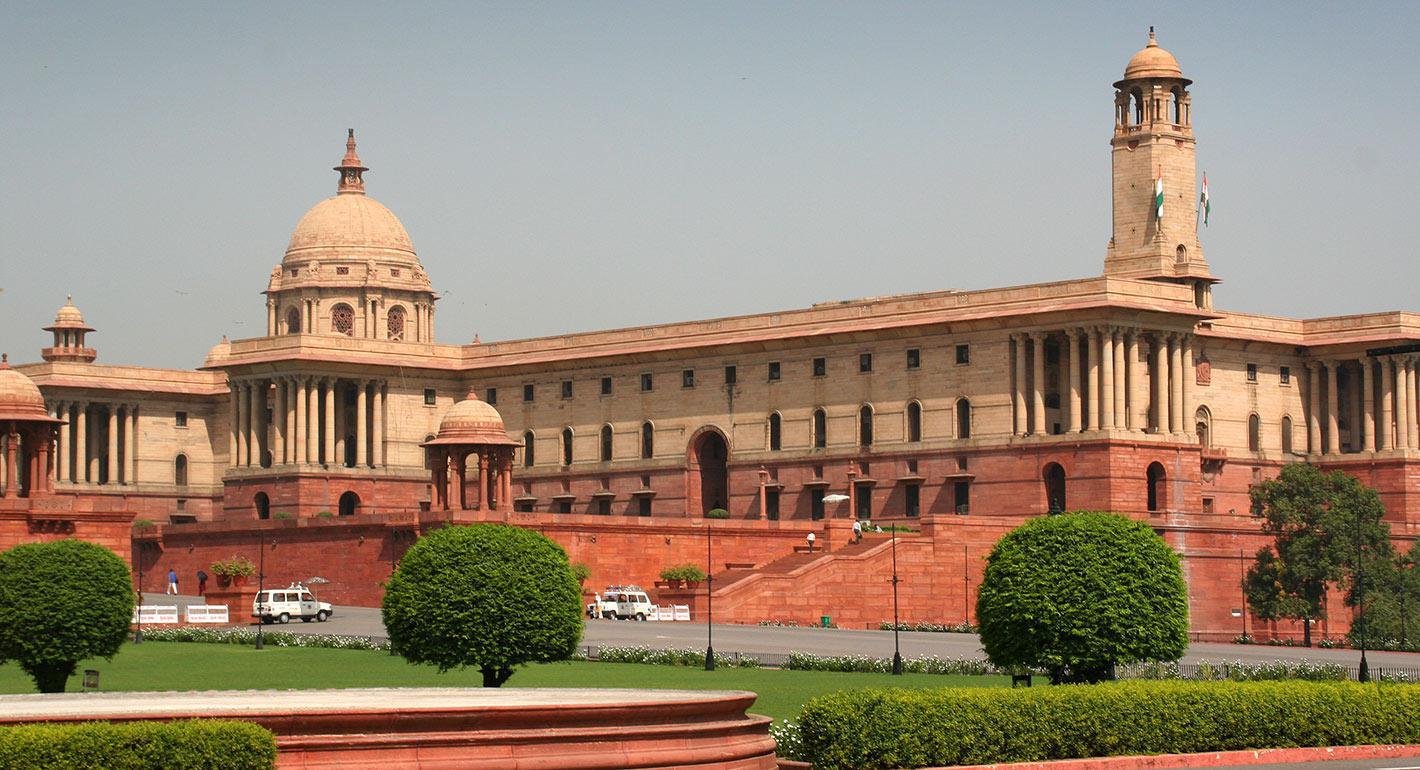
Lately, the behavior of India’s Supreme Court institution—once recognized as among the most prestigious judicial bodies in the world—has been seen as problematic on another count: The Court has ceased to confront the government.
Source: Indian Express
The Supreme Court has made headlines because of its verdict holding senior advocate Prashant Bhushan guilty of contempt of court. Lately, the behaviour of this institution — once recognised as among the most prestigious judicial bodies in the world — has been seen as problematic on another count: The Court has ceased to confront the government. Over the last four years, none of its decisions has come as a major embarrassment for the government. For these two power centres to be on the same wavelength for such a long time is unprecedented — especially, after the period of tension between 2014 and 2016.
Almost immediately after assuming office, in 2014, the Narendra Modi government blocked the elevation of Gopal Subramanium as a judge of the apex court. Subramanium was the Court’s amicus curiae in the Sohrabuddin case in which current Home Minister Amit Shah was the prime accused. The government cleared the names of the three other candidates proposed by the collegium — Rohinton Nariman, Arun Mishra and A K Goel. The government’s decision attracted the criticism of the then Chief Justice R M Lodha. A month later, the Modi government introduced a bill to create the National Judicial Appointments Commission (NJAC), which would replace the Collegium system for appointing judges to high courts and the Supreme Court. The Commission would comprise the CJI, two senior judges and two “eminent personalities” selected by a committee comprising the CJI, the Prime Minister and the Leader of Opposition in the Lok Sabha. The NJAC Act was passed by Parliament in December 2014.
In October 2015, the SC struck down the NJAC Act, ruling that it would affect the independence of the judiciary vis-à-vis the executive — a decision in which Arun Jaitley, then Minister of Finance, saw “the tyranny of the unelected”. That was almost the last time the SC opposed the government in a major case. This, ironically, when the court burnished its reputation in the 1980s-90s with “judicial activism”.
After the 2014 blitzkrieg, came a long war of attrition. In order to show the world that it was open to a reform of the admittedly dysfunctional collegium system, the SC directed the government to propose a new memorandum of procedure (MoP) for appointments to the higher judiciary. The government seized this opportunity to upgrade its role in the process. The draft it sent to the Court allowed the government to reject any name recommended by the Collegium on grounds of national security and made it compulsory for the Collegium to justify its selection. The Collegium rejected these clauses and the MoP could never be finalised.
Meanwhile, the government was sitting on the appointments that the Collegium had recommended months ago — if not more. In early 2016, more than 40 per cent of posts in the high courts were vacant while the backlog of pending cases amounted to over four million. In April 2016, addressing the annual Conference of Chief Justices and Chief Ministers in the presence of PM Modi, then CJI T S Thakur broke down, saying that the Indian judiciary was too understaffed to fulfil its obligations — 170 proposals for appointments to the high courts were pending at that time. On November 11, 2016, the government returned 43 out of 77 names recommended by the Collegium for HC judges —the number of vacant posts had by then gone up to about 500.
CJI Thakur retired in January 2017 and after that, relations between the executive and the SC improved. Appointments and transfers ceased to be a problem because the Collegium, by and large, accepted the law ministry-orchestrated appointments and transfers, even when it had not proposed them or had suggested others, like in the cases of Justices Jayant Patel, Ramendra Jain, Basharat Ali Khan, Mohammad Mansoor, Mohammad Nizamuddin, Akil Kureshi and S Muralidhar to name a few.
In the same vein, the Court considered that the Aadhaar Bill could be passed as a Money Bill, validated the Electoral Bonds Act, and in the case of Special Judge Loya, as Gautam Bhatia puts it, it acted as “the Supreme Magistrate, the Supreme Investigating Officer, and the Supreme Additional Sessions Judge, the Court of First and Last Instance” — so much so that, finally, no additional investigation was ordered despite the many grey areas that remained. The SC also abstained from dealing with sensitive issues like the abolition of Article 370 or the Citizenship Amendment Act: By doing nothing, the judges do not take the risk of making mistakes. This modus operandi of the court, when applied to Aadhaar, created a fait accompli.
Commenting on the role of the apex court in maintaining checks and balances, the former judge, Madan Lokur, recently asked: “Has the last bastion fallen?” To respond, one needs to make sense of the trajectory. The non-confrontational attitude of the SC can possibly be explained by the arm wrestling of the years 2014-15. Some other variables need to be factored in. First, the court’s reluctance to question the government on contentious issues — from J&K to misuse of sedition law or the NRC — is disturbing. More so, when some of these are labelled by the BJP as its ideological projects.
Second, the manner in which the judiciary has addressed allegations against itself — Kalikho Pul or Prasad Education Trust or on sexual harassment — gives a handle to those in power. For, these allegations affect the moral authority of the judges, especially when they fail to apply the basic principle of natural justice by being judges in their own cause. Third, the independence of the judiciary is inevitably affected by the acceptance of post-retirement jobs.
In this context, in convicting Prashant Bhushan of contempt, the Court is trying to silence one of the few lawyers who have used the judicial arena to speak truth to power. In doing so, it indulges in judicial authoritarianism, an “ism” that becomes obvious, when, according to Lynne Henderson, a court’s jurisprudence appears “to manifest inflexibility, lack of compassion, and approval of oppression”.
Former Nonresident Scholar, South Asia Program
Jaffrelot’s core research focuses on theories of nationalism and democracy, mobilization of the lower castes and Dalits (ex-untouchables) in India, the Hindu nationalist movement, and ethnic conflicts in Pakistan.
Recent Work

Milan Vaishnav, Rahul Verma, Rukmini S., …
Christophe Jaffrelot
Carnegie does not take institutional positions on public policy issues; the views represented herein are those of the author(s) and do not necessarily reflect the views of Carnegie, its staff, or its trustees.

With its public finances in shambles, the far right polling at 35 percent ahead of the 2027 presidential election, and a growing protest movement, is France’s crisis a threat to the EU’s geopolitical awakening?

Rym Momtaz, ed.

Putin’s conservative staffing policies and search for ever greater control have cemented parliament’s transformation into a bureaucratic appendage of the executive branch.

Andrey Pertsev

Ahead of a tough winter for Ukraine, Donald Trump’s swing back toward Russia bodes ill. But instead of panicking, Kyiv’s European allies are focusing on action.
Rym Momtaz

Without a ceasefire with Ukraine on attacking each other’s energy infrastructure—to which the Kremlin is unlikely to agree—the diesel agreement between Putin and Trump is largely for show, rather than representing a genuine increase in the volumes of Russian diesel on the global market.

Sergey Vakulenko

Funding Ukraine remains a priority for European leaders. As Russia’s war of aggression heads into another winter, two feasible options to mobilize support for Kyiv should be fast-tracked.


Vladyslav Rashkovan, Gregory P. Wilson