

Article
Alejandro Martin Rodriguez, Joy Arkeh, Sarah Yerkes
{
  "authors": [
    "Sarah Yerkes"
  ],
  "type": "commentary",
  "centerAffiliationAll": "dc",
  "centers": [
    "Carnegie Endowment for International Peace"
  ],
  "collections": [
    "Arab Awakening"
  ],
  "englishNewsletterAll": "menaTransitions",
  "nonEnglishNewsletterAll": "",
  "primaryCenter": "Carnegie Endowment for International Peace",
  "programAffiliation": "MEP",
  "programs": [
    "Middle East"
  ],
  "projects": [
    "Tunisia Monitor"
  ],
  "regions": [
    "North Africa",
    "Tunisia"
  ],
  "topics": [
    "Political Reform"
  ]
}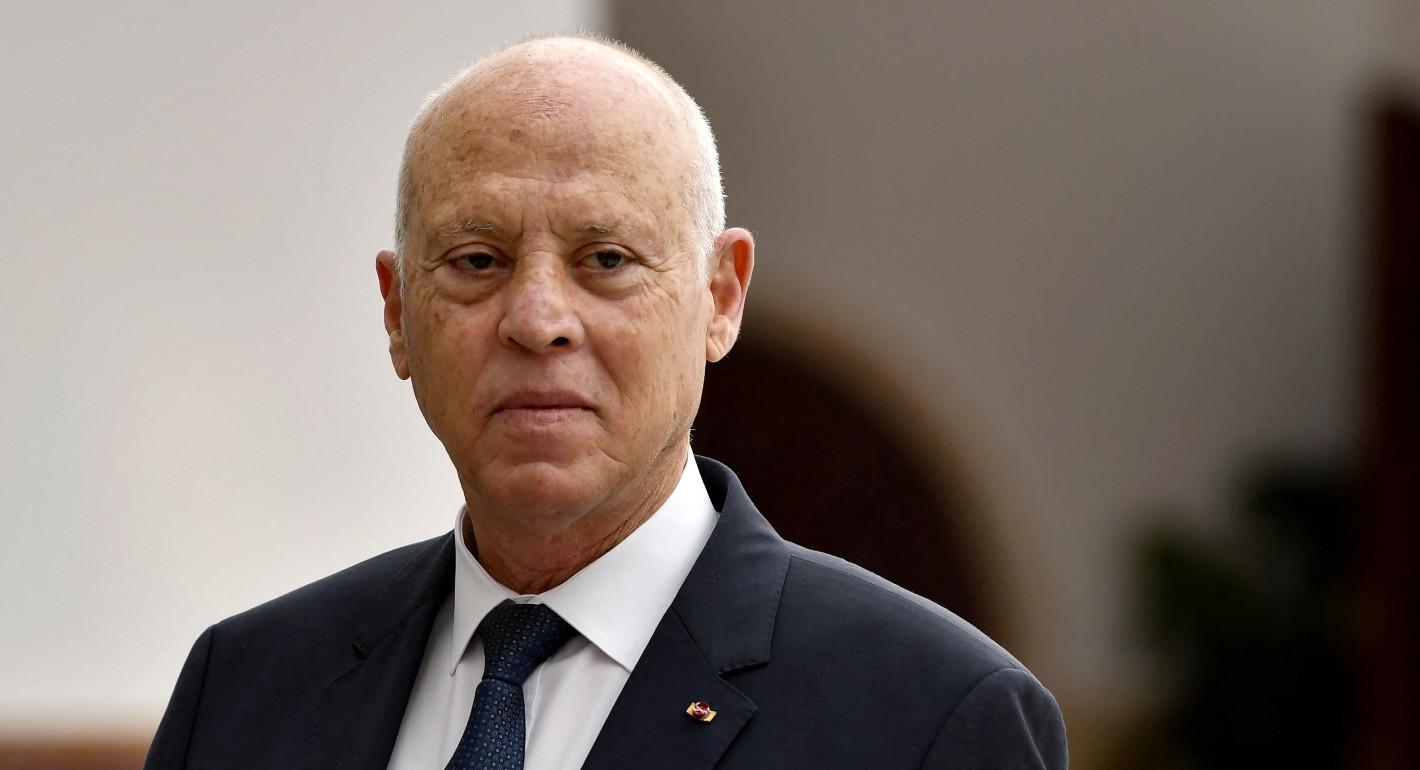
Source: Getty
Five months after he seized power, Kais Saied has given no signs he plans to return the country to its democratic path.
Last week, Tunisian President Kais Saied announced his plan for the country’s political future, nearly five months after he seized power under an emergency declaration. He later suspended much of the country’s constitution in what many have described as a coup. The announcement comes after numerous Tunisian political and civil society actors, as well as international donors, called for Saied to lay out a road map to address Tunisia’s political instability and return the country to a democratic path. But Saied’s plan should do little to assuage the concerns of those inside and outside Tunisia who are fearful of the country’s authoritarian drift.
The plan raises several red flags. First, the democratically elected parliament, initially frozen under a thirty-day emergency measure, will not return until elections are held next December, leaving the country without a parliament for seventeen months. Saied has also pledged to revise the electoral law in advance of those elections but has thus far failed to consult the Independent High Authority for Elections, which is constitutionally mandated to organize elections and referenda.
Second, the process through which Saied will seek public input on a revised constitution hardly meets the definition of inclusive. He is planning an online consultative process in early 2022 that will allow Tunisians to comment on the new document, along with some vaguely defined face-to-face consultations. But this approach is dangerous and ineffective for two reasons. First, one-third of Tunisians do not have access to the internet. Second, attacks on Tunisians’ freedom of expression have created a chilling effect whereby citizens are less likely to publicly voice their opinions under fear of arrest. According to Human Rights Watch, since Saied’s power grab, “arbitrary and politically motivated acts of repression have proliferated” with at least fifty Tunisians placed under house arrest, including three members of parliament. Additionally, the Tunisian government issued an international arrest warrant for former president Moncef Marzouki after he criticized Saied, and a Tunisian student was recently arrested for a Facebook post critical of Saied. Furthermore, Saied has decreed that he alone will appoint the commission charged with drafting the new constitution, likely leaving little room for dissenting viewpoints.
Almost as troubling as Saied’s plan is the tepid response by the United States. In a statement, the State Department welcomed the announcement and says it “look[s] forward to a reform process that is transparent and inclusive of diverse political and civil society voices.” Nothing Saied has done over the past several months suggests that he has any desire for transparency or inclusivity. It would be naïve to expect him to suddenly change course over the next year when he has solidified his power with no legislature or constitutional court to stop him.
The United States should also be very concerned that Saied’s plan does nothing to address Tunisia’s growing economic crisis, as more and more Tunisians face skyrocketing unemployment, inflation, and ballooning debt. For much of the past decade, the United States, Europe, and the IMF have kept funds flowing into Tunisia despite the government’s failure to implement crucial economic reforms upon which that assistance had been conditioned. International donors agreed that failing to keep up economic support for Tunisia could cause dangerous instability with potential ramifications across the region. But by failing to enact economic reforms that can bring long-term growth, Tunisia faces both political and economic instability. Now the buck stops with Saied. Giving him a blank check without pushing him to address the socioeconomic challenges plaguing so many Tunisians would bring more harm than good to the country and to U.S. interests.
The United States should also hold steady on its earlier demand that any changes to the constitution go through a consultation process that includes all sectors of Tunisian society—including Saied’s opponents. Saied has repeatedly threatened to exclude or even outlaw the Islamist Ennahda party, which currently holds the plurality of seats in the frozen parliament. If that happens, the United States should be prepared to push back publicly and privately. Punishing Tunisia by completely withholding military or economic assistance is not likely to achieve U.S. goals and could easily backfire. However, conditioning U.S. assistance on real and measurable reforms and identifying additional pots of money or other forms of support to reward Tunisia with, should they meet those conditions, could encourage Saied to take concrete steps to open up space for dialogue and discussion around any political or economic reforms.
The U.S. calculus should also include recognition that Saied’s popularity is waning. For too long, the United States has justified its relatively muted criticism of Saied with the idea that the Tunisian public supports him. That is no longer the case. A recent poll put his approval at 55 percent, down from 87 percent following the coup announcement. And opposition voices are growing. Citizens Against the Coup, a Tunisian civil society group, organized a protest against Saied last week and has pledged to hold rallies for the next month to mark the anniversary of the period between the self-immolation of Mohamed Bouazizi that started the Arab Spring on December 17, 2010, and the removal of president Zine el-Abidine Ben Ali on January 14, 2011. Noureddine Tabboubi, the secretary general of the main labor union who has vacillated between outright support for and condemnation of Saied’s actions, recently said that his organization will not give Saied a “blank check” and criticized Saied for his focus on political, rather than economic, reforms.
Tunisia’s democratic experiment is not yet finished. While Saied has taken numerous steps to push back against the hard-earned freedoms won by the Tunisians who took to the streets eleven years ago, Tunisian civil society groups have demonstrated their desire and ability to push back on Saied in the street and online. While it is up to Tunisians to determine their path, the United States has the opportunity to help prevent any further threats to Tunisia’s democracy and support those actors seeking a more democratic, stable, and prosperous future.

Acting Co-Director and Senior Fellow, Middle East Program
Sarah Yerkes is acting co-director and a senior fellow in Carnegie’s Middle East Program, where her research focuses on Tunisia’s political, economic, and security developments as well as state-society relations in the Middle East and North Africa.
Recent Work

Alejandro Martin Rodriguez, Joy Arkeh, Sarah Yerkes
Alejandro Martin Rodriguez, Sarah Yerkes
Carnegie does not take institutional positions on public policy issues; the views represented herein are those of the author(s) and do not necessarily reflect the views of Carnegie, its staff, or its trustees.

If the Russian-speaking community in Latvia cannot articulate their interests without being seen as disloyal, they could end up embracing a pro-Kremlin agenda.

Sergejs Potapkins

Russia’s ruling party would have benefited from Putin appearing as its distant patron, but as an active frontman imposing his views on the public, he has done nothing but harm both the party’s election campaign and the ruling system overall.

Andrey Pertsev

In the tenth year of his presidency, President Mirziyoyev’s system is becoming even more personalized than that of his predecessor Karimov.

Galiya Ibragimova
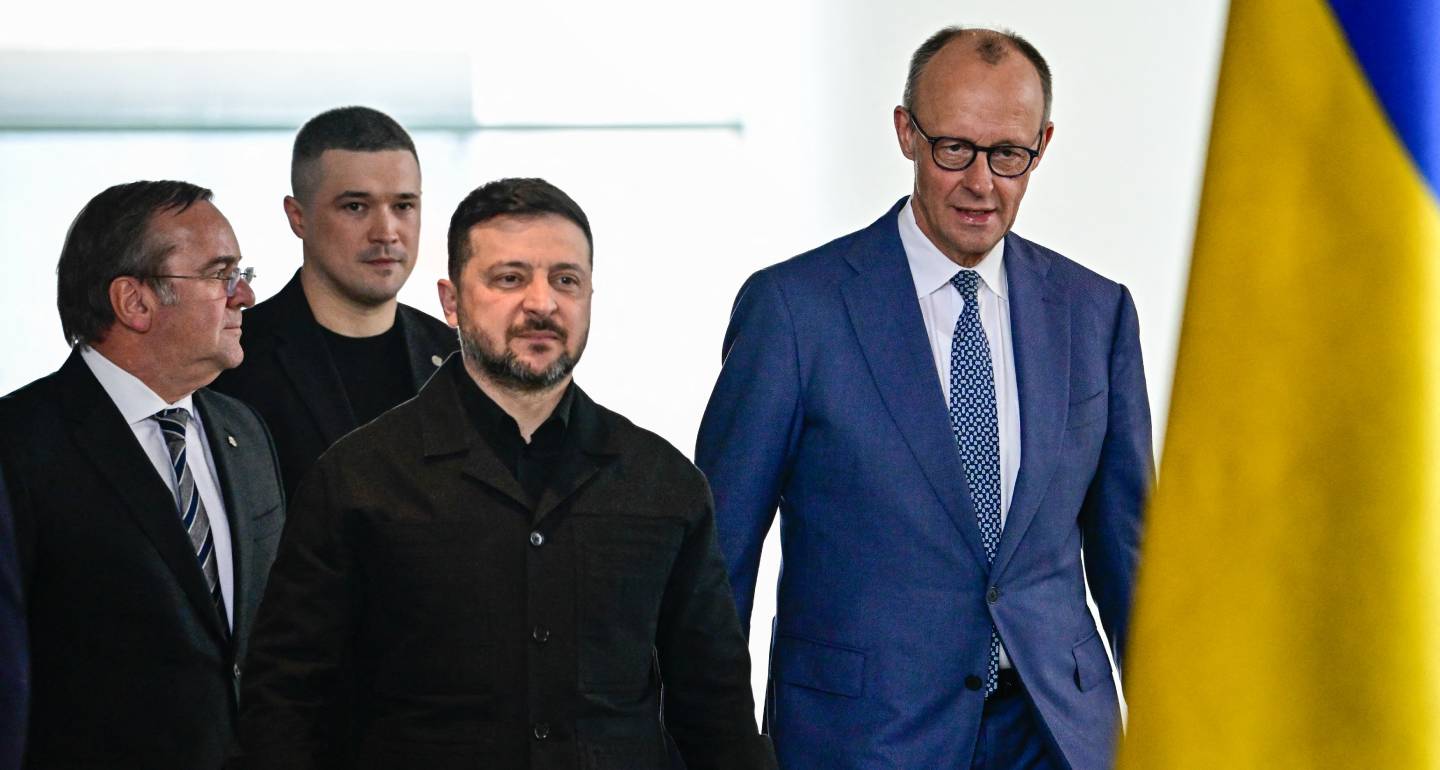
The greater threat to Zelensky comes not from Fedorov alone, but from the convergence between the former defense minister’s political campaign and the anti-corruption investigations moving ever closer to the presidential administration.

Balázs Jarábik
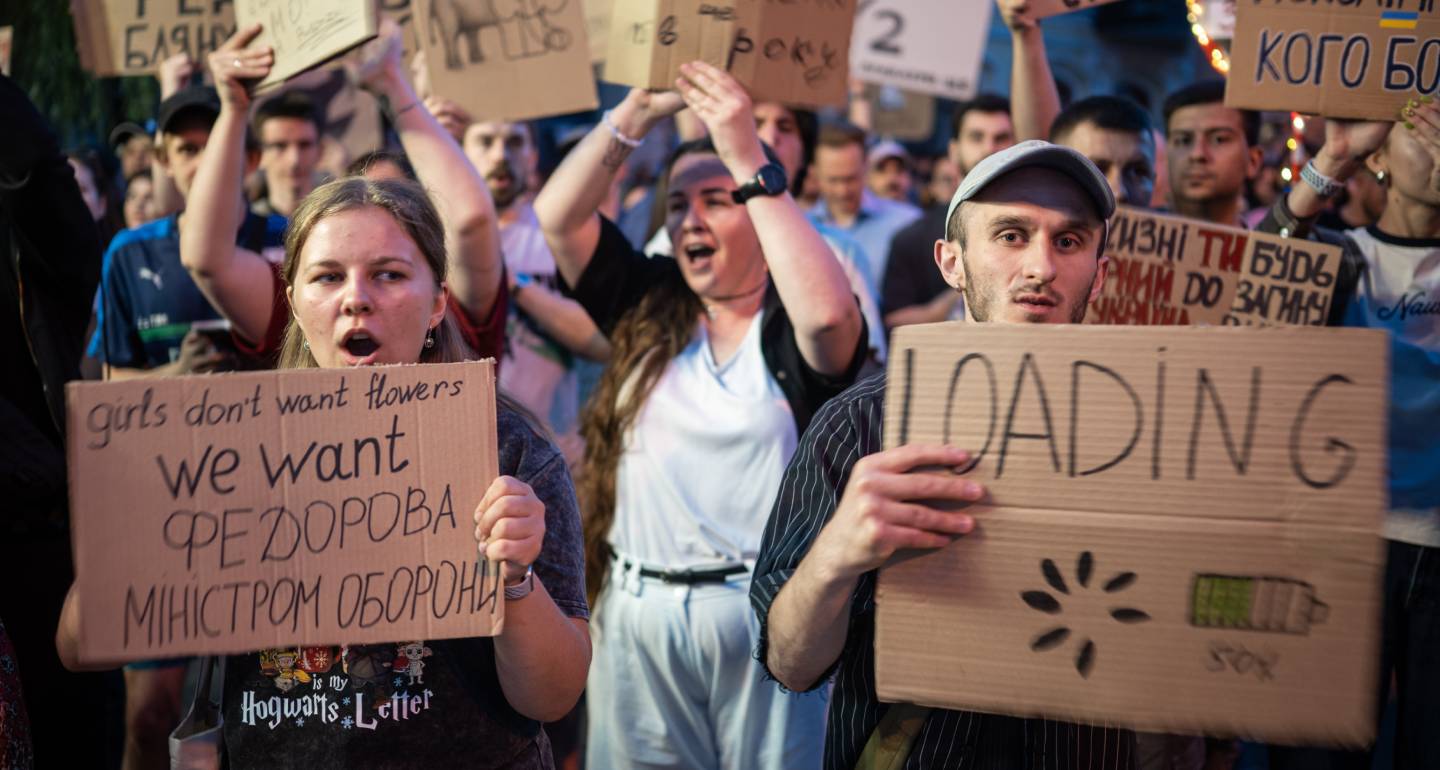
With his public call for new elections in Ukraine, ex-defense minister Mykhailo Fedorov has opened Pandora’s box.

Konstantin Skorkin