

Article
A notable degree of participative democracy has firmly arrived in Europe. But to have more far-reaching impact, democratic deliberation needs to move into a radically new phase.
Richard Youngs
{
  "authors": [
    "Madhav Khosla",
    "Milan Vaishnav"
  ],
  "type": "other",
  "centerAffiliationAll": "dc",
  "centers": [
    "Carnegie Endowment for International Peace"
  ],
  "collections": [],
  "englishNewsletterAll": "ctw",
  "nonEnglishNewsletterAll": "",
  "primaryCenter": "Carnegie Endowment for International Peace",
  "programAffiliation": "SAP",
  "programs": [
    "South Asia"
  ],
  "projects": [],
  "regions": [
    "South Asia",
    "India"
  ],
  "topics": [
    "Democracy"
  ]
}
Source: Getty
As India commemorates the seventy-fifth anniversary of the country’s independence from the British Raj, one question above all strikes at the heart of democracy’s uncertain future: who belongs in today’s India?
On August 15, 2022, more than 1 billion Indians will celebrate the seventy-fifth anniversary of India’s independence from the British Raj. India’s democracy has been prefaced with innumerable adjectives—loudest, largest, and most enduring in the developing world. In many ways, it is also an “unlikely” democracy. Its deep-seated inequalities, high rates of poverty and illiteracy, sprawling geography, and linguistic diversity mean that India possesses few of the typical prerequisites for democracy that political theorists have enumerated. Yet seven-and-a-half decades later, India’s democracy remains intact.
Today, while the political framework of Indian democracy remains firmly in place, fresh questions are being raised about its content. As India commemorates this milestone anniversary, one question above all strikes at the heart of democracy’s uncertain future: who belongs in today’s India? This question is not a new one—it was the same question that India’s constitutional framers debated as they navigated the complexities of the subcontinent’s partition, the uneven reach of the Indian state, and the patchwork of directly and indirectly ruled British territories.
Through its constitutional and legal architecture, India sought to build a liberal democracy—one that afforded all its citizens equal rights and protection under the law. Inherent in this vision was an embrace of secularism and India’s diversity. Framers conceptualized India as a mosaic, not a monolith—a polity comprised of diverse linguistic, ethnic, religious, and regional identities.
With the benefits of hindsight, this framework was far from perfect. For instance, the Indian Constitution enjoined the state to intervene in religious affairs on the assumption that it would do so even-handedly, a fine line that proved difficult to walk. Nevertheless, it laid the foundation for what came to be called the “idea of India.” The idea of India, quite simply, is that there is no single “idea of India”; the state would not insist upon strict congruence between the imagined “nation” and its sovereign territorial boundaries.
In recent years, however, an alternate vision with roots dating back to the nineteenth century has come to the fore—one that has pitched a narrower vision of nationhood. Advocates of Hindu nationalism believe that Indian culture is synonymous with that of Hindus, who account for roughly 80 percent of the country’s population. Hindu nationalists believe that India is fundamentally a Hindu rashtra (nation) and that the secularism articulated by the constitution was a betrayal of the majority’s wishes.
The rise of the Bharatiya Janata Party (BJP), the political party most closely aligned with the Hindu nationalist ethos, has introduced newfound challenges to the constitutional standards of inclusion. Put simply, there is clear evidence that—in a manner both explicit and novel—religion is being used as a filter through which Indian citizenship can be determined. These challenges are proceeding both in formal, legal terms as well as in informal, social terms. Hindu nationalists are adopting laws to codify the preeminence of a religious majority while simultaneously reshaping informal norms, customs, and behaviors to curtail the de facto minority rights and privileges.
Many of these challenges did not originate with the BJP and Prime Minister Narendra Modi’s stunning rise to national power in 2014. India’s postindependence history is littered with examples of secular parties cynically employing religious appeals to curry favor with electorally crucial communities. Laws that impinge on free expression and individual freedom, many of which are used to clamp down on minorities, have colonial origins and were further strengthened by successive Indian governments well before the rise of the BJP.
However, while these issues have complex roots, it is hard to deny that the BJP’s advancement of Hindu nationalist tenets has exacerbated social cleavages, especially on religious lines.
In 2019, the South Asia Program of the Carnegie Endowment for International Peace convened a group of experts to analyze and contextualize recent shifts in the conception of citizenship and belonging in India. This group is comprised of legal scholars, political theorists, and political scientists. Their findings are being published in a special section of Studies in Indian Politics dedicated to the seventy-fifth anniversary of independence and are reproduced here with permission from the journal’s publisher.
As the editors of this collection, we hope this work informs readers about the state of Indian politics on the eve of the country’s birthday. But we also believe that this collection contributes to contemporary global debates about the state of democracy and democratic erosion—from the rise of populism to the allure of religious nationalism. In sum, it is our distinct hope that the thinking synthesized in this project attracts a wide audience and influences public discourse.
We are grateful to the Henry Luce Foundation, whose generous grant made the research for this compilation possible, and the foundation’s former director of policy initiatives Toby Volkman. We also owe a debt of gratitude to our collaborators—Hilal Ahmed, Niraja Gopal Jayal, Pratap Bhanu Mehta, Neelanjan Sircar, and Raeesa Vakil—for their excellent contributions, written during an extremely challenging pandemic. Caroline Duckworth and Jonathan Kay at the Carnegie Endowment for International Peace provided excellent editorial and research assistance throughout this project. We also benefited from the creative talents of Natalie Brase, Cliff Djajapranata, Douglas Farrar, Fiona Garguilo, Jessica Katz, Jocelyn Soly, and Cameron Zotter. Finally, we are grateful to Suhas Palshikar and his editorial colleagues at Studies in Indian Politics for their partnership.

Niraja Gopal Jayal
The mobilization of religion for political purposes has a long and troubled history in the Indian subcontinent, from the consolidation of electoral blocs to inter-community violence. Its deployment to define and circumscribe legal citizenship is relatively new in India, though arguably not in the subcontinent, the very object of whose bifurcation in 1947 was to separate citizens into two nations based on religion. It is the politicization of that historical divide that animates recent attempts to recast citizenship in India along religious lines. In effect, it is an attempt to construe Indian citizenship as faith-based, in consonance with the idea of a Hindu majoritarian nation, of which Hindus are natural citizens while Muslims, in this view, properly belong to Pakistan or Bangladesh. Perfecting this congruence is the object of the new project of citizenship.
Niraja Gopal Jayal is the Avantha Chair at the King’s India Institute at King’s College, London.
Read the full essay by Niraja Gopal Jayal

Pratap Bhanu Mehta
This article reflects on the relationship between Hindu nationalism and democracy and how the former emerges from within democracy only to subvert it. The essay outlines important conceptual issues in the relationship between Hindu nationalism and democracy, discusses the relationship between the idea of a “Hindu Rashtra” and “Hindu Rajya,” and delves into the complex interplay between Hindu nationalism and caste. This article ultimately argues that Hindu nationalism’s alignment with authoritarianism in a political style does not simply corrode democracy, but it also undermines all values. The objective of this analysis is not to provide a comprehensive explanation of the rise of Hindu nationalism, as much as to reflect on the ways in which its ideology operates at multiple levels.
Pratap Bhanu Mehta is Laurence S. Rockefeller Professor for Distinguished Teaching at Princeton University.
Read the full essay by Pratap Bhanu Mehta

Hilal Ahmed
This article explores Muslim political attitudes in contemporary India. It contextualizes the political responses of Muslim communities in the backdrop of two crucial legal-constitutional changes introduced by the Bharatiya Janata Party government: the abrogation of Article 370 of the Constitution and the Citizenship Amendment Act (CAA), 2019. These changes, Ahmed suggests, stem from the official doctrine of New India and its operative mechanism, Hindutva constitutionalism. Analyzing the nature of Muslim participation in the anti-CAA protests and Muslim electoral responses in two subsequent elections (Delhi Assembly election, 2020, and the Bihar Assembly election, 2020), Ahmed argues that the political engagement of Muslims could be interpreted as an ever-evolving discourse, which not merely responds to Hindutva politics but also asserts its relative autonomy.
Hilal Ahmed is associate professor at the Center for the Study of Developing Societies in New Delhi, India.
Read the full essay by Hilal Ahmed

Raeesa Vakil
This article presents the argument that the Supreme Court of India’s jurisprudence on procedural bars to litigation is insufficient to address challenges that arise in cases involving religious rights. Examining the court’s views on standing (the right to litigate) in three key public interest decisions (the Sabarimala Temple case, the Ram Janmabhoomi case, and the triple talaq case), Vakil argues that the court has privileged a discretionary, ends-based reasoning over an approach based on principle and law, resulting in erratic and inconsistent outcomes. The result is an uncertain level of protection to minority rights in judicial processes.
Raeesa Vakil is a J.S.D. candidate at Yale Law School.
Read the full essay by Raeesa Vakil

Neelanjan Sircar
Religious division formed the basis for the subcontinent’s partition and has continued to be a major social cleavage in local relations. Yet remarkably, religious parties have rarely been successful in India. This may be changing with an ascendant Bharatiya Janata Party mobilizing the Hindu vote. Accordingly, this article seeks to explicate the conditions under which successful religious parties may emerge. To do so, Sircar conceives of electoral mobilization on religion as a form of ethnic mobilization, referring to it as “religion-as-ethnicity” voting. Sircar argues that religion-as-ethnicity voting emerges when the religious group meets certain spatial demographic criteria (density and pivotality) and when a governing party representing these interests can use state power to reify boundaries between religious groups. Sircar uses this framework to explain the emergence of the Hindu vote in the Indian state of Assam.
Neelanjan Sircar is senior fellow at the Centre for Policy Research in New Delhi, India.
Madhav Khosla

Director and Senior Fellow, South Asia Program
Milan Vaishnav is a senior fellow and director of the South Asia Program and the host of the Grand Tamasha podcast at the Carnegie Endowment for International Peace. His primary research focus is the political economy of India, and he examines issues such as corruption and governance, state capacity, federalism, and electoral behavior. He also conducts research on the Indian diaspora.
Carnegie does not take institutional positions on public policy issues; the views represented herein are those of the author(s) and do not necessarily reflect the views of Carnegie, its staff, or its trustees.

A notable degree of participative democracy has firmly arrived in Europe. But to have more far-reaching impact, democratic deliberation needs to move into a radically new phase.

Richard Youngs
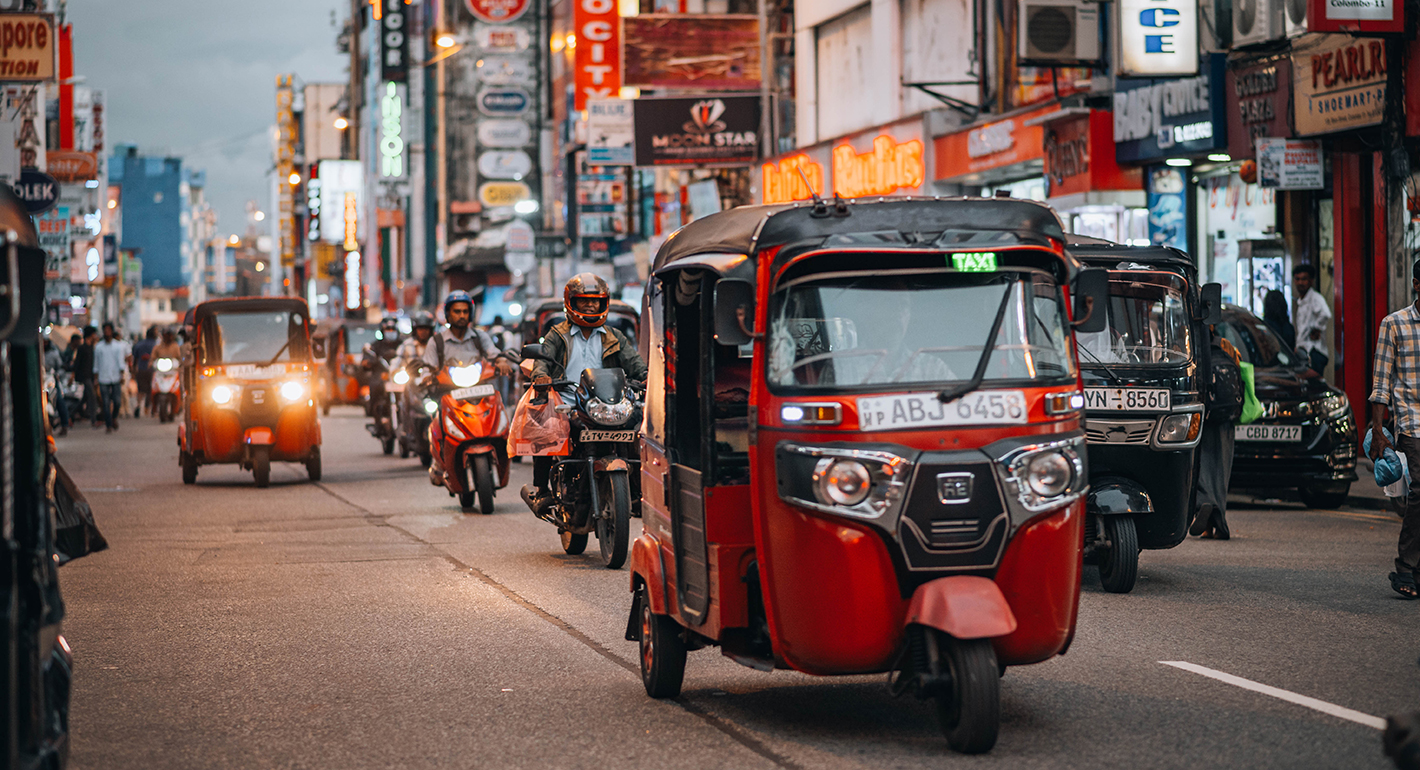
Economic recovery has brought Sri Lanka a modicum of stability, but domestic strains and great-power rivalry could test how long it lasts.
Avinash Paliwal
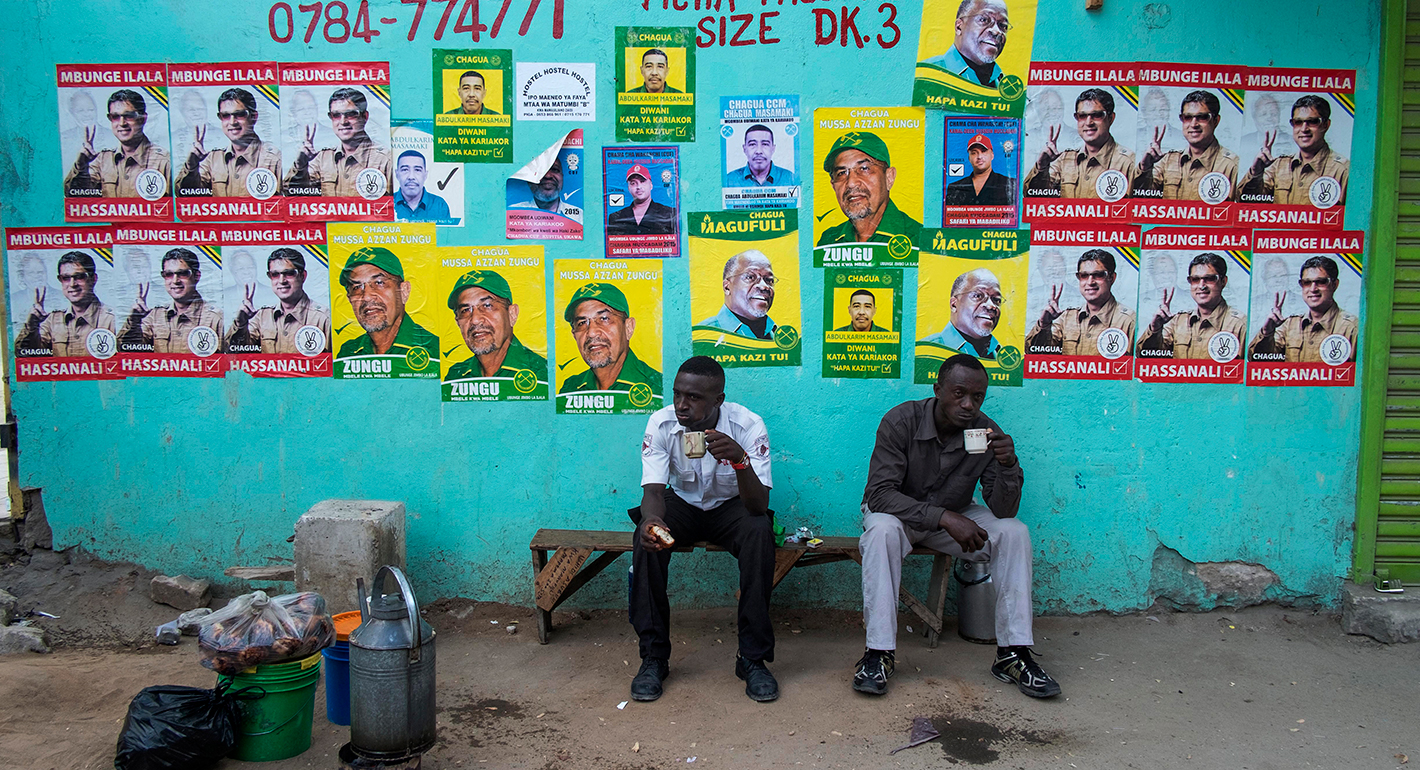
Today’s global democratic recession is partly rooted in a common perception that democracies have a delivery problem, with many citizens in both autocracies and democracies alike now believing that strongmen can achieve better governance outcomes. But a study of four countries in Africa reveals that democratic-leaning governments have demonstrated better governance performance than autocratic governments.


Sarah Yerkes, Natalie Triche, Amr Hamzawy
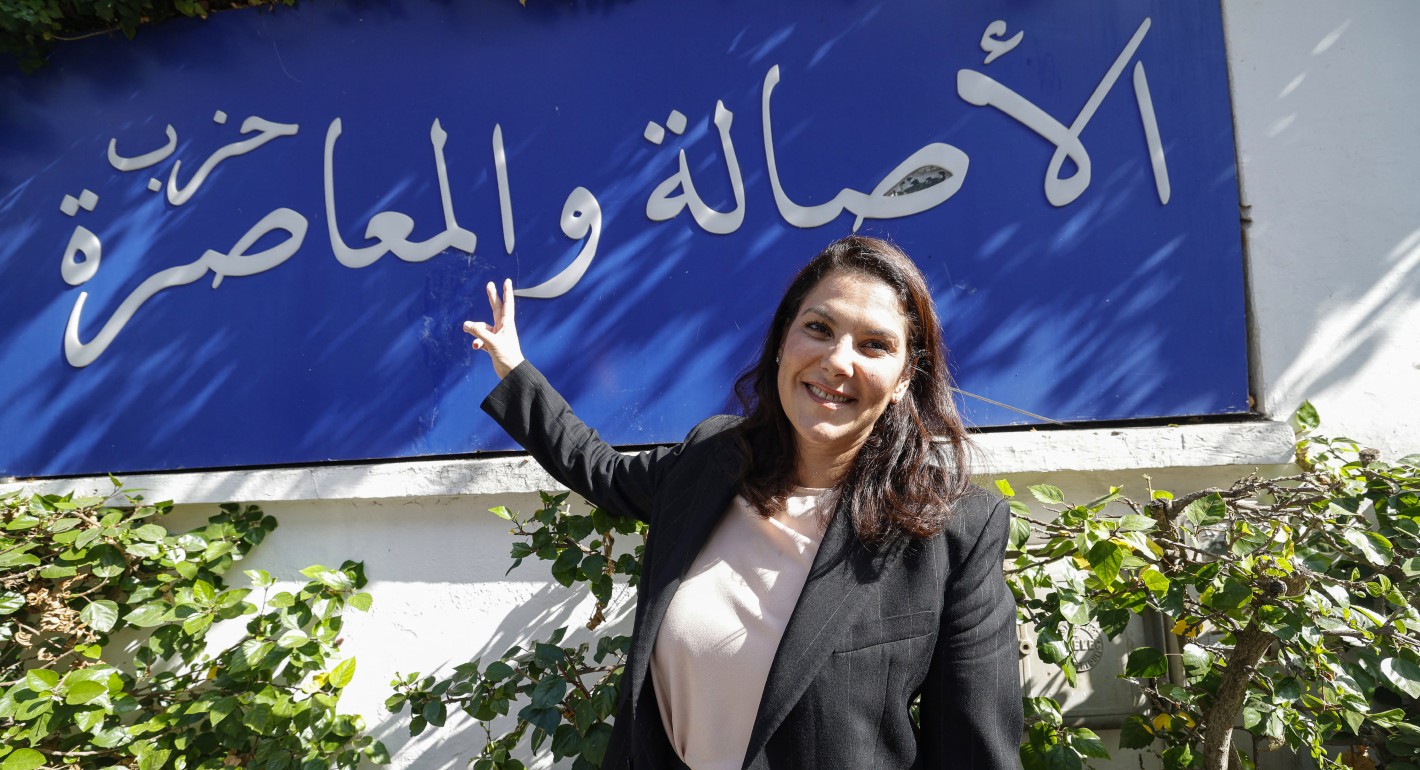
Fatima El Mansouri is the country’s first female prime minister. She’s also a privileged insider in a largely ceremonial position.
Sarah Yerkes

The domestic impacts of how long it is taking to end the war in Ukraine have pushed the French electorate to the political extremes and compromised the country’s diplomatic capacity.

Rym Momtaz