

Article
Konark Bhandari
{
  "authors": [
    "Konark Bhandari"
  ],
  "type": "commentary",
  "centerAffiliationAll": "",
  "centers": [
    "Carnegie Endowment for International Peace",
    "Carnegie India"
  ],
  "collections": [],
  "englishNewsletterAll": "",
  "nonEnglishNewsletterAll": "",
  "primaryCenter": "Carnegie India",
  "programAffiliation": "",
  "programs": [],
  "projects": [
    "Technology and Society"
  ],
  "regions": [
    "South Asia",
    "India"
  ],
  "topics": [
    "Technology"
  ]
}
Source: Getty
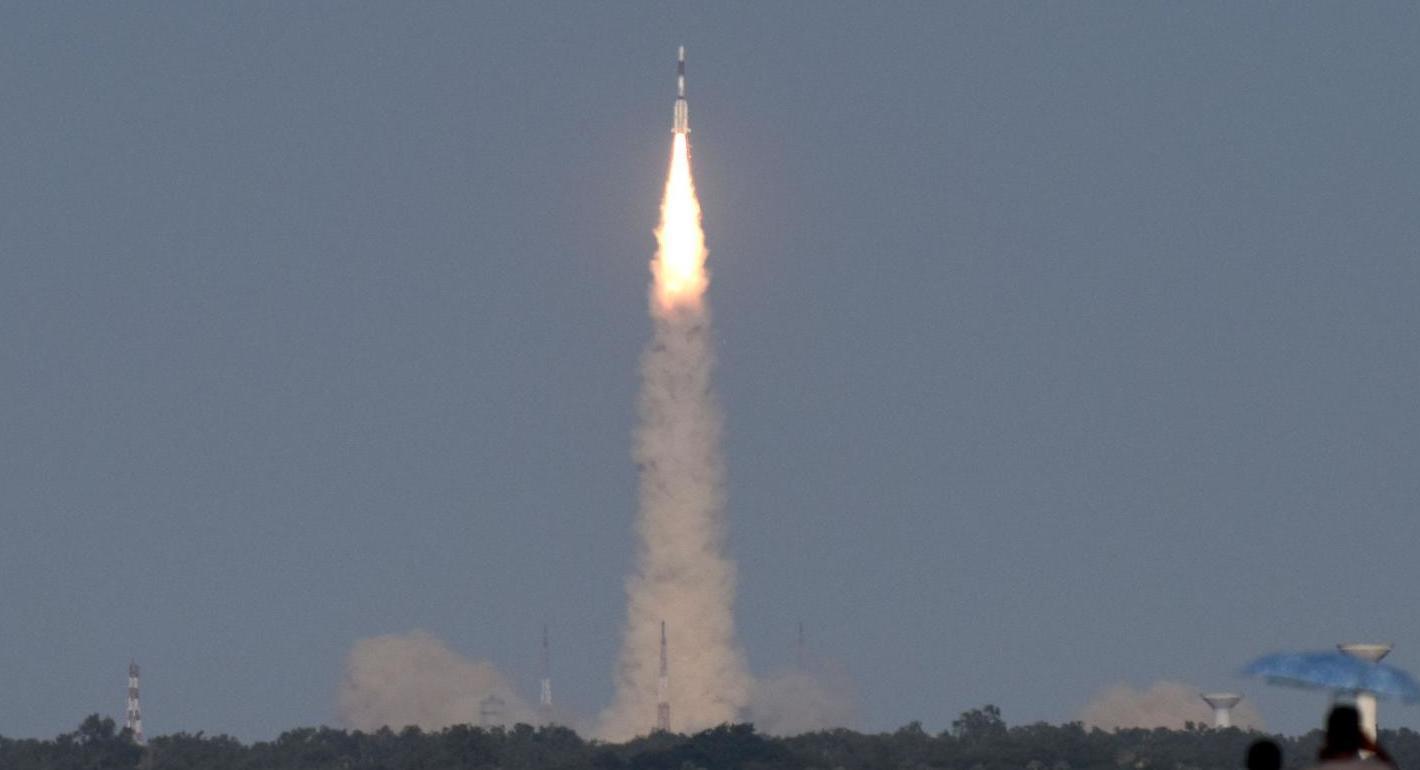
The latest U.S. policy reform on the Missile Technology Control Regime may benefit the Indian space economy.
Export control-related discussions appear to be the flavor of the season. While the United States has explicitly announced its desire to tighten its export control measures in the semiconductor sector to stay multiple generations ahead of its competitors, concerns have been voiced about the restrictive effect of the International Traffic in Arms Regulations (ITAR) on the AUKUS deal. Overall, the theme remains one of constricting export control measures thwarting cooperation with friends and ratcheting up competition with foes.
However, in a significant change to its Missile Technology Control Regime (MTCR) policy, U.S. Deputy Commerce Secretary Don Graves announced that after undertaking a “careful review” of its MTCR policy, the export of satellites and satellite components to its members will be reviewed on “a case-by-case basis,” as opposed to the earlier standard of “presumption of denial.” This is significant for two reasons. First, for far too long, the standard of presumption of denial had operated without consistency or clarity and was seen as “amounting to denial far more often than it perhaps should.” Opting for a case-by-case approach will provide more discretion while reviewing applications for satellite exports since this approach depends on the fact of each case. Second, India, being one of the member nations of the MTCR, will stand to benefit from the relaxation of export controls on satellite and satellite exports to other MTCR members.
For the uninitiated, MTCR is a regime formed in 1987 that seeks to “limit the proliferation of missiles and missile technology.” To begin with, it was created to keep a close watch on the transfer of missile equipment, material, and related technologies, which could be used for systems capable of delivering weapons of mass destruction (WMDs).
However, it is reasonable to ask—what does the export of satellite and satellite components have to do with the MTCR and missile proliferation? In this regard, the example of Brazil is instructive. For nearly a decade, Brazil was kept outside the MTCR due to what was perceived as its ability to provide low-cost satellite launch vehicles (SLVs) for launches of satellites and other payloads. At the same time, due to the dual-use nature of space technology, its SLVs could also double up as ballistic missiles. It was surmised that development costs for these missiles might come from their commercial launch operations. In other words, the development costs of missile development could be recouped from the profits generated by the SLV business. Accordingly, it was recommended that in order to slow the proliferation of ballistic missiles, the United States and other nations should not assist Brazil’s launch programs. Consequently, this policy slowed the development of missile technology by Brazil.
The remarks made by Don Graves have now relaxed this policy considerably. He noted that the application for the export of satellites would now be on a case-by-case basis, even if the SLV is one that the United States “does not encourage.” This policy applies to even MTCR members, barring Canada, France, Germany, Italy, Japan, the United Kingdom, and India (that was granted an exception from this rule in 2005). To be clear, the remarks make it unmistakably apparent that earlier, both groups—those who wished to launch satellites on
SLVs that were “not encouraged” and those who were keen to use the SLVs that were exempted—would still have to comply with the “presumption of denial” standard.
Below are the implications of the U.S. policy reform regarding MTCR for India.
(i) India will be able to access satellite technology more liberally than before: In an earlier study, it was pointed out that due to the MTCR, India’s satellite industry had suffered considerably, which led to its indigenization. While India did eventually join the MTCR in 2015, the standards for satellite exports to MTCR members remained subject to a “presumption of denial” standard. While MTCR mentions that exports to its members from an MTCR nation will not be treated differently from similar exports to non-MTCR nations, in practice, things are different. MTCR members like the United States do make a distinction between member and non-member nations in their national export control procedures. Therefore, this reform ought to be beneficial to India when it comes to the transfer of satellite technology.
(ii) Indian launch vehicles may see more orders: Given the easing of restrictions when it comes to the launching of U.S. satellites on other nations’ SLVs, India will stand to benefit. This would help not only tried-and-tested SLV providers like ISRO but also private players such as Skyroot Aerospace, which recently tested its Vikram-S rocket successfully.
(iii) Momentum on further relaxation on tech transfer from the United States to India could be built: It would be premature to read too much into a unilateral measure of the United States. However, given that the recent U.S.-India Initiative on Critical and Emerging Technologies (iCET) has made export control issues one of its priorities, this development can only augur well for India. While a special regime or carve-out for Indian space enterprises under the ITAR would be challenging in the short term, perhaps the current relaxation under United States’ policy on MTCR could lead to forward-looking discussions on a possible pilot program like the Open General License scheme that was extended to Australia for the AUKUS.
However, to be sure, this reform was undertaken to support American businesses that have suffered due to the restrictions on the export of satellite technology under their MTCR policy. In fact, this move is reminiscent of an earlier reform of the export control regime in the United States in 2014 when satellites were moved from the restrictive U.S. Munitions List (governed by ITAR) to the more permissive U.S. Commerce Control List, as their placement on the former had led to lost sales opportunities. In the end, it is safe to say that if export control reform makes commercial sense, there is a higher likelihood of it being pursued.

Fellow, Technology and Society Program
Konark Bhandari is a fellow with Carnegie India.
Recent Work
Konark Bhandari
Konark Bhandari
Carnegie does not take institutional positions on public policy issues; the views represented herein are those of the author(s) and do not necessarily reflect the views of Carnegie, its staff, or its trustees.

The acknowledgment has sparked fears of a new arms race with China and Russia.

Chris O’Meara
The summit may be remembered as a fatal blunder, when Washington, Beijing, and the AI industry collectively chose ceremony over action.

Jeffrey Prescott

A deep dive into the policy ecosystems behind battery development in China, South Korea, Japan, the European Union (including some of its member states), the United States, Canada, and India.



Milo McBride, Herbert Crowther, Darcie Draudt-Véjares, …

Germany, India, and other middle powers can’t build frontier AI alone, and they risk being cut off if they depend on the United States or China. The way through is to build the capacity for a frontier sprint while hoping never to use it.


Anton Leicht, Sam Winter-Levy

AI technology has proliferated extensively and offers authoritarian leaders three crucial advantages: scale, speed, and efficiency. As a result, it has undoubtedly become a crucial tool of repression. But AI tools also give individuals and activists the means to organize, resist, and hold their governments accountable. Today, it is far more difficult for autocratic leaders to hide their corrupt practices and govern in darkness.

Steve Feldstein, Shreya Joshi