

Commentary
By fueling the arguments of both supporters and opponents of Armenian Prime Minister Nikol Pashinyan, Azerbaijan wants to ensure he is re-elected with a weaker mandate.
Bashir Kitachaev
{
  "authors": [
    "‘Gbenga Sesan"
  ],
  "type": "commentary",
  "centerAffiliationAll": "dc",
  "centers": [
    "Carnegie Endowment for International Peace"
  ],
  "collections": [],
  "englishNewsletterAll": "democracy",
  "nonEnglishNewsletterAll": "",
  "primaryCenter": "Carnegie Endowment for International Peace",
  "programAffiliation": "DCG",
  "programs": [
    "Democracy, Conflict, and Governance"
  ],
  "projects": [
    "Digital Democracy Network"
  ],
  "regions": [
    "North Africa",
    "Sudan",
    "Southern, Eastern, and Western Africa"
  ],
  "topics": [
    "Democracy",
    "Civil Society"
  ]
}
Source: Getty
Activists and citizens must ensure that governments respect their digital rights.
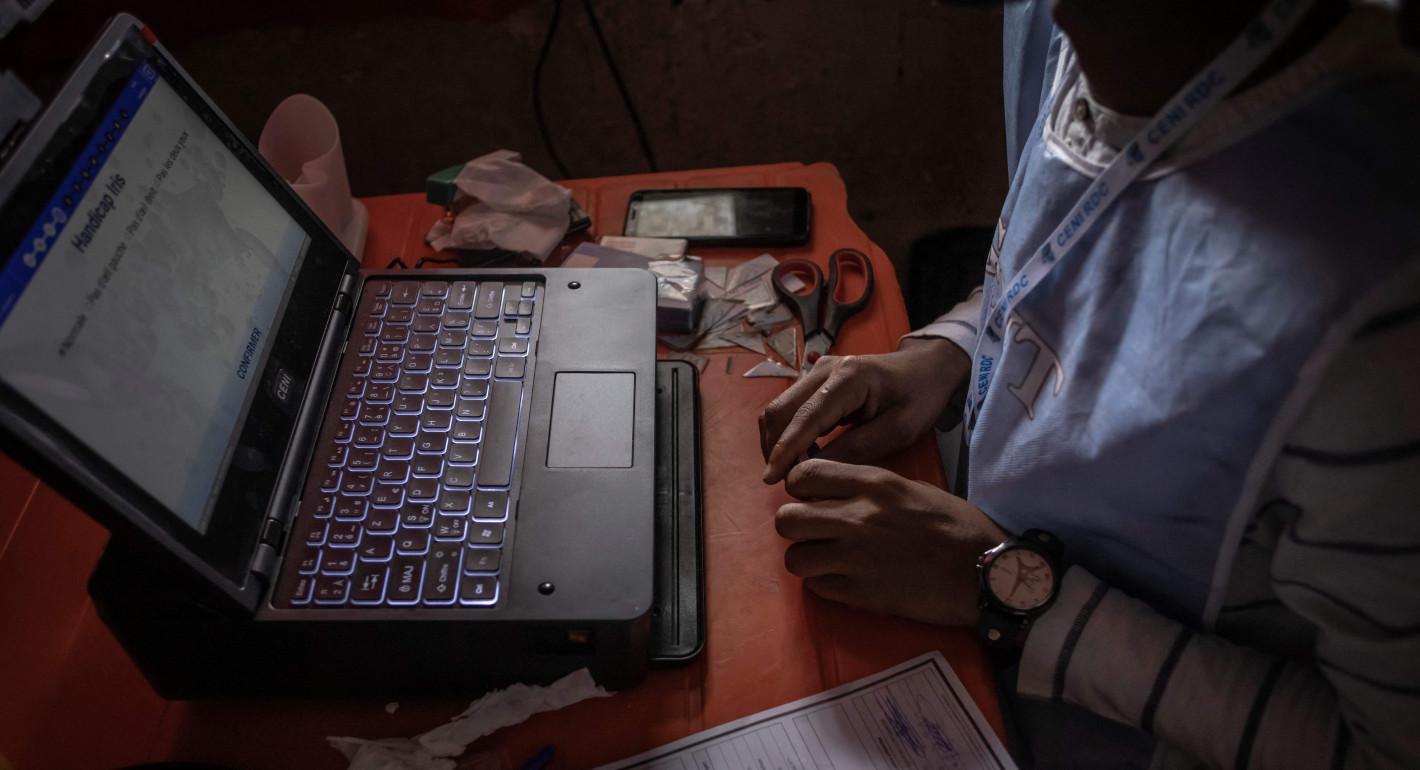
African leaders have increasingly shown a willingness to shut down the internet during momentous political events. In the past two years, governments in the Republic of the Congo, Niger, Uganda, and Zambia have cut off internet access during election periods. According to data from Access Now, in 2022 alone, governments in seven African countries shut down the internet nine times.
The risk of Internet shutdowns is acute in 2023, with presidential elections scheduled to take place in Gabon, Liberia, Libya, Madagascar, Sierra Leone, South Sudan, Sudan, and Zimbabwe. Governments in all of these countries except Madagascar have a history of shutting down the internet or restricting the use of digital platforms. And apart from Libya, all have previously disrupted access to the internet or digital platforms within the past three years. Civic activists and ordinary citizens in these countries must anticipate likely infringements and ensure that their digital rights are respected.
Growing pushback from civil society and the judiciary has so far not deterred governments from employing internet shutdowns. Many continue to disregard opposition from civil society and, in some cases, court judgments that declare such actions illegal.
In Nigeria in 2021, the government announced a nationwide shutdown of Twitter, which is considered to be one of the country’s last-standing online civic spaces. The Economic Community of West African States (ECOWAS) Court of Justice declared the shutdown to be “unlawful and inconsistent with the country’s international obligations” and ordered the government “to ensure the unlawful suspension would not reoccur and to take necessary steps to amend its laws to be in conformity with the rights and freedoms enshrined” in international law. The government has refused to promise that such violations will not happen again. While no network disruptions were reported during Nigeria’s general elections earlier this year, civil society organizations are still pursuing the lawsuit on the Twitter ban in local courts to bring the Nigerian government in line with ECOWAS court judgments.
In Sudan, following a military coup and subsequent protests, the government shut down the internet in October 2021. A Sudanese court ordered the country’s telecom firms to restore access, but this did not stop the authorities from once again shutting down the internet in June 2022, ahead of planned protests. Speaking on the latter shutdown, the Sudanese Engineers Syndicate, a professional association of Sudanese engineers, said that “cutting off internet and communication services in Sudan has become a pattern and led to many violations.” Most recently, the internet was cut off on April 23 during the ongoing violence in Khartoum between the army and the Rapid Support Forces, according to NetBlocks, a cybersecurity monitoring organization. NetBlocks also reported that the military claimed that paramilitaries “sabotaged the telecom exchange in Khartoum.”
In Zimbabwe, the government shut down the internet for three days in January 2019 to quell citizens’ protests against rising fuel prices. Later that week, the government requested that telecommunications companies implement a second shutdown, but a judge ruled that the shutdown was illegal, forestalling further government action. But this did not prevent authorities from ordering another round of shutdowns in July 2020.
Judicial pronouncements, civil society condemnation, and citizen dissent have so far not been enough to prevent future violations in countries that have developed the habit of disrupting digital access during significant democratic events. However, citizens can still prepare for the likelihood of such violations of digital rights and challenge them to prevent impunity.
First, digital rights actors must document evidence of violations, provide information about how to stay safe, and help citizens seek redress when violations happen. For example, Paradigm Initiative (PIN), a pan-African digital rights organization for which I serve as the executive director, has documented digital rights violations and significant policy updates across African countries since 2016 through its annual Londa report. Londa, which included twenty-two independent country reports in its most recent edition in 2021, also forms the basis for short films produced by PIN to educate digital rights actors and other citizens about how to protect themselves in digital spaces. In addition, PIN has developed a digital rights toolkit, Ayeta, and a platform, Ripoti, to report incidents and seek legal redress if violations occur. During elections, PIN provides country-specific information on how to stay online if digital clampdowns happen. The first edition of PIN’s Digital Rights and Elections in Africa Meetings was held in Abuja in February ahead of Nigeria’s general elections. Similar editions are planned ahead of elections in other countries.
Second, the task of protecting citizen rights—including preventing and condemning abuses and helping victims seek redress—should not rest solely on civil society organizations and activists. Even though civil society organizations are at the forefront of working to protect citizen rights during elections, multiple actors have a responsibility to ensure that a continent that lost $261 million to internet shutdowns in 2022—and desperately needs to maximize digital opportunities for its citizens—avoids implementing further digital clampdowns. International organizations and multilateral institutions can support civil society pushback and safeguard citizen trust in elections by warning governments in advance not to enact digital restrictions and offering resources to help maintain online connectivity.
Elections are fraught with violations, so citizens must be ready for digital disruptions. But it is also possible to prevent digital disruptions, as happened in Ghana in 2020 and Kenya in 2022. In both countries, civil society organizations worked diligently with the diplomatic community and international organizations to deter online disruptions. This highlights the importance of anticipating and preparing for shutdowns during Africa’s 2023 election season.
Citizens should work with coalitions of domestic and international partners to send a clear signal to governments that internet shutdowns are unacceptable. But if governments decide to shut down the internet anyway, civil society should be ready to respond: to document government abuses for accountability purposes, to file judicial appeals to cease shutdowns, to mobilize international responses, and to develop adaptative techniques to get around communications blocks.
Carnegie’s Digital Democracy Network is a global group of leading researchers and experts examining the relationship between technology, politics, democracy, and civil society. The network is dedicated to generating original analysis and enabling cross-regional knowledge-sharing to fill critical research and policy gaps.

‘Gbenga Sesan
‘Gbenga Sesan is the executive director of Paradigm Initiative, a pan-African social enterprise working on digital inclusion and digital rights, with offices in Cameroon, Kenya, Nigeria, Senegal, Zambia, and Zimbabwe.
Carnegie does not take institutional positions on public policy issues; the views represented herein are those of the author(s) and do not necessarily reflect the views of Carnegie, its staff, or its trustees.

By fueling the arguments of both supporters and opponents of Armenian Prime Minister Nikol Pashinyan, Azerbaijan wants to ensure he is re-elected with a weaker mandate.

Bashir Kitachaev
The battle over free speech has taken center stage since U.S. Vice President JD Vance accused Europe of censorship. From travel bans to social media regulation, especially around the Israel-Palestine conflict, are liberal democratic governments weaponizing free speech?

Rym Momtaz, ed.
What is political violence and what works to reduce it.

Political Violence Researchers, Rachel Kleinfeld, ed., Dalya Berkowitz, ed.
If Indigenous land and water dispossession is ignored, climate adaptation strategies risk reproducing inequalities and worsening acute climate vulnerability.
Frederic Wehrey, Charles H. Johnson

Regardless of the outcome, there’s another path to ensuring that progress doesn’t stall.

Zaur Shiriyev