

Commentary
Ahead of a tough winter for Ukraine, Donald Trump’s swing back toward Russia bodes ill. But instead of panicking, Kyiv’s European allies are focusing on action.
Rym Momtaz
{
  "authors": [
    "Paul Haenle",
    "Xue Gong",
    "Ngeow Chow Bing",
    "Tong Zhao"
  ],
  "type": "commentary",
  "centerAffiliationAll": "",
  "centers": [
    "Carnegie Endowment for International Peace",
    "Carnegie China"
  ],
  "collections": [
    "Carnegie China Commentaries"
  ],
  "englishNewsletterAll": "",
  "nonEnglishNewsletterAll": "",
  "primaryCenter": "Carnegie China",
  "programAffiliation": "",
  "programs": [],
  "projects": [],
  "regions": [
    "North America",
    "United States",
    "East Asia",
    "China"
  ],
  "topics": []
}
Source: Getty
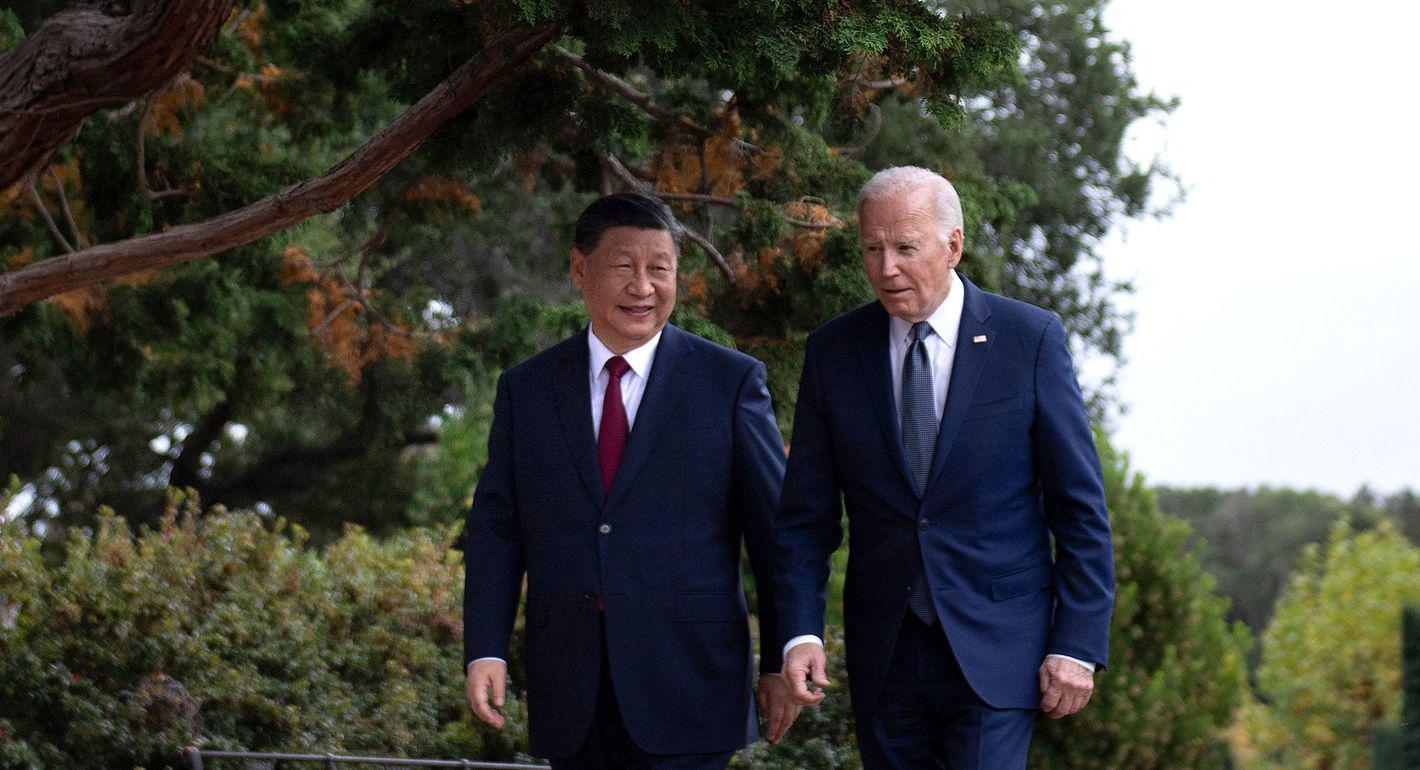
Carnegie China scholars share their assessment of the Biden-Xi meeting and its implications for U.S.-China relations going forward.
This publication is a product of Carnegie China. For more work by Carnegie China, click here.
On November 15th, U.S. President Joe Biden and Chinese President Xi Jinping met outside San Francisco at the Asia-Pacific Economic Cooperation event. In this quick take, Carnegie China scholars share their assessment of the meeting and its implications for U.S.-China relations going forward.
Paul Haenle, director, Carnegie China
While the Biden-Xi meeting resulted in several important agreements, the structural dynamics of intensifying competition and rivalry are expected to persist. Among the agreements reached between the two leaders, the most significant were the commitment to stem the flow of fentanyl precursor chemicals from China; to reopen military-to-military dialogues; to establish a dialogue on AI risk and safety; and to increase direct flights and strengthen people-to-people exchanges. The two leaders also exchanged reassurances on Taiwan and committed to maintain further communication at the working-group and executive level. In the coming weeks and months, it will be important to watch the follow through to determine how lasting the post-APEC momentum will be. As Biden said during the post-meeting press conference, his approach to China is one of “trust, but verify.” Although Xi made a number of welcome goodwill gestures, the Biden administration will be playing close attention to see whether Beijing follows through on the commitments it has made. Going forward, several risks, including the uptick in unsafe encounters in the Western Pacific as well as the upcoming presidential elections in Taiwan and the U.S., could derail the fragile stabilization in bilateral relations.Xue Gong, nonresident scholar, Carnegie China
There were no major deliverables except to keep communication channels open to avoid miscalculations and prevent conflict. Some progress was made in terms of reestablishing channels for potential cooperation on issues like climate change, fentanyl and military communication. But the Biden-Xi meeting will not change the direction of U.S.-China relations away from strategic competition. Sensitive flashpoints still exist between Beijing and Washington such as U.S. support for the government in Taiwan and its advanced technology export controls against China.Ngeow Chow Bing, nonresident scholar, Carnegie China
The Xi-Biden summit follows a series of high-level contacts between the United States and China. It is notable that these high-level contacts have yielded not just symbolic, but in some cases, substantive results. U.S. Climate Envoy John Kerry’s meeting with his Chinese counterpart, Xie Zhenhua, has been reported very positively by the Chinese state media, underscoring the substantial agreement both sides apparently have been able to reach. Similarly, cooperation on the fentanyl crisis will be another concrete policy area where both sides are reportedly working on closely. The summit signals at least the temporary stabilization of the U.S.-China relationship, which has been on a downward spiral for years, although none of the structural and fundamental differences between the two sides will come to any easy solution. Moving forward, the cooperative gains and positive momentum from the summit have to be consolidated and put on a more institutionalized footing, to prevent them from being affected by some strange but unforeseen events such as the balloon incident earlier this year.Tong Zhao, senior fellow, Carnegie China
The bar for measuring success is low and the two leaders achieved general agreements that could help put a floor under the relationship, including measures to resume military communication. However, they continue to disagree about whether to define the two nations as “friends” or “competitors.” On top of that, Biden’s “dictator” comment is likely to leave Beijing somewhat disillusioned, reflecting an unfulfilled expectation for a significant advancement in high-level trust with the United States. This casts a shadow on potential future cooperation on practical matters, which are essential to maintain and build upon the current positive momentum.
Former Maurice R. Greenberg Director’s Chair, Carnegie China
Paul Haenle held the Maurice R. Greenberg Director’s Chair at the Carnegie Endowment for International Peace and is a visiting senior research fellow at the East Asian Institute, National University of Singapore. He served as the White House China director on the National Security Council staffs of former presidents George W. Bush and Barack Obama.

Nonresident Scholar, Carnegie China
Xue Gong’s current research interests include International Political Economy, China’s economic diplomacy, regionalism and governance, and geoeconomics in the Indo-Pacific.

Nonresident Scholar, Carnegie China
Ngeow Chow Bing focuses on China’s relations with Southeast Asian countries.

Senior Fellow with the Nuclear Policy Program and Carnegie China
Tong Zhao is a senior fellow with the Nuclear Policy Program and Carnegie China, Carnegie’s East Asia-based research center on contemporary China. Formerly based in Beijing, he now conducts research in Washington on strategic security issues.
Carnegie does not take institutional positions on public policy issues; the views represented herein are those of the author(s) and do not necessarily reflect the views of Carnegie, its staff, or its trustees.

Ahead of a tough winter for Ukraine, Donald Trump’s swing back toward Russia bodes ill. But instead of panicking, Kyiv’s European allies are focusing on action.

Rym Momtaz

Despite its flop at the box office, the film raises important questions for the climate community to answer.

Leonardo Martinez-Diaz

In an interview, Rozina Ali discusses her new book on the rise and manifestations of Islamophobia in the United States.

Michael Young

While the EU and European governments are embracing the much-lauded middle-power moment, this entails three difficult conundrums.

Richard Youngs

Europe is facing rising populism internally as well as external pressures from Russia, China, Turkey, and the United States.

Dimitar Bechev