

Report
The choices California makes while implementing its frontier AI law has ramifications for AI governance in the United States and around the world.
- +10
Scott Singer, Jon Bateman, Michael Chen, …
{
  "authors": [
    "Mark Baldassare",
    "Ian Klaus"
  ],
  "type": "commentary",
  "centerAffiliationAll": "dc",
  "centers": [
    "Carnegie Endowment for International Peace"
  ],
  "englishNewsletterAll": "ctw",
  "nonEnglishNewsletterAll": "",
  "programAffiliation": "CC",
  "programs": [
    "Carnegie California"
  ],
  "regions": [
    "United States"
  ],
  "topics": [
    "Subnational Affairs",
    "Economy"
  ]
}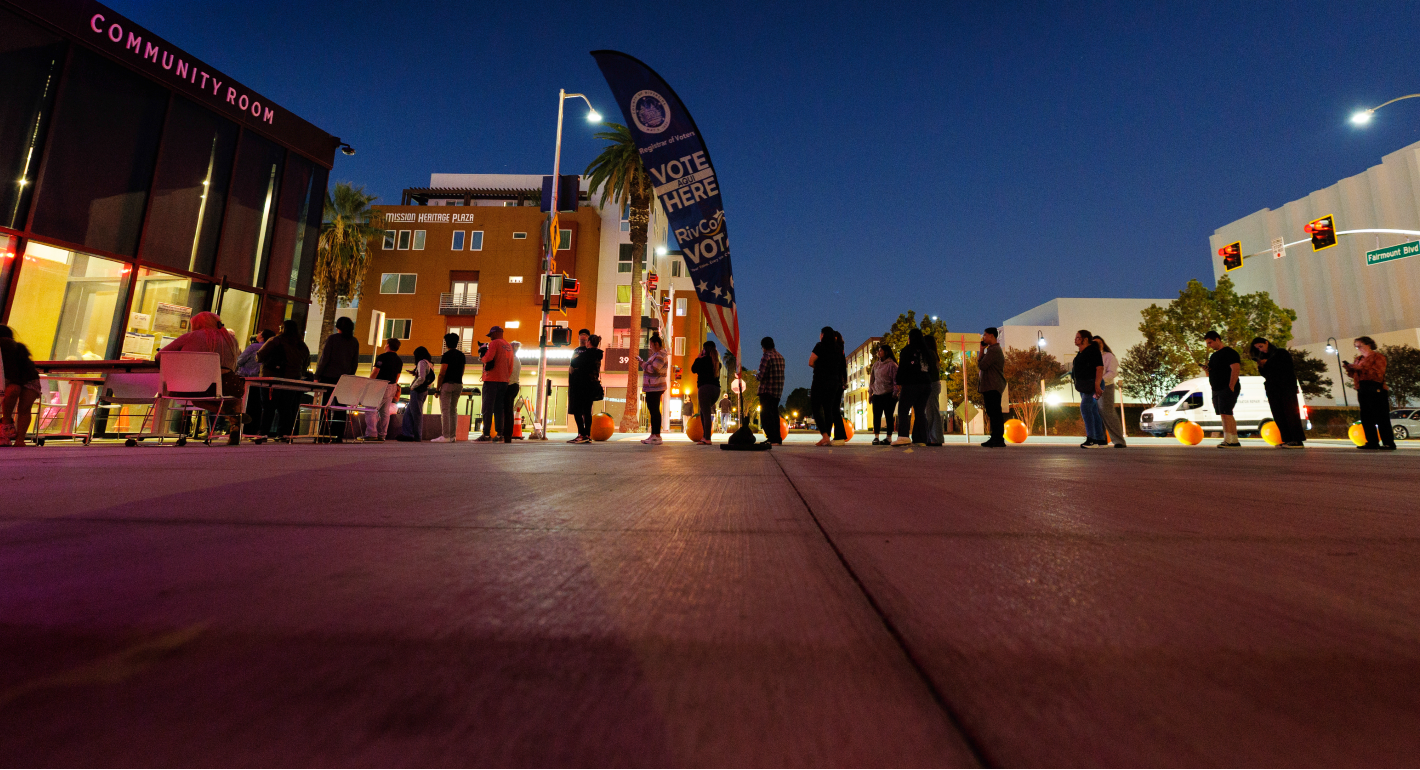
Voters wait in line on November 3, 2026, in Riverside, California. (Gina Ferazzi/Los Angeles Times via Getty Images)
Voters sent mixed messages about funding priorities.
Californians are often the deciders on the major issues that are confronting their state. In July, we identified three policy themes linking the fourteen state propositions on which Californians voted this November. Seven focused on affordability, three on federal uncertainty, and four on election reforms.
The 2026 midterms turned out to be an historic election, and California elected Democratic candidates in all of the statewide races. Republican candidates have not won a statewide election in twenty years, and this streak remains in intact. With a twenty-point advantage in voter registration, and most voters choosing candidates with their partisan stripes and leanings, the governor’s race and all other statewide races were not even close. Democrats also won large majorities of the U.S. House, State Assembly, and State Senate seats. In a dramatic election, California offered predictability.
But the fourteen state propositions—where the “D” and “R” give way to “Yes’” or “No”—tell a more interesting story. Californians worry about affordability, but voters sent mixed messages that reflect their fiscally conservative approach to state policymaking. Californians are worried about the health of the nation’s democracy but did not heartily endorse a suite of change to electoral processes in the state.
And as for direct democracy, Californians overwhelmingly agreed that there were too many propositions and that the wording is often too complicated and confusing. When they have doubts, voters say no even if they like the concept behind the ballot item.
In pre-election polling, when asked to name the most important issue facing state residents today, Californians chose affordability and the cost of living. Many voters feel that their incomes are not keeping up with inflation and that housing affordability is a big problem in their part of the state. Majorities are in favor of increasing state taxes on the wealthy to fund the state’s programs but prefer lower state taxes for themselves, given their financial situations.
The affordability ballot measure with the highest profile in the November election was Proposition 40, which would have imposed a one-time tax on individuals’ assets over $1 billion. It did not pass. Pre-election polling in early September and late October indicated that the measure lost its majority support in the wake of massive spending by the opponents, which raised questions about whether this new state law might open the door to tax increases on all retirement funds. Proposition 40’s opponents had placed two countermeasures that would nullify it should it reach majority support. Proposition 41, which called for audits of new special taxes, did not pass, while Proposition 42, which called for a permanent ban on taxes for retirement funds, is currently passing by a slim margin.
Proposition 3 would make a temporary tax on high incomes to fund schools and healthcare permanent, and it did pass. Voters first passed this state policy in 2012 with an end date of 2018, and voters passed it again in 2016 with an end date of 2030. Pre-election polling consistently found a majority in support of permanently extending the tax on high income earners. Proposition 3 was aligned with broad support for taxing the wealthy to help pay for state programs, which we had seen in recent polling, and also gave voters another option for a wealth tax, as doubts were raised about the billionaire tax initiative.
Turning to housing affordability, Proposition 1 was an $11.25 billion state bond placed on the ballot by the legislature to finance programs to fund affordable rental housing and homeownership programs. It passed. Proposition 37 was a citizens’ initiative sponsored by real estate interests and labor unions that would authorize up to $25 billion in bonds for middle-income buyers of qualified new homes to be paid by homeowners’ mortgage payments. It also passed. Both of these state bonds for housing programs consistently had majority support in pre-election polls. The two bond measures gave voters a way to increase state funding to deal with their affordable housing concerns without raising their taxes.
Proposition 45 was a citizens’ initiative that would amend the California Environmental Quality Act (CEQA) to expedite environmental review of certain projects such as housing plans. It did not pass. Early polling found that majorities would vote yes on the concept of CEQA reforms to speed up housing reviews. In later polling, the measure fell below majority support when opponents raised concerns about expediting industrial projects that resonated with Californians’ pro-environment attitudes.
States have experienced heightened uncertainty about federal funding for their health programs and medical research as a result of executive orders and the One Big Beautiful Bill that Congress passed in 2025. Majorities of likely California voters in recent polling say they want the state government to backfill the loss of federal funding. However, most also say they are not willing to pay higher taxes for this purpose. Several proposals for dealing with federal uncertainty and fiscal uncertainty were on the November ballot.
Proposition 2 was a legislative measure that would increase the share of annual state tax revenues that could be set aside for future use from 10 percent to 20 percent. It passed. This “rainy-day fund” increase aims to prepare for state budget gaps from federal cuts and state revenue decreases. Proposition 38 was a citizens’ initiative that would authorize an $8.4 billion state bond for immunology and immunotherapy research. It also passed. Proposition 44 was a citizens’ initiative that would require community health clinics to spend 90 percent of revenues on services. It did not pass, largely because the opponents raised concerns that were unanswered by the supporters about limiting access to community health clinics. Pre-election polling was aligned with the election outcomes for these three state propositions. The two propositions that passed could backfill federal funding for state programs without raising taxes, and this was consistent with the fiscal priorities of California voters.
When asked in recent polling to name the most important problem facing the nation today, many Californians chose threats to democracy and political extremism, and most California voters are not satisfied with the way democracy in the United States is working. Although most Californians express confidence in voting and elections in the state, issues have been raised about voter registration procedures, local tax measures, recall elections, and local government elections. In this context, proposals for changes to state and local elections were on the ballot in November.
Proposition 4 was a legislative measure that would allow state and local governments to create programs for state and local candidates to receive public funds within certain limits. It is currently trailing by a slim margin. It would have amended the 1974 state law passed by voters that prohibits the use of public funds for campaigning. Proposition 5 was another legislative measure that would change the format of recall elections to a single vote for removing or keeping the current officeholder, and it passed. Proposition 39 was a citizens’ initiative that was sponsored by two Republican legislators that would establish additional voter identification and citizenship verification requirements. It did not pass. Proposition 43 was a legislative measure that would require a two-thirds majority, rather than a simple majority vote, to pass a special local tax. It did not pass. Voters were deeply divided along partisan lines on these election reforms in pre-election polling. The reluctance to fiddle with election laws is aligned with distrust in political parties, and this was a limiting factor in support for election reforms.
In sum, California voters chose to address their concerns about affordability and state program funding by approving massive bonds (Propositions 1, 37, 38), extending a current tax on high-income individuals (Proposition 3), and increasing the state’s rainy-day fund (Proposition 2). They rejected a one-time tax on billionaires (Proposition 40) while a ban on taxes for their retirement funds (Proposition 42) is currently passing by a slim margin. In doing so, they tabled the issue of finding new revenues to meet the state’s fiscal priorities. And although they approved two measures that deal with high housing costs, they rejected an effort to increase housing supply. The outcomes are partial solutions to the top two state policy issues on voters’ minds.
A number of pressing issues that were not on the ballot—such as rent controls, energy costs, and disaster insurance—may find their way to the 2028 state ballot. Our Carnegie California Survey found AI data centers and privacy are on the public’s wish list for state policymaking. The incoming governor and legislature would benefit from citizen input gathered by the new Engaged California tool to inform ballot measures and bolster confidence in the direct democracy system.
Nonresident Scholar, Carnegie California
Mark Baldassare is a nonresident scholar at Carnegie California. He is an authority on elections, voter behavior, and political and fiscal reform.
Founding Director, Carnegie California
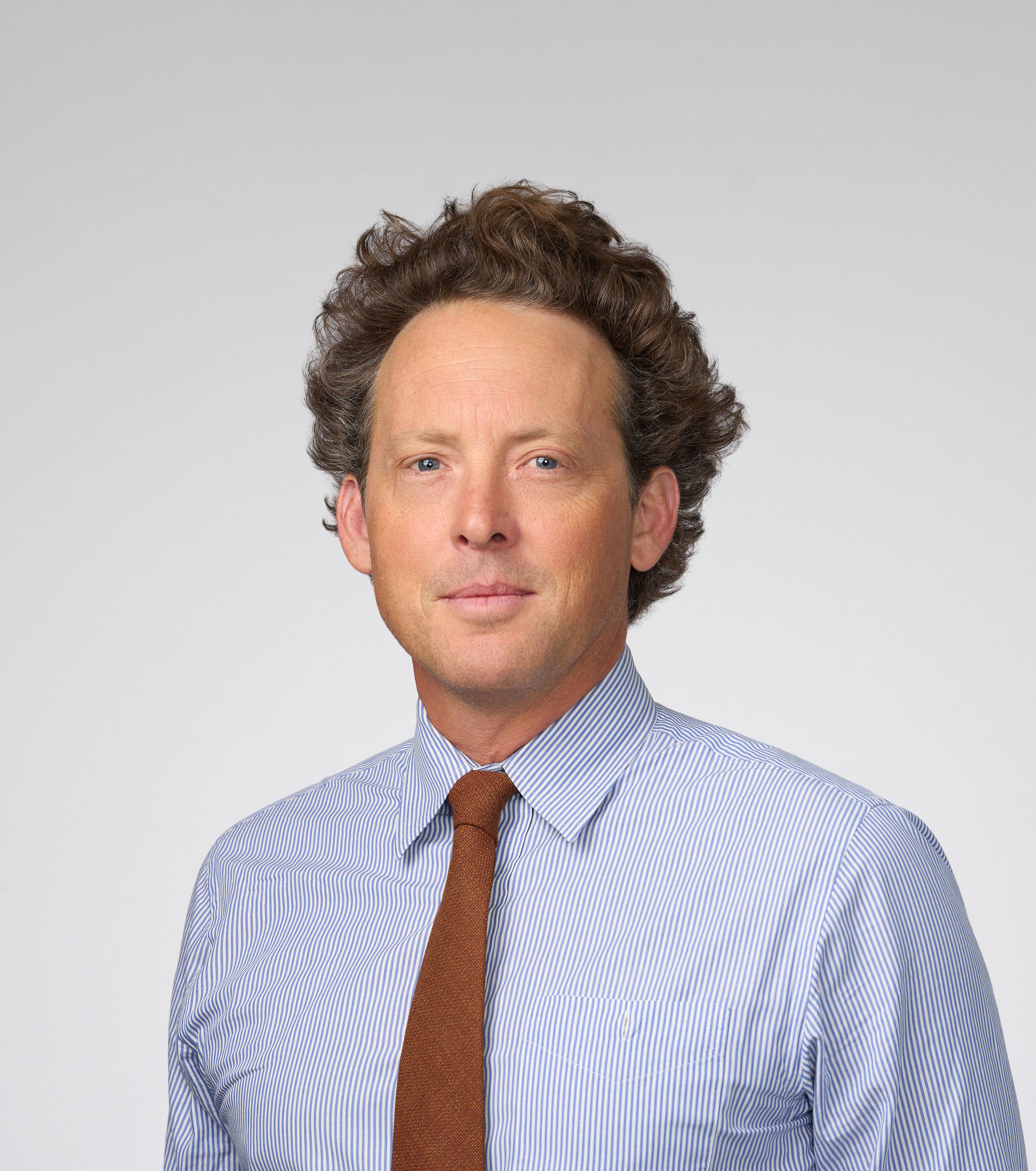
Ian Klaus is the founding director of Carnegie California. He is a leading scholar on the nexus of urbanization, geopolitics, and global challenges, with extensive experience as a practitioner of subnational diplomacy.
Carnegie does not take institutional positions on public policy issues; the views represented herein are those of the author(s) and do not necessarily reflect the views of Carnegie, its staff, or its trustees.
The choices California makes while implementing its frontier AI law has ramifications for AI governance in the United States and around the world.

Scott Singer, Jon Bateman, Michael Chen, …
The middle power moment will not be defined by sovereign states alone, and California stands out for its potential contributions to international cooperation.
Ian Klaus, Stewart Patrick

The ‘global’ cities that have emerged in the current round of globalization are not simply urban phenomena, but have been dependent upon the liberal international order and the powerful states that underpinned it for the international environment in which they were able to thrive–and have in turn underpinned that order.

Ian Klaus, Michele Acuto, Simon Curtis, …

While there are notable demographic, economic, and geographic divides over AI, there is also substantial alignment between Republicans and Democrats.
Ian Klaus, Mark Baldassare, Rachel George, …
Direct democracy is the political wildcard in the state’s midterm election.
Mark Baldassare, Ian Klaus