

Paper
Renée DiResta, Rachel Kleinfeld, Margot Treadwell
{
  "authors": [
    "Rachel Kleinfeld"
  ],
  "type": "legacyinthemedia",
  "centerAffiliationAll": "dc",
  "centers": [
    "Carnegie Endowment for International Peace"
  ],
  "collections": [
    "Violence and Conflict",
    "U.S. Democracy in Comparative Perspective"
  ],
  "englishNewsletterAll": "democracy",
  "nonEnglishNewsletterAll": "",
  "primaryCenter": "Carnegie Endowment for International Peace",
  "programAffiliation": "DCG",
  "programs": [
    "Democracy, Conflict, and Governance"
  ],
  "projects": [],
  "regions": [
    "North America"
  ],
  "topics": [
    "Political Reform",
    "Democracy"
  ]
}
Source: Getty
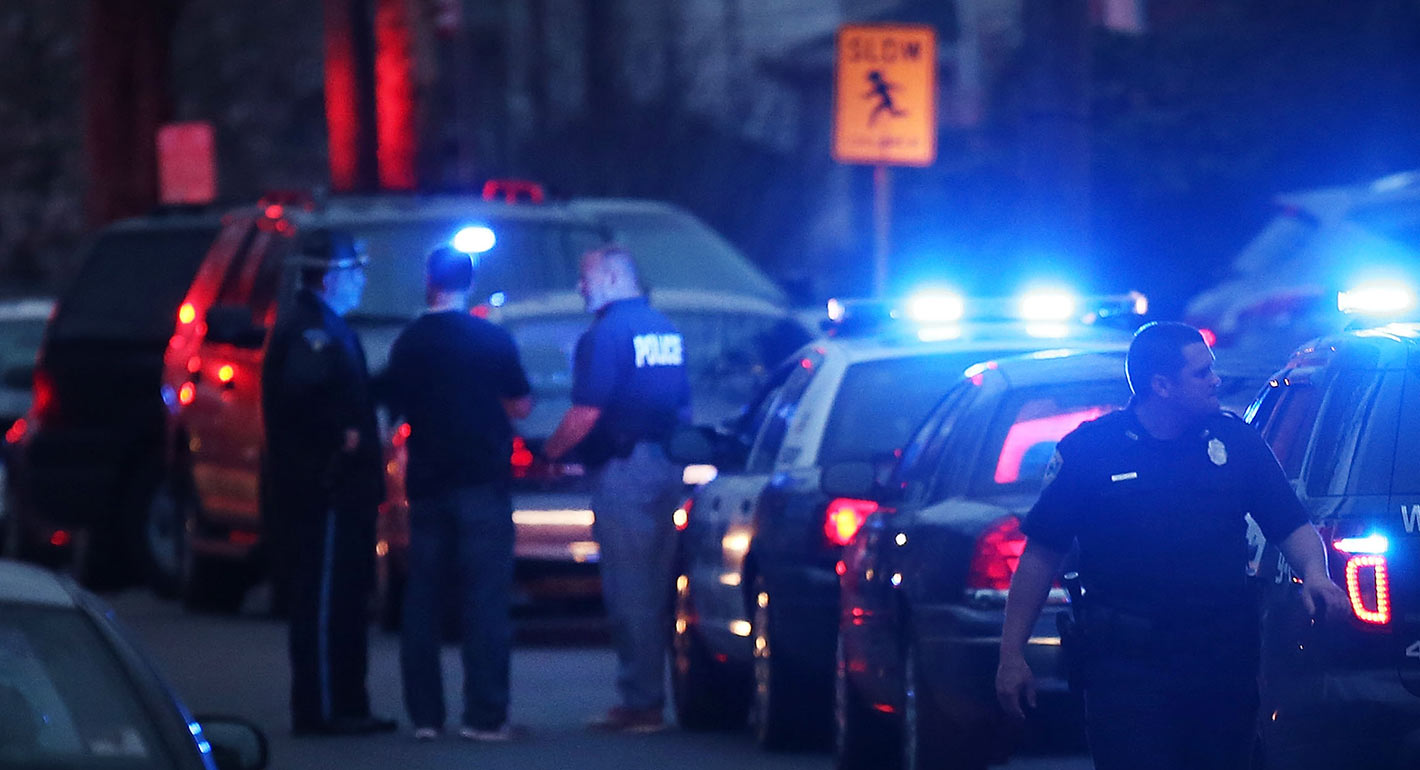
Political violence can’t be predicted perfectly, but there’s a clear risk pattern. Violence is more likely where it has happened before, and the United States has the tinder for political violence.
Source: Washington Post
Should Americans worry about political violence? President Trump’s tweet regarding civil war if he is impeached and his expressed desire to try a congressman for treason (punishable by execution) have militias excited and other people worried. For experts who study political violence in other countries, warning signs have long been glaring red.
Political violence can’t be predicted perfectly, but there’s a clear risk pattern. Violence is more likely where it has happened before. It begins with polarization followed by the dehumanization of opponents. Opportunistic politicians test the system, seeing how people react to violent language to determine the potential costs. Based on such risk factors, the 2018 Fragile States Index ranked the United States among the top five “most worsened countries” for political stability, alongside Yemen and Venezuela.
America’s history of political violence spans our civil war, decades of lynchings and the assassinations of a president, presidential candidate and national community leaders in the 1960s and 1970s. The United States is also extraordinarily polarized. As for dehumanization, scholars Nathan Kalmoe and Lilliana Mason found last year that 20 percent of Republicans and 15 percent of Democrats believe that if members of the other party “are going to behave badly, they should be treated like animals.”
Kalmoe and Mason’s recent research is even more concerning. While 87 percent of Americans believe political violence is never okay, according to their surveys, 3 percent believed that if violence advanced partisan goals, it was very justified, and an additional 5 percent felt such violence was moderately justifiable. Thus, a vanguard of likely perpetrators exists (in nearly equal amounts in both parties, though violence is greater among the far right), surrounded by a larger community willing to excuse and normalize their violence.
Once violence begins, it builds on itself — not only due to reprisals, but because seeing others act on latent desires makes those desires feel more acceptable. Kalmoe and Mason happened to be conducting part of their survey during the week last year of a mass shooting in a Pittsburgh synagogue and the mailing of pipe bombs to prominent Democrats. These events increased peoples’ belief that using violence was justified for partisan purposes.
The research of Moonshot CVE, an organization working to combat extremist violence, shows what these findings look like in practice. The week after the 2017 Charlottesville Unite the Right rally showcased white nationalist violence, Moonshot tracked a surge of interest in violence for that cause, including an 1,800 percent increase in Internet searches indicating a desire to kill Jewish Americans, an increase of 200 percent for killing ethnic minorities and a 40 percent increase for killing African Americans. Searches to join the Ku Klux Klan increased by 800 percent, while there was a 22,000 percent spike in people wanting to donate. The desire for violence had real-world effects. The FBI (whose data generally undercounts) found hate crimes spiked 17 percent in 2017, with a 37 percent increase in anti-Semitic incidents.
We have the tinder for political violence. Impeachment could provide the spark. Great harm doesn’t require mass bloodshed. A pipe bomb such as the ones sent two years ago could, this time, kill a Supreme Court justice, giving Trump a third appointment and further politicizing the court. A shooting such as the one at a congressional baseball game practice in 2017 could, this time, tilt the balance of the Senate. Violence need not even be deadly to derail our fragile democracy. More than 40 states allow open carry of guns into voting places. What if the 2020 election is close and many Americans believed that such intimidation tilted the balance?
As the impeachment inquiry heats up, we can do five things to lower the temperature:
First, we should clearly assert that violence and violent rhetoric are unacceptable. Words matter, since behavior is influenced by what we believe other people think. People who have more status or popularity are particularly influential. Language normalizing violence from within one’s group is especially dangerous, because it suggests that supporting violence is part of belonging. Thus, we must all speak against violence, but Trump-supporting politicians are essential for voicing moderation.
Second, support the moderates willing to work across communities and temper their own groups. These people are often the first to be intimidated and silenced as extremism grows.
Third, the media should stop treating every issue as a win or loss for one partisan side, which increases polarization, and instead emphasize the complexity of policy outcomes and the multifaceted nature of our identities, both of which humanize fellow Americans.
Fourth, local communities should plan now to respond to violence and potential violence. Separating protesters and counterprotesters, swift arrests of perpetrators, reducing the power of militias, ensuring law enforcement follows the law and training police in de-escalation can dampen ardor for confrontation. Legal challenges against violent groups can also reduce their momentum.
Finally, while many violent people are just malicious, not unsound, Moonshot CVE found that people seeking to engage with violent far-right groups are also 115 percent more likely to click on mental health ads. We should increase resources to mental health programs and other groups that help people leave behind violent organizations and proclivities.
This article was originally published in the Washington Post.

Senior Fellow, Democracy, Conflict, and Governance Program
Rachel Kleinfeld is a senior fellow in Carnegie’s Democracy, Conflict, and Governance Program, where she focuses on issues of rule of law, security, and governance in democracies experiencing polarization, violence, and other governance problems.
Recent Work
Renée DiResta, Rachel Kleinfeld, Margot Treadwell
Political Violence Researchers, Rachel Kleinfeld, ed., Dalya Berkowitz, ed.
Carnegie does not take institutional positions on public policy issues; the views represented herein are those of the author(s) and do not necessarily reflect the views of Carnegie, its staff, or its trustees.

Putin’s conservative staffing policies and search for ever greater control have cemented parliament’s transformation into a bureaucratic appendage of the executive branch.

Andrey Pertsev

Ex-president Gurbanguly Berdimuhamedov remains interested in politics, but his son Serdar, Turkmenistan’s current president, is becoming increasingly independent and willing to break with his father’s legacy. If their covert rivalry goes too far, both risk losing power.

Galiya Ibragimova

A notable degree of participative democracy has firmly arrived in Europe. But to have more far-reaching impact, democratic deliberation needs to move into a radically new phase.

Richard Youngs
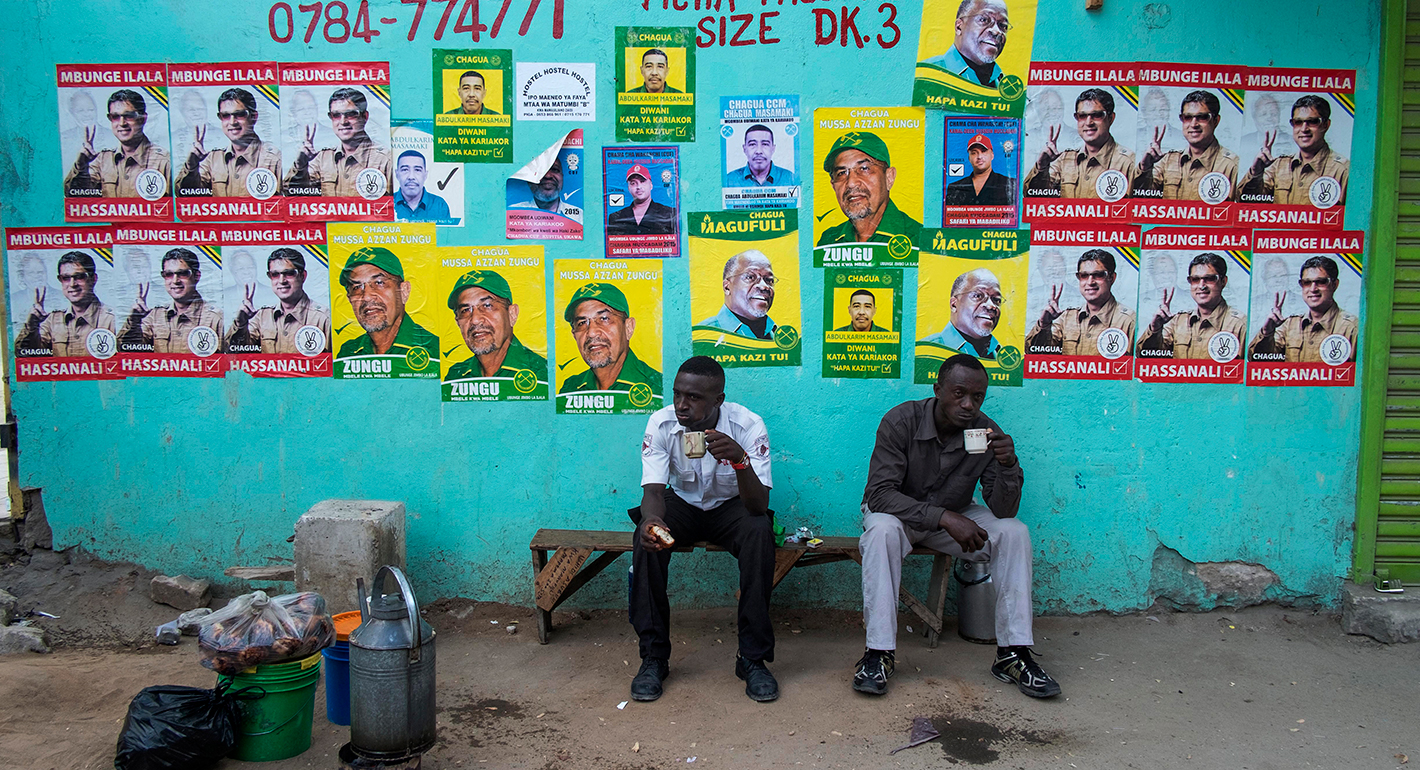
Today’s global democratic recession is partly rooted in a common perception that democracies have a delivery problem, with many citizens in both autocracies and democracies alike now believing that strongmen can achieve better governance outcomes. But a study of four countries in Africa reveals that democratic-leaning governments have demonstrated better governance performance than autocratic governments.


Sarah Yerkes, Natalie Triche, Amr Hamzawy

Fatima El Mansouri is the country’s first female prime minister. She’s also a privileged insider in a largely ceremonial position.
Sarah Yerkes