

Paper
James M. Acton, Ankit Panda
{
  "authors": [
    "James M. Acton"
  ],
  "type": "commentary",
  "centerAffiliationAll": "dc",
  "centers": [
    "Carnegie Endowment for International Peace"
  ],
  "collections": [
    "Ukraine’s Long Shadow"
  ],
  "englishNewsletterAll": "ctw",
  "nonEnglishNewsletterAll": "",
  "primaryCenter": "Carnegie Endowment for International Peace",
  "programAffiliation": "NPP",
  "programs": [
    "Nuclear Policy"
  ],
  "projects": [],
  "regions": [
    "Russia",
    "Eastern Europe",
    "Ukraine"
  ],
  "topics": [
    "Nuclear Policy"
  ]
}
Source: Getty
Even though an accident is unlikely, Russia must take exceptional measures to avoid a nuclear catastrophe.
There is a disquieting nuclear dimension to the unfolding humanitarian catastrophe of Russia’s illegal and unprovoked invasion of Ukraine. This brutal assault violates the security guarantees that Moscow provided in 1994, when Kyiv allowed it to remove nuclear weapons left in Ukrainian territory after the collapse of the Soviet Union. In recent days, trying to justify his aggression, Russian President Vladimir Putin has invoked the specter of a nonexistent Ukrainian nuclear weapons program—a cynical ploy to justify regime change and perhaps a pretext for trashing those earlier security guarantees.
Even more menacingly, Putin stated that Russia “is today one of the most powerful nuclear powers in the world.” He added that “no one should have any doubts that a direct attack on our country will lead to defeat and dire consequences for any potential aggressor.” U.S. President Joe Biden’s decision not to intervene directly reduces the danger of deliberate nuclear escalation significantly. Yet there is a small but real risk of inadvertent escalation, which could be sparked, for example, by an engagement between NATO and Russian aircraft on the border between Poland and Ukraine.
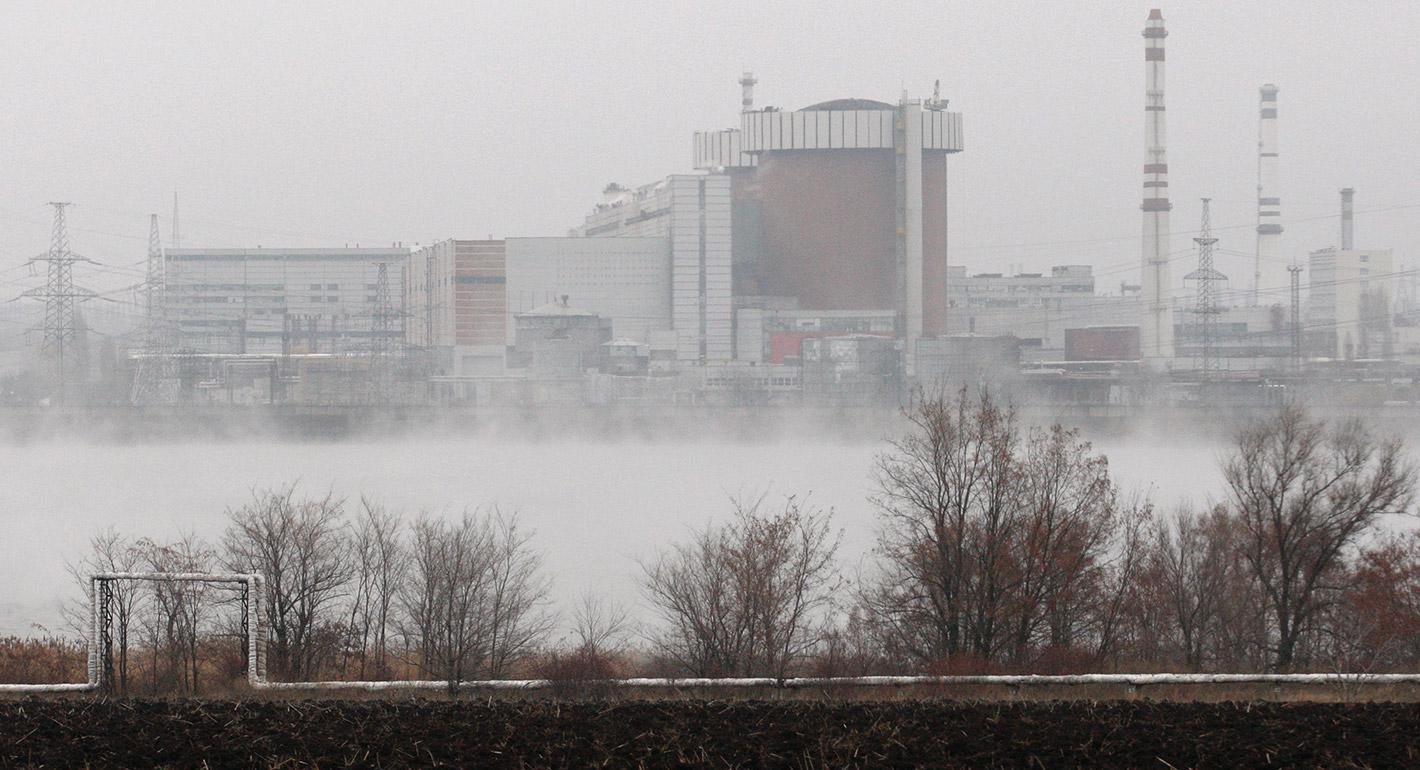
The most immediate nuclear danger, however, comes from Ukraine’s nuclear power plants. Ukrainian President Volodymyr Zelensky has already stated that “Russian occupation forces are trying to seize” the Chernobyl nuclear plant, site of the infamous 1986 accident, and footage purportedly shows Russian forces there. Various storage facilities for spent nuclear fuel and radioactive waste are located nearby. However, the bigger risk comes from the potential for fighting around Ukraine’s four active nuclear power plants, which contain fifteen separate reactors and generated over half of the country’s electricity in 2020.
Chernobyl is inside a large exclusion zone, and the uninhabited space would mitigate the consequences of a second nuclear accident there. Ukraine’s other reactors are not similarly isolated. Moreover, much of the fuel in these other reactors is substantially more radioactive than the fuel at Chernobyl. To put it simply, nuclear power plants are not designed for war zones. It seems exceedingly unlikely that Moscow would authorize deliberate attacks on these facilities, but they could nonetheless become targets in a war that will, in any case, disrupt their operations.
For Ukrainian nuclear power plant staff, merely traveling to work may be a dangerous act—making it potentially challenging to ensure the reactor can be operated safely. In the event of an accident, backup personnel, such as firefighters, may not be able to reach the plant—not least because they could be involved in civilian relief efforts
Moreover, nuclear power plants might be targeted inadvertently. These facilities use power from the state’s electricity grid to help cool the reactor in the event it is forced to shut down. While backup power systems, such as diesel generators, are available, the power grid is one important line of defense. There is a very real risk of such power being lost in Ukraine if Russian forces attack the country’s electricity infrastructure—as NATO forces did against Serbia during the 1999 Kosovo War and Russia itself did against Ukraine in 2015 using cyber tools.
Even if Moscow doesn’t authorize direct attacks against nuclear power plants, such attacks might occur anyway. A weapon aimed at a nearby target could hit a nuclear power plant if its navigation system failed. If Russian forces believed that Ukrainian defense forces were inside a nuclear power plant, they could call in an airstrike, perhaps in contravention of an order not to attack nuclear power plants. This concern isn’t hypothetical: In 2017, U.S. special operation forces in Syria called in an attack against a dam that was on a “no strike” list. The resulting damage almost caused the dam to fail, which would likely have led to the drowning of tens of thousands of civilians.
The CEO of the company that operates Ukraine’s nuclear power plants has stressed that they are designed to withstand an aircraft crash. However, munitions are often designed to penetrate thick layers of protective concrete. One particularly serious risk is that a direct attack might drain the pools in which spent fuel is stored, often in large amounts. Without cooling, this fuel could melt, releasing very large quantities of radioactivity. This kind of accident was the “worst-case” outcome envisioned by officials as the Fukushima Nuclear Power Plant accident in Japan unfolded in 2011.
I set out these scenarios with some hesitation. The likelihood of a serious nuclear accident is probably quite small. Drawing attention to it risks a loss of focus on the certain consequences of Putin’s invasion—Ukraine’s loss of autonomy, the deliberate killing of its service members, the unintentional killing of its civilians, and the war crimes that inevitably accompany any military operation of this scale. (For that matter, we shouldn’t forget the deaths of rank-and-file Russian service members who have no choice but to fight in a war ordered by their autocratic leader.)
Nonetheless, even if a nuclear accident is still quite unlikely, its effects could be severe and would add significantly to the long-term consequences of this invasion for Ukraine’s population. Moscow will be directly responsible for any nuclear accident that is caused, directly or indirectly, by its aggression. If it doesn’t want such an accident to be added to its growing list of crimes, it must take exceptional measures to avoid one.
Correction: This post originally indicated that Chernobyl did not yet store spent fuel from other Ukrainian reactors; however, various storage sites are located nearby.

Jessica T. Mathews Chair, Co-director, Nuclear Policy Program
Acton holds the Jessica T. Mathews Chair and is co-director of the Nuclear Policy Program at the Carnegie Endowment for International Peace.
Recent Work

James M. Acton, Ankit Panda
James M. Acton
Carnegie does not take institutional positions on public policy issues; the views represented herein are those of the author(s) and do not necessarily reflect the views of Carnegie, its staff, or its trustees.

A leak of Russian gas price data helps establish that China is paying Russia far less than Central Asian countries and Gazprom’s former European customers.

Sergey Vakulenko

The EU can impose sanctions but struggles to enforce them without the United States. With Washington increasingly disinterested in backing European interests, the bloc must now fend for itself.


Nicu Popescu, Tiago Antunes

Japan’s long-term security policy is driven by concerns about China, and there is little appetite for (or interest in) pursuing a confrontation with Moscow.

James D.J. Brown

Russia is testing the waters of NATO’s mutual defense clause. What do strikes in Romanian territorial waters mean for the alliance’s posture toward Moscow?

Dimitar Bechev

China has showcased its engineering prowess with small modular reactor demonstration projects. But turning these technological achievements into commercial success will be a greater challenge.

Tong Zhao