

Paper
Policy proposals on sovereign debt must both match the scale of the challenge and be implementable within existing political constraints.
David McNair
This report from the Carnegie Endowment for International Peace examines the impact of NAFTA after ten years.
Source: Carnegie

This report from the Carnegie Endowment for International Peace examines the impact of NAFTA after ten years. The report asks:
To answer these questions, the authors looked beyond the two headline figures that have typically been used to measure the impact of NAFTA: the increase in the volume of trade between the countries and the increase in the flow of foreign investment.
Click on the link above to read the full text.
Read the Spanish translation.
New York Times 11/19/03 article (may require free registration)
About the Authors
Sandra Polaski is director of Carnegie’s Trade, Equity, and Development Project. Demetrios G. Papademetriou is co-director and co-founder of the Migration Policy Institute. Scott Vaughan, formerly a visiting scholar with Carnegie's Trade, Equity, and Development Project, is director of the Unit for Sustainable Development and Environment at the Organization of American States. John Audley, formerly director of Carnegie's Trade, Equity, and Development Project, is senior transatlantic advisor at the German Marshall Fund.
*Errata:
In Figure 10 (page 25) the trend line labeled "wages" inadvertantly showed unit labor costs. The new figure correctly presents the data on wages.
On page 27, the study cited in footnote 37 claims that NAFTA eliminated 766,000 net jobs during its first seven years. The text has been changed to reflect this.
Former Senior Associate
Former Senior Associate

Former Senior Associate, Director, Trade, Equity and Development Program
Until April 2002, Polaski served as the U.S. Secretary of State’s Special Representative for International Labor Affairs, the senior State Department official dealing with such matters.
Former Visiting Scholar
Carnegie does not take institutional positions on public policy issues; the views represented herein are those of the author(s) and do not necessarily reflect the views of Carnegie, its staff, or its trustees.
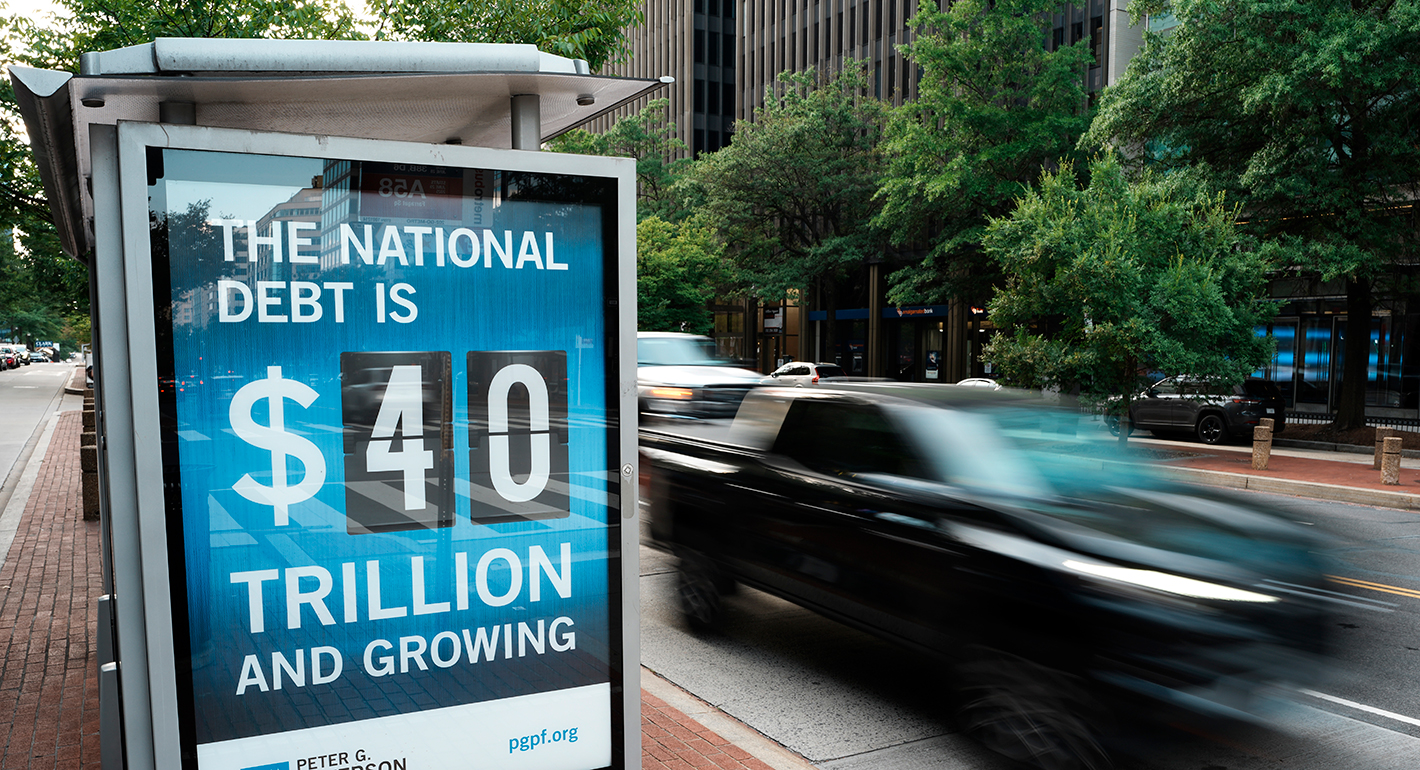
Policy proposals on sovereign debt must both match the scale of the challenge and be implementable within existing political constraints.
David McNair

For every ruble allocated to social policy, health, and education in 2027, double that amount is earmarked for the army, the police, and the security services.

Alexandra Prokopenko

The European Commissioner for Trade is headed to China. But after President Xi’s bridge-building visit to Washington, can a more isolated EU overcome Beijing’s stranglehold on critical raw materials? Who will blink first?

Rym Momtaz, ed.

Cargo traffic through Russia’s Northern Sea Route has increased because of the disruption caused by the conflict in the Middle East, the Ukraine war, and U.S.-China tensions.

Mikhail Korostikov

The domestic impacts of how long it is taking to end the war in Ukraine have pushed the French electorate to the political extremes and compromised the country’s diplomatic capacity.
Rym Momtaz