

Commentary
It should address the shortcomings of previous crisis communication efforts and adapt to the demands of frontier AI.
Lucy Luo

REQUIRED IMAGE
Earlier this week the 9/11 Public Discourse Project, an extension of the bipartisan 9/11 Commission, reported on efforts to protect America from terrorists that seek nuclear weapons and materials. Their verdict was not a happy one. Chairman Thomas H. Kean and Vice Chairman Lee H. Hamilton cited “insufficient progress” in the race against time to prevent the world’s most dangerous people from getting the world’s most dangerous weapons. In short, they wrote, “the size of the problem still dwarfs the policy response.”
Kean and Hamilton reported that less than half of Russia’s nuclear material has received security upgrades. In real terms, this means that more than 300 tons of loose nuclear material remains unguarded in Russia and the former Soviet states. That is enough highly enriched uranium (HEU) and plutonium for tens of thousands of crude nuclear bombs. In the past year, moreover, security improvements were completed twice as slowly as expected. The Department of Energy’s nuclear security administration now estimates that this work will not be complete until 2020. Securing nuclear material in the former Soviet Union is an essential front in the war on terror. We must progress at a faster rate. (Read More)
Earlier this week the 9/11 Public Discourse Project, an extension of the bipartisan 9/11 Commission, reported on efforts to protect America from terrorists that seek nuclear weapons and materials. Their verdict was not a happy one. Chairman Thomas H. Kean and Vice Chairman Lee H. Hamilton cited “insufficient progress” in the race against time to prevent the world’s most dangerous people from getting the world’s most dangerous weapons. In short, they wrote, “the size of the problem still dwarfs the policy response.”
Kean and Hamilton reported that less than half of Russia’s nuclear material has received security upgrades. In real terms, this means that more than 300 tons of loose nuclear material remains unguarded in Russia and the former Soviet states. That is enough highly enriched uranium (HEU) and plutonium for tens of thousands of crude nuclear bombs. In the past year, moreover, security improvements were completed twice as slowly as expected. The Department of Energy’s nuclear security administration now estimates that this work will not be complete until 2020. Securing nuclear material in the former Soviet Union is an essential front in the war on terror. We must progress at a faster rate.
According to the 9/11 commissioners, we are failing in three critical areas:
First, not enough has been done to secure and eliminate nuclear materials in Russia and the former Soviet Union. Though progress has been made in recent months—getting US officials greater access to Russian nuclear facilities and resolving a liability dispute that was blocking a program to eliminate enough plutonium for roughly 6,000 atomic bombs—we are still behind the curve. Kean and Hamilton reported that less than half of Russia’s nuclear material has received security upgrades. In the past year, moreover, upgrades were completed twice as slowly as the US was anticipating.
Second, some 40 states around the world possess weapons-usable nuclear material. The most vulnerable sites are research reactors fueled by highly enriched uranium (HEU). Roughly 100 of these reactors contain enough HEU for a bomb. Though the US Department of Energy founded the Global Threat Reduction Initiative in May 2004 to secure these facilities, clean out the exorbitantly dangerous HEU fuel, and convert the reactors to safer low-enriched uranium, current plans don’t call for the program to be completed for another decade. The 9/11 commissioners agree that this timetable is far too long.
Third, there is too little public discussion of this issue. In February 2004, President Bush publicly identified nuclear terrorism as the gravest threat to American national security. Just last week at the Carnegie International Non-Proliferation Conference, Secretary of Energy Samuel Bodman commented, “there can be no excuse on our part not to think of nuclear issues in terms of a very real terrorist threat.” Despite these statements, there has been no national debate about the importance of securing nuclear materials. Thomas Kean put it succinctly, “Why isn’t the President talking about securing nuclear materials? Why isn’t the Congress focused? Why aren’t there more hearings and debate? What about the media? Why aren’t the airwaves filled with more commentary if everyone agrees this is the most serious threat?”
The 9/11 Public Discourse Project has it right. Though we are currently coming up short, we are not predestined to fail. In their progress report, the 9/11 commissioners highlight five steps that can be taken to significantly reduce, if not eradicate altogether, the threat of nuclear terror. Many of these same recommendations can be found in the March 2005 Carnegie Endowment report, Universal Compliance:
1. The umbrella agreement for the Nunn-Lugar program, which secures and eliminates nuclear material in the former Soviet Union, expires next year. It should be renewed as soon as possible so that this work is not suspended.
2. Congress should complete action on the Defense Authorization bill, now in conference, which includes provisions to improve the efficiency of Cooperative Threat Reduction.
3. The president should accelerate the timetable for securing all weapons-usable nuclear material no matter where it is in the world and request enough funding from Congress to complete this task.
4. Congress should fully fund the president’s requests for nuclear threat reduction programs.
5. The president should publicly make this goal his top national security priority. He must lend a sense of urgency to ongoing efforts.
9/11 Public Discourse Project Progress Report, 14 November 2005
"Cleaning House," Ben Bain, Carnegie Analysis, 13 October 2005
Universal Compliance: A Strategy for Nuclear Security, Carnegie Report, March 2005
Joshua Williams
Carnegie Endowment for International Peace
Carnegie does not take institutional positions on public policy issues; the views represented herein are those of the author(s) and do not necessarily reflect the views of Carnegie, its staff, or its trustees.

It should address the shortcomings of previous crisis communication efforts and adapt to the demands of frontier AI.

Lucy Luo
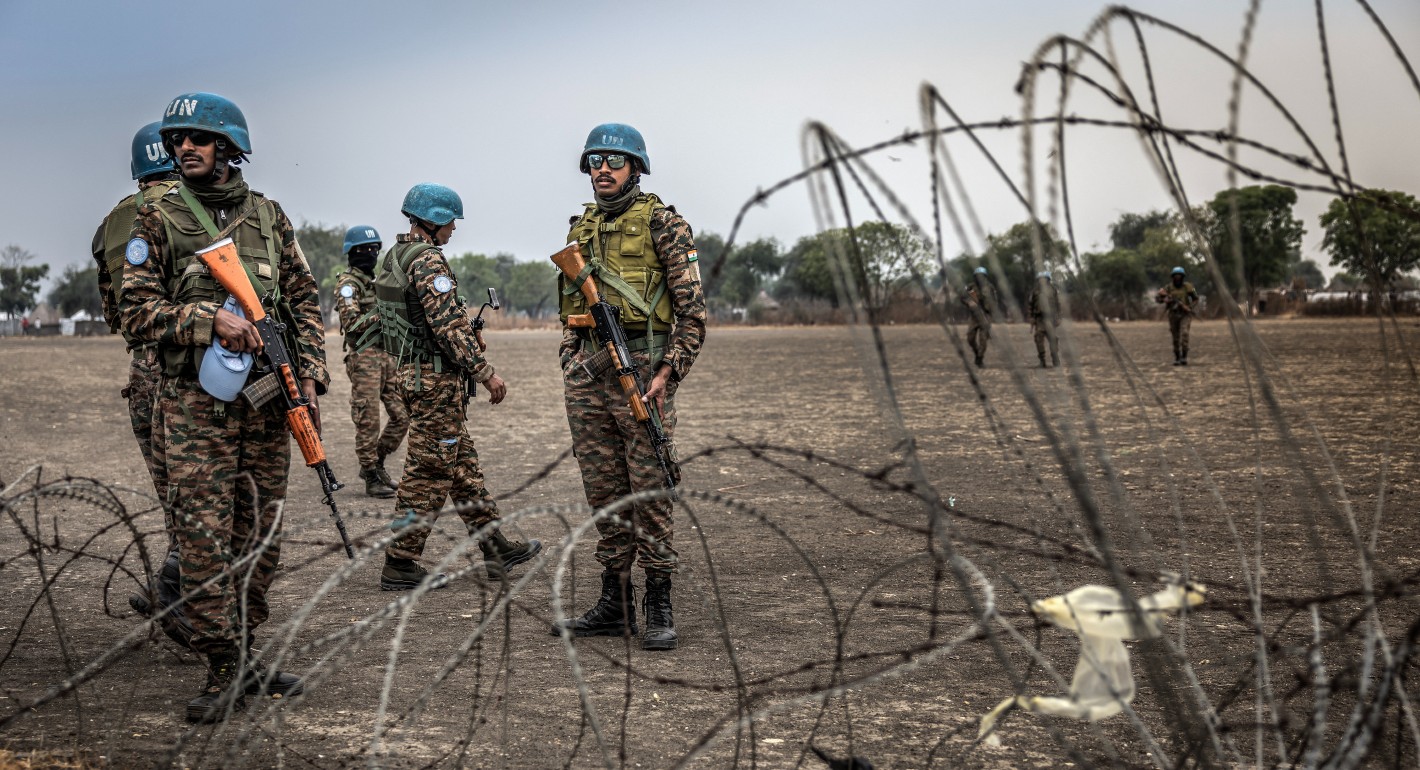
Washington’s decision to support some UN functions while letting others wither is pulling the organization apart at the seams.

Stewart Patrick, Theodore Zaritsky

While there are notable demographic, economic, and geographic divides over AI, there is also substantial alignment between Republicans and Democrats.



Ian Klaus, Mark Baldassare, Rachel George, …

AI capabilities are moving fast. Most institutions—including governments—can’t keep up.


Anton Leicht, Scott Singer

The Bureau of Industry and Security needs to adjust its focus and practices to maintain its position as the U.S. government’s primary champion of international technological competition.

Geoffrey Irving