The Bureau of Industry and Security (BIS) has stood as the U.S. government’s tip of the spear in the past decade of technological competition with China. As the agency charged with administering the Export Administration Regulations (EAR), BIS has used its export-control authorities to limit the transfer of technologies that present national security risks when they fall into untrustworthy foreign hands.
The current administration, however, is pivoting away from BIS’s export-focused paradigm toward an era of increasingly import-focused trade and technology controls. Where BIS has often wielded export controls as the primary instrument of technological competition, Washington is increasingly turning to import-control tools such as the Federal Communications Commission (FCC) Covered List, Section 232 national security tariffs, and Executive Order 13873 import controls. The erosion of ever-advancing export controls as the primary and leading tool of technological competition is an indicator of a new regulatory age—that age of import controls. If import controls are ascendant, then BIS will have to adjust its focus and practices to maintain its position as the U.S. government’s primary champion of international technological competition.
The Export Control Era: Born of U.S. Dominance
The modern export-control regime developed during an era of U.S. and allied technological dominance. The Export Administration Act of 1979 built on earlier wartime and Cold War controls. When that act lapsed and was eventually replaced by the Export Control Reform Act of 2018 (ECRA), BIS was instructed to block the export of “emerging and foundational technologies” to competing powers.
However, since 2015, China’s “Made in China 2025” industrial policy has drastically altered the world’s technological and manufacturing supply chains. The United States now lags China in several technology sectors, particularly if that competition is judged on manufacturing volume. China produced nearly three-quarters of the world’s electric cars last year, compared with roughly one-quarter for the rest of the world.
Where the United States is not lagging is in the size and dynamism of the domestic consumer economy and domestic capital markets. American capital markets remain the largest in the world. Additionally, the United States domestic consumer remains a pillar of the global economy, generating an outsized impact on global consumption and gross domestic product. If domestic markets and domestic consumption are among the United States’ major economic strengths, then a policy that leverages those strengths through import controls, tariffs, or market-access controls is compelling.
The policy shift is already measurable. The Center for Strategic and International Studies found that BIS added entities to the Entity List—one of many export control mechanisms—every thirty-five days on average from 2018 through 2024, compared with no additions between October 2025 and late June 2026. The bureau also adopted and then suspended its Affiliates Rule, and eased the license-review policy for certain advanced-computing exports to China. BIS is already measurably reducing its administration of export regulations.
Much of this pullback can be attributed to President Donald Trump’s immediate desire not to offend China amid tense trade negotiations. But if and when Trump or his successors resume their use of export controls, they will contend with trade-offs that experts have long highlighted and Trump himself seems to have finally discovered. Export controls are neither cost-free, limitlessly repeatable, nor sufficient on their own to ensure U.S. technology leadership. At best, they can be one piece of a multipronged strategy. Given that, what comes next?
The Move Toward Import Controls and Market Access
Import controls and restrictions on foreign access to markets are not a new concept. China has long enforced tariff and nontariff barriers, including investment restrictions through its Negative List. Chinese investment controls that condition the acceptance of products into the market upon the ownership of the entity manufacturing or providing those products have been a central part of Chinese industrial policy over the past two decades. Successive administrations have challenged Chinese domestic tariff and nontariff barriers. Yet American and other non-Chinese companies operating in China remain subject to intense regulatory obstacles, stringent data and cybersecurity reviews, and disadvantages relative to their Chinese peers. The United States’ consistent diplomatic shortfall has been failing to resolve the fundamental incongruity of the U.S.-China trade relationship.
Meanwhile, Chinese companies entering open foreign markets have long been able to invoke the same protections as their domestic peers. Thus, Chinese companies enjoy a state-favored advantage in the domestic Chinese market, while also traditionally availing themselves of the free-market protections of foreign markets. This imbalance allowed for new Chinese entrants to have a leg up, relying on their protected position in the domestic Chinese market to undercut incumbents in more equitable foreign markets.
The competitive outcome has been visible across many technology and manufacturing arenas: automotive, power-conversion systems, drones, sensors, robotics, appliances, networking, and displays. Across these industries, home-market protection gives Chinese entrants a structural advantage when competing for market share abroad.
Thankfully, Washington’s emerging use of import controls has begun to challenge this broken status quo, potentially leading toward a new import-focused paradigm that can help restore American competitiveness. To be clear, export controls continue to have value for critical technologies and end uses, but they should be complementary, not primary, actions. In a world where China already imposes stiff import barriers and uses home-market leverage, the United States should continue to turn more attention toward import controls.
Tariffs represent one variant of import control. When designed carefully, they can create an incentive structure that insulates domestic manufacturing and commerce, setting conditions for increased domestic industrialization. To complement tariffs, the administration has other authorities that can impose barriers or controls on imports to address identified national security risks. These include specific industry supply-chain regulations that prohibit certain products or services associated with foreign adversary countries. These types of import and market-access controls, paired with broad or narrow tariffs, could achieve a trade policy that puts American and allied businesses first, while targeting protectionist measures at specific adversarial states.
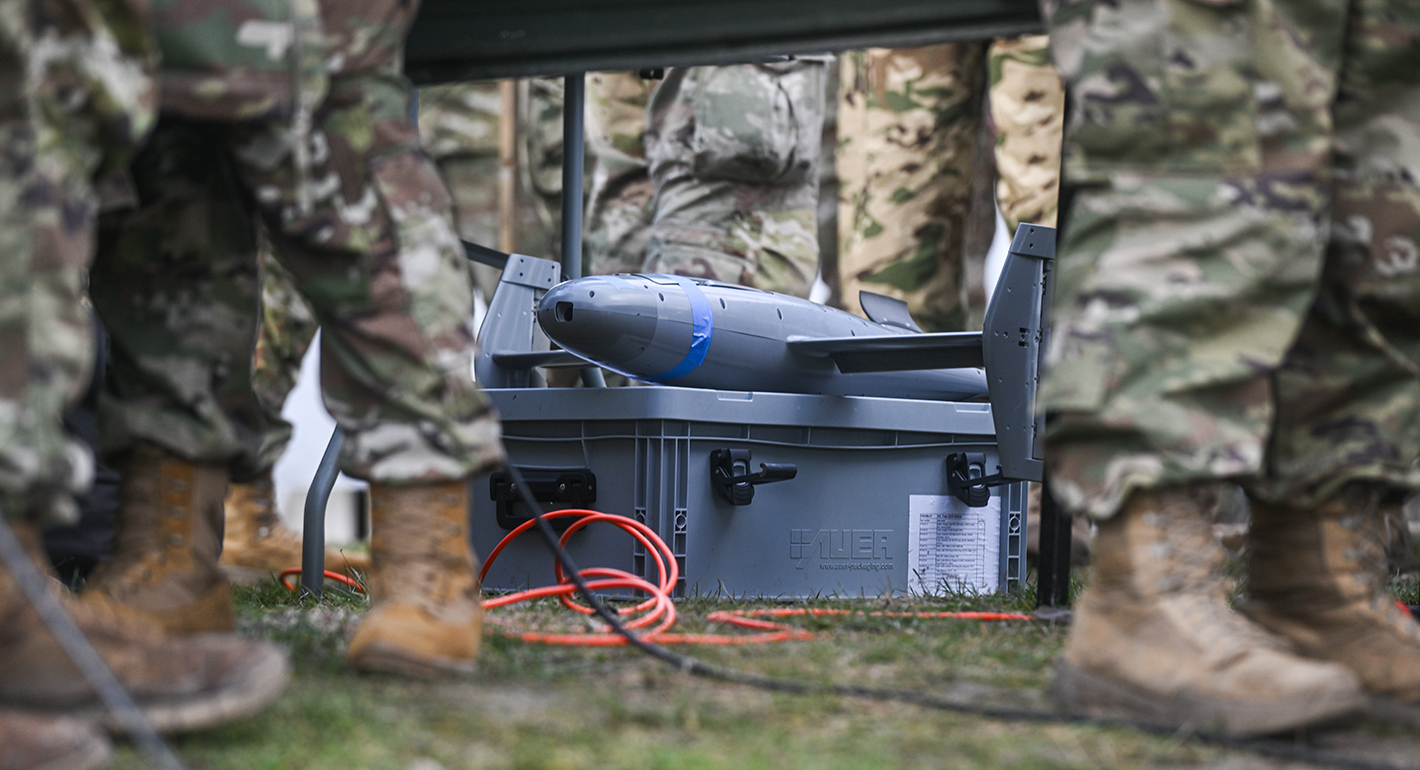
Consider the ascendancy of the Section 232 national security tariff instrument. BIS’s investigations now span semiconductors, pharmaceuticals, critical minerals, drones, and robotics, among other sectors. These investigations concern imports. In parallel, policy pronouncements ranging from the AI Action Plan to the Unmanned Aircraft Systems Dominance Executive Order favor excluding foreign-adversary technology from domestic supply chains, as the previous administration did in the automotive sector. Both Section 232 tariff investigations and EO 13873 import controls are administered by BIS, and their prominence reflect the administration’s shifting policy.
This transition is no longer confined to policy pronouncements. Under the connected-vehicle rule finalized by former president Joe Biden’s administration, Polestar can sell its remaining model year 2026 and earlier inventory, but BIS has declined to authorize sales of model year 2027 vehicles or later models. The company expects to cease new-vehicle sales once that inventory is exhausted. One must question what fate awaits other similarly placed Chinese-owned automakers such as Lotus. These are effectively import controls in action and are proceeding in the stead of new export controls.
The FCC has implemented parallel market-access restrictions through its equipment-authorization regime. Its Covered List now reaches foreign-produced drones, consumer routers, advanced robotic devices, and certain power inverters, subject to exemptions and conditional approvals. Covered new models cannot obtain the authorizations required for ordinary importation and marketing. These measures extend technology controls from named companies to entire product categories.
Axios reported in July that officials considered listing Chinese AI laboratories to impede American access to their open-source models. An Entity List designation does not prohibit imports as its legal effect concerns covered exports, reexports, and transfers. However, this example is evocative because the desired effect was to use an export control regulation to accomplish an import control end state.
While BIS’s export-control function continues, BIS will remain the tip of the spear for technological competition as the administration and the bureau place greater emphasis on import controls.
The Future of U.S. Technological Competition
The implications of this policy transition are profound. An overly export-control-focused strategy would risk clinging to yesterday’s playbook in sectors where foreign competitors have reduced their effectiveness. A strategy that relies on import controls with complementary export controls is more applicable to a strategic environment where China outpaces U.S. manufacturing volume, deploys home-market protection, and uses global market access as a launching pad.
But a coherent U.S. strategy that marries export controls for narrowly defined high-risk technologies with expanded import controls and market-access regulation can help America rebalance the technology competition. An import-focused paradigm would shift the terrain of competition from delaying technology diffusion abroad to leveraging the domestic U.S. market. The goal would be to reshape global supply chains, better positioning U.S. industries and allies to capture the premium portion of the value chain.
Moreover, such a strategy presents China with a choice: accept reduced access to U.S. markets and consumption or operate within a rules-based framework that prioritizes equitable market access. That dynamic gives the United States new strategic leverage.
BIS should organize and resource its import-control mission accordingly. The Department of Commerce and Congress should expand its Office of Information and Communications Technology and Services technical, investigative, and authorization-review capacity, while retaining the personnel needed to administer and enforce the EAR. The bureau should publish sectoral priorities, authorization criteria, and decision timelines and coordinate those requirements with the FCC and the Treasury Department. Implementation must include transition periods tied to the availability of American and allied substitutes.
This is not an endorsement of blanket protectionism. Any import control regime must be calibrated carefully to avoid self-imposed economic harm, inflationary pressure, retaliation, or erosion of trade alliances. Indeed, the legislation underpinning export controls still requires that controls be imposed “only after full consideration of the impact on the economy of the United States and only to the extent necessary.” Analogously, import control and market access regulations in the consumer market and domestic supply chain demand close coordination with industry partners, transparency, targeted scope, and multilateral coordination when possible. Import controls promulgated by the Department of Commerce and the FCC form a foundation for a future import control regime but should continue to be refined to minimize disruptive effect and maximize the potential for scale across foreign allied economies. The proliferation of coordinated import-control regimes across multiple allied states would increase efficacy.
The administration’s policy shift over the past two years shows that the era of technological competition defined primarily by export control regulation is ending. Policymakers should acknowledge this transition and build a regulatory scaffolding between the Department of Commerce and the FCC to strengthen the new regulatory age of import controls and position the United States again at the center of global technology competition.