

Commentary
While the EU and European governments are embracing the much-lauded middle-power moment, this entails three difficult conundrums.
Richard Youngs
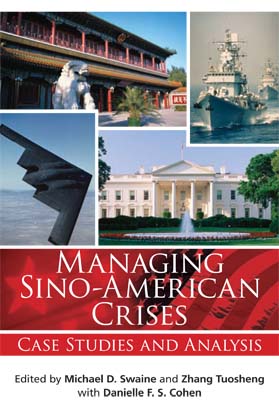
Sensitivities and suspicions between Washington and Beijing have heightened as China’s global power and influence have grown. Arguably, this new international order could increase the chances of a political-military crisis—or perhaps outright conflict—between the two powers.
Source: Washington

Sensitivities and suspicions between Washington and Beijing have heightened as China’s global power and influence have grown. Arguably, this new international order could increase the chances of a political-military crisis—or perhaps outright conflict—between the two powers. Managing Sino-American Crises brings together Chinese and American officials and participants in past confrontations, as well as scholars from both countries, to explore the changing features of crisis behavior and their implications for defusing future encounters. Using both conceptual analysis and historical case studies, the essays in this volume identify specific problems and opportunities that will likely confront both countries in the future and propose recommendations that will improve the effectiveness of crisis management skills between the United States and China.
About the Authors
Michael D. Swaine is a senior associate with the China Program at the Carnegie Endowment for International Peace.
Zhang Tuosheng is director of the research department and senior fellow at the China Foundation for International and Strategic Studies.
Danielle F. S. Cohen was a junior fellow with the China Program at the Carnegie Endowment for International Peace from 2005-2006.
"This is an important and timely book that sheds new light on what will be the most important strategic relationship of the 21st century. By examining the similarities and divergence between Chinese and American approaches to crisis management over the past fifty years, this study produces insights which could literally mean the difference between peace and war in future crises. The rich historical detail, combined with the unique perspectives of both practitioners and scholars, make this volume invaluable for both policymakers and students of US-Chinese relations."
—James B. Steinberg, Dean, Lyndon B. Johnson School of Public Affairs, The University of Texas at Austin, and former deputy national security advisor to President Bill Clinton
"This volume is rich in insights ... Swaine's essays, and the case studies that they bracket, deserve a wide audience and careful consideration within China and without."
—The China Quarterly

Former Senior Fellow, Asia Program
Swaine was a senior fellow at the Carnegie Endowment for International Peace and one of the most prominent American analysts in Chinese security studies.
Tuosheng Zhang
Danielle F.S. Cohen
Carnegie does not take institutional positions on public policy issues; the views represented herein are those of the author(s) and do not necessarily reflect the views of Carnegie, its staff, or its trustees.

While the EU and European governments are embracing the much-lauded middle-power moment, this entails three difficult conundrums.

Richard Youngs

Europe is facing rising populism internally as well as external pressures from Russia, China, Turkey, and the United States.

Dimitar Bechev

The acknowledgment has sparked fears of a new arms race with China and Russia.

Chris O’Meara

The European Commissioner for Trade is headed to China. But after President Xi’s bridge-building visit to Washington, can a more isolated EU overcome Beijing’s stranglehold on critical raw materials? Who will blink first?

Rym Momtaz, ed.

The summit may be remembered as a fatal blunder, when Washington, Beijing, and the AI industry collectively chose ceremony over action.

Jeffrey Prescott