• Research
  • Emissary
  • About
  • Experts
Carnegie Global logoCarnegie lettermark logo
DemocracyIran
  • Donate
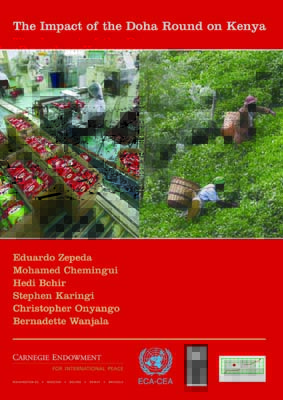
The Impact of the Doha Round on Kenya
Report

The Impact of the Doha Round on Kenya

The ongoing Doha Round of trade negotiations could improve Kenya’s competitive position in processed food and agriculture, but long-term development requires the strengthening of other economic sectors.

Link Copied
By Eduardo Zepeda, Mohamed Chemingui, Hedi Bchir, Stephen Karingi, Christopher Onyango, Bernadette Wanjala
Published on Nov 4, 2009

Additional Links

Full TextBackground on Kenyan Trade

Kenya’s economy has yet to recover from the global financial crisis and the political upheaval and social violence that followed the disputed elections at the end of 2007. The implementation of a likely agreement of the ongoing Doha Round of trade negotiations would improve Kenya’s competitive position in processed food and agriculture, but would harm manufacturing and mining. Depending on the content of negotiations, the liberalization of trade in goods would boost the country’s GDP by 0.2 percent annually, placing Kenya on the winning side of Doha. However, the benefits would be small, according to the report from the Carnegie Endowment, United Nations Economic Commission for Africa, United Nations Development Programme, and Kenya Institute for Policy Research and Analysis.

Key Conclusions:

  • Eliminating export subsidies for agriculture in Europe and the United States would help Kenya more than partial reductions of domestic support to agriculture in these countries and cuts to tariffs around the world.
     
  • Kenya would enjoy gains in agriculture, processed food, and the service sector, but experience losses in manufacturing and mining.
     
  • Losses in manufacturing and mining follow the weakening of domestic protection in Kenya.
     
  • Changes in the Kenyan economy would decrease poverty, and income distribution in rural regions would fall slightly, but the gap between wages in urban versus rural areas would expand.
     
  • The Doha Round is likely to diminish the importance of Kenya’s regional partners in total trade as its exports of manufactured goods would fall—these goods are often destined for African countries. 
     
  • Countries in sub-Saharan Africa should not expect major net gains stemming from the current round of trade negotiations. This underscores the need for human development policies that will accompany trade liberalization.


“The impact of the Doha Round can lead the Kenyan economy to further specialize in agriculture and processed food. And specialization in these activities can help Kenya make good use of its unskilled labor, its most abundant factor,” write the authors. “But Kenya’s long-term development cannot rest on only these two activities. Kenya must aim to build dynamic comparative advantages in activities with higher value added that can support higher standards of living. Trade can help, but trade by itself will not do the job.”

About the Authors

Eduardo Zepeda

Former Senior Associate, Trade, Equity and Development Program

Zepeda is inter-regional policy coordinator of the Development Policy and Analysis Division, Department of Economic and Social Affairs at the United Nations General Secretariat. He was previously a senior associate in the Trade, Equity, and Development Program at the Carnegie Endowment for International Peace.

Mohamed Chemingui

Hedi Bchir

Stephen Karingi

Christopher Onyango

Bernadette Wanjala

Authors

Eduardo Zepeda
Former Senior Associate, Trade, Equity and Development Program
Eduardo Zepeda
Mohamed Chemingui
Hedi Bchir
Stephen Karingi
Christopher Onyango
Bernadette Wanjala
Southern, Eastern, and Western AfricaNorth AmericaEconomyTrade

Carnegie does not take institutional positions on public policy issues; the views represented herein are those of the author(s) and do not necessarily reflect the views of Carnegie, its staff, or its trustees.

More Work from Carnegie Endowment for International Peace

  • Article
    India–Africa Strategic Partnership: Challenges, Potential, and Possible Pathways

    A partnership between India, a country of subcontinental size, and Africa, a continent of fifty-four countries, may seem asymmetric until one notes that both are home to nearly the same number of people—1.4 billion. This essay spells out the existing challenges to the partnership, its optimal potential, and the possible pathways to realize it over the next quarter-century.

      Rajiv Bhatia

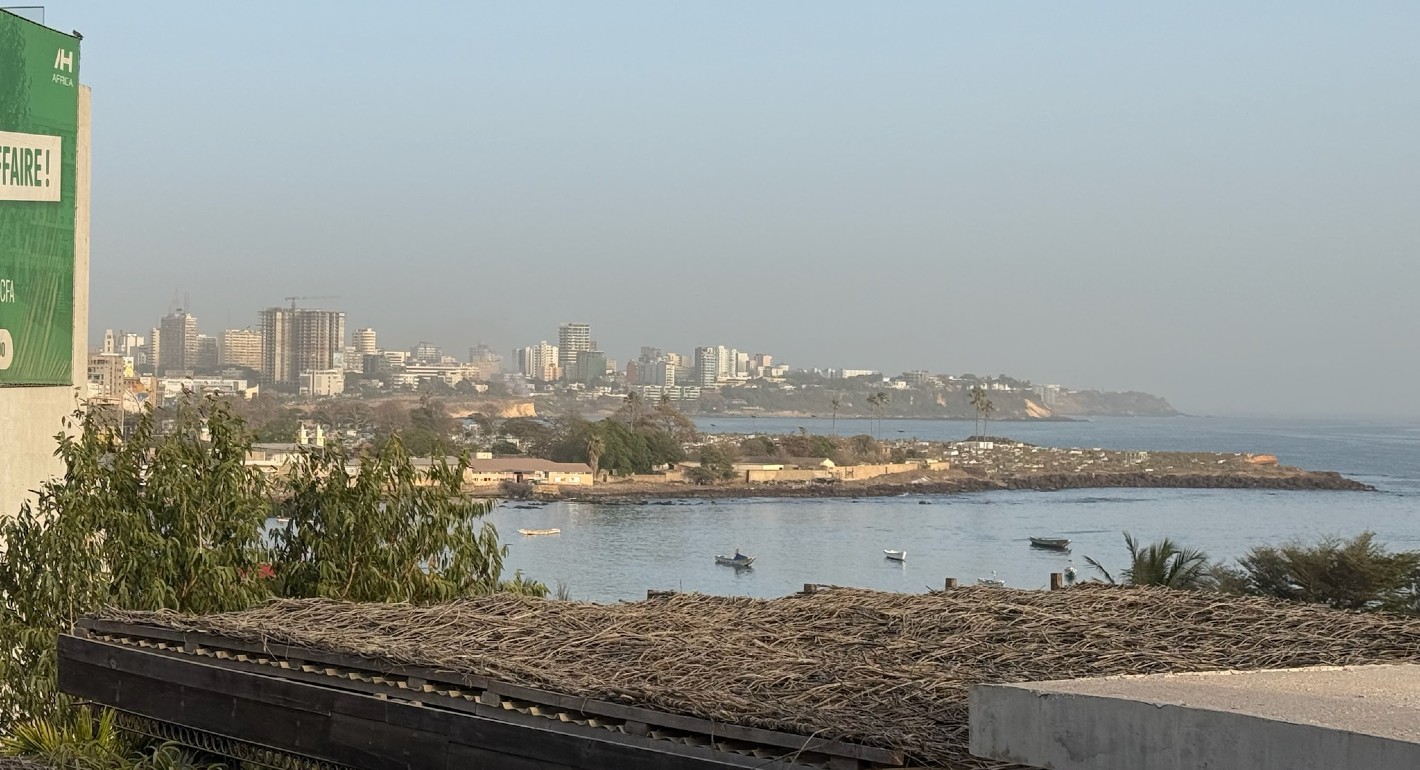
  • wide shot of the city of Dakar by the water
    Commentary
    Senegal: An Island of Resilience

    During our visit, we observed a democracy that has learned from its difficult past and is working toward an even more dynamic future.

      • Sarah Yerkes

      Sarah Yerkes, Natalie Triche

  • Article
    Continental Asia and the Rise of Portfolio Politics

    “Central Asia” as an analytical category is itself part of the problem. The term is a Soviet administrative inheritance, drawn along lines that served the convenience of Moscow. The Central Asian states the Soviets named no longer see themselves through this category alone and are not aligning across political blocs but are instead building external partnerships sector by sector, assigning different partners to different functions.

      Jennifer B. Murtazashvili

  • Commentary
    Carnegie Politika
    In Russia, Private Companies Have Been Left to Pick Up the Tab for Ukrainian Drone Attacks

    The cost of air defense has become an unregistered tax on revenue for businesses. While military rents are consolidated in the federal budget, the costs of defense are being spread across the balance sheets of companies and regional governments.

      Alexandra Prokopenko

  • San Francisco Skyline
    Paper
    California’s Global Trade Cities: Driving Local and National Outcomes

    Cities across the United States facilitate investment in American communities. Yet, because global attention remains focused on U.S. trade policy, their distinctive and bold local approaches to international trade and investment promotion are often underappreciated.

      • Wyatt Frank
      • Marissa Jordan

      Wyatt Frank, Marissa Jordan

Get more news and analysis from
Carnegie Endowment for International Peace
Carnegie global logo, stacked
1779 Massachusetts Avenue NWWashington, DC, 20036-2103Phone: 202 483 7600
  • Research
  • Emissary
  • About
  • Experts
  • Donate
  • Programs
  • Events
  • Blogs
  • Podcasts
  • Contact
  • Annual Reports
  • Careers
  • Privacy
  • For Media
  • Government Resources
Get more news and analysis from
Carnegie Endowment for International Peace
© 2026 Carnegie Endowment for International Peace. All rights reserved.