

Commentary
Nikolay Petrov
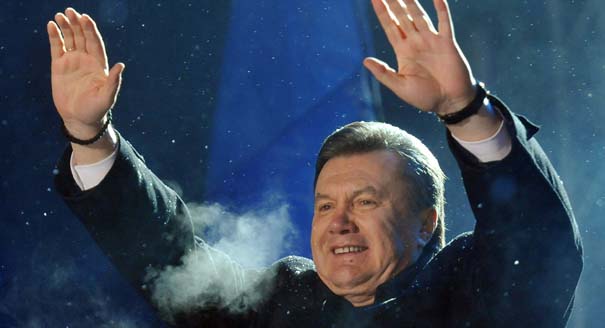
Source: Getty
Viktor Yanukovich's apparent victory in the second round of presidential elections should not be interpreted as the end of Ukraine's democratic experiment. Ukrainian politics is set to remain multi-polar for the foreseeable future.
The apparent triumph of Viktor Yanukovich in the second round of Ukrainian presidential elections held February 7 should not be interpreted as the end of that country’s democratic experiment, argues Carnegie Moscow Center expert Nikolay Petrov.
“The presidential elections in Ukraine brought to a close an important stage in the country's political development,” Petrov said. “However, the presidency of Viktor Yanukovich is by no means a return to the days of former president Leonid Kuchma and does not represent a definitive ‘farewell’ to the ‘Orange Revolution’ that led to the ouster of Yanukovich (then Kuchma’s chosen successor) in 2004. The significance of that ‘revolution’ derives not from the specific personalities in power, but rather from how the Ukrainian political system is constructed, from its adherence to pluralism, its competitiveness, and its transparency. With Yanukovich as president and Timoshenko as the leader of the opposition, the Ukrainian politics will remain multi-polar for the foreseeable future.
“As concerns Russian-Ukrainian affairs, at this point all we can say is that the election removes some of the obstacles that had interfered with normal working relations between the two governments. We can also hope that in its new configuration, the Ukrainian political system will become more stable and thus expand the planning horizon.”

Former Scholar-in-Residence, Society and Regions Program, Moscow Center
Nikolay Petrov was the chair of the Carnegie Moscow Center’s Society and Regions Program. Until 2006, he also worked at the Institute of Geography at the Russian Academy of Sciences, where he started to work in 1982.
Recent Work
Nikolay Petrov
Nikolay Petrov
Carnegie does not take institutional positions on public policy issues; the views represented herein are those of the author(s) and do not necessarily reflect the views of Carnegie, its staff, or its trustees.