

Commentary
Uri Dadush

Source: Getty
If the crisis in Europe continues to weaken the region’s economy, developing countries will likely be hurt by slower export growth and increased financial instability.

The Euro crisis threatens the economic stability of much more than the Euro area alone. A weakened Europe implies slower export growth in developing countries as well as increased financial volatility. The Euro crisis may also be only the first episode in which post-financial-crisis vulnerabilities converge to such devastating effect, implying that similar dangers for developing countries could emerge from sovereign debt crises in other regions or another global credit crunch. Policy makers in emerging markets can take a variety of steps, outlined below, to limit the potential consequences right now. In addition, the crisis underscores the importance of the IMF as a lender of the last resort.
Exports: The Euro crisis is likely to deduct at least 1 percent of growth, and potentially much more, from Europe—a market that consumes more than 27 percent of developing countries’ exports, In addition, the euro has already devalued more than 20 percent against the dollar since November 2009 and the two could reach parity before the crisis is over. A lower euro will sharply reduce the profitability of exporting to the European market and will also increase competition from Europe in sectors ranging from agriculture to garments and low-end automobiles.
Tourism and Remittances: A lower euro will reduce the purchasing power of European tourists traveling to developing countries, and the value of remittances originating from Europe.
IMGXYZ5033IMGZYXDomestic Competition: At the same time, a lower euro may provide opportunities for consumers and firms to import from Europe at a lower cost.
Capital Flows: The Euro crisis will force the European Central Bank to maintain a very low policy interest rate for the foreseeable future. Similarly low rates in Japan and the United States, combined with low growth in Europe, may lead even more capital to flow to the fastest-growing emerging markets. This will lead to inflation and currency appreciation pressures, as well as increase the risk of asset bubbles and, eventually, of sudden capital stops in emerging markets.
Market Volatility: The Euro crisis will add greatly to the volatility of financial markets and will lead to sharp bouts of risk-aversion. The VIX index, which measures the cost of hedging against the volatility of stocks, has more than doubled in the last two months. This, in turn, has increased the level and volatility of spreads on emerging market bonds—which have risen by more than 130 basis points since April—and will make currencies more volatile across the globe.
Credit Availability: The Euro crisis may constrain trade and other bank credit available to developing countries as it raises questions about the viability of European banks—especially those based in vulnerable countries whose assets likely include large amounts of their own government’s bonds. But all international banks will be viewed as having either direct or indirect (through other banks) exposure to the vulnerable countries. The confidence that banks have in lending to each other has already fallen; the TED spread (the difference between the three-month inter-bank lending rate and the yield on three-month Treasury bills) reached a nine-month high of 35 basis points in May, up from this year’s low of 10.6 basis points in March.
Contagious Crises: A failure to contain the crisis in Greece and its spread to Spain or other vulnerable countries will raise the alarm on sovereign debt in other industrial countries—for example, Japan, whose debt-to-GDP ratio is projected to be nearly twice that of Greece in 2015—and inevitably in any exposed emerging market. If more countries are hit, the pressures on trade, global credit, and capital flows to emerging markets will only increase.
Though there are no one-size-fits-all prescriptions for developing countries given their very different starting points, some general policy conclusions emerge:
Two other important policy lessons flow from the Euro crisis experience to date: one is a reinforcement of the message that strictly pegged exchange rates together with open capital accounts and the ability to borrow abroad in foreign currencies are often a dangerous combination. Just as a tight peg to the U.S. dollar led to significant GDP contraction in Argentina (18.4 percent from 1998 to 2002), countries that are not part of the Euro area but had pegged their currencies to the euro many years ago have seen their GDP decline sharply. GDP in Latvia, Estonia, and Lithuania, for instance, will have contracted by 24.8 percent, 16.5 percent, and 14.1 percent, respectively, from 2007 levels by the end of 2010. Countries with flexible exchange rates, such as Poland or Brazil, and those with pegged exchange rates but tight capital controls appear to have dealt with the dislocation caused by the crisis more successfully.
Last but not least, the crisis has exposed the limitations of regional mechanisms in dealing with financial crisis—even among countries with deep pockets—and underscored instead the vital role that a global lender of last resort, in the form of the IMF, can play. Not only can the institution bring more resources and broader expertise than would plausibly be available to a regional institution, but its distance from potentially divisive regional politics can also be a big asset.
Uri Dadush is a senior associate in and the director of Carnegie’s International Economics Program.
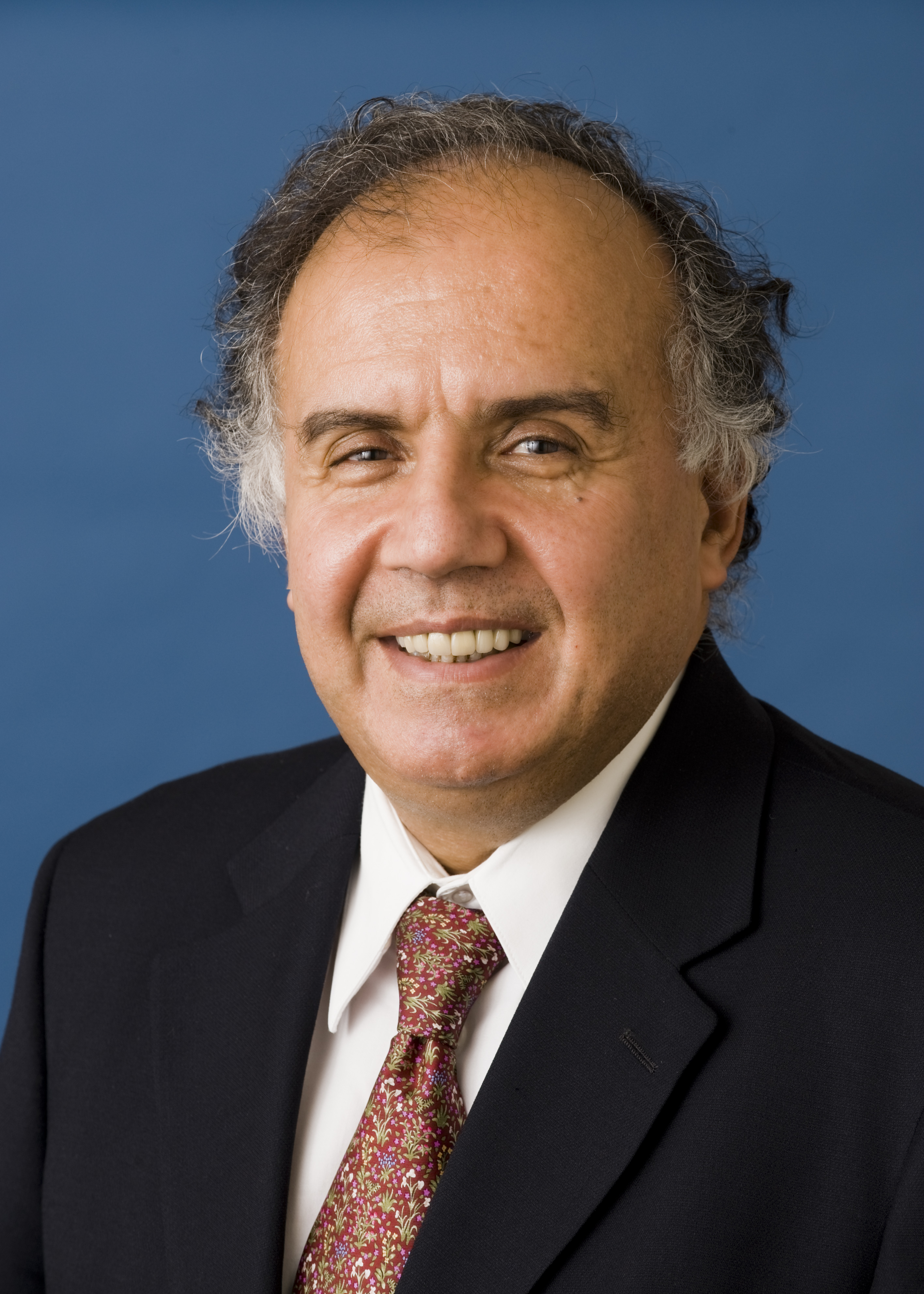
Former Senior Associate, International Economics Program
Dadush was a senior associate at the Carnegie Endowment for International Peace. He focuses on trends in the global economy and is currently tracking developments in the eurozone crisis.
Recent Work
Uri Dadush
Uri Dadush
Carnegie does not take institutional positions on public policy issues; the views represented herein are those of the author(s) and do not necessarily reflect the views of Carnegie, its staff, or its trustees.

For every ruble allocated to social policy, health, and education in 2027, double that amount is earmarked for the army, the police, and the security services.

Alexandra Prokopenko

The European Commissioner for Trade is headed to China. But after President Xi’s bridge-building visit to Washington, can a more isolated EU overcome Beijing’s stranglehold on critical raw materials? Who will blink first?

Rym Momtaz, ed.

The domestic impacts of how long it is taking to end the war in Ukraine have pushed the French electorate to the political extremes and compromised the country’s diplomatic capacity.
Rym Momtaz

The Plaza Accord was not an externally imposed punishment of Japan but part of a broader restructuring that Japanese economists and policymakers themselves recognized was necessary. Its effects were undermined, however, when Tokyo responded to the resulting slowdown with policies that exacerbated investment, credit expansion, and the very imbalances the adjustment was intended to resolve.

Michael Pettis

Before the next wave of EU enlargement takes place, the union needs to grapple with thorny questions of how power is distributed among its members.


Emil Sondaj Hansen, Ditte Brasso Sørensen