

Paper
Paul Salem
Source: Getty
Lebanon might have escaped another war, but tensions in the country and the region are high and getting higher, and any one of several issues could trigger local or regional conflagrations.
Despite overall calm and a record tourist season this summer, Lebanon’s political system has been struggling to manage a number of major issues. These include skirmishes with United Nations Interim Force in Lebanon (UNIFIL) in the south, escalating rhetoric with Israel over oil and gas exploration, the renewal of debate over Palestinian civil rights in Lebanon, and concern that the Special Tribunal for Lebanon (STL) will soon issue its preliminary findings in the investigation into former Lebanese Prime Minister Rafic Hariri’s assassination.
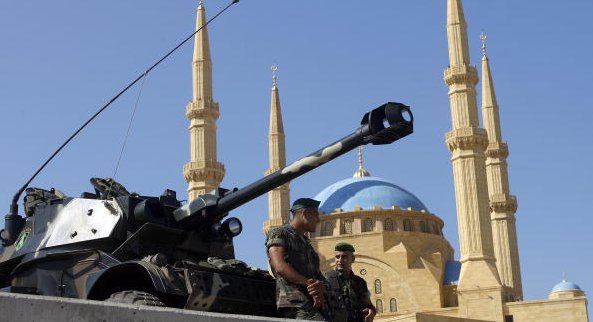
Although UNIFIL forces and local inhabitants have had run-ins previously, their confrontations this summer were more serious than before and left a number of people on both sides injured. UNIFIL says that it met organized civilian resistance during its normal exercises and patrols in its area of deployment. Other sources say that UNIFIL did not adequately coordinate its exercises with the Lebanese army and local communities, and that they were unnecessarily showy and provocative. Both UNIFIL and its French contingent have new commanding officers and they may have misread the local situation and gone further than previous commanders.
The Lebanese army command and UNIFIL moved quickly to defuse the situation. Nevertheless, the reaction from inhabitants—many of whom are influenced by Hezbollah—was unusually combative, and statements from pro-Hezbollah leaders have also been somewhat threatening to UNIFIL. While Hezbollah has generally accommodated UNIFIL’s presence on the southern strip to help it avoid another war with Israel, the organization regards UNIFIL generally as an observer force, and has previously resisted UNIFIL’s attempts to flex its muscles or conduct effective operations and searches in its zone of operation.
Given Hezbollah’s links to Tehran, the new tension with UNIFIL could reflect Iranian responses to the new wave of sanctions against it, and signal European countries—including France, Italy, and Spain—not to add to the UN and American sanctions already in place.
The tensions with UNIFIL have raised concerns that it might become hostage to regional events or that the UNIFIL mission could begin to unravel. If any major contingent withdraws and UNIFIL indeed dissolves, the calm that has prevailed on the Lebanese-Israeli border since 2006 will disappear and the two countries could slide quickly back into war. National, regional, and international officials should move quickly to contain this crisis and maintain UNIFIL’s successful buffer role.
The recent discovery of a major gas field off the shores of Israel (the Tamar field, with estimated reserves of six trillion cubic feet) has catapulted energy to the forefront of political and security concerns. The find has the potential to transform Israel into an energy independent nation and indicates that gas and oil reserves under eastern Mediterranean Sea beds might be more significant than previously thought.
While Lebanon has agreements with Cyprus and Egypt over offshore exploration zones, it does not have any such agreement with Israel—and the Lebanese-Israeli maritime border is not properly delimited. Lebanese officials have warned Israel not to drill next to Lebanon’s maritime waters, and Hezbollah issued warnings that it would protect Lebanon’s offshore rights if necessary. Israel responded with stiff warnings of its own.
Both Israel and Cyprus started to organize oil and gas exploration off their shores years ago. The Lebanese government—belatedly realizing that such resources might exist in significant amounts and would help pay down the country’s debt—is trying to push an oil and gas bill through parliament this summer. This law would establish an energy authority to manage exploration contracts and a Lebanese sovereign wealth fund to receive the proceeds if and when they materialize. Even if the law goes through, however, the process of contracting, exploring, extracting, and generating revenues from the reserves will take years.
In the meantime, the issue of offshore energy resources is just one more point of contention between Lebanon and Israel and adds to an already fractious relationship. It is in both Lebanon and the region’s interests to indirectly mediate the Lebanese-Israeli maritime border disputes and make sure that offshore drilling does not become another cause for armed conflict.
On June 15, Druze leader Walid Jumblatt caused a minor political earthquake by tabling a law to grant Palestinian refugees long overdue social and economic rights. The proposal immediately polarized the Lebanese political scene along old civil war lines, with Christian leaders opposing it and Muslim leaders favoring it. That response may have been just what Jumblatt intended, allowing him to weaken both Sunni-Christian and Shiite-Christian alliances and rebuild the old alliance systems—grouping Sunnis, Shiites, and Palestinians against a mainline Christian coalition—of which he (and previously his father) was a key component.
The draft proposes granting Palestinian refugees the right to buy property in Lebanon, the right to work, and the right to receive social and medical coverage as well as end-of-service insurance from the Lebanese Social Security Fund. Proponents argue that it is a humanitarian necessity and will help ease tensions from the overcrowded refugee camps.
Opponents argue that it puts new burdens on deeply indebted public finances, should be preceded by the disarming of Palestinian militias, and is a prelude to the effective naturalization of Palestinian refugees. Opponents also say that the welfare of refugees is the responsibility of the United Nations Relief and Works Agency (UNRWA) and argue that international and regional funders are not funding their fair share and are trying to transfer the burden onto refugee host countries.
The draft law is now in parliamentary committee and is unlikely to pass in its current form. A watered-down version, however, might eventually see the light of day.
The timing of the proposal is interesting. While it could be just one of Jumblatt’s attempts to shuffle the political deck, the proposal is unlikely to have proceeded without Syria’s knowledge and/or approval. As U.S. envoys continue trying to revive Israeli-Palestinian peace talks while largely ignoring Damascus, Syria might be indicating that its influence in Lebanon can be relevant in addressing the central Palestinian refugee question. Although Syria would oppose full naturalization in Lebanon and Syria because it would dramatically affect sectarian balances in both countries, it could support granting social and economic rights in Lebanon.
Unfortunately, the sectarian reactions to the recent proposal indicate that Lebanon has not moved beyond the discourse that prevailed during the civil war. While the Palestinians urgently need these social and economic rights, the matter needs to be handled in such a way that it does not ignite another civil war in Lebanon. And it also should not be used as an excuse to rob the Palestinians of their right of return, regardless of whether that right is eventually exercised or compensated.
Although the work of STL investigator Daniel Bellemare is still secret, there has been increasing speculation in Lebanon that his investigation is close to submitting its findings to the Special Tribunal. If the investigation fingers Syria, Hezbollah, or both, it could lead to unforeseen and unmanageable consequences. Of course, the investigation may be inconclusive or find another party guilty.
Regardless, the shadow of the tribunal has returned to Lebanon. Former Minister Wiam Wahhab, who is close to both Syria and Hezbollah, has warned the Lebanese government to stop cooperating with the tribunal and said that the tribunal’s decisions could affect “UNIFIL and other UN institutions in Lebanon.” The recent troubles with UNIFIL might be a prelude to this. Israeli Army Chief Gabi Ashkenazi told the Knesset Foreign Affairs and Defense Committee that Israel expects tensions to increase in Lebanon following the indictment of Hariri’s assassins “in September.”
It is worth noting that the political situation has changed dramatically since the UN investigation was launched. Syria is no longer isolated or targeted for regime change by the international community, and Hezbollah is a full partner in a national unity government led by the assassinated former prime minister’s son, Saad Hariri.
If the investigation concluded in 2006, the United States, France, and Saudi Arabia might have used the results to seriously undermine the regime in Syria or to go after Hezbollah. Today, the major regional and international powers have rebuilt—or are rebuilding—relations with Syria, and would want to ensure that a guilty finding does not undermine the regime. This is similar to an approach that eventually was taken with Libya and Muammar el-Qaddafi over the Lockerbie bombing. If the indictment points at Hezbollah operatives, Saudi Arabia and others are aware that if they push the issue against Hezbollah, the party may counterpunch violently and possibly trigger a brief civil war. In such a case, the Sunnis of Lebanon would be the bigger losers.
In other words, most players have an interest in downplaying the results of the investigation, but the shock of large-scale revelations could trigger reactions and events that are beyond any party’s control.
War erupted in Lebanon days after the last World Cup ended in 2006; gallows humor in Lebanon had it that another war was coming after the end of this year’s tournament. The country might have escaped imminent war, but the gathering crises indicate that tensions in the country and the region are high and getting higher, and that any one of these issues could trigger local or regional conflagrations. Until real progress is made in achieving regional peace or resolving the nuclear issue with Iran, regional and international diplomacy should remain focused on conflict management. Although peace might not be at hand, war must be continuously avoided.
Senior Fellow at the Middle East Institute
Paul Salem is a senior fellow at the Middle East Institute.
Recent Work
Paul Salem
Paul Salem
Carnegie does not take institutional positions on public policy issues; the views represented herein are those of the author(s) and do not necessarily reflect the views of Carnegie, its staff, or its trustees.
This year’s wars have made alternative routes to transit through Russia no less risky for Central Asian countries.

Galiya Ibragimova
The United States and Israel may have unwittingly revived the Islamic Republic’s “zombie regime.”



Suzanne Maloney, Aaron David Miller, Karim Sadjadpour
As talks begin between Washington and Tehran, Beirut has an opening to advance a regional plan for the party’s disarmament.

Michael Young
The Islamic Republic’s words and actions suggest that it has changed its approach to both diplomacy and war.
Mohammad Ayatollahi Tabaar
In an interview, Elizabeth Thompson recalls how the country formulated a liberal constitution in 1920, before being denied by France and Britain.
Michael Young