

Commentary
Before the next wave of EU enlargement takes place, the union needs to grapple with thorny questions of how power is distributed among its members.
Emil Sondaj Hansen, Ditte Brasso Sørensen
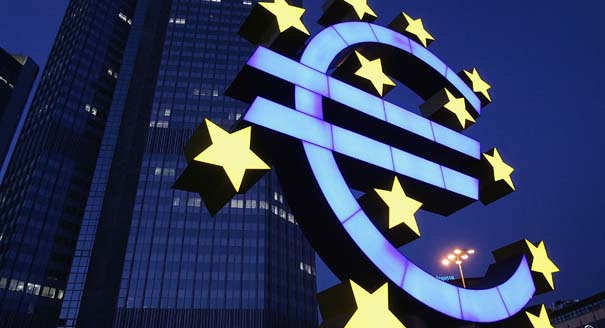
Source: Getty
There can be no effective foreign policy or external projection for Europe unless the core economic strength and vitality of the continent are restored.
There can be no effective foreign policy or external projection for Europe unless the core economic strength and vitality of the continent are restored. We all live in an era of austerity, but Europe inhabits a world where its influence will steeply decline if current trends continue.
One of the unintended consequences of the fiscal crisis now under way—on both sides of the Atlantic—is the acceleration of a pre-existing trend: the end of American tutelage over Europe’s security. If there was any lingering doubt more than two decades after the end of the Cold War, the Libyan crisis—in which long-term tendencies and contingent factors intersected to leave the Europeans without clear U.S. “leadership”—is the final turning point.
How to deal with Libya—whatever happens to Qaddafi—is in fact a European responsibility. This is because history has started moving again in North Africa, despite the resilience of conservative forces across the region. Libya is a key test case precisely because the Europeans will have to live with the outcome of the war and its regional ramifications, regardless of the economic and political constraints that make them reluctant to take on new international responsibilities. In other words, while Washington has the option to pass the buck to its old allies, Europe lacks such a luxury.
Due to energy interests, migration concerns, and sheer geographic proximity, North Africa has become essential to Europe’s security. The Libya conflict, whatever the motivations for our policy choices, stands to confirm this assessment. The management of this particular crisis also raises three crucial issues for the future of European security: first, assuming the primary responsibilities that we have inherited from the United States will be problematic, in light of the capability gaps and shortfalls that have been in full display. Second, the United Kingdom and France will strive to firmly establish their joint leadership, but it remains to be seen whether the rest of the European Union—starting with Germany, Italy, Poland—will accept this arrangement. And third, there is an overall question about the sustainability—and thus the feasibility—of complex security and stabilization interventions considering the major resource constraints and a lack of domestic consensus.
In this context of financial stringency, the case for a regional and rather selective—as opposed to global and open-ended—security role for Europe becomes stronger than ever. Only by concentrating its energies and specializing in some areas can aggregate Europe—whatever the format—hope to exert significant influence over events along its troublesome Eastern and Southeastern periphery.
This would also entail a pragmatic division of labor among EU members on the basis of their geographical and historical sensitivities, whereby there will be lead countries and core groups depending on the crisis or issue at hand. The precedents abound, from the Balkans to Lebanon to Libya, and even the institutional setup of the Lisbon Treaty allows for such a solution.
Yet for Europe to be effective externally, one obvious precondition must be met: the EU must survive its key economic challenges.
When an economic crisis in a country like Greece can lead the euro to the edge of the abyss, it is obvious that the European construction is not working properly.
Let us be honest. Resolving the Greek crisis should have been fairly simple. After all, we are talking about 3 percent of the eurozone’s overall gross domestic product. The reasons for its becoming a mammoth task—and extending its contagion to larger economies—are political rather than economic.
As the critics warned at the outset, a monetary union devoid of fiscal coordination or a common budget policy cannot work. Or rather, it can work until it is tested. When it was put to the test—as it has been over the past two years—we discovered that there was insufficient political solidarity (both at the periphery of the euro and in its German heartland).
Indeed, the common feature that links the euro crisis and the recurrent flaws of the EU’s international action is precisely the lack of sufficient political solidarity. This very weakness was also on full display during the most acute phase—to date—of the immigration crisis when, spurred by the North African revolts and Libyan crisis, the Schengen Agreement was suspended.
What is true of the euro as a safeguard system for its members—and the tangible core of Europe’s economic strength in the world—is true of foreign and security policies: the EU must at least provide a real line of defense and threat prevention against international risks. Otherwise, there simply is no substance to the “common” dimension of our external projection.
It is a fact that Europe—and the entire Western world—is confronted with an unstable multipolar setting and diminishing resources to tackle it. Austerity is not only perceived, it actively constrains choices—and will do so for a number of years.
Therefore, even assuming that an arrangement will emerge to restore confidence in the euro and improve the overall prospects of the EU as an economic area, European external projection will have to focus in any case on few and well identified priorities, especially on widely understood security matters.
The immediate neighborhood is the key to the future of Europe, even if we entertain global ambitions. This means, first, that North Africa is a priority that will not go away: all means of influence thus need to be activated for the long haul.
Second, Turkey is a pivotal partner with growing regional ambitions. It is truly too big to be left hanging with no clear relationship with the EU. This is part of a more general problem: the rise of middle powers with regional reach—as a consequence of a partial U.S. retrenchment—forces Europe to elaborate a more coherent strategy vis-à-vis countries such as Iran, Saudi Arabia, Israel, and Egypt itself. Relations with Turkey and Israel, in particular, risk dividing Europe—all the more so when the bilateral link between Ankara and Jerusalem is being eroded.
Third, Russia is an indispensable counterpart, which should not become a sort of reserved domain for a few capitals. Balancing the eastern and southern dimensions of Europe’s security is key to a continental strategy.
It is a daunting agenda. Getting serious about the neighborhood is no longer a choice, but a strategic necessity.
Marta Dassù is director of the Aspen Institute Italia.
To reinvigorate debate over European foreign policy and Europe’s role in the world, Carnegie Europe is publishing a series of essays from leading policymakers, diplomats, experts, and journalists on Strategic Europe over the coming weeks. A new essay will appear every day.
Marta Dassù
Aspen Institute Italia
Carnegie does not take institutional positions on public policy issues; the views represented herein are those of the author(s) and do not necessarily reflect the views of Carnegie, its staff, or its trustees.

Before the next wave of EU enlargement takes place, the union needs to grapple with thorny questions of how power is distributed among its members.


Emil Sondaj Hansen, Ditte Brasso Sørensen

The European far right might fail to steer EU policy in the direction Russia wants, but they will create enough chaos inside Europe to benefit the Kremlin.

Dimitar Bechev

The new U.S.–Denmark–Greenland agreement will help Washington exert political, economic, and financial dominance under the guise of security. Yet, it acknowledged Copenhagen’s and Nuuk’s sovereignty on the island.

Marc Pierini

If the Russian-speaking community in Latvia cannot articulate their interests without being seen as disloyal, they could end up embracing a pro-Kremlin agenda.

Sergejs Potapkins

Are Germany’s economic, industrial, and political struggles becoming a liability for the EU’s ability to rise to the geopolitical moment?

Rym Momtaz, ed.