Federica D’Alessandra
Conceptualizing Great Power Perpetrators
Leveraging alternative mechanisms within the prevailing multilateral system might be the best—if not currently the only—viable approach to confronting, curbing, and countering great power abuse.
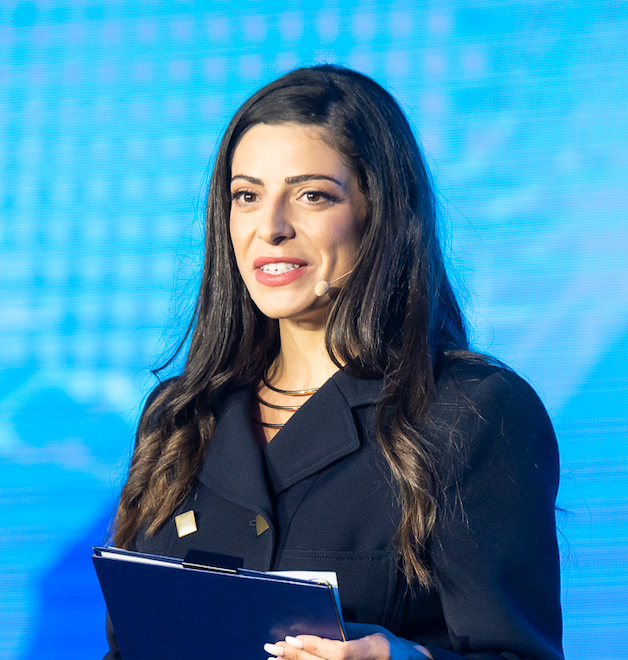
About the Author
Nonresident Scholar, Global Order and Institutions Program
Federica D’Alessandra is a nonresident scholar with the Global Order and Institutions Program at the Carnegie Endowment for International Peace.
- What the White House and Congress Can Do to Prevent Global Mass AtrocitiesPaper
- International Crimes Accountability Matters in Post-Assad SyriaPaper
Federica D’Alessandra
Recent Work
Carnegie does not take institutional positions on public policy issues; the views represented herein are those of the author(s) and do not necessarily reflect the views of Carnegie, its staff, or its trustees.

More Work from Carnegie Endowment for International Peace
- Lukashenko’s Bromance With Trump Has a Sell-By DateCommentary
Lukashenko is willing to make big sacrifices for an invitation to Mar-a-Lago or the White House. He also knows that the clock is ticking: he must squeeze as much out of the Trump administration as he can before congressional elections in November leave Trump hamstrung or distracted.
Artyom Shraibman
- The Middle Power Moment?Collection
The world has entered an era of upheaval—a period of heightened geopolitical rivalry, deepening political polarization, quickening technological change, glaring economic inequality, accelerating environmental crises, and eroding respect for international law. This moment of disruption and fluidity is also one of opportunity, however. It provides openings for middle powers, both established and emerging, to exercise unaccustomed agency and influence the future of global order.
Carnegie scholars are analyzing middle power responses to this moment of upheaval and assessing whether—and under what conditions—these states can contribute to practical problem solving. They are asking critical, concrete questions: What countries, precisely, are we talking about when we refer to middle powers? In what issue areas do their priorities converge and diverge, including across North-South divides? In what domains can middle powers pack a punch, rather than produce a whimper? Are they willing to shoulder actual burdens and responsibility? Finally, how can middle powers assert themselves globally, without running afoul of or threatening their relations with the United States or China?
- Beyond Oil: Hormuz Closure Puts Russia in the Lead in the Fertilizer MarketCommentary
The Kremlin expects to not only profit from rising fertilizer prices but also exact revenge for the collapse of the 2023 grain deal.
Alexandra Prokopenko
- A Tight Spot: Challenges Facing the Russian Oil Sector Through 2035Paper
Russian oil production is remarkably resilient to significant price changes, but significant political headwinds may lead to a drop regardless of economics.
Sergey Vakulenko
- The Nuances of Oscar-Winning Film “Mr. Nobody Against Putin”Commentary
It’s disingenuous to criticize a film for simplifying Russia’s complexities when Russia is waging a brutally simple war of aggression against its neighbor.
Alexander Baunov