

Commentary
The EU can impose sanctions but struggles to enforce them without the United States. With Washington increasingly disinterested in backing European interests, the bloc must now fend for itself.
Nicu Popescu, Tiago Antunes
Source: Getty
The United Arab Emirates has become a major investor in the Western Balkans. With enlargement back on the agenda, the EU must ensure that foreign capital meets rather than undermines its governance standards.
This paper was written and analytically structured by Iliriana Gjoni. The case studies on Belgrade, Durrës, and Porto Romano draw on research and commentary provided by Iva Čukić, Alba Çela, and Aleksandër Trajçe, whose contributions informed and enriched the empirical sections. The paper was prepared with support from the Heinrich Böll Foundation as part of a joint initiative with Carnegie Europe on foreign investment and governance in the Western Balkans.
Foreign investment has become a defining force in the Western Balkans’ development model. From marinas to new skylines, foreign-funded construction creates what politics alone often cannot: momentum, visibility, and symbols of belonging to a global economy. Yet, this building boom carries risks. In systems where administrative capacity is weak and political loyalty outweighs merit, the race to attract capital can erode rather than strengthen institutions. Progress is measured more often in concrete than in governance.
This dynamic, which appears across the region in different guises, tests whether the rule-making power of the European Union (EU) can still shape outcomes when the union’s authority relies on persuasion rather than enforcement. At its root, the problem lies in the asymmetry between the EU’s normative reach and its practical leverage. The EU enlargement process operates through conditionality, with candidate countries offered access to the European single market, funding, and prestige in return for progress toward membership. Yet, these incentives often lose traction where political elites can secure faster alternative sources of legitimacy and capital. External investors fill the vacuum created by delayed accession, exploiting the space between EU rules and domestic enforcement.
While Brussels cannot prevent every opaque deal, it can narrow that space by reinforcing transparent procurement standards, strengthening independent oversight, and promoting parliamentary and public scrutiny insulated from political pressure. The EU must also match its regulatory ambition with visible economic engagement to ensure that credible, rules-based investment from within the EU competes with, rather than yields to, faster but less accountable capital. The issue is a lack not of norms but of enforcement and credible consequences when those norms are breached.
Between 2020 and 2023, the Western Balkans attracted steadily rising levels of foreign direct investment. Net inflows averaged roughly 6.4 percent of the recipients’ gross domestic product (GDP)—more than four times the EU average.1 From 2015 to 2023, nearly four-fifths of this capital went to Serbia, Montenegro, and Albania, directed mainly toward real estate and coastal infrastructure, such as marinas and resorts, rather than productive industry.2 These sectors, which are prone to speculation and money laundering everywhere, are especially exposed when oversight is fragmented and political influence shapes decisions more than law does.
Among external actors, the United Arab Emirates (UAE) has become one of the region’s most visible and ambitious investors. Through developer networks and bilateral agreements, the UAE has financed large-scale real estate and tourism projects from Belgrade’s riverfront redevelopment to resorts in Albania and, lately, Montenegro.
To explain these projects’ wider governance implications, this paper builds on the concept of corrosive capital. Developed by the Center for International Private Enterprise and later adapted to the Western Balkan context in research on state capture and foreign influence, the notion describes how investments “not only exploit governance gaps in countries with weak or corrupt structures, but also make those gaps wider” by drawing local elites into arrangements that prioritize visibility and rapid delivery over institutional resilience and long-term reform.3 This challenge has been noted elsewhere: Persistent governance gaps in EU candidate states can limit the union’s ability to steer external actors’ engagement with the region—even when accession frameworks are in place.4
Comparable ventures in EU member states face stronger checks. In Budapest in early 2025, the city authorities voided a planned land deal, canceling the proposed so-called Maxi Dubai project.5 In Zagreb the previous year, required urban-planning changes and legal constraints on repurposing the city’s hippodrome combined with a shift in political environment meant the Zagreb Manhattan plan was ultimately dropped.6 Yet, these cancelations did not deter investor interest: The UAE-based group Eagle Hills, which was behind both projects, has since acquired other high-value properties in Budapest, including the former Interior Ministry building.7 By contrast, in France and Italy, UAE-backed projects proceed only within tightly regulated frameworks, where discretionary exemptions are rare and multilayered oversight is the norm.8
Taken together, these examples underscore a structural difference: It is not the investor that varies, but the regulatory environment. While EU systems constrain discretion, Western Balkan legal frameworks enable it—allowing similarly ambitious projects to advance with far fewer safeguards.
These dynamics show that no system is immune to the temptations of high-visibility capital, yet outcomes diverge sharply depending on the density of governance. Where the EU’s institutional and civic checks are embedded—from procurement scrutiny to heritage review—foreign capital can enhance public assets rather than capture them. The decisive variable is governance, not geography or investor origin: EU membership locks in enforcement, while candidate states, lacking strong rule of law, must rely on persuasion.
The following four case studies—spanning Montenegro, Serbia, and Albania—show how the EU enlargement process, once designed to anchor governance through conditionality, increasingly bends to political expedience. Yet, the EU’s legal and environmental vocabulary still frames how governments justify action, even when the spirit of those rules is stretched. The question is no longer whether the Western Balkans will adopt EU norms but whether the EU can still steer the way they are applied when political urgency meets external capital.
Montenegro illustrates how progress toward EU accession can coexist with regulatory vulnerability. Long regarded as one of the region’s front-runners, the country has provisionally closed several accession negotiation chapters, including Chapter 5 on public procurement. Yet, even as Podgorica was aligning its legislation with EU standards, it was signing agreements for major projects to bypass competitive procurement through ad hoc procedures, creating a governance risk.
In several cases, state-owned land was set to be leased for up to ninety-nine years under bilateral frameworks that sidestepped the requirement for open tenders—a direct contradiction of procurement law and the body of EU legislation known as the acquis.9 This move was made possible by a project-specific legal act designed to override general rules—an increasingly standard technique in the region. Comparable arrangements have been applied elsewhere, from highway contracts in Kosovo to energy concessions in North Macedonia.
In Montenegro, the dynamic is particularly visible in the draft framework agreement on tourism and real estate cooperation between Montenegro and the UAE prepared in early 2025.10 The text effectively placed UAE-backed projects outside Montenegro’s public procurement and planning regime, enabling contracts to be concluded without competitive procedures or comprehensive public scrutiny.11 It also envisaged the establishment of designated zones for tourism and real estate, governed by simplified authorization and bespoke regulatory treatment, while granting investors long-term leases of state-owned land.12
In effect, the agreement, which was later halted, subordinated national safeguards to a bilateral framework—an arrangement that reveals how foreign capital can operate beneath the legal surface of the EU’s rule-transfer process, using formal compliance to legitimize discretionary governance. This gap between legal alignment and actual practice has created space for politically connected ventures to flourish—a hallmark of corrosive capital.
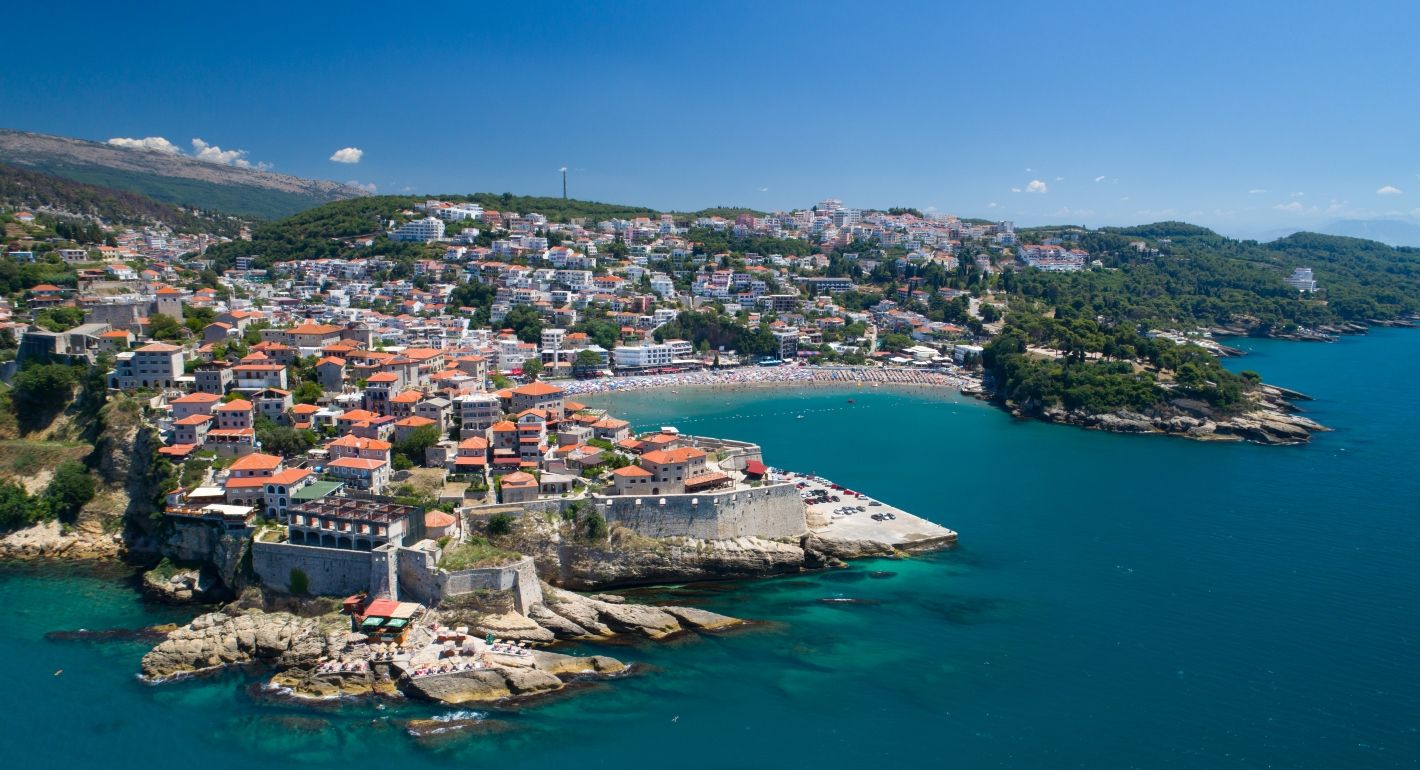
The pattern crystallized along Montenegro’s coast in the town of Ulqin/Ulcinj, where a Gulf-backed development project promised to transform the country’s southern shoreline into a luxury tourism hub. Initial announcements placed the value of the investment at €35 billion ($41 billion)—a figure later revised downward with little public explanation—capturing how spectacle often precedes substance.13
The focus of this vision was Plazhi i Madh/Velika Plaža, which, with 13 kilometers (8 miles) of uninterrupted sand and dunes, is among the longest beaches in the Adriatic. The main investor, Eagle Hills, entered the scene through the Montenegro-UAE cooperation agreement, which effectively exempted both sides from procurement rules. In practice, this arrangement removed the requirement for tenders or competitive bidding—the very standards Chapter 5 was designed to entrench.
The Montenegrin government promoted the initiative as a sign of modernization, yet the process revealed how laws could be reshaped around a single investment. Velika Plaža became the emblem of this approach. Despite its steady contribution to the country’s economy, Ulcinj, which is home to much of Montenegro’s Albanian minority, has long been sidelined from major infrastructure plans and depends almost entirely on tourism, fisheries, and seasonal work.14 This structure sustains livelihoods but offers little protection against externally driven transformation. The concession’s high-end model risked displacing this local economy, turning public coastline into private leverage while cloaking discretionary governance in the language of European modernization.
After the Montenegro-UAE agreement was signed in spring 2025, Montenegrin civil society mobilized with unusual coherence. The Network for Affirmation of the Nongovernmental Sector (MANS) revealed that the deal contained clauses that would allow land to be allocated “without the need for public bidding or procurement.”15 Meanwhile, the Center for the Protection and Research of Birds launched a petition to protect Velika Plaža, warning that the concession bypassed Montenegro’s planning and nature-protection laws.16 Ulcinj Mayor Genci Nimanbegu, together with journalists and local environmental groups, demanded transparency about the project in the country’s parliament.17 And the Dr. Martin Schneider-Jacoby Association highlighted the scheme’s risks to the Buna/Bojana Delta ecosystem.18 Multiple civil society organizations appealed for Podgorica to fully align with EU standards before rather than after accession.
Most striking was the unity of the response: Albanians, Montenegrins, and Serbs acted together to defend common ground, illustrating a form of Europeanization that emerged from within rather than being imposed from outside. The European Commission took note but avoided open criticism. The Ulcinj development was reportedly raised in working-level reviews of Chapter 5, yet quiet monitoring replaced formal scrutiny—a cautious approach that, according to an EU delegate familiar with the process, reflected internal restraint. Participants in a subsequent policy roundtable in Ulcinj perceived this diplomatic approach as symptomatic of a wider credibility gap in EU oversight.19
The project’s environmental dimension amplified the tension between compliance and capture. Velika Plaža and the Bojana Delta together cover roughly 1,600 hectares (4,000 acres) of wetlands and dunes, and host over 250 bird species, including more than twenty that are endangered.20 Despite international conservation designations, both zones are exposed to construction pressure. As a signatory to the Barcelona Convention for the protection of the Mediterranean and the United Nations Protocol on Integrated Coastal Zone Management, Montenegro has pledged to integrate biodiversity protection into its coastal policy, but implementation remains selective. Environmental-impact assessments exist, yet cumulative-impact analysis and land-sea coordination mechanisms are largely absent. The result is a governance framework that sounds European but functions through discretion.
The Montenegro-UAE agreement required parliamentary ratification because it created binding obligations under international law and granted exemptions from domestic procurement rules. It was narrowly ratified in a second round of voting by forty-one of Montenegro’s eighty-one members of parliament and soon became a symbol of this elasticity.21 After local resistance intensified, the main investor, Mohamed Alabbar, announced his withdrawal, citing a loss of interest. Yet, he has since renewed his engagement through a partnership in the Lake Shas/Šas area with a local businessman.22 Reports that landowners in the Zogaj/Zoganje area intend to offer Alabbar private land parcels during a December 2025 visit highlight a familiar dynamic: In conditions of inconsistent institutional signals, citizens treat land as a short-term commodity. These side channels do not undermine the suspension of the main project but rather illustrate how institutional volatility shapes local incentives.23
While the large-scale Velika Plaža project remains suspended, such side arrangements suggest that despite civic pressure, quiet EU scrutiny, and domestic recalibration, negotiations continue behind the scenes. This pattern has further eroded public confidence and reinforced the perception that legality is negotiable and that visibility, not compliance, defines success.
Even within this volatility, civic oversight has produced incremental corrections. Municipal councils have begun demanding transparency in concession procedures; environmental authorities have strengthened their zoning reviews; and nongovernmental organizations (NGOs) have launched monitoring initiatives led by watchdog groups to track public-private partnerships. In a country of just over 600,000 inhabitants, such measures matter: They demonstrate that even under constrained institutions, accountability can grow from below when public vigilance aligns with EU observation.
Reporting by the Center for Investigative Journalism of Montenegro (CIN-CG) and Slobodna Evropa shows that besides the UAE deals, Montenegro has since concluded further interstate agreements that enable major projects to bypass standard public-procurement procedures. These include a draft agreement with Hungary for transportation and information technology infrastructure and one with France for infrastructure, energy, and digital projects, which includes formal anticorruption safeguards and stricter integrity provisions. Slobodna Evropa notes that several deals are being signed shortly before December 26, 2025, when Montenegro’s new obligation to align all of its international agreements with EU law goes into force. While the current arrangements fall outside the scope of EU law, their proliferation highlights how Montenegro’s margins of discretion allow external partners to operate through opaque channels—reinforcing the need for denser governance before accession.24
Montenegro’s experience illustrates how EU enlargement toward states with rule-of-law deficits can foster political economies shaped by corrosive capital—where external investment exploits governance gaps instead of closing them. Corrosive capital emerges not in defiance of Europeanization but under the cover of it, by exploiting the distance between formal alignment and genuine accountability. When investment serves simultaneously as a symbol of reform and a vehicle of capture, the boundary between progress and privilege collapses. What is unfolding along Montenegro’s coast is therefore more than a domestic episode: It is a microcosm of how EU enlargement functions when rules are bent to accommodate political expedience.
The limits of the current dynamic are also visible in Montenegro’s efforts to attract EU investment. An EU-sponsored investment conference in 2025 generated high-level political visibility but limited follow-through. The event was meant to showcase the EU’s commitment to couple enlargement with financial engagement, yet Western investors remained hesitant. Many cited an unpredictable business environment and inconsistent enforcement as deterrents—concerns that underscored the gap between legislative alignment and practical credibility.25
The conference, though symbolic, thus became an illustration of how political momentum without economic delivery leaves the field open to alternative actors. In the months since the event, the space created by the EU’s cautious investment posture has increasingly been filled by non-EU partners that offer faster, less conditional financing, confirming a self-reinforcing cycle of dependence that enlargement has yet to break.26
The Belgrade Waterfront is one of the clearest examples of corrosive capital in the Western Balkans. Announced in 2014 as a €3.5 billion ($4.1 billion) redevelopment of 100 hectares (247 acres) along Belgrade’s riverfront, the project was presented by the Serbian government as a symbol of national renewal and global ambition. In practice, it revealed how foreign investment can thrive on legal exceptions and political discretion rather than clear rules.
The project’s main investor, also Eagle Hills, received extraordinary privileges, including exemptions from tendering, customs duties, and planning procedures. As in the Montenegrin case, these benefits were granted through a special law that bypassed public-oversight and urban-planning requirements.27 The result was a project sustained by political protection, financed on opaque terms, and insulated from public scrutiny. The Belgrade Waterfront thus illustrates how external capital can exploit weak governance not by breaking the law outright but by reshaping it to fit its purpose.
From the start, the project breached Serbia’s own planning framework. Rather than enforce existing urban-planning and procurement rules—which were already aligned on paper with EU standards—the authorities introduced ad hoc regulations tailored to the investor’s needs. The government declared the development a “project of national importance,” enabling special laws and amendments to Belgrade’s urban plan that matched the investor’s requests while excluding public consultation and environmental reviews.28
In response, two collectives—Ministry of Space and Who Builds the City—mobilized architects, planners, and citizens to file over 2,000 formal objections. Nearly all were dismissed.29 The campaign evolved into Don’t Let Belgrade D(r)own, a civic platform that exposed irregularities, bypassed censored media with its own newspaper, and turned protest into performance: The now-iconic yellow duck, at once a symbol of a scam in Serbian slang and of resilience, became shorthand for resistance to capture.30
The development’s 2015 contract formalized a joint venture that granted the investor a 68 percent stake and Serbia 32 percent.31 The investor supplied €150 million ($174 million) in equity and a €150 million loan, while Serbia financed more than €1 billion ($1.2 billion) in preparatory works, including a €280 million ($324 million) loan from the investor itself.32 Over €1.2 billion ($1.4 billion) of public land was transferred without compensation, with rights convertible and saleable to third parties.33
By 2024, Belgrade Waterfront Limited had earned €145 million ($168 million), while Serbia’s budget received barely €3 million ($3.5 million) annually.34 Property prices inside the complex, which range from €3,500 to €11,500 ($4,100 to $13,300) per square meter, contrast sharply with the city’s €620 ($718) median monthly salary, underscoring how the project fueled speculation rather than meeting housing needs.35 As the scheme expanded, its exceptional legal status began to translate into equally exceptional methods of enforcement.
The authoritarian tactics used by the government in Belgrade caused further outrage.36 On the night of Serbia’s 2016 parliamentary election, around thirty masked men with bulldozers illegally demolished buildings in the city’s Savamala district, a key part of the project area. They destroyed property, restrained night watchmen, and threatened witnesses. Police did not intervene, and it was later revealed that top city officials had ordered the operation.37
This blatant abuse of power triggered mass protests, led by Don’t Let Belgrade D(r)own, which drew up to 25,000 participants, making them at that point the largest antigovernment protests in Serbia since 2000. The movement demanded accountability, defended public resources, and later transformed into the political organization Green-Left Front, which is now represented in the national parliament and the Belgrade City Assembly.
The European Commission has repeatedly acknowledged that politically driven exemptions and opaque procurement practices undermine Serbia’s alignment with EU standards on public finance, competition, and the environment. The commission’s 2025 report on Belgrade’s progress toward EU accession noted that “public investment management and public procurement procedures still use exemptions from standard procedures, undermining the attainment of a unified and transparent system for investment planning and management and preventing fair competition.”38
Yet, this language is technical and avoids a direct reference to the Belgrade Waterfront. Despite these issues being flagged in the commission’s annual progress reports, they have not triggered consequences in terms of conditionality or funding—revealing a persistent headache in the EU enlargement process: how to balance political stability with accountability when rule bending becomes a tool of governance.
Although protests could not stop the Belgrade Waterfront project, they did succeed in politicizing urban development. Today, nearly every Belgrade neighborhood has an informal group that resists investor-driven urbanism and proposes alternative plans. These movements’ activism exposes how opaque development fuels local distrust of institutions and deepens the perception that rules exist only to be bypassed. What this case makes clear is that defending the public interest is a gradual but cumulative process through which citizens are steadily reclaiming their right to shape the city’s future.
The Belgrade Waterfront story encapsulates the wider challenge of EU enlargement without enforcement. Civic resistance has redefined public infrastructure as the front line of accountability, yet EU engagement has remained largely procedural. The challenge for the EU is to move from awareness to influence—ensuring that the union’s governance standards apply not only in the chapters of accession negotiations but also in the everyday practice of investment.
The Durrës Yachts and Marina project is a €2 billion ($2.3 billion) redevelopment plan to transform Albania’s main cargo port into a luxury marina, complete with high-rise residential buildings, hotels, and berths for super yachts.39 The deal grants sweeping privileges to its foreign developer while placing the public on the hook for hidden costs. The outcome is a transaction that trades regulatory discipline for spectacle—where prestige substitutes for accountability and EU language is used to legitimize domestic shortcuts. The marina has thus become a case study in corrosive capital: investment that exploits regulatory discretion, bypasses oversight, and transfers risk onto the state.
Framed as a step toward EU-aligned maritime standards, the project reimagines the Port of Durrës—through which more than 90 percent of Albania’s maritime trade passes—as a high-end waterfront.40 Prime Minister Edi Rama hailed the scheme as transformative, promising 12,000 new jobs and a European facelift for the coast. The lead developer, Eagle Hills, partnered with the Albanian Seaports Development Company to form the business entity Durrës Marina, 67 percent of which is owned privately and 33 percent by the state.41
The initiative grew from a 2020 strategy by the Albanian Ministry of Infrastructure and Energy that proposed moving cargo operations out of the city and redeveloping the waterfront for tourism. That year’s bilateral cooperation agreement with the UAE opened the door for investment; by December 2021, the project had been granted “strategic investor” status, unlocking public land, tax exemptions, and fast-track approval. The final contract followed in January 2023.42
The impressive figures conceal a deep asymmetry. Spanning 80.9 hectares (200 acres), the development’s €2 billion valuation rests on an initial €160 million ($185 million) of injected capital—half guaranteed by the state—and on speculative real estate sales to finance the remainder.43 Though not formally illegal, this structure exposes Albania’s public finances to investor risk and contradicts EU state-aid principles that prohibit shifting private liabilities onto taxpayers. Half of the starting sum was channeled through Albanian intermediaries whose ownership traced back to offshore structures; the contracted company even changed names multiple times in 2022. Meanwhile, Eagle Hills secured generous fiscal relief, including exemptions from contributions to social-housing and infrastructure funds. Estimates put forgone housing-fund revenues at roughly €57 million ($66 million), effectively converting public money into a private subsidy.44
Procurement offered no corrective. There was no transparent bidding: The deal was concluded through direct negotiation with Eagle Hills, sidestepping open tendering and raising concerns among opposition political parties and watchdogs about fairness and legality.45 Their criticism was echoed by the European Commission, which withdrew a €28 million ($32 million) grant previously earmarked for modernizing the existing Durrës port.46 Then–European commissioner for neighborhood and enlargement Olivér Várhelyi warned that such contracts must uphold transparency, competition, and equal treatment—principles ignored under this arrangement.47 No parliamentary inquiry followed, reinforcing perceptions that exceptional treatment had become standard practice.
There is an additional, underdiscussed cost to turning Durrës from a cargo port into a playground for the wealthy: Someone must still handle the commercial cargo. That task now falls to Porto Romano, a replacement commercial port 10 kilometers (6.2 miles) north of Durrës. Its first construction phase is estimated at €390 million ($452 million), with total costs between €600 million and €800 million ($695 million and $926 million)—largely public money.48 The state has already committed €385 million ($446 million).49 A request by the North Atlantic Treaty Organization (NATO) that Porto Romano accommodate military logistics could further inflate costs. What was promoted as a privately driven transformation has effectively produced a second, publicly funded megaproject. Albania thus lost an EU grant and assumed a double fiscal burden: building a marina for investors and a new port for itself.
The project’s legal architecture mirrors the pattern seen elsewhere in the region: laws adjusted to fit projects, exceptions justified as progress, and oversight replaced by political discretion. In Albania’s centralized system, the asymmetry between investor leverage and institutional capacity is particularly stark. In return for transferring major public assets and privileges to Eagle Hills, the state carries speculative risk, lost revenue, and the full financial burden of building a replacement port. Official promises of jobs and prestige are largely rhetorical; the investor’s potential upside is real and protected, while public exposure grows.50
For the EU, the Durrës case underscores the limits of conditionality when investment politics outpace regulatory discipline. The project has come to symbolize the pattern of rule bending packaged as reform—a perception echoed in investigative media and civic commentary that describes Durrës Marina as “a deal for the few.”51 The episode illustrates how the strategic-investor model, initially designed to attract development, can instead institutionalize privilege and opacity. The result is not only fiscal strain but also an erosion of trust, as citizens watch EU standards invoked to legitimize discretionary governance. Unless governance catches up with ambition, the yachts in Durrës will keep floating on public debt rather than genuine reform.
While the Durrës Yachts and Marina project exposed the financial mechanics of corrosive capital, Porto Romano revealed its environmental cost. What began as a redevelopment of Albania’s principal port for luxury tourism has created a chain reaction of ecological displacement, institutional opacity, and public liability. Under the banner of modernization, pollution has not been cleaned but relocated, and accountability replaced by discretion.
When the Albanian government reclassified Durrës as a tourism hub, it pledged to move commercial shipping north to Porto Romano—an industrial zone already scarred by decades of petroleum storage and chemical waste. Construction of the new cargo port began soon after the marina deal was signed, turning a private redevelopment into a dual transformation financed largely by public funds. Official documents describe Porto Romano as a state-of-the-art green port, yet feasibility studies are incomplete, impact assessments delayed, and remediation plans thin.52 Dredging and land reclamation required to build deep berths risk stirring up toxic sludge that contains heavy metals and hydrocarbons, threatening nearby wetlands and aquifers that sustain local fisheries and agriculture.53
North of Durrës, the Fllakë Lagoon and adjacent wetlands—important habitats for herons, flamingos, and collared pratincoles—now sit between access roads and spoil heaps left by preliminary works. Fishermen from nearby villages say the water has grown murkier and the fish scarcer, though no official monitoring data have been made public.54 The area lies along the Adriatic Flyway and is recognized by BirdLife International as an Important Bird Area and a Key Biodiversity Area, yet enforcement of conservation rules is largely tokenistic. Critics argue that the Durrës port redevelopment has been driven by opaque, top-down decisions with limited meaningful public consultation, despite the project’s scale and long-term impact.55 This pattern of symbolic participation and deferred assessment shows that Albania’s environmental governance operates more as choreography than as control.
The environmental relocation carries social costs as well. Small fishing cooperatives from Porto Romano have lost docking space to dredging operations and face uncertain futures.56 Compensation mechanisms, though promised, remain undefined. Meanwhile, most construction jobs are short term and subcontracted to firms from Tiranë, doing little to offset local displacement.57 The redistribution of risk and opportunity follows a familiar pattern: Privilege accumulates in the city’s luxury zone, while exposure to pollution and precarity shifts to its periphery.
This is a story not simply of state weakness but of mutual complicity—between political elites seeking visibility, investors seeking privileged access, and local administrations eager for short-term gain. Albania’s legislation formally aligns with EU environmental directives and now covers more than 21 percent of the country’s territory with protected-area designations.58 Yet, major infrastructure and tourism concessions repeatedly target those very zones—Durrës, Narta, and Sazan among them. Impact assessments exist, but enforcement is selective; planning frameworks contain EU language but are discretionary in practice. Corrosive capital thrives precisely in this gap between compliance and conviction.
The European Commission’s 2023 report on Albania’s progress toward EU membership noted “limited strategic planning and weak implementation of environmental legislation,” citing “political influence over major investment decisions.”59 As in the Durrës Marina case, Brussels’s criticism was confined to procedural language. Although the commission canceled its €28 million ($32.6 million) grant after the original Durrës Port rehabilitation project was redefined, it did not attach further conditions or enforcement measures—illustrating the EU’s preference for quiet signaling over enforceable accountability. The absence of consequences has a cumulative effect: It normalizes exceptionalism and signals to investors that rules are negotiable. The EU’s preference for diplomatic quiet over confrontation thus perpetuates the same governance fragility that enlargement is meant to address.
Despite official claims of environmental modernization, Porto Romano’s ecological debt will likely outlast its infrastructure. The site’s long-term remediation—soil decontamination, wetland restoration, and coastal stabilization—will fall to the public sector, not the investors whose projects triggered the relocation. The port may one day boast efficient terminals and NATO-compatible logistics, but it will stand on land whose contamination predates, and is now compounded by, the very reforms invoked to justify it.
What emerges is less a tale of environmental neglect than one of environmental redistribution—a question of who bears the burden of growth. The transformation of Durrës and Porto Romano shows how under weak governance, foreign investment rewrites not only economic rules but also ecological boundaries. It turns nature itself into collateral for political prestige. The Adriatic’s glittering marinas and ports may soon stand as monuments to this paradox—where progress shines brightest just above the murkiest waters.
Across the four cases, a clear pattern emerges. Foreign direct investments—predominantly from the UAE—have injected visibility and capital into politically strategic projects, but with limited scrutiny over governance standards. In each instance, the formal gatekeepers differed: National governments negotiated directly with investors; parliaments, when involved, largely endorsed rather than examined the deals; and municipal authorities were either sidelined or politically aligned with central power. EU engagement, meanwhile, was confined to procedural critique and technical reporting, rarely extending to conditionality or on-site monitoring.
The absence of embedded expertise—legal, environmental, or financial—meant that administrative discretion often filled the void left by weak institutions. Yet, where civic mobilization and local oversight emerged, as in Belgrade, the exposure of irregularities tempered the political narrative of success and kept space open for accountability. While the EU remains the region’s main trade and aid partner, its financial presence has been slow to translate into tangible, rules-based investment—leaving room for faster, less accountable capital to shape development priorities.
The contrast across the cases underscores that resilience against corrosive capital depends not only on a country’s EU accession status but also on the density of scrutiny and credible investment exercised at all levels: local, national, and European.
These dynamics point to a broader regional pattern. Across the Western Balkans, the problem is not the presence of foreign investors but the conditions that make opacity profitable. Weak procurement enforcement, discretionary zoning, and fragmented oversight create an environment in which shortcuts cost less than compliance. In such settings, investors have little reason to internalize EU standards—governance adapts to capital, not the other way around. The result is a pattern where legality is negotiated rather than applied, and public interest is routinely traded for fiscal or political expediency.
For the EU, the challenge is structural: how to change the incentives that make informality the path of least resistance. Enlargement already gives the EU a degree of leverage through the acquis, the Instrument for Pre-accession Assistance (IPA), and the Growth Plan for the Western Balkans. Yet, these tools are often detached from the realities of how investment decisions are made on the ground. Reconnecting them would mean using existing instruments—procurement screening, budget support, and technical assistance—to reward transparency and penalize discretion. Investors follow opportunity, not obligation. The EU’s task is to ensure that transparency and rules-based governance become part of that opportunity.
The Montenegrin case illustrates the risk of this gap on a smaller scale with more at stake, but the logic extends regionwide: When the EU’s financial presence lags behind its political rhetoric, others step in to define what development looks like. The issue is a lack not of norms but of credible consequences when those norms are breached. The EU’s influence depends as much on visible partnership as on regulatory persuasion. Unless the union’s financial engagement and governance agenda advance together, enlargement will remain a vocabulary of standards without the means to sustain them.
There are five specific steps—four within the Western Balkans and one beyond the region—that the EU can take to turn its leverage into credible frameworks for accountable investment.
Closing EU accession negotiation chapters should mark genuine reform, not symbolic progress. Each milestone must deepen the union’s presence where governance is weakest—the rule of law, environmental regulation, and procurement. These are the areas most vulnerable to corrosive capital.
The EU and its member states could embed twinning experts, seconded judges, financial auditors, and environmental assessors directly into ministries, regulatory agencies, and local inspectorates in the Western Balkans. Their task would be not to police but to identify in real time where legal loopholes, administrative shortcuts, or political discretion distorts alignment with the acquis—especially in the governance of foreign investments and concessions. Integrating such monitoring into the chapter-closure process would link a candidate’s EU accession progress to visible improvements in its public procurement, environmental permitting, and judicial independence.
To complement this institutional presence, the EU should also deploy targeted investment under the Growth Plan for the Western Balkans and the Global Gateway into transparent, high-visibility projects that embody the same standards it promotes—making the union’s economic footprint a tool of credibility rather than rhetoric. Using existing instruments, such as twinning, IPA technical assistance, and member states’ expertise, the EU could turn its enlargement machinery into a practical firewall against corrosive capital. This approach would rely on presence, not punishment: the EU moving closer to reform instead of demanding it from afar.
Transparency needs architecture. While individual NGOs and journalists in the Western Balkans monitor procurement and concession deals, their work remains fragmented and nationally confined. There is no regional mechanism that provides systematic oversight of strategic foreign investments.
A Western Balkan watchdog on corrosive capital, co-funded by the EU and run by regional think tanks, NGOs, and investigative media, could fill this gap. It would track major infrastructure and real estate projects—especially those backed by Gulf capital—and publish dashboards, audits, and cross-border comparisons. Modeled on the European Environment Agency’s observatories, it would reinforce European Commission reporting and strengthen parliamentary scrutiny.
The watchdog could function as a reporting mechanism under the governance pillar of the commission’s Directorate General for Enlargement and the Eastern Neighborhood and the EU-Gulf Dialogue’s annual review, co-funded through the IPA or the Open Government Partnership to ensure sustainability beyond donor cycles. More importantly, by making data and analysis public, such a watchdog could shape the broader discourse on foreign investment, turning transparency itself into a source of accountability.
Recognition mechanisms, such as annual accountable-investment awards for transparent municipalities, could link oversight with prestige, making accountability visible and rewarding.
Ulcinj illustrates a recurring governance problem: The municipalities most affected by large projects are sidelined from decisionmaking, leaving them unable to shape or safeguard local outcomes. Municipal authorities are often excluded from high-stakes investment negotiations, even though it is mayors, councillors, NGOs, and journalists who usually first expose governance failures. Yet, in places where local councils are politically captured, their inclusion alone would not prevent abuse. The aim is not to empower compromised structures but to create direct EU partnerships with municipalities and civic actors willing to operate transparently—a safeguard that widens accountability beyond the national executive. Strengthening such local capacity is therefore not symbolic; it builds resilience where central oversight fails.
The commission, together with EU member states and delegations in the region, should institutionalize direct partnerships with municipalities, especially in coastal and border areas where the tension between tourism, investment, and sustainability is most acute. One model could be municipality twinning to pair Western Balkan towns with EU counterparts experienced in balancing development and environmental protection. These partnerships could be piloted through the Western Balkans Investment Framework (WBIF) and supported by the EU’s Technical Assistance and Information Exchange (TAIEX) instrument and Twinning Light projects focused on participatory planning, environmental permitting, and coastal zoning.
Technical exchanges, temporary secondments, and urban-planning residencies would help local administrations anticipate risks rather than react to them. This approach would bring the EU’s expertise closer to where it matters most, helping municipalities manage foreign-backed projects on their own terms, with accountability built in from the start.
Ulcinj—Montenegro’s southernmost municipality and a hub for tourism and the country’s Albanian minority—offers a unique opportunity for the EU to demonstrate what membership in practice looks like before accession. Establishing a regional center for sustainable tourism and environmental governance in the municipality—co-financed by the EU and open to third-country partners, such as the UAE—would address one of the region’s most persistent gaps: the shortage of qualified professionals capable of applying EU environmental and spatial-planning standards in tourism-dependent economies.
Designed as a training and research hub, the center could offer executive and vocational programs in environmental permitting, sustainable tourism, and coastal management, in partnership with the College of Europe in Tiranë, local universities, and technical institutes. A quota system that balances gender, regional, and linguistic representation would make it a genuine laboratory of inclusion. With accreditation under the EU’s Erasmus+ education program, EU students and professionals could also participate, fostering people-to-people exchanges and helping demystify the region’s complexity.
Beyond capacity building, the center would allow the EU to demonstrate participatory urban planning and cross-border cooperation between Montenegro and Albania—the two front-runners for EU accession. That would turn the regulatory burden of accession into a shared opportunity.
EU engagement with the UAE should aim not to validate its investment model but to shape how its capital operates in the union’s neighborhood. Emirati ventures seek long-term legitimacy and stable access to European markets—offering the EU real leverage. Structured cooperation can channel Gulf investment through frameworks aligned with EU standards of transparency, sustainability, and fair competition. The objective is disciplined influence rather than accommodation.
One avenue is to pilot a municipal investment platform that redirects Gulf financing from flagship megaprojects toward transparent, community-focused initiatives—renewable energy, green mobility, and heritage restoration. Projects could be designed in line with WBIF principles and subject to EU procurement and environmental standards. Such a model would demonstrate that Gulf capital can deliver credible public outcomes when routed through European rules.
Complementing this, an EU-led observatory linked to the EU-Gulf Dialogue could monitor major UAE-backed projects, benchmark them against environmental, social, and governance standards, and issue annual transparency assessments. Regional civil society networks and independent experts could contribute to the analysis, ensuring that visibility itself becomes a governance tool and that scrutiny is shared rather than adversarial.
Finally, the EU should make compliance with procurement, environmental, and social standards a condition for preferential access to European co-financing mechanisms—including Global Gateway visibility and partnerships with EU financial institutions. For investors, this would strengthen credibility; for the EU, it would turn governance commitments into enforceable practice.
The Western Balkans are not passive terrain for external influence. The administrations, municipalities, and civic actors of the countries in the region already define the boundaries of what foreign capital can do—for better or worse. The EU’s task is to reinforce those boundaries with credible frameworks so that every investment—whether Emirati, European, or domestic—operates under the same standards. When governance and sovereignty align, EU enlargement becomes not a promise of future order but a demonstration of it in practice.
Iliriana Gjoni is a research analyst at Carnegie Europe, where she focuses on EU enlargement and Western Balkan politics. She also performs as a concert pianist, using music to support cultural diplomacy across Europe.
Iva Čukić is co-founder and director of the Ministry of Space collective and was one of the key figures in the Don’t Let Belgrade D(r)own campaign between 2014 and 2018.
Alba Çela is the executive director and head of the European Program at the Albanian Institute for International Studies (AIIS) and a member of the Western Balkans 6 Strategy Group.
Aleksandër Trajçe is the executive director of Protection and Preservation of Natural Environment in Albania (PRENA).
This paper builds on discussions from a policy roundtable held in Ulqin/Ulcinj, Montenegro, in September 2025, co-organized with the Centre for Civic Education, the Center for the Protection and Research of Birds, and the Dr. Martin Schneider-Jacoby Association, whose representatives presented case analyses that informed this study.
Iliriana Gjoni gratefully acknowledges the contribution of Greta Ricci, whose research assistance helped map the theoretical framing and recent regional developments ahead of the Ulcinj roundtable. Iliriana Gjoni is solely responsible for the analysis and recommendations presented.

Research Analyst, Carnegie Europe
Iliriana Gjoni is a research analyst at Carnegie Europe, where she focuses on EU enlargement and Western Balkan politics.

Iva Čukić
Co-Founder and Director, Ministry of Space Collective
Iva Čukić is co-founder and director of the Ministry of Space collective and was one of the key figures in the Don’t Let Belgrade D(r)own campaign between 2014 and 2018.

Alba Çela
Executive Director and Head of the European Program, Albanian Institute for International Studies
Alba Çela is the executive director and head of the European Program at the Albanian Institute for International Studies (AIIS) and a member of the Western Balkans 6 Strategy Group.
Aleksandër Trajçe
Executive Director, Protection and Preservation of Natural Environment
Aleksandër Trajçe is the executive director of Protection and Preservation of Natural Environment in Albania (PRENA).
Carnegie does not take institutional positions on public policy issues; the views represented herein are those of the author(s) and do not necessarily reflect the views of Carnegie, its staff, or its trustees.

The EU can impose sanctions but struggles to enforce them without the United States. With Washington increasingly disinterested in backing European interests, the bloc must now fend for itself.


Nicu Popescu, Tiago Antunes

Russia is testing the waters of NATO’s mutual defense clause. What do strikes in Romanian territorial waters mean for the alliance’s posture toward Moscow?

Dimitar Bechev

The truth of the strategic situation is that Europe and Russia are extremely unlikely to be able to “turn the page” on their confrontation within the next two decades.

Arkady Moshes

With its public finances in shambles, the far right polling at 35 percent ahead of the 2027 presidential election, and a growing protest movement, is France’s crisis a threat to the EU’s geopolitical awakening?

Rym Momtaz, ed.

Ahead of a tough winter for Ukraine, Donald Trump’s swing back toward Russia bodes ill. But instead of panicking, Kyiv’s European allies are focusing on action.
Rym Momtaz