This publication is part of Carnegie India's Practitioner Paper Series, which highlights the experiences of professionals from the world of politics, public administration, and business.
Note: This paper was written while the author was serving as director at Mach33.aero. All analysis and assessments reflect developments up to June 2025. The views and opinions expressed herein are solely those of the author and do not reflect those of any organization with which the author is affiliated.
Introduction
India’s space sector is undergoing a significant transformation, evolving from its government-centric origins to an ecosystem that increasingly accommodates private enterprise.
Since the establishment of the Indian Space Research Organization (ISRO) in 1969, India’s space program has primarily operated as a state-driven initiative. The 2020 space reforms and subsequent Indian Space Policy (ISP) 2023 have redrawn the boundaries between public and private participation in this strategic sector.
The economic implications are substantial. India’s space economy was valued at $8.4 billion in 2022 and is projected to grow fivefold to reach $44 billion by 2033. In the wake of regulatory changes, there has been tremendous entrepreneurial activity in the space sector, with estimates pointing to more than 190 startups emerging between 2023 and 2025. This policy shift aligns with broader global trends. The global space economy is expected to be valued at $1.8 trillion by 2035, creating competitive pressures and opportunities for countries developing their space capabilities. The impact is visible across multiple segments of the value chain. Indian companies like Skyroot Aerospace, Pixxel, and Agnikul Cosmos have developed technologies in launch vehicles, satellite imaging, and rocket manufacturing, respectively—areas previously dominated by government agencies.
This paper examines the relationship between India’s evolving space policy and the corresponding growth in private space ventures. It analyzes both the enabling factors created by recent regulatory changes and the persistent challenges facing entrepreneurs in this capital-intensive, highly regulated industry.
A Brief History of India’s Space Journey
India’s journey into space began long before commercialization entered the picture. The foundations were laid in the 1960s when Dr. Vikram Sarabhai established the Indian National Committee for Space Research (INCOSPAR) in 1962. This evolved into the ISRO in 1969, with a clear vision articulated by Dr. Sarabhai—to use space technology for national development rather than competing in the superpower space race.
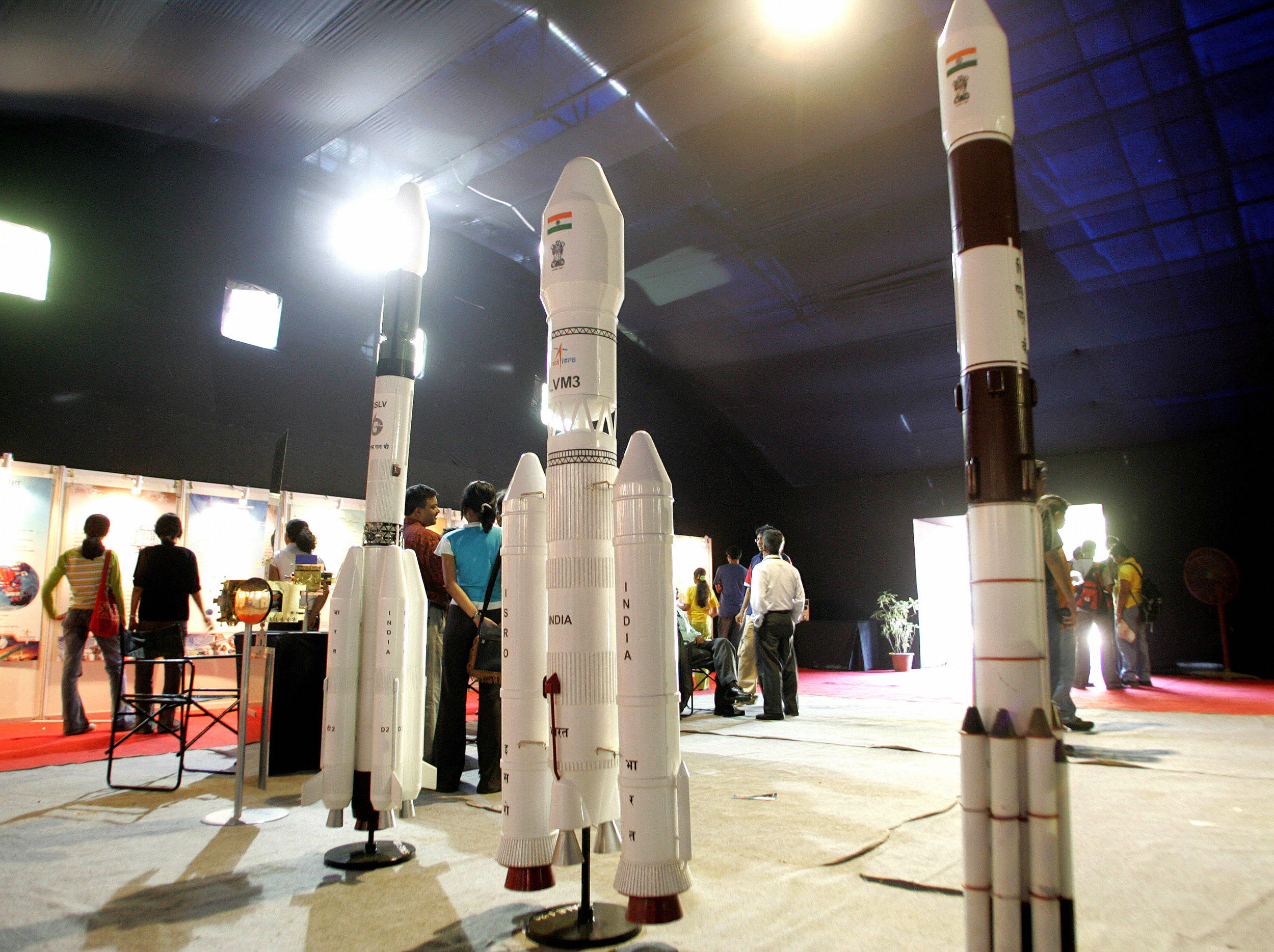
The early decades focused on building indigenous capabilities from scratch. India recently celebrated the fiftieth anniversary of ISRO’s first satellite, the Aryabhata, launched in 1975 aboard a Soviet rocket. The satellite was completely designed and fabricated in India and laid the crucial foundation for future space programs by developing infrastructure, skills, and scientific experimentation processes. The subsequent development of the SLV-3 rocket under Dr. APJ Abdul Kalam in 1980 made India only the sixth nation to have an indigenous satellite launch capability. The developments were significant milestones and placed India among a select group of countries to have a full-scale, vertically integrated space program.
Through the 1980s and 1990s, ISRO systematically expanded its technological repertoire. The Polar Satellite Launch Vehicle (PSLV), which made its successful flight in 1994 after initial setbacks, became the workhorse of India’s space program. Accounting for over half of India’s launches and known for its remarkable reliability (approximately 92 percent success rate) and cost-effectiveness, the PSLV has been crucial for key missions including Chandrayaan-1 (first lunar probe) and Aditya-L1 (first solar observatory). The Geosynchronous Satellite Launch Vehicle (GSLV) program followed, aiming to reduce dependency on foreign launchers for heavier satellites.
ISRO’s operational model during this period was distinctly government-centric. The Space Commission, the Department of Space (DOS), and ISRO formed a closed ecosystem that handled everything from policy formulation to technology development and mission execution. Private participation was limited primarily to component manufacturing and as suppliers rather than independent operators.
This centralized approach had notable successes. Remote sensing satellites, like the Indian Remote Sensing (IRS) series, provided valuable data for agriculture, water resources, and urban planning. The Indian National Satellite System (INSAT) communication satellites revolutionized telecommunications and broadcasting across the subcontinent.
Technological evolution played a crucial role in fulfilling Dr. Sarabhai’s vision of space for national development. The miniaturization of satellites, improvements in sensor technology, and advances in data processing capabilities transformed how space assets could serve developmental goals. What began as basic remote sensing evolved into sophisticated applications—crop yield prediction, disaster management systems, and natural resource mapping—directly contributing to India’s socioeconomic objectives, as documented in the Economic Survey of India 2023.
The institutional framework supporting these developments was distinctive. Unlike many Western counterparts, India’s space program had to justify its existence against competing national priorities, like poverty alleviation, healthcare, and basic infrastructure. This resulted in a unique funding model where space activities were consistently evaluated based on their direct contributions to national development. ISRO’s annual budget, typically hovering around 0.06 percent of India’s GDP (compared to NASA’s approximately 0.3 percent of the United States’ GDP), reflected this pragmatic approach. This constraint fostered a culture of frugal innovation. The Mars Orbiter Mission, completed at approximately $74 million—less than the production budget of the Hollywood film Gravity—exemplified this approach, as noted by the Harvard Business Review in its analysis of ISRO’s cost-effectiveness. ISRO’s ability to deliver cost-effective solutions became its distinguishing feature in the global space community.
But by the early 2010s it was soon apparent that the global space ecosystem had already entered the NewSpace Era, exemplified by the convergence of technological breakthroughs (like reusable rockets and cloud computing) and disruptive ventures de-risked by the government’s policy shifts in the space sector.
Global Headwinds: Disruptive Innovations and Policy Shifts
The global space landscape experienced a profound transformation in the 1990s and 2000s. The United States started shifting toward commercial partnerships in the 1990s with policies that encouraged private launch services. NASA’s Commercial Orbital Transportation Services (COTS) program, initiated in 2006, marked a decisive turn toward public-private partnerships for space transportation. The emergence of SpaceX, following its first successful launch in 2008, demonstrated the potential of private sector–led innovation.
Europe was similarly evolving. The European Space Agency (ESA) established its Technology Transfer Programme (TTP) in the 1990s to commercialize space technologies. By the 2000s and 2010s, countries like France and Luxembourg had implemented dedicated space laws to facilitate private sector participation.
Even Russia, with its traditionally state-dominated space program, began restructuring Roscosmos in the 2010s to improve commercial competitiveness, though with mixed results.
China, while maintaining strong state control, had begun encouraging private space companies around 2014, leading to the emergence of firms like LandSpace and iSpace that worked on several critical technology capabilities, including reusable launch vehicles.
Technological disruption accelerated these global shifts. The “smaller, faster, cheaper” paradigm in satellite development, advances in manufacturing techniques, including 3D printing, standardization of components, and the CubeSat revolution, dramatically lowered barriers to entry. Reusable rocket technology, pioneered by SpaceX, fundamentally altered launch economics and disrupted the launch industry as a whole.
Against this backdrop of global transformation, India’s space ecosystem remained relatively unchanged until the late 2010s. The ambiguities regarding private sector rights and responsibilities meant that they continued to be risk-averse in committing sizeable investments, and foreign direct investment (FDI) rules were yet to be reformed. Technology transfer mechanisms remained restrictive, and private entities had limited access to facilities and testing infrastructure due to the lack of established processes and protocols. It was becoming clear that despite its remarkable successes, the government-centric model of the space ecosystem needed reforms to incentivize innovation and capital deployment from the private sector.
By the time India began considering major reforms, the contrast with global trends was stark. The worldwide NewSpace revolution had already produced multiple unicorns, reusable rockets had become a reality, and satellite constellations were being deployed by private companies at unprecedented scales, led by multiple technology breakthroughs.
This global context made it increasingly clear that policy reforms were necessary if India wanted to capture a greater share of the growing global space economy and foster domestic innovation beyond the confines of government programs, while still honoring Dr. Sarabhai’s vision of space technology for nation-building.
Indian Space Reforms: Is Policy Ready to Meet the Moment?
Key Provisions of the Indian Space Policy
The ISP 2023 establishes a detailed, multi-layered framework for the governance, development, and commercialization of India’s space sector. Its salient provisions include:
- Clear definitions and applicability: The policy provides precise definitions for terms such as “space activity,” “space object,” “orbital resource,” and “non-government entity (NGE),” ensuring legal clarity for all stakeholders.
- Vision and strategy: The policy’s vision is to augment India’s space capabilities, foster a robust commercial ecosystem, and leverage space for socio-economic development, environmental protection, and national security. The strategy emphasizes holistic growth, advanced R&D, open procurement of space services, and a stable regulatory environment.
- NGE participation: NGEs, including companies, LLPs (limited liability partnerships), trusts, and associations, are permitted to undertake end-to-end activities. These include building, launching, and operating satellites and launch vehicles, establishing ground infrastructure, using Indian or foreign orbital resources, making International Telecommunication Union filings, and even engaging in asteroid mining and resource recovery, subject to IN-SPACe authorization.
- IN-SPACe’s role: The Indian National Space Promotion & Authorisation Centre (IN-SPACe) is the single-window agency for authorizing all space activities, including launch, operation, data dissemination, and infrastructure use. IN-SPACe also issues guidelines on safety, security, liability, and prioritization of shared facilities, and is responsible for promoting industry clusters, technology transfer, and equitable access to public infrastructure.
- ISRO’s refocused mandate: ISRO is tasked with research and development, capacity building, and sharing technologies and data.
- Data policy: The policy offers open access to remote sensing data. Higher-resolution data is freely available to government entities and to NGEs at transparent prices, once authorized by IN-SPACe.
- NSIL and DoS Roles: NewSpace India Limited (NSIL) handles commercial deployment of space assets, while the Department of Space (DoS) retains policy formulation and inter-ministerial coordination responsibilities.
Table 1: Roles of Key Entities
|
Entity
|
Role and responsibility
|
|
IN-SPACe
|
Authorize, regulate, promote, and facilitate all space activities; issue guidelines; manage infrastructure and data access.
|
|
ISRO
|
R&D, mission planning, capacity building, and technology and data sharing
|
|
NSIL
|
Commercial deployment and operation of space assets
|
|
DoS
|
Policy formulation, inter-ministerial coordination, international representation
|
Amended Foreign Direct Investment Policy
In late 2024, the government approved amendments to the FDI policy in the space sector to align with the ISP 2023. The revised framework divides the satellite sub-sector into three categories with defined investment limits:
- Up to 74 percent FDI under the automatic route for satellite manufacturing and operations,
- Up to 49 percent for launch vehicles and spaceports, and
- Up to 100 percent for the manufacturing of space components and subsystems.
The policy aimed to attract greater private and foreign investment, improve the ease of doing business, and expand India’s role in the global space market. It was expected to generate employment, promote technology absorption, and support domestic manufacturing. The amendment also provided regulatory clarity and a structured pathway for foreign participation in India’s space sector. It balanced strategic control with economic openness, positioning India to capture a larger share of the commercial space economy.
Taking Stock: The Impact of Space Reforms
Two years from its announcement, the ISP has served as a foundational document that clarifies, liberalizes, and modernizes India’s approach to space. By codifying definitions, roles, and authorization procedures, the policy provides much-needed legal clarity for private and public actors. The policy’s explicit support for NGEs across the value chain—manufacturing, launch, operations, resource utilization, and even asteroid mining—marks a significant liberalization. NGEs are no longer limited to being vendors; they can independently operate and innovate. It has also created an open market for space services, where public and private entities can procure from any provider, fostering competition and efficiency. The policy mandates equitable access to ISRO-developed infrastructure and data, with IN-SPACe managing prioritization and pricing, which could democratize the sector and spur innovation.
India’s space ecosystem has also undergone significant structural changes since the ISP 2023, and private sector participation has increased across manufacturing, launch services, and satellite operations. While progress has been notable, the sector remains in early development stages with substantial challenges ahead.
Impact on the Private Sector
Funding data reveals mixed trends. India’s space tech sector recorded $130.2 million in funding during 2023, up 33 percent from 2022’s $97.7 million, driven by increased investor interest and strong government support. However, total funding fell sharply by 55 percent to $59.1 million in 2024, despite an increase in deal count from eleven to fourteen. This suggests investor selectivity and market correction rather than a sector decline. Between 2020 and 2024, Indian space startups raised approximately $353.5 million across seventy-two funding rounds, reflecting steady long-term growth despite short-term fluctuations.
Recent fundraising activity underscores the rapid maturation of India’s private space-tech ecosystem. Since 2025, Indian space startups have collectively raised roughly $150 million in FY2025 alone, pushing cumulative sector funding over $617 million and signaling sustained investor interest in deep-tech space infrastructure.
A recent slew of announcements is testament to the growing technology capabilities of Indian startups. GalaxEye, based in Bengaluru, is developing its second satellite with a sharp 0.5-meter resolution and under three-day revisit time, targeting defense and disaster response markets. Digantara, which focuses on space situational awareness, recently announced the commissioning of its space surveillance satellite capable of tracking objects as small as 5 centimeters orbiting the earth. Bellatrix Aerospace is developing satellite propulsion solutions and announced an innovative satellite designed to operate in Ultra-low Earth Orbit (180–250 kilometers), a range previously unattainable. Astrome works on satellite-based 5G connectivity solutions. PierSight provides satellite imaging analytics for security and infrastructure monitoring, and unveiled its maiden satellite, Varuna, in 2024, capable of 24/7 maritime surveillance with advanced Synthetic Aperture Radar technology. SkyServe, an edge computing startup, tested AI models for satellite data processing in collaboration with NASA JPL and D-Orbit, while Azista BST Aerospace is capable of capturing high-resolution video from space with its ABA First Runner (AFR) satellite. Many of them have gone on record to highlight the support they have received from ISRO and IN-SPACe in achieving some of these technology milestones.
Impact on the Public Sector
ISRO’s achievements post the reforms have also generated renewed public enthusiasm for the sector. Chandrayaan-3’s lunar south pole landing in August 2023 made India the fourth nation to achieve this milestone, while Aditya-L1 reached its solar observation destination in January 2024. The successful space docking demonstration in January 2025, with the Space Docking Experiment (SPADEX) mission, positioned India as the fourth country to master this critical capability, essential for the planned Gaganyaan human spaceflight program.
IN-SPACe has emerged as the single-window nodal agency, streamlining authorizations and launching initiatives like the Satellite Bus as a Service (SBaaS) to help startups and small firms access standardized satellite platforms, lowering entry barriers and accelerating commercialization.
The facilitation enabled by IN-SPACe has led to renewed public engagement even after the reforms. India’s ambitions now extend to human spaceflight and deep-space science. Group Captain Shubhanshu Shukla of the Indian Air Force became the first Indian to conduct seven India-centric experiments on the International Space Station as part of the NASA-ISRO Axiom Mission 4, a landmark in international collaboration and scientific research. On the lunar frontier, Chandrayaan-3’s thermal probe results have broadened the prospects for water ice prospecting on the Moon, while the upcoming ISRO-JAXA LUPEX mission will drill for and analyze lunar water ice, providing data crucial for future Artemis missions and global lunar exploration. ISRO’s adoption of “Make-in-India” chips for space missions marks a significant step toward domestic supply chain resilience. Defense and security applications also remain a strategic priority. Under Chairman V. Narayanan, ISRO plans to add 100–150 satellites in the next three years, significantly enhancing India’s surveillance, disaster management, and defense capabilities. While many of these initiatives and applications currently remain purely in the public sector, these reforms can encourage the private sector to contribute more to future scientific missions. The private sector has already played a crucial role in several aspects of the Chandrayaan-3 mission, contributing to hardware components, propulsion engines, essential ceramic parts, tracking, and communication systems. The momentum is expected to continue, with global companies shifting manufacturing supply chains and deepening local partnerships to cater to future missions like the human spaceflight mission.
Another key feature has been the emergence of states as champions for the space sector. Tamil Nadu’s TN Space Bays initiative seeks to attract investment and nurture a manufacturing and R&D ecosystem for space technology. Gujarat and Karnataka have also introduced policies at the state level to encourage investments and economic activity in the space sector. It is clear that the ISP has provided a much-needed thrust to the startup and innovation ecosystem, but some critical gaps remain.
From Intent to Execution: Evaluating the Framework
While India’s space policy reforms represent a significant shift from the traditional government-dominated approach, several critical aspects deserve deeper examination to ensure they deliver their intended impact.
Integration and Strategic Alignment
The current policy framework provides a robust foundation that can be further optimized though deeper integration with broader national science and technology initiatives. There is a significant opportunity to synchronize the objectives of the space policy with other national missions like Digital India, Smart Cities, and Ayushman Bharat Digital Mission. For example, an institutionalized mechanism for seamless satellite data sharing with the Smart City network would be useful to enable various key applications.
Furthermore, the Department of Science and Technology (DST) and the Department of Biotechnology (DBT) possess significant research capabilities and funding mechanisms. By fostering cross-fertilization between different scientific departments, India can maximize returns on public investments and create a more cohesive ecosystem for innovation.
Bridging Research and Commercialization
As India’s space industry matures, the focus must shift towards streamlining the transition from basic research to commercial applications. While ISRO has developed impressive technological capabilities with applications in several sectors, there is an opportunity to refine the industry transfer mechanisms based on the technology readiness levels and co-development requirements. Technologies with broader potential, including battery technologies and composites, have seen higher uptake compared to more specialized electronics and antennas, which require co-development and design integration. The government frequently puts out lists of technologies available for commercialization through the industry. The challenge is not only the mechanism itself but also the stage of these technologies, many of which require further development to be market-ready.
This highlights the need for intermediary structures—such as specialized technology transfer offices and joint development programs—that can accelerate the translation of research into market-ready products. The Space Technology Cells established by ISRO in academic institutions represent a step in this direction, whose expansion will further help to meet industry demands.
Testing and Validation Infrastructure for India’s Space Ecosystem
To support India’s burgeoning space sector, there is a need to move toward a more unified model for accessing the testing and validation infrastructure. While substantial facilities exist across various government institutions, including laboratories at the Council of Scientific & Industrial Research, ISRO, Defence Research and Development Organisation (DRDO), the Indian Institutes of Technology, and the DBT, the next strategic step involves optimizing the protocols of industry access to these national assets based on their availability and criticality in the startup product development cycles. For example, testing access to an ultrasonic wind-tunnel, which is a strategic requirement, will need to be treated differently compared to an environmental testing EMI/EMC (electromagnetic interference/electromagnetic compatibility) facility.
IN-SPACe’s technical center in Ahmedabad represents a positive step forward, offering dedicated resources and facilities along with mentorship for space entrepreneurs. This initiative must evolve into a comprehensive nationwide network to appropriately address the growing demands of India’s expanding space sector. Such a network would coordinate testing resources across institutions and geographies, creating a unified access point for the industry.
To comprehensively address this challenge, a strategic approach is required: conducting a thorough survey of existing testing capabilities across institutions, creating a centralized database of these resources, and implementing a streamlined process for industry access.
By establishing clear protocols for facility sharing, reasonable fee structures, and technical support systems, India can transform this infrastructure gap into a competitive advantage. These protocols must cover a reasonable geographic spread and have a mechanism to incorporate feedback to collate upcoming needs for better resource planning. This would accelerate indigenous space technology development while optimizing national resource utilization, ultimately strengthening India’s position in the global space economy.
Government as Anchor Customer
There is a growing need for government departments to serve as anchor customers, providing a reliable foundation for the private space sector. Policy interventions like the National Geospatial Policy 2022 have laid out the framework for enabling access to geospatial data and its widespread use in governance. The implementation can be further strengthened by establishing clear procurement targets for startups. Moving towards value-based procurement models, such as quality cum cost-based selection or outcome linked payments, will allow public agencies to better leverage the agility and innovation of emerging companies. This evolution in public procurement will more closely align practical execution with the ambitious policy intent.
Refocusing Startup Priorities
A closer look at the funded Indian space startups shows that a majority of them focus on upstream activities like satellite manufacturing and launch services, while fewer startups work on downstream applications that have immediate commercial potential. This stands in stark contrast to global trends, where downstream applications constitute approximately 70 percent of commercial space activities. The potential for space technology to address pressing challenges in agriculture, disaster management, and resource monitoring remains largely untapped. There needs to be a deeper appreciation of the problem statements and the implementation context, which can be realized through collaborative efforts with organizations and non-profits supporting mission-oriented science entrepreneurs to create impact.
Engaging Large Conglomerates
The ISP 2023 framework has been more successful in attracting startups than in mobilizing established industrial houses. This could be attributed to the thrust on enabling and facilitating early-stage technology development, while procurement pathways and market creation efforts are still works in progress. Unlike in the defense sector, where major conglomerates have made significant investments following policy reforms, the space sector has seen relatively limited participation from India’s industrial giants. One of the driving factors in the defense sector has been joint ventures with global primes and significantly higher value contracts to derisk investments.
The role of space capabilities in national security became evident during India’s Operation Sindoor, when satellite imagery proved crucial for situational awareness. It has also brought forth the need for policy instruments specifically designed to incentivize large-scale private investments in strategic space technologies.
Learning from Global Models
China’s approach offers valuable lessons. Their space program explicitly develops technologies with both civilian and military applications, creating larger markets and justifying higher investments. For example, China’s commercial space sector is targeting a $344 billion market by 2025, approximately 40 percent from dual-use technologies.
Similarly, the European Space Agency’s ARTES 4.0 program for technology development in satellite communication demonstrates how the government can share development risks while stimulating private innovation.
Legislative Foundation
Perhaps most critically, India’s space reforms remain primarily administrative rather than legislative. The transition from administrative directives to a permanent legislative foundation represents the next milestone in the sector’s journey. A comprehensive Space Activities Bill, under consideration since 2017, would provide the legal certainty needed for long-term private investments.
The experience of countries like Luxembourg, Japan, and the UAE demonstrates how dedicated space legislation can attract international capital and create a stable environment for industry growth. Without similar legal foundations, India’s space reforms may struggle to achieve their full potential.
Future Directions: Emerging Initiatives and Opportunities
Recent developments in India’s space ecosystem point toward an evolving landscape that aims to address some of the foundational challenges identified earlier. These initiatives, while still nascent, offer promising pathways for strengthening the sector’s commercial viability and technological capabilities.
Augmenting Launch Capabilities
In a boost for developing launch vehicle manufacturing capabilities in the private sector, the first privately manufactured PSLV Technology Demonstration Satellite (TDS-1) is currently lined up for launch. The contract includes the manufacture of up to five PSLV XL awarded to a consortium of Larsen & Toubro (L&T) and Hindustan Aeronautics Limited (HAL) and comes with a high level of indigenization of several components.
Another notable development has been the transfer of technology for Small Satellite Launch Vehicles (SSLV) to HAL, which will commercialize ISRO’s small satellite launch capabilities and boost Low Earth Orbit (LEO) demand. Unlike PSLV, this agreement provides a non-exclusive, independent mass production mandate to HAL once the technology transfer handholding phase is completed. The revenue impact of these will only be visible in the coming years, but they have strategic implications in the context of securing wider domestic launch capabilities.
Accelerating Technology Validation
ISRO’s Project for Orbital Experiments in Microgravity Environment (POEM) and SSLV Module in LEO Experiment (SMiLE) platforms represent significant steps toward addressing the technology maturation gap. POEM repurposes the final stages of PSLV rockets as orbital testbeds, enabling startups to conduct in-orbit validation of components and subsystems without bearing the full cost of dedicated satellite missions. This initiative directly tackles one of the most challenging aspects of space technology development: flight heritage and qualification. Establishing clear, consistent standards for flight experiment selection, integration, and operational parameters would significantly enhance the value of these platforms.
Expanding Market Awareness and Adoption
IN-SPACe’s recent initiative to organize space technology awareness workshops across different states and industry sectors marks a pragmatic approach to demand generation. These workshops are conducted in collaboration with industry bodies like the Confederation of Indian Industry (CII) and Federation of Indian Chambers of Commerce and Industry (FICCI) and focus on practical applications of space technology in sectors like agriculture, urban planning, disaster management, and telecommunications.
Another encouraging trend is the rising awareness of the potential of space applications in sectoral ministries at the central government level, like in the case of the Department of Fisheries, leading to budget and procurement announcements. Expanding them to include structured follow-up mechanisms—such as sector-specific challenge programs with committed funding—could accelerate the transition from awareness to adoption.
Enhancing Early-Stage Funding
The IN-SPACe seed fund scheme was a promising first step toward addressing the critical gap in the availability of early-stage patient capital for establishing proof of concepts. The current funding cap of ₹1 crore (approximately $107,200) per startup, while substantial, is insufficient to meet development costs, particularly for hardware-intensive applications.
The Technology Adoption Fund (TAF), announced in February 2025, represents a more pragmatic approach, designed specifically to support the commercialization of space technologies. With a much higher allocation of ₹25 crore (approximately $2.9 million), the TAF focuses on non-dilutive capital for technology validation and market entry, addressing a critical financing gap. Its effectiveness will depend on the streamlining of disbursement mechanisms and the flexibility of its evaluation criteria to accommodate the unique challenges of space technology commercialization.
Quantifying the Space Economy
A persistent challenge in policy formulation has been the absence of comprehensive data on India’s space economy. The recent initiative by IN-SPACe to develop a standardized framework for measuring the sector’s economic contribution is therefore particularly significant. By clearly defining the scope and boundaries of space-related economic activities, this exercise will enable more targeted policy interventions and better assessment of policy outcomes. More importantly, the disaggregated analysis across subsectors will be able to highlight specific opportunities in downstream applications and ground segment technologies that have previously received insufficient attention.
Building the Entrepreneurship Pipeline
IN-SPACe’s Pre-Incubation and Entrepreneurship (PIE) initiative focuses on university-level engagement and students interested in pursuing entrepreneurship. It aims to build a pipeline for the next generation of innovators from India in the space sector, representing a strategic investment in long-term ecosystem development.
However, such programs would benefit from stronger alignment with industry needs and clearer pathways to entrepreneurship. Integrating experiential learning opportunities through industry internships and problem-based projects would enhance the program’s effectiveness in building the next generation of space entrepreneurs.
Coordinating State-Level Initiatives
The emergence of state-specific space policies in Karnataka, Tamil Nadu, and Gujarat signals growing recognition of the sector’s economic potential at the regional level. These policies typically offer complementary incentives such as land allocation, tax benefits, and specialized infrastructure for space technology companies.
While this federal approach enables policy experimentation and competition, it also risks creating fragmentation and inefficient resource allocation. A coordinated national framework that identifies state-specific specializations based on existing industrial ecosystems would maximize the impact of these initiatives. For example, Karnataka’s strength in satellite software, Tamil Nadu’s expertise in electronics manufacturing, and Gujarat’s capabilities in mechanical systems could form the basis for complementary rather than competing development paths.
Toward Innovation, Inclusion, and Impact
The downstream impact of these advances is already visible. ISRO satellites have been used to estimate record wheat production, demonstrating the value of space data for agriculture and food security. India’s space startups have an opportunity to build on goodwill and build solutions for disaster management, communication infrastructure, and economic inclusion.
In the aftermath of the policy directives and their implementation, India’s space ecosystem shows signs of addressing its structural challenges. The effectiveness of these efforts will ultimately depend on their implementation, consistency, funding adequacy, and alignment with broader economic objectives. Looking ahead, India’s space sector is targeting a $44 billion market by 2033, with a focus on leveraging public-private partnerships, indigenous technology, and global collaborations to drive growth across defense, telecom, and commercial applications. The sector’s trajectory is clear: Innovation, inclusivity, and strategic autonomy will define the next decade of the Indian space industry. The moment demands visionary entrepreneurs willing to pursue complex, multi-decade challenges to build India’s space story and fulfil the promise of science for meaningful social, economic, and environmental impact.