

Article
The world’s climate adaptation funds must adapt to address the ways that climate change is deepening state fragility.
Ray Salvatore Jennings, Paul Andrew Mayewski
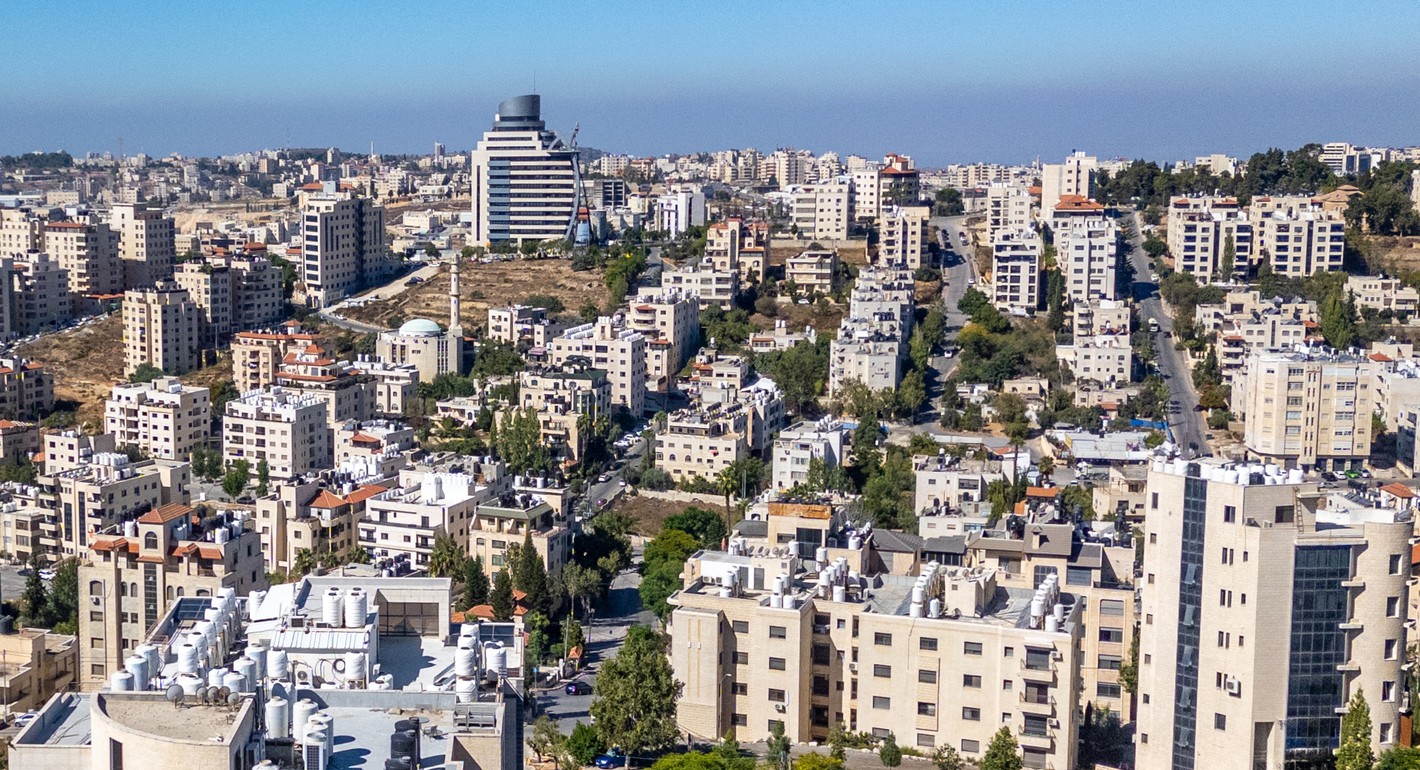
Capital city of the Palestinian Territories in the occupied West Bank. (iStock)
Barriers ranging from weak legal frameworks to ongoing, occupation-related limitations are constraining Palestine from achieving its ambitious climate targets.
Divided between the Mediterranean coastline of the Gaza Strip and the fertile, mountainous terrain of the West Bank, the Palestinian territories encompass a geographically diverse yet environmentally vulnerable landscape. The region follows a Mediterranean semiarid climate characterized by hot, dry summers and mild, wetter winters, although several areas of both territories experience increasingly arid conditions.
The outlook for climate adaptation in Palestine is alarming. Today, only one in ten Gazans has access to potable water, and in the West Bank, 42 percent of the population is living under extreme vulnerability to climate effects. Combined with trends of reduced precipitation and increased emissions that severely weaken Palestine’s water and food systems, the ongoing Israeli occupation further complicates Palestine’s recovery and, far more, the possibility of a sustainable recovery that equally benefits Palestinians and Israelis.
Any water management rights allotted to Palestine in the Oslo Accords are essentially negated by Israel’s veto power, consequently allowing for Israel to overabstract water resources and further limiting Palestine’s water availability and quality. Israel controls over 80 percent of the water resources in Palestine that originate from the Mountain Aquifer and the Jordan Valley, which Palestine has no access to despite bordering the Jordan Valley and Mediterranean Sea. UN projections show that climate change coupled with human activities—including urbanization, population growth, and contamination of water and soil due to Isarel’s war in Gaza—will significantly disrupt Palestine’s water, energy, agricultural, and health sectors well beyond existing shortcomings. Furthermore, as a result of climate impacts and absent legal oversight on Israel’s overabstraction, the rate of water renewal—how fast water resources are replenished, through methods like runoff and rainfall—has decreased, not only for the water resources Palestine currently accesses but also across the surrounding region (see figure 1).
Palestinian farmers and herders will be the first to bear the economic effects of droughts, desertification, and the occupation’s settlement expansion and mobility restrictions on arable land. The majority of Palestine’s arable land lies in Area C—the parts of the Occupied Palestinian Territories that are under complete Israeli civil and military control. Around 80 percent of Palestine’s agricultural sector is rain-fed. With drivers like waning groundwater resources, sea-level rise, and saltwater intrusion stifling agricultural productivity and incomes, food sovereignty will likely remain a distant reality in the West Bank. In the grim case of Gaza, stabilizing food security to pre–2023 conflict levels—already far below nutritional requirements—would at the very least require Israel to satisfy the UN-recommended quota of 500–600 food trucks a day, a far cry from current supplies.
With Israel’s war seeing no end in sight, Palestine will have to ensure its survival before it can imagine plans for reconstruction. While Palestine has introduced sustainable reform to its governance strategy, it will struggle to realize its goals without structural and legal interventions that, one, decentralize Israel’s ownership over natural resources in the Occupied Palestinian Territories and, two, minimize Israel’s restrictions on import materials and permit issuances for infrastructure development projects, restrictions that have thus far prevented the construction of water, energy, and sanitation systems in Palestinian territories. Long-term, adaptive capacities in Palestine will require inclusive and participatory governance—both domestically and internationally—that does not separate the issue of sustainability and climate impacts from the realities of occupation.
Palestine’s updated nationally determined contribution (NDC) (in 2021) identifies rising temperatures, declining precipitation, and water scarcity as central climate risks shaped by structural and governance challenges. These challenges are compounded by constraints on land use, water access, energy supply, and infrastructure development, particularly where planning and resource management are limited. Consequently, Palestine’s climate strategy emphasizes adaptation, prioritizing resilience in water management, agriculture, and ecosystem protection.
Palestine’s climate strategy comprises three frameworks: the 2021 NDC, the National Adaptation Plan (NAP), and commitments to the UN Sustainable Development Goals by 2030. The NDC sets emissions reduction targets of 17.5 to 26.6 percent below business-as-usual by 2040, while the NAP provides an implementation road map with concrete interventions costing a minimum of $3.5 billion, including Gaza’s $510 million desalination plant and West Bank aquifer rehabilitation. The NDC diagnoses vulnerabilities and sets targets; the NAP operationalizes adaptation with budgets and timelines. However, integration is weak: The NAP lacks a mitigation framework, and neither document addresses the barriers related to Israel’s occupation (such as Area C restrictions, import limitations, and water resource control), which both documents identify as the primary implementation constraint. This gap between planning and actionable strategy is the most significant weakness in Palestine’s climate policy.
These strategies are supported by Environmental Law No. 7 of 1999, Palestine’s central legal framework for environmental protection and resource management. The policy frameworks align with four Sustainable Development Goal acceleration priorities: inclusive and sustainable economic growth, resilience and protection for vulnerable groups (such as farmers, fishing communities, women, and refugees), improved public services, and effective, accountable institutions. These priorities integrate climate resilience with national development planning and institutional capacity building.
Palestine’s mitigation strategy presents two emissions scenarios. Under the status quo, which assumes a continuation of restrictions in Area C (61 percent of the West Bank land area), emissions reach 15.93 metric tons of carbon dioxide equivalent (MTCO₂e) by 2040, or 2.4 times 2015 levels, with a reduction target of 17.5 percent or 2.8 MTCO₂e. Under a sovereignty scenario with greater Palestinian control, baseline emissions rise to 22.5 MTCO₂e due to increased economic activity, but the reduction target increases to 26.6 percent or 4.6 MTCO₂e. Mitigation actions span energy, transportation, waste management, and agriculture/forestry through renewable energy expansion to 20 to 33 percent by 2040, public transport development, recycling programs, and climate-smart agricultural practices.
Palestine’s adaptation strategy, outlined in the NAP and NDC, also addresses high climate risk exposure and protects vulnerable sectors through four priorities:
Implementation depends on international finance and technical support and is shaped by restrictions on land use and infrastructure development. Many projects require coordination with Israeli authorities; limited or delayed coordination directly slows adaptation efforts. Energy supply is constrained, with up to 94 percent of electricity imported, reflecting broader dependence on external energy sources (see figure 2), limiting renewable expansion, and leaving supply dependent on external tariffs. Prior to 2023, Gaza relied on approximately 120 megawatts of electricity purchased from Israel, covering roughly half of its total demand, at a cost of $11 million per month, deducted from Palestinian tax revenues collected by Israel on the Palestinian Authority’s behalf. Water access is similarly shaped by external pricing, with significant supply purchased from Israeli providers (primarily Mekorot) at 2 to 3 shekels per cubic meter, exceeding local prices and straining budgets. Infrastructure development is restricted, particularly in Area C, limiting construction of water, sanitation, and energy systems. In Gaza, limited wastewater treatment results in untreated discharge into the Mediterranean, while reduced fishing zones strain coastal ecosystems and livelihoods. Financial capacity is limited, with NDC costs estimated at $5.93 billion, leaving climate initiatives dependent on external funding.
Although adaptation is prioritized in the NDC and NAP, this emphasis is not reflected in binding legal frameworks. Both documents identify vulnerabilities and priorities but remain at the strategy level without enforceable regulations, institutional responsibilities, or timelines. The NDC provides quantified mitigation targets, but the NAP lacks similar specificity: It identifies priorities (such as wastewater reuse, irrigation modernization, and climate-resilient agriculture) without binding targets or deadlines.
Adaptation remains descriptive rather than actionable, limiting both documents’ effectiveness as operational policy tools.
Adaptation remains descriptive rather than actionable, limiting both documents’ effectiveness as operational policy tools. Participation and institutional coordination remain uneven. Although the NDC and NAP emphasize inclusive development and protection of vulnerable groups, mechanisms for integrating civil society, local actors, and the private sector are limited. Given the adaptation strategies’ dependence on localized responses and sustained investment, these gaps reinforce the disconnect between national strategies and practical execution.
The Environment Quality Authority (EQA), the entity responsible for Palestine’s sustainable development mandates, consistently received the lowest fraction of funding between 2017 to 2025 compared to all other ministries (see attached database). While ministries overseeing vulnerable, climate-sensitive sectors—particularly water and agriculture—made up a significant fraction of Palestine’s fiscal spending, limited support for the EQA indicates that Palestine is still following a siloed, sector-specific approach to resource resilience. Strengthening the EQA, which approaches environmental threats as an integrated issue that more directly acknowledges the impacts of climate change, would be a meaningful step toward optimizing climate risk and adaptation measures.
More importantly, however, the Israel-Gaza war has expelled any potential for tertiary services and capital investments that would have facilitated Palestine’s productivity-focused sectors, including economic and sustainable development (see figure 3). Our budget analysis demonstrates that total development spending in Palestine in 2025 was around 1.4 times smaller than in 2023, with the EQA receiving the largest cut. All economic activity in the Gaza Strip has been reduced to humanitarian assistance and relief operations, and similarly, the West Bank has not been immune to a declining GDP, consequently weakening domestic revenues. Additionally, struggles in publicly funding Palestine’s capacity-building and development can be further explained by Israel’s historic practice of deducting and suspending clearance revenue transfers—taxes collected by Israel on behalf of the Palestinian Authority. In the long run, this has caused severe wealth and income loss for Palestinians.
Palestine’s climate strategies have identified the private sector as a solution for financing Palestine’s climate action, which is subject to an approximately $2.6 billion funding gap. Public funds are expected to cover initial studies and pilot projects, while blended finance mechanisms are proposed to lower risk and attract larger private investments to expand these efforts. Palestine’s Ministry of Agriculture is consistently the highest recipient of public funds. Beyond the economic significance of agroproduction in Palestine and the government’s broader vision of preserving agricultural land as a form of political resistance and survival, the ministry has played a vital role in supporting sustainable and technologically advanced methods for farming and water management. Although energy, water, and food are equally vulnerable to climate change, the Palestinian Energy and Natural Resources Authority (PENRA) only makes up a moderate portion of Palestine’s budget. The war has significantly raised electricity costs and demand. Prioritizing the financing of more efficient, renewable energy deployment can alleviate energy and fiscal pressures in the long run. Additionally, although Palestine prioritizes the energy and water sectors in its regulatory frameworks, this is not reflected in its fiscal plans.
Palestine’s climate governance framework comprises laws, decrees, and regulatory decisions defining institutional roles and implementation processes. Responsibility is concentrated within the EQA, PENRA, Palestinian Water Authority (PWA), and Ministry of Agriculture. Environmental Law No. 7 of 1999, as amended in 2021, establishes EQA’s authority across environmental protection, pollution control, and resource management.
These instruments cover environmental protection, renewable energy, water management, impact assessment, and pollution control, establishing licensing, monitoring, and compliance procedures. Climate policy is embedded within broader environmental and sectoral regulations. The database evaluates thirty-two climate-relevant instruments across goal setting, institutional mandates, oversight, transparency, and accountability. Overall, the framework is administratively structured and clear in assigning institutional roles but focuses on general environmental regulation rather than climate-specific priorities like adaptation, resilience, and vulnerability reduction.
Palestine’s climate governance is institutionally organized and compliance-oriented with defined regulatory responsibilities. Environmental Law No. 7 of 1999, as amended in 2021, establishes the EQA’s authority. The Environmental Assessment Policy institutionalizes impact assessments. Hazardous Materials Regulation No. 5 of 2025 adds regulatory specificity and enforcement capacity. Decision No. 8 of 2020 establishes licensing and regulatory control over groundwater extraction. However, in waste management, responsibilities are assigned to municipalities and the EQA, and the law lacks dedicated financing mechanisms, operational budgets, or implementation of resources, limiting consistent enforcement. The framework is administratively structured and increasingly comprehensive but uneven in translating oversight into implementation.
At the sectoral level, water and energy are the most operationally developed areas due to binding regulatory mechanisms and oversight structures. Decree-Law No. 18 of 2019 amending the Water Law reinforces centralized control led by PWA. The law establishes all water resources as public property under PWA management; requires formal licensing for groundwater extraction, well construction, and water use; and grants PWA authority to amend or revoke licenses for noncompliance. The Water Sector Regulatory Council monitors service providers, approves tariffs, issues licenses, and enforces standards. The 2019 amendment requires monitoring operational performance across production, transport, and distribution while establishing quality standards and financial data systems for continuous regulatory supervision.
Decree No. 14 of 2015 on Renewable Energy and Energy Efficiency divides responsibilities across PENRA, the Palestinian Electricity Sector Regulatory Council, and transmission and distribution companies. PENRA holds authority over strategy, licensing, standards, and tariff proposals. The law includes binding measures: mandatory generation licenses, power purchase agreements for licensed renewable plants, periodic energy audits, and energy labeling requirements. Water and energy governance are operationalized through licensing policies and continuous regulatory monitoring rather than high-level policy commitments alone, providing the clearest examples where climate governance moves beyond strategy into implementation.
Although adaptation is the main priority in Palestine’s NDC and NAP, this does not carry through into the legal framework. According to our calculations, only 20 percent of laws include adaptation provisions, 24 percent mention risk or vulnerability, and 22 percent address mitigation. Core laws like Environmental Law No. 7 of 1999, as amended in 2021, establish the general environmental framework but, aside from energy, do not translate adaptation priorities into concrete, sector-specific requirements such as mandatory wastewater reuse targets, enforceable irrigation efficiency standards, or binding climate resilience requirements for infrastructure planning. This absence of binding enforcement mechanisms reflects a broader disconnect between national strategies and the legal framework. The NDC and NAP provide clear timelines and sector priorities, but most laws lack deadlines or long-term targets. Furthermore, legal development is uneven: Strategies highlight agriculture, ecosystems, and water as key for adaptation, but enforcement is stronger in water and energy than in other high-risk sectors. Strategies emphasize inclusion and protecting vulnerable groups, but most laws do not mandate participation from local communities, civil society, or private actors. Around 44 percent of laws do not reference financial or human capacity. The Hazardous Materials Regulation No. 5 of 2025 imposes detailed technical and safety requirements on operators but does not establish public financing mechanisms. Similarly, the Solid Waste Management Regulation No. 3 of 2019 outlines responsibilities but does not specify sustainable funding structures or long-term investment mechanisms. These gaps are particularly problematic for adaptation, which depends on long-term investment, institutional support, and local-level engagement.
In Palestine, climate governance operates under structural constraints tied to land access barriers, infrastructure constraints, and resource control, shaped by the Israeli occupation. Restrictions in Area C of the West Bank, along with limits on infrastructure development, water access, and energy systems, make it difficult to implement mitigation and adaptation measures, particularly large-scale projects. National strategies have shifted toward smaller, localized adaptation measures. The laws do not create these constraints but fail to account for them. For example, Decree-Law No. 18 of 2019 on water and Decree No. 14 of 2015 on renewable energy focus on licensing and technical management within existing systems without addressing limits on land access, infrastructure expansion, or resource control. The NDC and NAP design around these constraints. Water measures focus on small-scale approaches: wastewater reuse, rainwater harvesting, and rehabilitating existing wells. Energy strategies prioritize decentralized solar and efficiency improvements over large, centralized systems requiring grid expansion or stable electricity imports.
Palestine’s climate change planning documents demonstrate greater operational realism than the legal framework from which they derive authority. However, the laws offer weak enforcement tools for these strategies. Palestine’s climate governance framework demonstrates strong institutional foundations, but adaptation priorities, planning mechanisms, and financial capacity remain insufficiently embedded in binding law, limiting effective implementation of NDC and NAP objectives.
The Middle East and North Africa (MENA) region is slated to be disproportionately affected by climate change. Climate change poses multi-faceted levels of risk for MENA governments, including environmental and biological, socioeconomic, and political risks. This project will provide a regional lens to examine the programs and approaches that several MENA governments are undertaking to address climate change and examine civil society activism and the role nongovernmental organizations play in engaging governments on climate change related issues. This work is primarily funded by the Swedish International Development Cooperation Agency. For inquiries about this project, contact middleeast@ceip.org.

Joy Arkeh
Research Assistant, Middle East Program
Joy Arkeh is a research assistant in the Middle East Program at the Carnegie Endowment for International Peace, where she focuses on climate change, vulnerability, and governance in the Middle East and North Africa.
Nabil Nasser
Former Research Intern, Middle East Program
Nabil Nasser was a research intern in the Middle East Program at the Carnegie Endowment for International Peace.
Carnegie does not take institutional positions on public policy issues; the views represented herein are those of the author(s) and do not necessarily reflect the views of Carnegie, its staff, or its trustees.
The world’s climate adaptation funds must adapt to address the ways that climate change is deepening state fragility.
Ray Salvatore Jennings, Paul Andrew Mayewski
If Indigenous land and water dispossession is ignored, climate adaptation strategies risk reproducing inequalities and worsening acute climate vulnerability.

Frederic Wehrey, Charles H. Johnson
The U.S.-Iran war has crossed a dangerous threshold: water infrastructure in the Gulf is now a target. Ecological statecraft is no longer peripheral to security, it's part of its foundations.


Olivia Lazard, Ali Bin Shahid
When municipalities and local actors are empowered with regulatory authority, knowledge, and resources, they can fill critical governance gaps.

Sabine Saad
For Morocco, integrating gender into climate governance is not simply a matter of social justice. It is a strategic imperative for effective adaptation.
Fadwa Rajouani