

Commentary
Kheder Khaddour
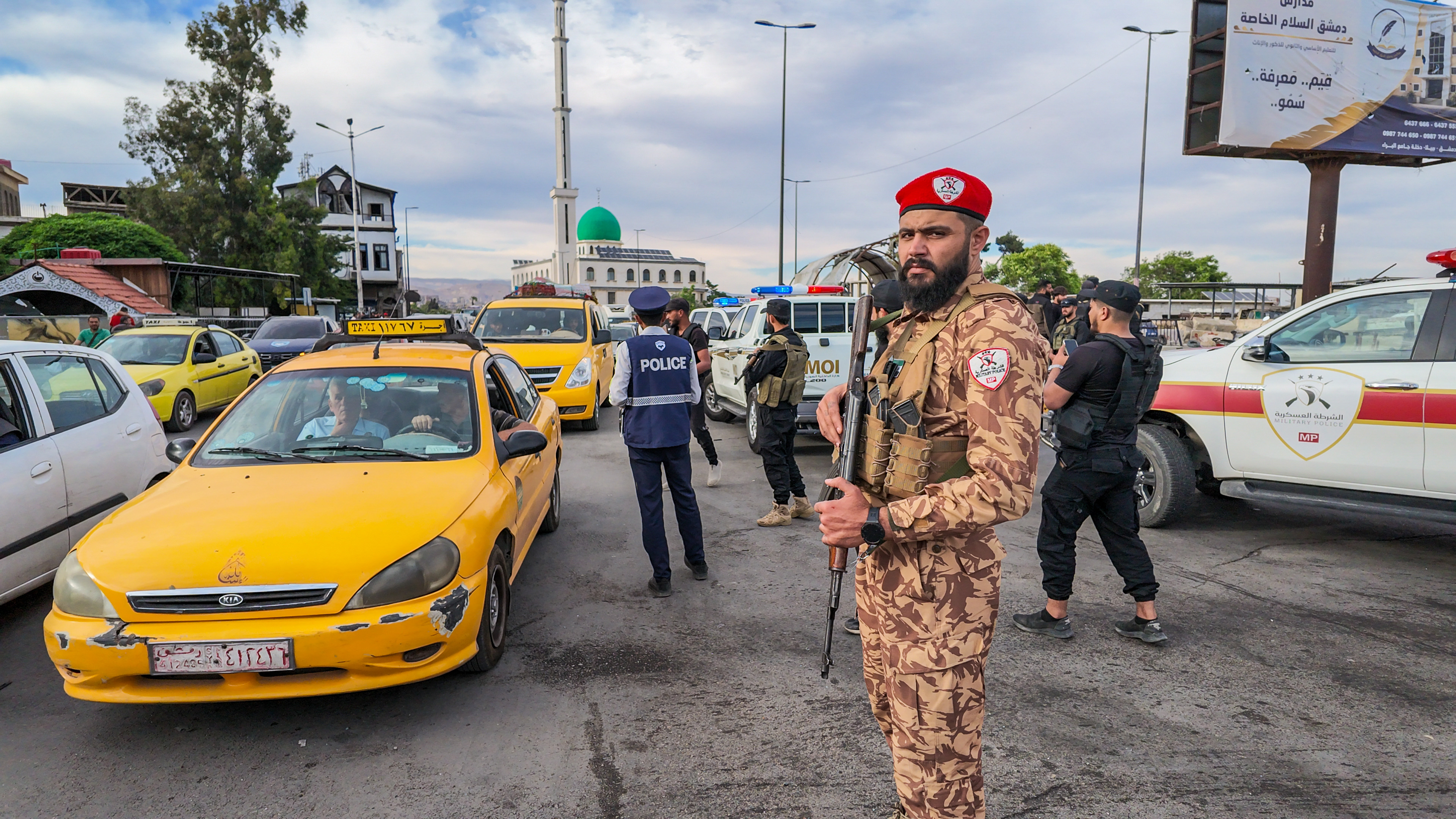
Source: Getty
The country’s armed forces have been reorganized as an emergency measure to prevent national fragmentation, however their diffuse structure on the ground may, in the future, serve only to reinforce fragmentation.
Supported by a grant from the Open Society Foundations.
After the collapse of Bashar al-Assad’s regime in December 2024, Syria entered a transitional phase in a social and political environment deeply shaped by fourteen years of war. This unfolded alongside the return of a displaced population, civilian employees, and local networks dispersed by years of conflict, as towns and markets slowly reconnected with their social surroundings. Armed factions followed a similar trajectory, reconstituting themselves within the geographical and social settings from which they had emerged, before their integration into Syria’s new armed forces. This has not only restored military structures; it has transformed the relationship between the military and society in the post-Assad state.
Syria’s new authorities have adopted an approach to reorganizing the armed forces that is quite different from the one during the years of Assad rule. The leadership was compelled to do so in order to quickly impose its power on the ground against domestic and external challenges that threatened to fragment the country. Under the new system, military units are no longer being managed entirely from Damascus, but are being reconfigured through local structures formed during the war years, whose links to the state are primarily formal. The repercussions of this have to be watched closely, as the consequences may be as challenging for the central government to manage as what Syrian officials have sought to avoid.
Historically, the military divisions of the Syrian armed forces were tied to specific social and geographical regions, managed through a highly centralized center in Damascus. As Syria’s leaders established a transitional authority after December 2024, however, a different pattern emerged. Units were not installed in a top-down process and remained tied to the local communities from which they emerged during the war years. Therefore, these units have tended to operate much more as decentralized local entities.
After the founding of the Syrian armed forces in 1946, military divisions played a central role in political life, especially during the coups that shook Syria in the 1950s and 1960s.1 This changed fundamentally with Hafez al-Assad’s takeover in 1970. Under him, the division was no longer primarily a combat unit, but an instrument of control within the state. This transformation accelerated during the 1980s, especially after the 1984 crisis over Rifaat al-Assad’s effort to seize power from his ailing brother. A form of military feudalism took hold. The division’s principal field of operation was the governorate (muhafaza), not the front with Israel, and its functions expanded to include security, administrative, and economic tasks. Divisional commanders managed a defined territory in a system of military fiefdoms granting them broad autonomy in their units’ operational boundaries.
This system protected the Assad regime from military coups. It created a system of privileges that provided commanders with independent economic resources, reinforcing their attachment to the status quo and raising the cost of any rebellion inside the armed forces. The division became an economic domain in its own right. Services, such as divisional cafeterias, became informal revenue sources as commanders benefited from their proceeds. Agricultural lands belonging to units, including olive groves and cultivated plots, generated additional revenues outside formal financial channels.2 Other informal income schemes emerged within units, including the exploitation of fuel allocations and logistical supplies, as well as practices such as forcing conscripts into productive labor in the division’s area.3 Divisional command was no longer just a military position; it became a favor granted to senior officers for limited periods of time, allowing them to accumulate financial resources and networks of influence before moving on, or retiring.
With the outbreak of the Syrian conflict in 2011, these military fiefdoms, which had bolstered stability, became a structural burden. The regime increasingly relied on local militias to compensate for the weaknesses of regular units, eroding the state’s capacity to manage military operations. Foreign intervention by Iran, Hezbollah, and Russia further undermined equilibrium in the military. No longer functioning as a unified force, the armed forces became a collection of units dependent on external funding, patronage, and operational support.
A major turning point occurred when armed factions succeeded in overthrowing Bashar al-Assad, leading to a comprehensive political rearrangement in Syria. The new leadership established a military operations command, bringing together armed factions under the leadership of Hay’at Tahrir al-Sham, the organization led by Syria’s interim president Ahmad al-Sharaa, which became the framework for managing the transitional phase. After Assad fled to Moscow, the Idlib-based Salvation Government took over administration of state institutions in Damascus, while the old army was dissolved. The authorities appointed Murhaf Abu Qasra defense minister, to oversee a new Defense Ministry. The Victory Conference in late January 2025 consolidated this shift by pledging allegiance to Sharaa, initiating a process of integrating opposition factions into a unified military structure.
The creation of a new army did not revive the armed forces in a conventional institutional sense. Opposition factions were allowed to preserve much of their internal structure and leadership. This defined the army as a defuse body based on negotiations between the center and local units. The army today is composed of twenty active divisions, drawing on fighters from over sixty military factions. While no reliable figures exist for the composition of combatants inside each division, roughly half of the divisions seem to be led by commanders, or built around factions, tied to the regions in which they operate.4 The remaining divisions, however, do not necessarily embody a more “national” or institutionalized character, as many also grew out of local factions and wartime networks, which shaped their cohesion. What differentiates them is the varying degree of local, factional, and wartime continuity.
For example, Jaysh al-Islam, a prominent opposition formation in Douma in the Eastern Ghouta, was incorporated into the 70th Division after years of displacement in northern Syria, with its leadership and networks reestablishing themselves in the suburbs of Damascus. The significance of this lies in the fact that Jaysh al-Islam was not only a military faction. Between 2012 and 2018, it was the dominant armed actor in Douma and much of the Eastern Ghouta, where military authority, local administration, and commercial life developed in close relation to each another. In other words, the faction’s return encompassed a pattern of governance, which coincided with the election of a local council recognized by the authorities in Damascus and the revival of Douma as a central urban space and market in the Eastern Ghouta. In practice, this meant that a local wartime order was reappearing within the confines of the state.
By contrast, developments in eastern Syria demonstrate a different mode of local integration. Factions such as Ahrar al-Sharqiyah, composed largely of fighters originating from the region and operating during the war as part of the Turkish-backed Syrian National Army (SNA), were transformed into the 86th Division under the command of Brigadier General Ahmad Ihsan Fayyad al-Hayes, known as Abu Hatem Shaqra, previously an Ahrar al-Sharqiyah commander from Deir Ezzor. The division was assigned sectors across eastern Syria—in Raqqa, Deir Ezzor, and Hasakeh Governorates—extending toward the Iraqi border. In this case, the state’s return to the east depends on commanders and combatants whose authority is rooted in the same geography as the one they are now expected to secure.
A different pattern appears in the 62nd Division (Al-Amshat), led by Brigadier General Mohammed Hussein al-Jassem (Abu Amsha). It emerged from the Turkish-backed Sultan Suleiman Shah Division of the SNA and was deployed in Hama Governorate, from which most of its combatants originate. The example is important less as a case of territorial representation than for how factional and kinship ties have been able to survive incorporation into the new army. Several brigade-level positions are held by members of the Jassem family. This has deepened the overlap between family structure and military hierarchy, effectively turning the division into a networked extension of the family.
The restructuring of the Syrian army also extends to the former Kurdish-led Syrian Democratic Forces (SDF). Unlike the factions that entered the new order through the Victory Conference and its pledge of allegiance to Sharaa, the SDF had to be incorporated through a separate bargain with Damascus. The SDF forces are being organized into four brigades distributed across the areas of Kobane, Hasakeh, Qamishli, and Malikiyeh, alongside the phased transfer to the central authorities of administrative control over border crossings, oil fields, and civil institutions in Deir Ezzor, Raqqa, and Hasakeh.
In the SDF’s case, Damascus is not using integration to eliminate the organization all at once. Rather, it seeks to break it down into smaller components that are gradually inserted into divisions and brigades under the new Syrian army, while retaining local leadership to ensure operational continuity. There will also be parallel integration of security institutions and administrative structures into central ministries in key urban centers such as Hasakeh and Qamishli. In practice, this is a step-by-step process negotiated under Damascus’ orders.
In southern Syria, particularly Suwayda, a similar logic may apply in restructuring power relations. The governorate is not under the direct control of Damascus, but of armed formations partly unified in a semi-cohesive organizational framework responsible for local security. These formations draw on social-sectarian legitimacy within the Druze community, under the leadership of Sheikh Hikmat al-Hijri, with external support from Israel strengthening their relative autonomy. Reintegrating these formations into the state will probably require negotiated arrangements, similar to the process with the SDF. This is especially true if understandings emerge under international sponsorship that allow the ties between Damascus and these formations to be redefined without direct confrontation.
Within the framework existing today in Syria, neither the example of the SDF nor what might happen in Suwayda is exceptional. Both are expressions of the new military model. The transformation in the Syrian military structure is a shift to a different logic of organizing force. Unlike the old system, which functioned as a patronage network in which military authority was coordinated through hierarchical ties linking the divisions to the regime’s core, the new pattern is more pluralistic and fragmented, albeit anchored in a single national framework. This, in turn, is reshaping power relations in Syrian society.
The rebuilding of the armed forces in Syria is taking place within a wider process of social and political transformation of the Syrian state and society. Armed factions are returning to their areas of origin alongside tens of thousands of civilians displaced during the conflict, while local networks broken up by war are reconstituting themselves.5 In this environment, the transitional authority isn’t rebuilding Syria’s armed forces from above, but is doing so from below, while operating within the broader dynamics of return.
Sharaa’s ambition is to reestablish a political-military center in Damascus around which the apparatus of the new state can revolve, with its elites derived from a narrow circle of his comrades from Hay’at Tahrir al-Sham. Yet this ambition is not backed by a fully formed structure of control. The new center lacks the tools that once guaranteed a monopoly over military decisionmaking—above all a security apparatus capable of monitoring and disciplining. Under the old regime, officers of the Military Intelligence Directorate provided continuous oversight of field commanders and functioned as an institutional link between the division and center. This did not replace the formal chain of command, but gave the central authorities a parallel political and security channel through which commanders could be monitored and disciplined. Today, this mechanism has been dismantled without being replaced by an equivalent system of security. This has redefined the relationship between the center and military divisions, in which boundaries are shaped more by negotiation and the balance of power on the ground than by a traditional hierarchical relationship.
This approach contains a paradox, however, which the Syrian leadership will have to resolve. There is a belief that, over time, the localized armed factions will be better integrated into the new army through a process of expansion of the institution. This is evident in the current policy of graduating new officers and retraining military personnel over several years, with the aim of creating a new military leadership class that transcends factional legacies. However, this wager on time is not occurring in a vacuum. It is unfolding in a socially and politically shifting environment, one determined by the dynamics of return, which may well entrench local structures if this transitional period is extended.
The outcome of this situation will likely reconfigure power relations across the Syrian state. The reason is that the deployment of factions to their places of origin represents more than just a military decision. It means they can also reconstitute the social and economic ties formed during the war. In this way, these units will be able to reproduce themselves within settings that reinforce their relative autonomy from the center. The state, in such a case, will not function as a pyramid of authority, but as a system of mutual dependency in which different levels of power intersect. The center needs local military divisions to ensure stability and continuity of control on the ground, while these divisions look to the center to obtain legitimacy, resources, and institutional support. But this mutual dependency will not produce a stable balance. It will create an unequal relationship that changes continuously according to local circumstances and each side’s capacity to adapt. What may result is a new state that is closer to a network of interconnected military units than a cohesive centralized apparatus.
This transformation will ensure the new army is based on an organic relationship between military divisions and the society from which they emerge. Military legitimacy is now fed by local social ties as much as by formal recognition from the Defense Ministry. In this sense, what appears to be geographic repositioning is in fact a reengineering of the state itself, blurring the boundary between the armed forces and society. While this may be a good thing in some regards, it also means the army may come to reflect the contradictions in Syrian society rather than seek to control or contain them. Local rivalries, communal solidarities, wartime memories, and competition over resources may be reproduced inside military units that are formally part of the state. As a result, political relations in Syria may increasingly be mediated by armed structures that possess both local legitimacy and official recognition. The risk is not only that the center will fail to impose authority from above, but that disputes within society will find expression inside the very institution meant to contain them.
In the end, what is unfolding in Syria does not appear to be a short transitional phase toward the recentralization of the state. It looks more like the establishment of a new pattern of rule in which the decentralization of the armed forces has become a structural condition for the state’s survival. The center lacks sufficient tools to reimpose full control, while local units continue to reiterate within their social environments. In that sense, the issue is not a temporary deviation from the model of strong centralization, but a redefinition of the classical notion of statehood which holds that the state must have a monopoly over violence.
That is why this emerging structure carries risks that extend beyond Syria’s transitional phase. It may be understandable that Syria’s leadership saw enhanced localism as an emergency measure to manage a highly volatile transition, in which the country was at risk of fragmentation. However, this measure also contains possibilities for future fragmentation that are no less serious. Managing violence through local units tied to their own social spaces may provide immediate stability and prevent rapid collapse, but it also opens the door to the proliferation of local power centers that the state will find difficult to dismantle, especially if the center remains weak and Syria’s economic recovery is delayed.
The experiences of Lebanon and Iraq show how such arrangements can outlast the emergencies that produced them. In Lebanon, the postwar settlement disarmed most militias, but Hezbollah remained outside the state’s monopoly over violence, while former sectarian militia leaders entered state institutions and converted ministries and public resources into instruments of patronage, rent, and power, effectively recreating the wartime order in peacetime. In Iraq, the Popular Mobilization Forces emerged after the advent of the Islamic State group in 2014. They were later given official status, and their networks have continued to operate across military, political, and economic arenas. These examples are not models for Syria, but show that granting autonomy to armed actors can create alternative power centers to the state if the conditions that made them autonomous are not transcended.
The challenge facing the new Syrian state, therefore, is no longer simply how to rebuild a centralized army, but whether central authority itself can be reestablished by armed groups that remain socially and geographically decentralized. What began as an emergency arrangement may ultimately become the defining architecture of the Syrian state.
Syria’s leadership will seek to establish strong central political authority from Damascus, with Sharaa and former Hay’at Tahrir al-Sham officials occupying commanding positions in security, political, and economic institutions. Yet the military structure through which this center is extended across the country is being assembled in a different way. It depends on commanders and fighters whose influence remains embedded in local networks and wartime formations, creating an unresolved tension. The outcome may, therefore, be a hybrid order in which Damascus accumulates authority at the center, while governing through armed structures it cannot fully disband.

Nonresident Scholar, Malcolm H. Kerr Carnegie Middle East Center
Kheder Khaddour is a nonresident scholar at the Malcolm H. Kerr Carnegie Middle East Center in Beirut. His research focuses on tribal structures in the Levant, civil-military relations in Syria, and the role of borders in shaping local and national identities across the Middle East.
Recent Work
Kheder Khaddour

Kheder Khaddour, Issam Kayssi
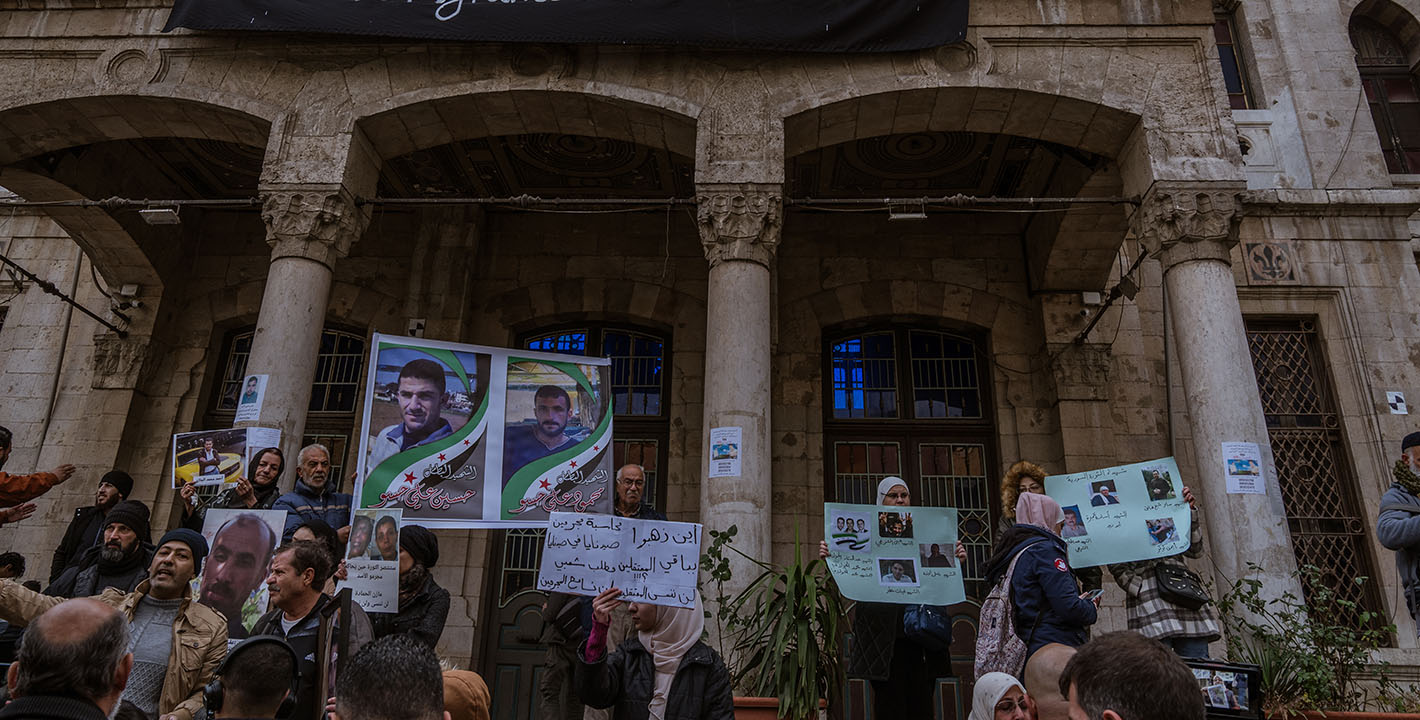
Reconciliation councils are emerging throughout the country to mediate in intracommunal disputes, many from the war years.
Natacha Danon
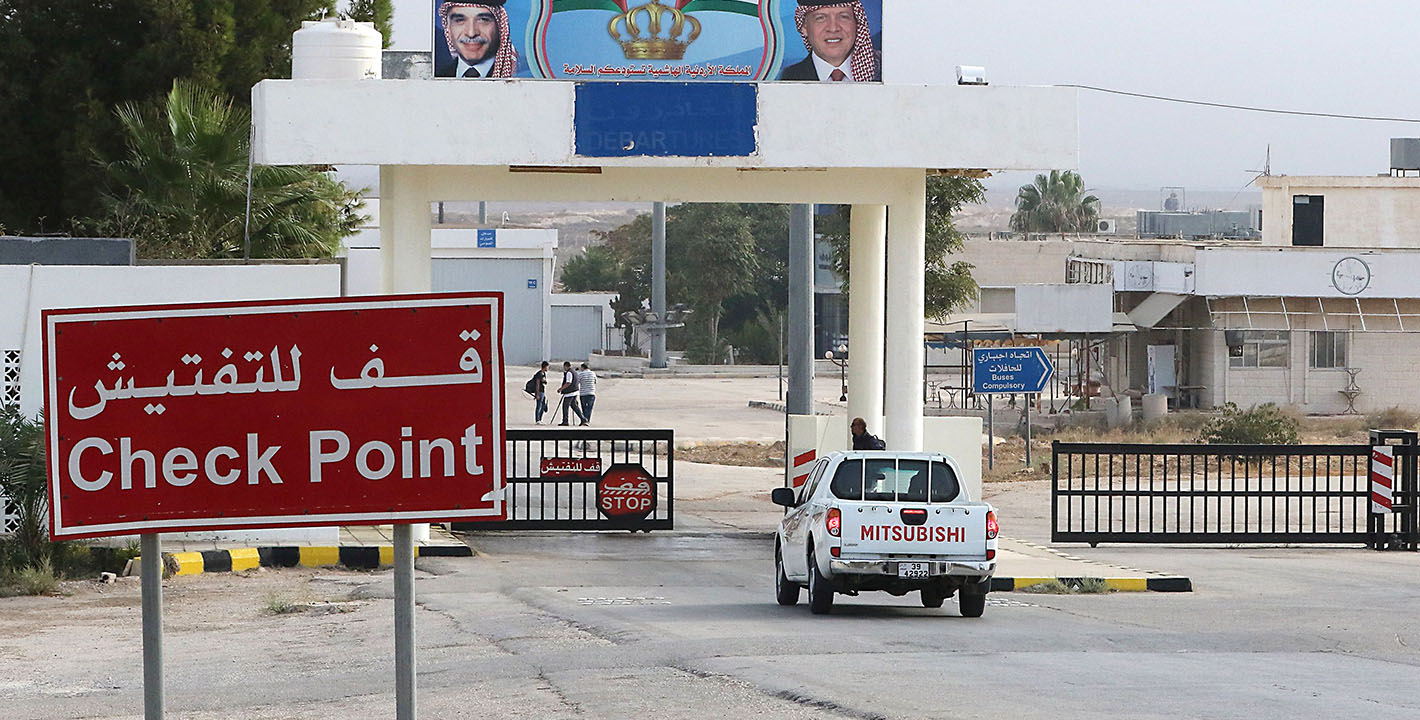
The civil war in Syria may have ended, but the country continues to serve as a source for the trafficking of illegal substances into and via Jordanian territory.

Armenak Tokmajyan, Laith Qerbaa
As the U.S.-led Coalition withdraws, the Kurds’ reliance on Baghdad, and on themselves, will only increase.
Wladimir van Wilgenburg
The Zaidi government’s objective to collect weapons is constrained by regional conflict, but it can take certain measures at home.
Ali Al-Mawlawi
In an interview, Sohaib Jawhar analyzes the profound changes in the ties between the neighboring countries.

Michael Young