

Commentary
The real test may come after the leaders leave the room.
- +1
Sheena Chestnut Greitens, Oriana Skylar Mastro, Yukon Huang, …
Source: Getty
Producing nuclear fuel quickly enough remains a major risk factor for the emerging advanced reactor industry.
As part of the Carnegie Endowment’s work on responsible use of nuclear energy, we are publishing a series of deep-dive papers on issues that deserve greater scrutiny in ongoing debates. This paper by Elmer Dyke, who has spent his career in the nuclear fuel industry, examines the intertwined fates of advanced nuclear reactors and the specialized materials needed to fuel them. It describes why producing HALEU is far from a simple augmentation of existing uranium enrichment capacity and charts the serious challenges in establishing a market for HALEU fuel in time for it to be available if and when advanced reactors become commercially viable. He concludes that, ultimately, government stimulus will be needed to ensure these reactors and fuels arrive together. Carnegie does not take institutional positions on public policy issues; the views represented in these papers are those of the authors and do not necessarily reflect the views of Carnegie, its staff, or its trustees. Publication of these essays is made possible by generous support from the Skoll Foundation.
Corey Hinderstein
Vice President of Studies
The nuclear energy industry is approaching a pivotal moment, with conditions for expansion more favorable than at any time in recent decades. Renewed enthusiasm for nuclear power is being driven by global emphasis on energy security following Russia’s invasion of Ukraine and the U.S.-Israeli war with Iran and by surging electricity demand from the rapid growth of data centers and artificial intelligence. In short, projections indicate that more—much more—electricity will be needed globally to meet accelerating demand.1 Especially in the United States, there is intense interest in deploying advanced nuclear reactors that use high-assay low-enriched uranium (HALEU) fuel.2 However, there is much that has to go right before widescale adoption of advanced reactors can occur. In particular, to meaningfully support nuclear energy expansion, the HALEU fuel industry must overcome, including the commercialization of the HALEU fuel market; exceptionally high costs to build special HALEU fuel plants; the lack of deployed commercial advanced reactors that will create proven and sustainable HALEU fuel demand; and the need for updated security, safeguards, and nonproliferation procedures and guidelines. The HALEU fuel industry faces the proverbial chicken and egg dilemma: Fuel is required to run the reactors, but suppliers hesitate to build costly fuel plants without a proven market.3
This paper evaluates the emergence and potential unique applications for advanced nuclear reactors while discussing numerous headwinds facing the industry—especially related to reliable HALEU fuel supply, licensing, proven construction processes, and reliable economic performance—that must be addressed prior to widespread deployment. Until these complex issues are resolved and reactor performance is proven efficient, the advanced reactor market will struggle to accelerate. Overcoming these barriers and providing the best chance for success is likely to require governments to play a key role in stimulating the advanced reactor market.
Understand the world with the latest from our scholars around the world.
To support clean energy and industrial uses, many nations and firms are pursuing innovative new small modular nuclear reactors (SMRs). There are two types of SMR under development: light water reactor (LWR) SMRs and Advanced Small Modular Reactors (ASMRs). LWR SMRs, which use standard low-enriched uranium (LEU) fuel, are ahead of ASMRs in terms of near-term deployments thanks to known and existing licensing approaches and approvals; existing supply chains; robust fuel supply; existing fuel cycles; and proven, operational commercial LWR systems. However, ASMRs, which will use HALEU fuel, are increasingly attractive to governments and industry users because of their putative advanced safety features, simplified designs, flexible uses, and smaller footprints, which enable higher heat output and longer fuel cycles. SMRs are defined in this paper as reactors with power outputs ranging from 50 to 350 megawatts electrical (MWe)—with a few notable exceptions, such as the 470 MWe Rolls-Royce LWR SMR.4 Reactors below 50 MWe are generally viewed as microreactors and have additional special uses and unique advantages when larger power output is not required.5
Fuel is required to run the reactors, but suppliers hesitate to build costly fuel plants without a proven market.
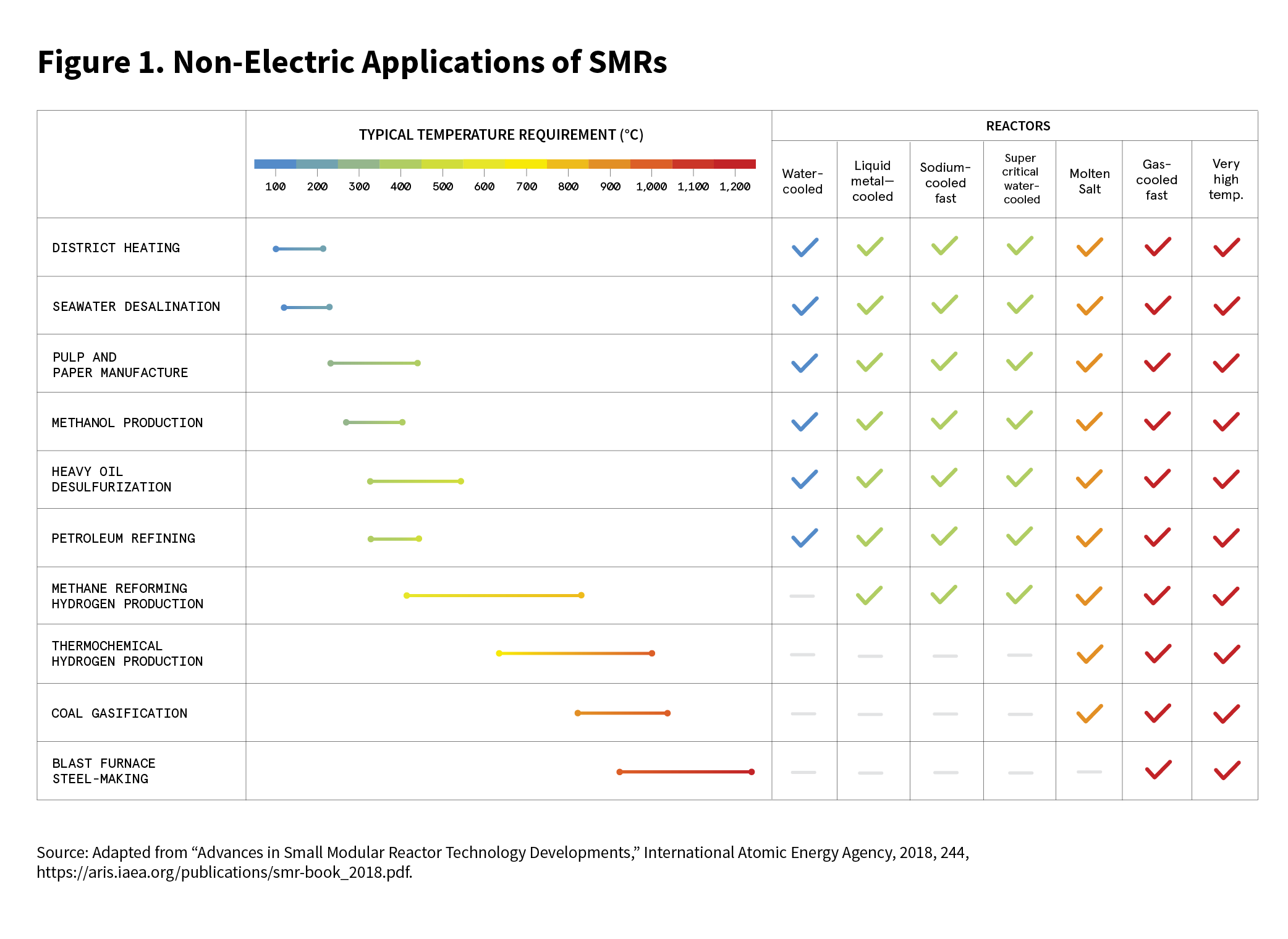
There are more than eighty SMR designs in various stages of progress worldwide, with dozens of ASMRs in development and several designs in first-of-a-kind (FOAK) deployment.6 Nuclear firms in many countries, including the United States, are actively working on SMRs, but only China and Russia have deployed commercial ASMRs; both nations plan to expand their deployments and are offering their designs to global customers.7 The vast majority of ASMRs will utilize innovative HALEU fuel, which allows for longer fuel cycles, higher power density, higher production temperatures, and more compact reactor designs. Thus, HALEU-fueled reactors are attractive options for electricity generation, industrial heat, chemical processing, hydrogen production, desalination, and medical isotope production (see figure 1).
Traditional LWRs typically use nuclear fuel that is composed of 3 to 4.95 percent uranium-235 (U-235) assays, although some utilities are moving to higher assays of up to 8 percent U-235 fuel.8 (Assay is the measured isotopic concentration of U-235 in the uranium.) Typically, fuel below 9.9 percent assay is considered LEU fuel and produced and manufactured in Category 3 (CAT3) facilities. HALEU fuel has an enrichment content between 10 and 19.75 percent U-235 assay, which poses higher risks and therefore must be specially handled and accounted for. HALEU fuel therefore must be produced in much costlier Category 2 (CAT2) facilities that are highly engineered for more stringent safety, safeguards, and security conditions than CAT3 facilities (see box 2 for a detailed discussion on CAT3 and CAT2 facilities).
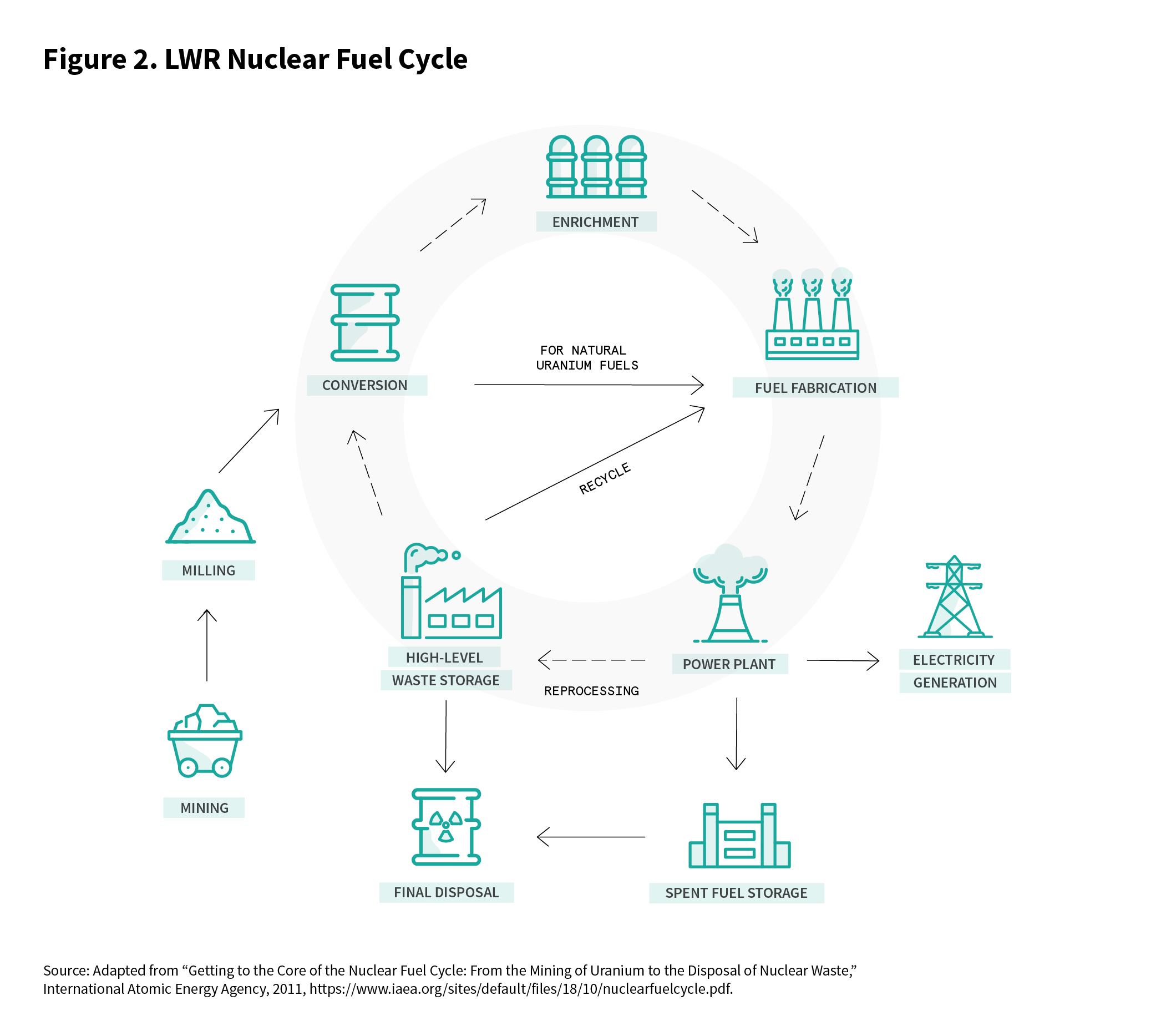
Uranium Mining and Milling: Natural uranium is extracted through mining. Uranium ore is processed (milled) to produce a concentrated form called yellowcake.
Conversion: Yellowcake is chemically converted into uranium hexafluoride (UF₆) gas for enrichment processing.
Note: Uranium mining, milling, and conversion are the same process and required for LEU and HALEU fuels.
Enrichment: UF₆ gas is sent to an enrichment facility (typically using gas centrifuge technology, but possibly lasers could be used in the future). There, the concentration of the fissile isotope U-235 is increased from the natural level (approximately 0.7 percent) to 3–5 percent for LEU and then to 10–19.75 percent for HALEU. This is done by spinning UF₆ in centrifuges, which separate lighter U-235 from heavier U-238.
Deconversion (unique to HALEU): For HALEU fuel fabrication, deconversion is required. The enriched UF₆ is converted into a solid chemical form (such as uranium oxide or uranium metal) depending on the requirements of the specific reactor or fuel type.
Fuel Fabrication: HALEU material is put into rods, assemblies, or other forms for use in advanced reactors and research reactors.
Note: All HALEU steps (enrichment, deconversion, fuel fabrication, and associated transportation) must be done in more robust and costly CAT2 facilities and systems.
The nuclear fuel cycle is similar for LEU- and HALEU-fueled reactors, with a couple important differences. (see figure 2). Mining, milling, and conversion operations to create natural UF₆ to be fed into enrichment facilities are the same for LEU and HALEU fuel types. However, LEU and HALEU enrichment operations differ (as mentioned above) because assays enriched above 10 percent must be done in separate CAT2 cascades. HALEU also requires an additional step to deconvert the enriched UF₆ gas to either uranium metal or uranium oxide before fabrication of final fuel forms. Final forms will be significantly different in HALEU compared to LEU fuels. LEU fuels are typically twelve-to-fourteen-foot-long metal structures containing special metal pins that house enriched uranium pellets. HALEU fuel forms will vary based on the reactor type and the different cooling systems they utilize.
The deployment of FOAK ASMRs is proceeding slowly, with significant uncertainty about the industry’s ability to deploy rapidly and scale quickly. Outside of Russia and China, there are no ASMRs that have final funding approval, nor have any commercial ASMR designs achieved Western design license approvals. The U.S. government is providing financial support for the deployment of two ASMRs: Terrapower’s Natrium reactor in Wyoming, and X-Energy’s X-100 reactor in Texas, which will power a Dow chemical plant.9 The U.S. government is also supporting work on various ASMR test and demonstration reactors. For instance, OKLO and Kairos are moving forward with deployments in Idaho and Alaska and Tennessee, respectively.10 Other, less firm plans for ASMR deployments are underway globally.
There is significant tension between the reactor designers and HALEU producers.
These expected near- to mid-term deployments are positioning the ASMR industry for a potentially significant deployment trajectory in the 2030s and beyond, but initial deployments must succeed to prove constructability, operational efficiency, and cost performance. Assuming such success, a reasonable expectation is to see early FOAK ASMRs of various types becoming operational in 2030 to 2034, with more widespread deployments quickly ramping up for successfully operating ASMRs in 2035 and beyond. Even as ASMR development continues, LWR SMRs could be deployed more quickly and at higher volumes because of their widely used and understood technology, known operational processes, existing supply chains and fuel cycles, and known licensing processes. It is likely that Russia and China will continue to operate and seek to expand deployments of their respective ASMRs domestically and in select markets, especially in Eurasia and Africa. Significant HALEU supply to fuel these reactors will be needed if this scenario comes to pass.
However, there is significant tension between the reactor designers and HALEU producers. As primary suppliers will not move without a known market, sufficient incentives, or guaranteed contracts, suppliers have not yet built new HALEU fuel plants. Urenco has begun building a HALEU enrichment plant in the United Kingdom,11 but even so, to date there are no HALEU deconversion plants for either uranium oxide or uranium metal that will be required for final fuel assembly, nor are HALEU fuel fabrication plants under construction. While it takes more time to design, license, and build an ASMR reactor than to build HALEU fuel production facilities, delivery schedules for the two need to closely align to support first deployments. If the fuel supply and reactor deployments do not line up, investors, new end users such as industrial firms, and utilities will hesitate before launching additional ASMR reactors.
The eventual emergence of commercial-scale deployments of ASMRs and an associated HALEU market that is reliable, sufficient, and cost-effective is constrained by numerous issues that must be addressed and obstacles that must be overcome prior to widespread commercial deployment. Many of these are tied to the development of ASMRs and their associated fuel cycles.
Development Pathway: Because of the innovative and new technologies and fuel cycles involved, detailed design and licensing requirements carry extraordinarily high investment of effort, time, and cost. Even for widely deployed LWR designs, the costs are extraordinary, and development takes time. For example, according to NuScale, “Over $1.8 billion (including non-dilutive DOE grants) has been invested to date to de-risk the technology, plant operations and manufacturing processes and obtain regulatory approvals,” which includes obtaining U.S. Nuclear Regulatory Commission (NRC) license approval for NuScale’s Voygr reactor, yet the design is still not fully complete and remains several years from FOAK operation.12 Licensing authorities have little to no experience in analyzing and approving new reactor designs. As of mid-2026, no ASMRs have received full-scale construction licenses from Western regulatory authorities, although Terrapower has been issued a license for initial civil works and has begun construction on its reactor project in Wyoming.13 As ASMR designs are expected to be used in multiple geographies, coordinated licensing authorities to standardize requirements are much needed to speed engagements and to dramatically lower licensing costs. Recent U.S. government efforts to streamline the Nuclear Regulatory Commission’s licensing process for advanced reactors,14 along with its efforts to speed the testing of designs at Department of Energy (DOE) sites,15 may shorten the timelines and costs to deployment over time, but as yet these streamlined processes are still new and unproven.
Although ASMR designs are touted as simpler than traditional nuclear power plants, the systems and components are still complex.
Financial Resources: Despite the challenges to deploying new nuclear reactor designs, significant progress has been made in the West in obtaining innovative private and government funding to support the design, licensing, and deployment of FOAK ASMRs. Technology firms (especially those needing massive power for AI and data centers) are providing some financial incentives, offtakes, and investments in the ASMR market. In addition, the DOE’s Loan Programs Office, under the banner of the Office of Energy Dominance Financing, provides financing for qualified designers and end users. Many U.S. states are advocating to host and fund nuclear reactor and technology development and deployment programs,16 while the Canadian government and some provinces are supporting and providing funding opportunities for reactor and technology deployments.17 In 2025, the European Union (EU), which until recently precluded nuclear power from Euratom financing, classified nuclear energy as a sustainable investment, which enables private and public financing for reactor projects.18 In 2024, the European Commission passed the Net Zero Industry Act to boost clean energy technologies, including nuclear,19 and the European Investment Bank is increasing lending for nuclear projects.20 Several European national governments are also funding power plants.21 Given the challenges, these efforts are necessary to launch commercial use of ASMRs and create consistent HALEU demand.
Deployment from FOAK to NOAK (nth-of-a-kind): The challenges of establishing an ASMR supply chain include the manufacturability on a commercial scale of the reactor modules, components, and systems, but also adequate professional staffing to build and operate a plant—principally operators, engineers, contractors, craft labor, and knowledgeable regulatory experts. Many long-lead components must be procured, often ordered in advance of final funding decisions, including vessels, turbines and generators, unique cooling systems, pumps, valves, carbon, specialty steel, and fuel loading and refueling systems (which involve unique systems for sodium and other corrosive fuel forms).
Although ASMR designs are touted as simpler than traditional nuclear power plants, the systems and components are still complex and must all be designed and manufactured efficiently. Efficient manufacturability of modules remains unproven. The advantages of modular construction are obvious (controlled environment, identical process, quicker assembly, and consistent workforce, among others), but assembly line manufacturability must be demonstrated beyond proof of concept to the point that modules can be efficiently built and transported to the reactor site to be quickly assembled. Significant manufacturing capabilities and workforces will be needed to achieve this goal. In addition, effective and efficient engineering, procurement, and construction (EPC) will be needed. EPC for ASMRs will need to be learned on the job, and FOAK EPC will undoubtedly involve high costs and control and performance issues, but these issues should improve as the industry moves to NOAK deployments. Ultimately, getting to NOAK deployments is key to providing the sustained demand needed for a commercial HALEU market.
Reactor Operations: In addition to being built on time and on budget, ASMRs must operate economically prior to widespread adoption. Ultimately, market conditions will have significant bearing on the operational efficiency (including total construction cost, fuel cost, and operational and maintenance cost of electricity to the grid) of ASMRs compared to other electricity sources, including both gigawatt-scale nuclear power plants and LWR SMRs. For investors and prospective ASMR buyers to gain confidence in reactor reliability, generation efficiency, fuel performance, and used fuel management will take a few years of consistent operations. However, even if some ASMR designs are less efficient, they may still offer benefits for industrial or other unique purposes (such as very high temperature requirements or remote locations). For fuel loading and fuel discharge operations, some processes and equipment must still be developed, along with used fuel storage and transportation systems.
The current and future generations of ASMRs will also need to overcome some specific construction, operational and fuel challenges, especially since high-quality, cost-efficient fuel fabrication affects fuel performance, which is key to reactors becoming economical electricity generators. Here, the history of commercial high-temperature gas reactors (HTGR) offers a cautionary tale. The Fort St. Vrain plant in Colorado and Peach Bottom plant in Pennsylvania were technically successful and were thought to be safer, yet proved operationally inefficient and uneconomical for various reasons—including significant fuel failures—and ultimately shut down after less than a decade.22 Both plants had very low percentages of online electricity generation, often measured as effective full power days, because of fuel issues. Other HTGRs in the West have operated in Germany and the UK; China built and operated a small HTGR before embarking on commercial-scale HTGRs recently.23 Yet the latest Chinese HTGR project has also proved challenging to build and operate. China began construction in 2012, started operations in 2021, and connected it to the grid in 2023, but the reactor subsequently has averaged only a 26.9 percent availability factor,24 which is far below optimal, economical performance compared to average U.S. reactor capacity factors (measuring available capacity to actual output) of over 90 percent since 2000.25 In many cases, a major cause of the HTGR’s uneconomical performance was not related to reactor design but to issues with fuel, which proved to be challenging and costly to manufacture.
Legacy/Institutional: Comprehensive management of used fuel is a major unresolved issue facing the ASMR industry that must be addressed before widespread deployments are made. (This is not merely a matter of good policy and practice, but also a legal requirement in the EU.) Management solutions for used LWR reactor fuel are well established, as are the technologies and processes for used nuclear fuel handling, transportation, and storage (short-, mid-, and long-term). These systems are lagging for ASMR designs, although the principles are understood. One issue facing the industry is that while the radioactivity of used fuel from ASMRs may be lower than that from comparable LWR reactors, there will be greater variety of fuel. ASMRs in some cases are expected to produce more used fuel volume but less radiotoxicity, though in some cases they could produce more plutonium in used fuel.26 Each distinct fuel cycle must be assessed, as there are opportunities for improving used fuel conditions, but these nevertheless require overcoming all the challenges enumerated above.
Governance issues related to the use of ASMRs and their fuel cycles for new and expanded purposes and in new geographical locations also will create challenges for governments to manage. As fuel is of utmost concern, governance structures and controls will need to be established for the industry to flourish and for developers and deployers to clearly understand the ground rules for deployment, especially in nontraditional applications like commercial maritime shipping, naval propulsion, space, industrial use, hydrogen production, chemical processing, floating reactors, and military microreactors. The need for governance structures is especially relevant for microreactors because of their much smaller size and much easier transportation and footprint requirements. As applications expand, the associated HALEU fuel types and processes will spread correspondingly. Thus, it is important to address governance issues related to ASMRs for all uses and scales simultaneously with fuel issues.
Other institutional issues must also be addressed, including the expansion of nuclear safeguards, security, and nonproliferation policies and regimes. These issues are briefly discussed in the “Policy Implications” section of this paper.
At the same time it seeks to overcome the ASMR challenges outlined above, the nuclear industry will need to address some complex and fundamental issues associated with HALEU fuel that are unresolved. The bottom line is that the HALEU fuel cycle must align with ASMR deployments. For the ASMR industry to have a chance at succeeding, the fuel supply industry must correspondingly succeed.
HALEU fuel cycle concerns are largely related to fuel availability and cost. With no commercial HALEU fuel market (neither supply nor demand) in existence today, ASMR designers and prospective end users (owners and offtake purchasers) recognize that HALEU fuel availability is one of their top risks. There are serious concerns about obtaining HALEU fuel for FOAK deployments. Scaling fuel production facilities can be done more quickly than planning and deploying reactors, so stakeholders have high confidence that the fuel cycle industry will respond, but the timing is critical.
For the ASMR industry to have a chance at succeeding, the fuel supply industry must correspondingly succeed.
Although the HALEU industry has existed and operated successfully at the research level for decades, it has not achieved commercial status yet. As discussed above, the HALEU fuel cycle is substantially different from the existing commercial LEU fuel cycle. Even though natural UF₆ is the feedstock for both LEU fuel and HALEU fuel, the availability of natural UF₆ (uranium and conversion) will be an issue that ASMR designers and end users must address as they compete for UF₆ on the open commercial market. The limited availability of natural UF₆ is an acute challenge due to the current and projected long-term nuclear fuel market constraints resulting from Western reactions to the Russian invasion of Ukraine.
HALEU costs are higher because the fuel must be produced in highly engineered, much more robust and controlled environments. HALEU containing 10 to 20 percent U-235 is built in CAT2 facilities, while standard LWR fuel containing below 10 percent U-235 is built in standard CAT3 facilities. CAT2 facilities and production costs are much higher because of the following requirements:
Beginning in February 2022, most Western nations began to shift away from future Russian fuel supplies, which for decades had supplied around 25 percent of U.S. and European nuclear fuel requirements. 27 Assuming that Western (and perhaps some Asian) countries continue to eschew Russian fuel, there is not sufficient Western natural UF₆ production to meet Western commercial demand, meaning that any additional fuel demand arising from ASMR deployments will add to existing and projected future Western UF₆ supply deficits. Thus, though not directly related, these constraints have become a critical HALEU fuel issue. Moreover, Western fuel suppliers are more likely to prioritize ongoing supplies to existing operational reactors, at least until ASMRs prove commercially viable. The pressure to supply the global, especially Western, LWR fleets is of utmost concern to fuel cycle suppliers, so the limited supply of UF₆ (and, to a slightly lesser extent, enrichment services) could negatively impact HALEU deployments.
Commercialization Needed: The lack of commercial-scale HALEU enrichment, deconversion, and final fuel fabrication are separate but critical issues to resolve before widespread ASMR deployments can be achieved. Russia could ramp up HALEU fuel production to meet its domestic and export market requirements for HALEU fuel, but Russian fuel is unlikely to be available to Western ASMR owners for the foreseeable future. China also can produce and deliver small quantities of HALEU today, but would need a few years to be able to deliver commercial quantities of HALEU reliably. To date, China has depended on Russia to supply commercial quantities of HALEU fuel.28
Western HALEU Production Dilemmas: Since the HALEU reactor market does not exist today and there is no proven HALEU fuel demand, Western fuel suppliers are reluctant to invest sufficient capital to produce HALEU fuel. Although there are a few HALEU-fueled ASMRs operational in Russia and China, there are no operational Western ASMRs, nor any that have obtained a Final Investment Decision—the formal approval to commit resources and begin project execution. Potential HALEU producers are hesitant to invest the hundreds of millions to billions of dollars necessary to build commercial scale CAT2 production facilities. Without either significant financial or guaranteed government support to address this hesitation, HALEU suppliers will wait for a proven, sustainable ASMR market to emerge. Such proof of market could be obtained through long-term guaranteed offtake purchases (such as ten-year guaranteed commercial contracts, often referred to as “take-or-pay” contracts) or pre-payments based on HALEU plant deployment milestones to support and sustain the expensive capital buildout. Western suppliers are conservative, not wanting to get too far ahead of the market. The suppliers are more than willing to build new or to expand existing production plants if they receive bankable, guaranteed long-term contracts, but to date this has not happened on a large scale for HALEU fuel. At the same time, investing in HALEU production appears out of reach for ASMR designers as they are pre-revenue, and supply contracts that are not backstopped by governments, investors, or escrows are a high risk.
High HALEU Fuel Costs: Many ASMR designers initially expected—and some still expect—HALEU fuel costs to be comparable to LEU fuel costs. This will never occur for two reasons: First, HALEU fuel production will always be much lower volume compared to LEU fuel production, so achieving economies of scale in HALEU fuel production is challenging. Second, HALEU CAT2 facilities will always be more expensive to design, license, build, operate, safeguard, and secure as they require distinct and separate buildings from large-scale LEU CAT3 facilities. This difference in scale can be seen in two ways: 1) roughly 85 percent of SWUs required to produce HALEU at 19.75 percent assay are in the first 4.95 percent LEU produced, so only the last 15 percent are actually HALEU SWUs; and 2) the LEU market is massive (approximately 50,000 metric tons separative work units, or MTSWU), while the firm HALEU market is nonexistent today and HALEU demand may not exceed 100 MT HALEU until the early to mid-2030s, assuming current ASMR projects actually reach fruition.29 While demand projections for HALEU may rise, potentially dramatically, in the mid- to late 2030s, the LEU market will always be much larger than the HALEU market. In commercial terms, size does matter.
Many ASMR designers initially expected HALEU fuel costs to be comparable to LEU fuel costs. This will never occur.
Reliance on Government Stimulus to Deploy HALEU Fuel Plants: Western governments have been slow to stimulate HALEU production, hoping the private sector would invest in fuel cycle plants on its own. Initial support from the U.S. government focused primarily on ASMR designs and deployment of two reactors, leaving the commercial sector to figure out the HALEU fuel cycle. After several years of stalemate due to lack of commercial contracts, Western suppliers refused to move forward with high-risk and high–capital cost deployments because of perceived (and actual) high risk of building HALEU fuel plants without a sustainable market and no firm contracts to support the buildout. Accordingly, the UK and U.S. governments slowly began to accelerate support to HALEU fuel development.
In 2025, the UK government awarded a HALEU enrichment contract valued at £196 million to Urenco to support the deployment of a HALEU enrichment cascade at Capenhurst.30 The UK government has not yet funded HALEU deconversion, however, which is the next required step in the HALEU fuel cycle following enrichment and which is planned as part of the government’s grant program to develop deconversion capability. For its part, since 2019, the U.S. DOE has contracted with Centrus Energy to deploy a technology demonstration cascade to prove the HALEU UF₆ capability of Centrus’ AC100 centrifuge.31 The demonstration cascade aims to produce 900 kilograms of HALEU UF₆ annually.32 Other U.S. government support for additional HALEU fuel production has been slow to follow, but in January 2026 the DOE awarded two HALEU enrichment contracts valued at $900 million each to Centrus and General Matter to accelerate the deployment of HALEU enrichment capabilities in the United States.33 The DOE has indicated that it intends to issue HALEU deconversion awards to stimulate those capabilities in 2026. Industry analysis suggests that initial commercial HALEU production could begin in 2029 and ramp up through the early 2030s.34 Urenco’s Capenhurst HALEU plant is expected to come online in 2031 or 2032.
Western suppliers will continue to rely on government stimulus to augment long-term take-or-pay contracts before expanding production significantly. The recent U.S. DOE stimulus will accelerate HALEU enrichment production, but by current estimates commercial production is unlikely to be reliable until 2030 or beyond. Additional Western government stimulus is still needed to support the HALEU conversion industry. Six U.S. firms are competing for DOE funding to initiate deconversion capacity for both uranium-oxide and uranium-metal forms, which is the critical next step in the HALEU fuel assembly process.35 Conversion facilities should take less time to be built than enrichment facilities, so the HALEU fuel production timeline is not yet threatened by a delay in conversion contracts. Nonetheless, it likely will take four years for conversion plants to go from detailed design through licensing, construction, commissioning, and plant operations. This means time is short for HALEU supply and deconversion to succeed in producing fuel for the first ASMRs.
Although Russia and China have only a few operational ASMRs, their governments and respective reactor developers and fuel cycle industries continue to make strides in commercializing these reactors and the associated fuel cycles. Both Russia and China will be able to produce commercial quantities of HALEU in the near term faster than Western suppliers, but geopolitical issues could constrain their expansion in global markets, either as fuel suppliers or as ASMR reactor vendors.
Both Russia and China will be able to produce commercial quantities of HALEU in the near term faster than Western suppliers.
Additional HALEU Fuel Supply Requirements: Final fabrication of HALEU fuels in the various forms needed for diverse ASMRs is underway. In the West, the U.S. DOE has supported Terrapower and X-energy with some fuel fabrication funding as part of broader support to their ASMR projects.36 As with enrichment and deconversion, fuel fabrication for HALEU fuel will require the fuel lines to be in CAT2 facilities, which will take more time and cost to build. Fuel fabrication line designs, licenses, construction, and plant operations and procedures are costly. These costs will need to be shared with reactor designers, supported by further government stimulus, or recovered in first production campaigns. Since early production is for FOAK fabrication and long-term take-or-pay contracts are only now beginning to emerge, fuel fabricators have been cautious about moving forward with these costly investments. Bespoke fuel production (for example, in low volumes) with uncertain future production quantities will dramatically increase FOAK fuel costs as compared to steady commercial fuel fabrication if the ASMR market materializes. Today, GE Vernova, Framatome, BWXT, Standard Nuclear, and X-energy, among others, have begun designing and/or building HALEU fuel fabrication lines and/or new plants.
Many forget the necessity of the LEU fuel supply that is the feedstock for HALEU production. As discussed above, natural UF₆, including uranium supply and conversion services, is required for LEU and HALEU enrichment processes. Since 2022, the global conversion market has been constrained following the Russian invasion of Ukraine and the subsequent attempt by Western utilities to obtain alternative supplies. The only Western conversion producers are Cameco in Canada, ConverDyn in the United States, and Orano in France. The West is woefully short of sufficient conversion to meet Western demand, and there has not been quick movement to expand capacity. Further complicating matters, outside of significant production from Cameco and reserves in Australia, Western countries do not produce much uranium. China and Russia also import uranium from more neutrally aligned countries, including Kazakhstan, Namibia, Niger, and others. The tension over uranium supply was highlighted by a 2023 coup in Niger, which resulted in the transfer of operation of the country’s uranium mines from the French firm Orano to Russia.37 Constraints on uranium production and conversion are of concern to both existing reactor operators and new reactor developers. ASMR developers and reactor owners will need to lock down available LEU supply to match the fuel fabrication process, which can take two to three years, to ensure fuel is delivered to the reactors on time. Competition for limited supply could therefore become a further problematic source of delay for HALEU production.
Transport and storage of HALEU in small quantities has been done safely for decades. However, new commercial-scale systems must be designed, certified, and built to support the transport and storage of HALEU fuel in all its various forms. Global nuclear fuel transportation companies, including NAC International, Orano TN, Holtec, and Russian entities all have deep experience in designing various fresh and used fuel transportation and storage systems. The design, licensing, and system fabrication process is well established. Some commercial designs have been licensed. Transportation and storage systems are not expected to cause any serious delays in deployment schedules, but nonetheless, the process and systems must be managed to ensure certified commercial-sized systems are available when needed, for all forms of fresh HALEU fuel as well as for used fuel storage and transportation.
There has been interest by some reactor developers in packaging nuclear fuel supply with reactor sales, but this is especially difficult because of the extremely high costs of designing and building enrichment, conversion, and fuel fabrication services. As such, while some ASMR designers have associated fuel designs, they still must purchase the natural UF₆, LEU and HALEU enrichment, and deconversion services separately. Oklo, Standard Nuclear, Kairos, and X-energy, among others, are pursuing such approaches.38 Because of the nature of the Chinese and Russian industries and export practices, both nations undoubtedly will package ASMR designs with HALEU fuel supply.
Finally, with respect to micro-ASMRs, which have very small fuel cores, a commercial HALEU industry that is developed for the broader ASMR industry should be sufficient to cover supply for the much smaller-scale microreactor community. Scale is important, and while microreactors are potentially relevant for numerous special applications—including maritime, space, military, and remote operations—the low quantity of fuel needed to supply them is not likely to be a significant driver of commercial HALEU fuel cycle development. For instance, the Natrium reactor will need roughly 15 metric tons of HALEU for the first core, while micro-ASMRs may need only hundreds of kilograms of HALEU.39 Commercial suppliers will be driven by demand volume.
As detailed above, neither the supply chain nor the HALEU fuel cycle is ready for the emergence of an ASMR market. In the West, there will not be commercial HALEU quantities available until the early 2030s. For their part, Russia and China are much better positioned and prepared to deploy advanced reactors and the associated HALEU fuel supplies, but given current geopolitical constraints, these are likely to impact only select markets globally.
So, assuming that additional intervention will be needed for Western FOAK ASMRs and the associated HALEU fuel cycle to emerge simultaneously, what could governments do to stimulate and ready the industry for expansion?
Governments have the responsibility to establish the vision for their respective nations’ energy and security policies. Countries pursuing nuclear power need long-term, consistent energy policies that support nuclear energy development through goal-setting, timelines, and funding of capital-intensive strategic programs. If ASMRs are to succeed, governments will need to establish the policies and appropriations necessary to stimulate the expansion of the ASMR industry and transition it to commercial viability. Although there are some similarities to gigawatt-scale nuclear power plants (with current funding challenges in the West), the ASMR industry is unique in many ways due to its long-term requirements that encompass reactor and technology designs, fuel development, licensing, engineering, procurement and construction, pre-operations, and operations of the reactor. From setting a government’s vision to establishing a nuclear generation capacity to actual reactor deployment and operations is a lengthy process. In the West, the total deployment schedule will require consistent government support through administrative transitions. Russia, China, and other countries that do not have frequent government changes benefit from more consistent policy alignment, as well as from state ownership of and backing for the nuclear sector.
A nation’s first commercial deployment of large LWRs can take ten to fifteen years, as illustrated by the Milestone Approach of the International Atomic Energy Agency (IAEA) to reactor deployment that guides new owners and users through nineteen steps and three phases (pre-project, preparatory, and implementation).40 It is conceivable that ASMR deployments in new-build nations may be deployed faster at some point in the future. While ASMRs must reach the same IAEA milestones, once NOAK ASMRs are deployed, it may be possible to compress the timelines thanks to the modular construction approach. Nations that already operate commercial reactors may be able to deploy and operate ASMRs much more quickly, given that much of the infrastructure and capability to operate, maintain, safeguard, and secure new systems already exist. Deploying large ASMRs will take time, but microreactors and truly modular systems that can be shipped by existing transportation systems in theory could be deployed in months to a few years.
If ASMRs are to succeed, governments will need to establish the policies and appropriations necessary to stimulate the expansion of the ASMR industry.
Governments should stimulate the ASMR industry through the support of reactor design development and establishment of a reliable commercial supply chain. To overcome the risk aversion and hesitation that impede ASMR deployment, additional government stimulus will be required for both the deployment of FOAK ASMRs and the requisite HALEU fuel cycle plants. Commercial fuel cycle suppliers will not build high-cost HALEU fuel plants until sufficient conditions are met: 1) there is an understandable market; 2) there exists sufficient long-term demand from this market; 3) there are guaranteed contracts with financially sound entities. Government support is necessary to bridge the gap between the development and deployment of FOAK ASMRs and the commercial development of a robust and reliable commercial HALEU fuel cycle. It is not practical for governments to expect commercial firms to deploy this capability on their own, taking on hundreds of millions if not billions of dollars of risk without confidence in a commercially viable industry. This is especially true given the high costs and much stricter conditions in which HALEU fuel must be produced and the uncertainty of timing and scope in the HALEU market.
Government support can come in many forms, such as promoting streamlined regulatory and licensing processes and approvals, cost-sharing and grant funding to promote ASMR reactor and fuel designs, tax incentives, loan guarantees to support reactor deployments, and fuel cycle capacity-building and production. All these government actions would serve to promote the expansion of the ASMR industry by reducing reactor and supply chain deployment risks. In 2025, the U.S. government launched a program for commercial firms to deploy and test advanced designs at DOE sites with shortened approval processes, with the goal of proving reactor viability, which could lead to additional private sector investments in the technologies.41 In addition, many U.S. states are supporting and seeking to attract ASMR deployments, with some states offering financial incentives to ASMR designers.42 The UK and Canada have emerged as other leading candidates to launch ASMRs, but their governments’ support has not been substantial yet, as both nations are pushing to deploy LWR SMRs first, followed by ASMRs.43
HALEU fuel supply remains a critical risk factor to ASMR deployments, as there is no commercial HALEU fuel supply available in the West and it remains limited in Russia and China. Governments can meaningfully reduce the HALEU fuel supply chain risk through cost-sharing or long-term offtake agreements that can reduce supply bottlenecks by guaranteeing a market will exist to support a new-build HALEU fuel cycle facility, decreasing fuel cycle deployment risks. While this appears to have been the initial vision of the U.S. government, that approach morphed into supporting the deployment of HALEU capacity instead. To be effective, the incentives should be meaningful in size and extend beyond short-term supply, especially as the plants built to support the industry are intended to operate for decades and are needed to reduce the high cost and high risk of deploying innovative fuel cycle production capabilities.
Governmental support will be needed for the deployment and buildout of uranium supply and conversion capacity to match the expected demand.
Further, governmental support will be needed for the deployment and buildout of uranium supply and conversion capacity to match the expected demand arising from accelerated deployments of ASMRs in the 2030s and beyond. The ASMR market will have a hard time competing with existing global utility companies that have been consistent, long-term buyers of the fuel cycle producers’ uranium, conversion, and enrichment services. For the most part, if fuel supply is tight, existing utility companies will have preferred status. Suppliers will not turn their collective backs on their long-term customers. Governments should look to support the investments through fuel offtake agreements, matching investments, grants, low-cost loans, or milestone payments to stimulate new LEU production capacity. As discussed above, the alignment of HALEU deconversion to HALEU enrichment plants that are starting to emerge will be critical. Without alignment, the industry could incur serious bottlenecks, resulting in delays or ASMR project cancelations. Few commercial firms can take this risk alone, and by their nature, pre-revenue startup firms cannot fund fuel cycle and supply chain buildout. Governments can and should fill the near-term gap. Once the industry gains traction, deployments accelerate, and a market materializes, then a commercial approach can be relied upon to meet demand through commercial investments. Until then, stimulus will be needed.
For ASMRs to be deployed competitively alongside current large LWR technologies and in varied geographies, regulatory authorities need to create alignment and standardization in their licensing approaches to speed engagements and lower deployment costs. ASMRs will almost certainly be less economical than large LWRs, but can offset this with faster deployment timelines and modularity. The challenge is to achieve this regulatory flexibility without sacrificing the independence and national responsibility of the respective regulatory bodies. If each nation requires unique analysis and follows its own processes without coordination and support between trusted regulatory bodies that have already approved ASMR designs, the process will be slow and expensive, delaying or risking deployments via lengthy and costly schedules. There has been much discussion and active coordination on regulatory alignment, including through Euratom and a recent collaboration between the Canadian, UK, and U.S. regulatory authorities,44 but after decades of effort, the industry remains far from this goal. If a regulator remains in proven good standing, a more streamlined “trust, but verify” approach should be encouraged. Of course, there will always be some unique country and environmental issues that must be addressed specifically, and harmonization should not be viewed as taking responsibility and autonomy away from a nation’s regulatory authority. These positions can be aligned.
A standard reactor design that can be deployed globally would go a long way in driving down costs and enabling faster deployments.
For their part, ASMR designers need to strive for standard reactor design and not fall into the bespoke design trap that leads to long schedules and dramatically increases costs. The failure to develop standardized designs among Western LWRs has been a mistake, leading to major delays and cost overruns. A standard reactor design that can be deployed globally would go a long way in driving down costs and enabling faster deployments.
Finally, security, safety, safeguards, and nonproliferation policies and regimes will need to evolve to appropriately address the potential acceleration of the spread of ASMR and HALEU fuel market. This is especially critical as ASMR designs are new, and while touted as having stronger safeguards and criticality safety features that make accidents less likely, HALEU fuels are also inherently higher-risk and need stricter and stronger protections related to safety, security, and safeguards. If the market materializes, potentially dozens of new nations could emerge by 2040 to host, operate, and manage CAT2 facilities. Some of these nations may never have operated commercial nuclear reactors before. Likewise, there will be a natural spread of CAT2 production facilities to new nations and new owners. All of these must be effectively managed by national and international organizations and regimes, which must adapt ahead of ASMR deployments.
The ASMR and related HALEU fuel cycle industry is emerging, albeit at a slower pace than many had hoped. ASMR designers see the increasing electricity demand among nations and regions, and for various business interests, and are poised to deploy to support broad, accelerating electricity and heat applications in the 2030s and beyond. In the end, however, it is incumbent on the developers and first movers seeking to deploy large-scale ASMR fleets to prove the operational and economic viability of their respective designs and to ensure reliable supply chains and fuel supplies. Governments have a critical role to play in helping this market emerge. If ever innovative nuclear ASMR designs are going to flourish, the opportunity is now.

Elmer W. Dyke
President, New Horizons Nuclear Associates
Elmer Dyke is the president of New Horizons Nuclear Associates and a recognized global leader in the commercial nuclear industry, specializing in strategy, business development, global fuel supply, and the nuclear fuel cycle. He has held executive leadership roles at Centrus Energy, NAC International, and Booz Allen Hamilton. He has held board positions with UR Energy, the World Nuclear Association, and the U.S. Nuclear Industry Council. In addition, he is designated as a senior fellow at the Savannah River National Laboratory’s Nonproliferation Applied Sciences Center.
Carnegie does not take institutional positions on public policy issues; the views represented herein are those of the author(s) and do not necessarily reflect the views of Carnegie, its staff, or its trustees.

The real test may come after the leaders leave the room.



Sheena Chestnut Greitens, Oriana Skylar Mastro, Yukon Huang, …

The nuclear relationship between China and the United States is increasingly shaped by widening perception gaps rather than deliberate strategic design.

Tong Zhao

A look at why states without nuclear weapons are seeking naval nuclear propulsion, whether they can legally and technically deliver it, what it will cost them, and what responsible stewardship of the capability would look like.

Jamie Kwong
Congress should ask tough questions about the agreement’s more unique features and whether they advance U.S. interests or compromise them.

Jane Darby Menton
Nuclear and maritime communities face a long and challenging journey to deploy commercial nuclear applications at sea.

Jamie Kwong, Toby Dalton