

Article
Taghreed El-Khodary
{
  "authors": [
    "Taghreed El-Khodary"
  ],
  "type": "commentary",
  "blog": "Sada",
  "centerAffiliationAll": "",
  "centers": [
    "Carnegie Endowment for International Peace"
  ],
  "collections": [],
  "englishNewsletterAll": "",
  "nonEnglishNewsletterAll": "",
  "primaryCenter": "Carnegie Endowment for International Peace",
  "programAffiliation": "",
  "programs": [],
  "projects": [],
  "regions": [
    "Middle East",
    "Palestine"
  ],
  "topics": [
    "Political Reform",
    "Economy"
  ]
}

REQUIRED IMAGE
Since Hamas seized control of the Gaza Strip on June 15, governance has barely functioned. Hamas Prime Minister Ismail Haniyya in a November 4 speech expressed his dissatisfaction with the paralysis afflicting the executive, judicial, and legislative institutions, accusing the Ramallah government of responsibility.
Since Hamas seized control of the Gaza Strip on June 15, governance has barely functioned. Hamas Prime Minister Ismail Haniyya in a November 4 speech expressed his dissatisfaction with the paralysis afflicting the executive, judicial, and legislative institutions, accusing the Ramallah government of responsibility. Haniyya also justified the Hamas government’s taking illegal steps, even if he did not call them such, as a substitute. Legally, the Haniyya government is a caretaker government, but the law does not give it the authority to make major decisions.
The Haniyya government’s initiatives so far have focused on the security apparatus and the judiciary more than civil affairs and the economy. This is new ground for Hamas, which historically has concentrated on social work and armed resistance. In the executive branch, the Haniyya caretaker government has made a number of appointments without seeking approval from Palestinian President Mahmoud Abbas. The first decision was the appointment of a police chief, followed by directors of the government and security institutions with the ranks of colonel, general, and police chief—all awarded without consulting Abbas, legally commander-in-chief of the armed forces. The Haniyya government is also making structural changes, for example turning the preventative security apparatus (whose mission had been internal security) into a police force, while an intelligence agency whose mission had been external security has taken on responsibility for internal security.
Among the major challenges the Haniyya government faces is the paralysis of the criminal justice system due to its reliance on the police and public prosecution. After the Hamas takeover, police officers abided by Abbas’s order that they refrain from going to work in exchange for receiving their salaries. The public prosecution suspended work in the courts after the takeover given the absence of police, and has not accepted the legitimacy of the new police formed by the Gaza government. Cases of murder, assault, theft, embezzlement, and other cases have all been in limbo, a situation that pushed the Haniyya government to appoint eight prosecutors, twenty assistant prosecutors, and a new attorney general. Another step that Haniyya defended in his November 3 speech was the appointment of seven judges, thus allowing his government to form a Supreme Justice Council parallel to the Supreme Judicial Council, the highest Palestinian judicial authority.
According to Salama Basisu, deputy head of the Lawyers’ Syndicate in Gaza, “Hamas succeeded in forming the Supreme Council, but what about the Court of First Instance, the Court of Appeal, and the Court of Cassation? What about the rest of the members of the other courts necessary to make a final decision on any case?” According to Basisu, a judge earns 15,000 to 20,000 shekels a month ($4,000 to $5,000) before bonuses, with Abbas paying the salaries. This material incentive is preventing the Haniyya government from persuading independent, competent judges to work in the new courts.
As for the civil courts specializing in issues of land, real estate, and financial transactions, their previous judges are still working, though operations are at a standstill due to the lack of legal enforcement. The stoppage of the criminal and civil courts has affected 700 lawyers as well as average Palestinians with pending legal affairs. To deal only with civil cases, a Palestine Islamic Scholars Association branch was formed in every district across the Gaza Strip, each comprised of seven to eight religious scholars, a development some legal professionals and human rights organizations see as a threat to the rule of law.
Regarding other government institutions, Abbas has not issued any orders for employees not to go to work, but has called on them to respect decisions by the Fayyad government. For the first time since March 2006, salaries are being paid regularly by Ramallah to civil as well as military employees. Thus Haniyya government decisions in the ministries have been limited to appointments. A number of Hamas members and supporters were named as directors in the health, education, religious endowments, and transportation ministries.
The impact of the siege on the economic, health, educational, and agricultural sectors remains the biggest concern for the average citizen. The prices of flour, sugar, rice, oil, meat, chicken, and fruit have all shot up 30 percent due to Israeli control over imports. Although businessmen no longer face extortion by security officials and resistance fighters as had happened under the previous government—and are able to drive their flashy cars around the streets of Gaza City without worrying about the car thefts widespread before the Hamas takeover—the closure’s impact has hit hard. With the private sector deprived of raw materials, thousands of jobs have been lost. The widespread frustration in the closed-off Gaza Strip has contributed to the average citizen’s apathy about the Annapolis conference, as they are now only concerned with the next immediate problem coming their way.
Taghreed El-Khodary is a New York Times correspondent in the Gaza Strip. Paul Wulfsberg translated this article from Arabic.
Former Visiting Scholar, Heinrich Boell Fellow, Middle East Program
El-Khodary was a visiting scholar in the Middle East Program, where her research focused on the future of Gaza.
Recent Work
Taghreed El-Khodary
Taghreed El-Khodary
Carnegie does not take institutional positions on public policy issues; the views represented herein are those of the author(s) and do not necessarily reflect the views of Carnegie, its staff, or its trustees.
Can economic ties help contain conflict between Egypt and Israel, or do they simply postpone confrontation? Drawing on the German-Russian experience, the article examines how the gas deal creates mutual dependence, keeps channels of cooperation open, and raises the cost of conflict, without necessarily delivering lasting peace.

Nourhan Hefzy

Is the Gulf moving beyond the dollar? This article examines how China is expanding the renminbi's role across Gulf markets, what that means for regional finance, and why the future of global currencies is more complex than the de-dollarization debate suggests.

Andrew Bonney
Syria's transition promised a fresh start. But are old habits of power making a comeback? This analysis looks at the warning signs and what it will take to build a more accountable state.

Sima Beitinjaneh
Syria’s worsening drought is no longer a seasonal crisis. This report explains what climate change is doing to rainfall, groundwater, and food security, and what solutions experts say are still possible.

Milia Esper
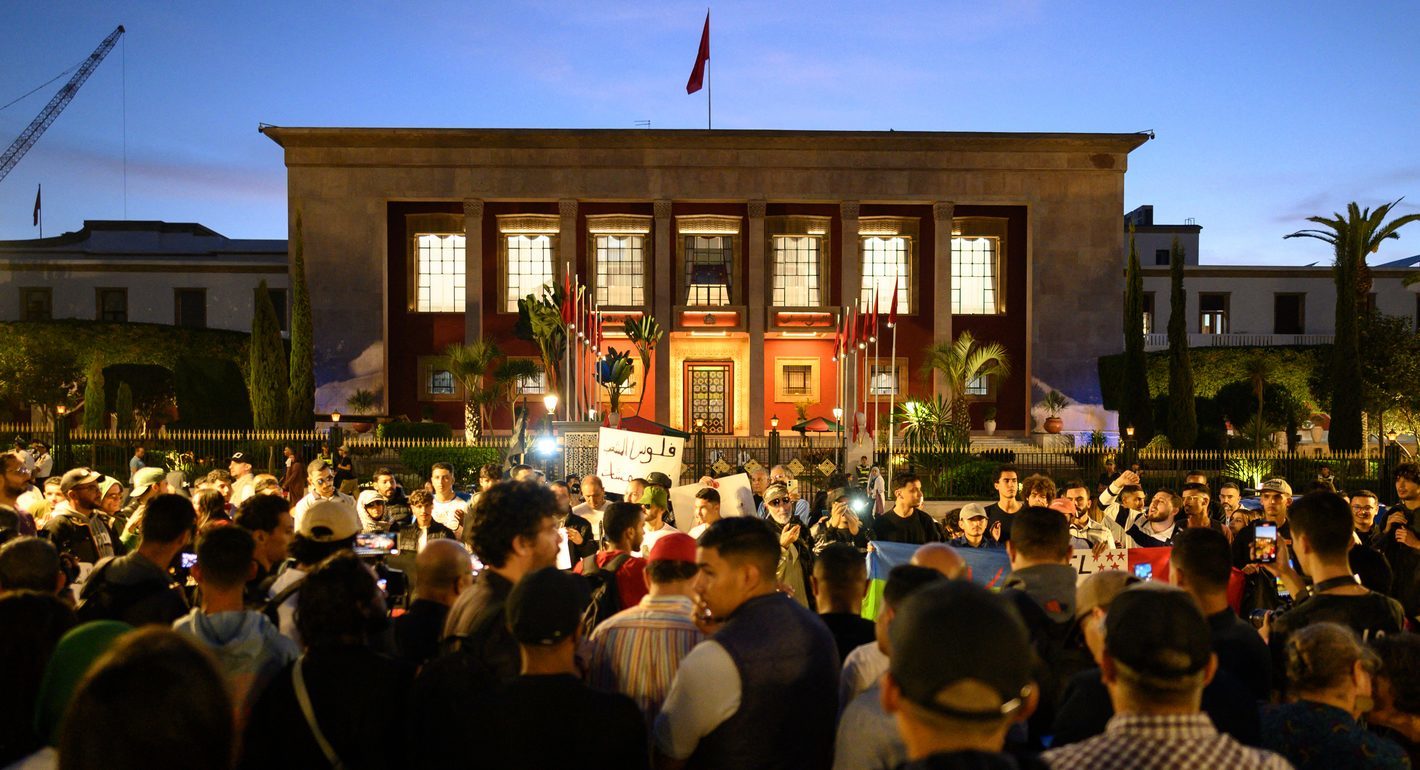
From anime heroes to online gaming communities, Morocco’s Gen Z is building a new protest culture. What does this digital imagination reveal about youth politics, and how should institutions respond?
Abdelilah Farah