• Research
  • Emissary
  • About
  • Experts
Carnegie Global logoCarnegie lettermark logo
Democracy
  • Donate
{
  "authors": [
    "Michele Dunne"
  ],
  "type": "commentary",
  "blog": "Sada",
  "centerAffiliationAll": "",
  "centers": [
    "Carnegie Endowment for International Peace"
  ],
  "collections": [
    "Arab Awakening"
  ],
  "englishNewsletterAll": "",
  "nonEnglishNewsletterAll": "",
  "primaryCenter": "Carnegie Endowment for International Peace",
  "programAffiliation": "",
  "programs": [],
  "projects": [],
  "regions": [
    "North Africa",
    "Tunisia"
  ],
  "topics": []
}

Attribution logo

Source: Getty

Commentary
Sada

What Tunisia Proved—and Disproved—about Political Change in the Arab World

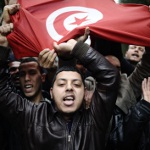
The Tunisian revolution has fulfilled longstanding expectations that the youth bulge in Arab countries would eventually lead to political instability; it also showed that the weakness of opposition movements might be less significant than many observers believe.

Link Copied
By Michele Dunne
Published on Jan 19, 2011
Sada

Blog

Sada

Sada is an online journal rooted in Carnegie’s Middle East Program that seeks to foster and enrich debate about key political, economic, and social issues in the Arab world and provides a venue for new and established voices to deliver reflective analysis on these issues.

Learn More

The Tunisian uprising raises so many questions that it is difficult to focus on only one or two, but one of the intriguing aspects of the January 2011 events is that they simultaneously strengthened and smashed several longstanding pieces of conventional wisdom about how political change might come to Arab countries.  Tunisia showed that the youth bulge about which demographers and other analysts have been fretting for two decades is indeed a political time bomb.  At the same time, Tunisia debunked the long-held analysis that only a country with a cohesive political opposition can overthrow an authoritarian system.

The Tunisian uprising was rooted in the problems of youth unemployment, though it leapt quickly from there to protests about official corruption and lack of democracy. The Middle East youth bulge—generally defined as a period in which there is a relatively high proportion of 15 to 24 year olds among the adult population of any country—and its attendant problems of youth unemployment, overburdened educational systems, and the postponement of marriage have preoccupied scholars of the region since at least the early 1990s. Looking at the experience of other regions, scholars reasonably enough theorized that the youth bulge could lead to political instability in the Middle East. Demographer Ragui Assaad, for example, said in a 2008 interview that “The presence of large number of underemployed and frustrated young men, with potential access to weapons, is often a recipe for civil conflict.  Thus the youth bulge could provide significant demographic dividends, but if not dealt with with the right policies, could result in political instability and civil conflict.” 
 
Connecting the youth bulge with political instability in theory is one thing, however, and seeing it actually unfold on the streets of an Arab country is quite another. It is the painful similarities between Tunisia and other Arab countries in this regard that give pause.  The percentage of Tunisians between 15 and 24—21 percent in 2005—is quite similar to that in Algeria, Morocco, Libya, Egypt, Jordan, and other Arab countries. Although figures often are unreliable, a 2007 analysis by Assaad and Farzaneh Roudi-Fahimi estimated youth unemployment for these countries to be between 20 and 40 percent, and then in addition there is rampant underemployment. Certainly the other grievances of Tunisians—corruption, human rights abuses, lack of meaningful political participation, a leader who twisted the country’s laws and constitution in order to remain in power for an entire generation—are widely shared in the region.
 
Until the recent events in Tunisia, however, the theory went that even with all those reasons for public discontent, no Arab population could overthrow an authoritarian leader without a cohesive opposition movement. Analysts cited the weakness of political parties in the Arab world as one of the main reasons for the persistence of authoritarian governments. And yet the Tunisian opposition was among the weakest in the Arab world: none of the three small opposition parties (the Democratic Progressive Party, Renewal Movement, and the Democratic Forum for Labor and Liberties) that initially joined the transitional government, nor the exiled Islamist Renaissance (Nahda) Party, played a significant role in the uprising. They certainly did not form a cohesive front capable of putting pressure on the government, and none of their leaders are charismatic figures who inspired protestors. Nor did labor unions, professional syndicates, or other organizations fill the organizational role in a major way. And so it apparently is possible for a population to put enough pressure on an Arab authoritarian leader to step down even if it lacks strong opposition organizations and compelling leadership.          
 
Tunisia has its own peculiarities—a population prosperous and educated enough to have high expectations, more equality of the sexes than exists in other Arab countries, and a relatively weak Islamist political movement—that undoubtedly contributed to the fact that the Jasmine Revolution occurred there and not elsewhere, and that it had a strikingly liberal and secular countenance. It is far from certain where Tunisia will go from here, and whether the country will move smoothly from a revolution with relatively little bloodshed to a truly democratic political system.
 
Still, whatever happens from now on, the Tunisians have taught all observers at least three unforgettable lessons: first, widespread economic grievances such as youth unemployment can indeed quickly translate into specific demands for political change, and second, this can happen even in the absence of strong opposition organizations. The third lesson of Tunisia’s Jasmine Revolution was perhaps the most memorable of all: when long-postponed change finally comes, it is often startling how relatively little effort and time it can take.
 
Michele Dunne is editor of the Arab Reform Bulletin and a senior associate at the Carnegie Endowment for International Peace.   
 
Michele Dunne
Former Nonresident Scholar, Middle East Program
Michele Dunne
North AfricaTunisia

Carnegie does not take institutional positions on public policy issues; the views represented herein are those of the author(s) and do not necessarily reflect the views of Carnegie, its staff, or its trustees.
More Work from Sada

  • Commentary
    Sada
    The Political Economy of Social Data: Opportunities and Risks of Digitizing Morocco’s Social Targeting System

    While Morocco’s shift to a digitized social targeting system improves efficiency and coordination in social programs, it also poses risks of exclusion and reinforces austerity policies. The new system uses algorithms based on socioeconomic data to determine eligibility for benefits like cash transfers and health insurance. However, due to technical flaws, digital inequality, and rigid criteria, many vulnerable families are unfairly excluded.

      Abderrafie Zaanoun
  • Commentary
    Sada
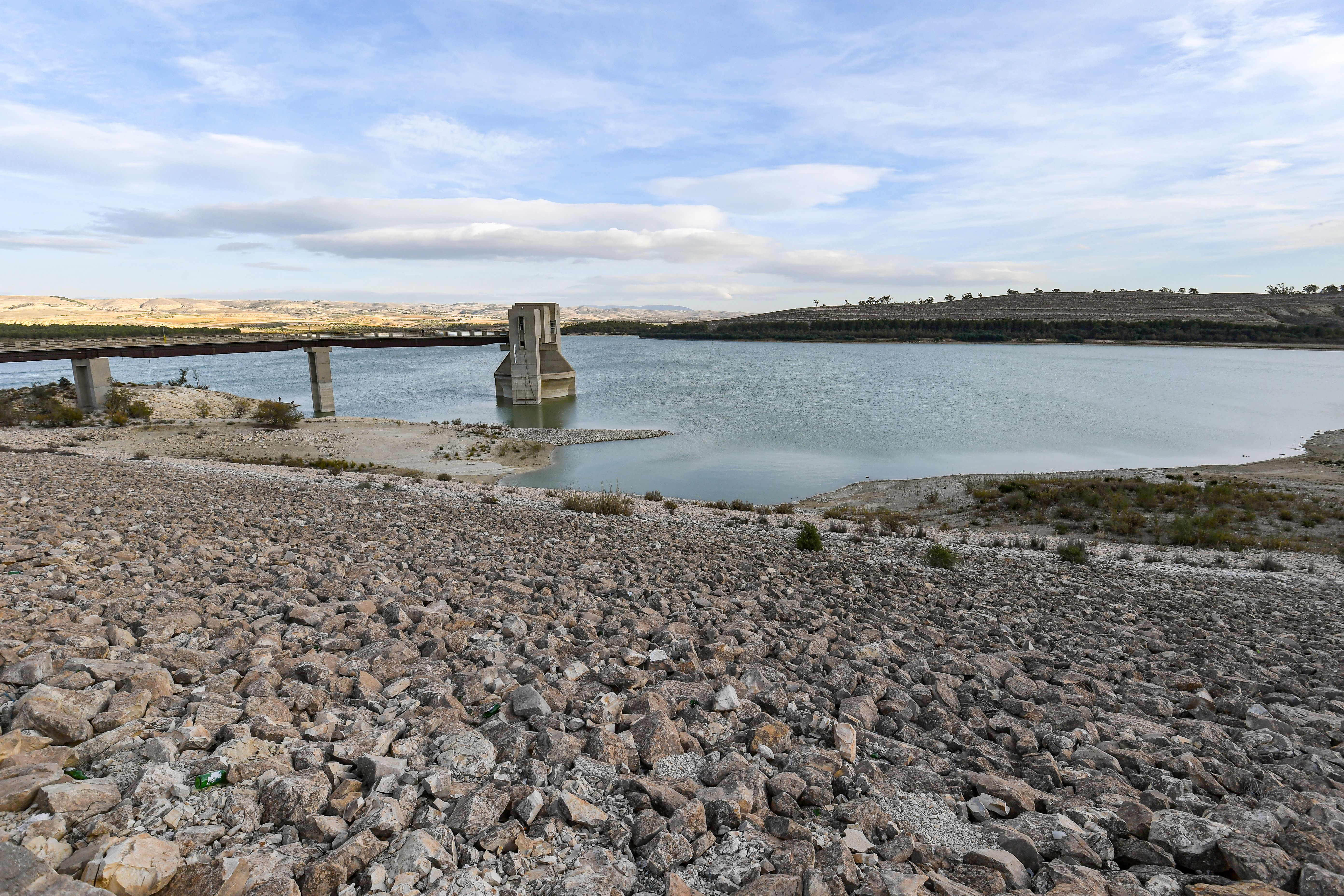
    Securing Tunisia's Constitutional Right to Water: Policy Solutions

    Tunisia is facing a worsening water crisis characterized by widespread protests over access to potable water, particularly in rural areas with underdeveloped supply networks. This situation is exacerbated by climate change, outdated agricultural policies, and industrial water consumption, necessitating comprehensive policy reforms to secure Tunisians’ constitutional right to water and ensure equitable access across the country.

      Noura Omar
  • Commentary
    Sada
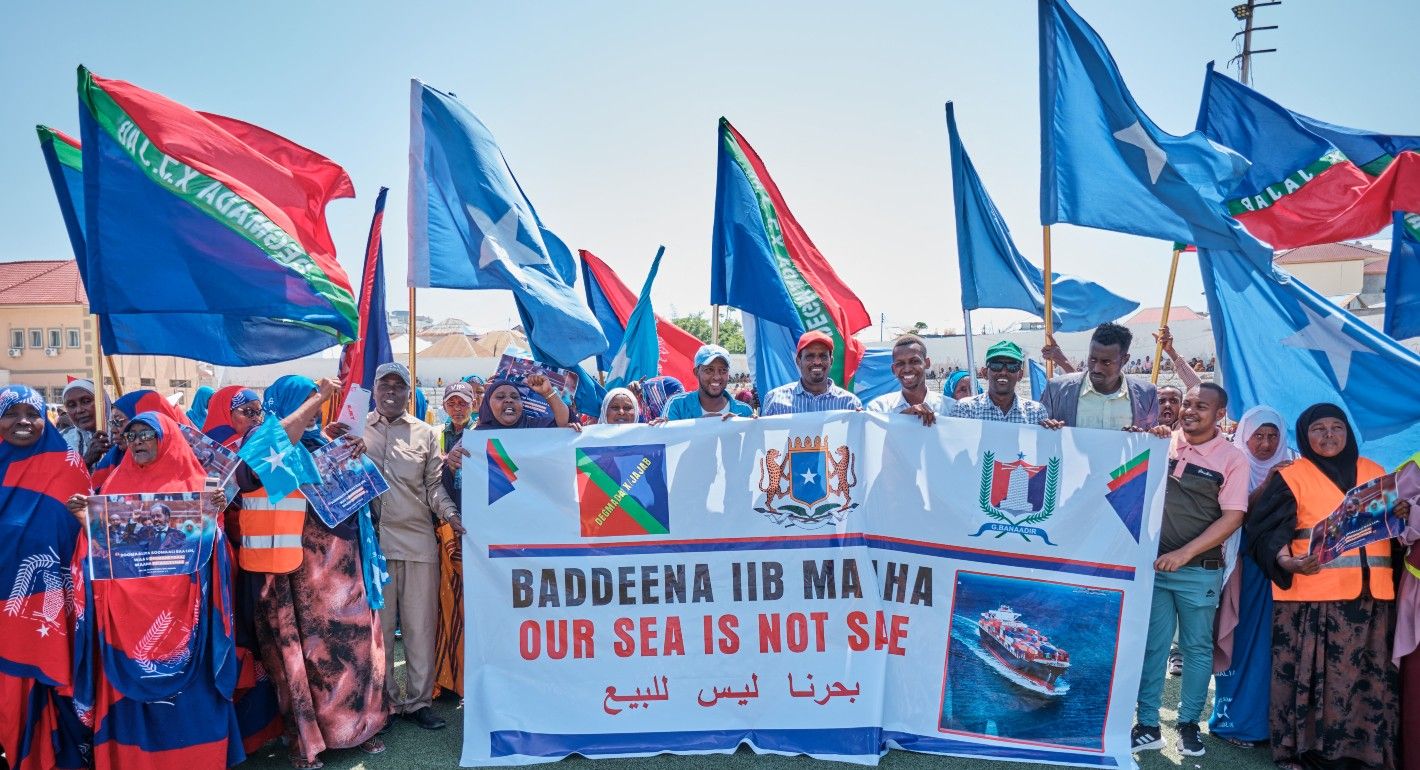
    Somalia’s Strategic Counterbalance to Ethiopian Influence in the Horn of Africa

    As hegemonic Ethiopian ambitions threaten stability in the Horn of Africa, Somalia is building strategic alliances regionally and internationally to counter Ethiopia’s growing political and military influence.

      Hisham Qadri Ahmed
  • Commentary
    Sada
    Morocco’s New Restrictions on Civil Society: A Setback for Anti-Corruption Efforts

    The Moroccan government’s decision to bar civil society from filing public actions in cases of public fund and property offenses has stirred debate, with critics warning it sidelines crucial players in the fight against corruption.

      Hasan Al-Ashraf
  • Commentary
    Sada
    Morocco’s Atlantic Initiative and Potential Challenges to Regional Leadership

    Morocco's Atlantic Initiative seeks to transform the geostrategic landscape of the Sahel and Sub-Saharan regions amid a wave of coups fueled by economic and social decline.

      Abderrafie Zaanoun

Get more news and analysis from
Carnegie Endowment for International Peace
Carnegie global logo, stacked
1779 Massachusetts Avenue NWWashington, DC, 20036-2103Phone: 202 483 7600Fax: 202 483 1840
  • Research
  • Emissary
  • About
  • Experts
  • Donate
  • Programs
  • Events
  • Blogs
  • Podcasts
  • Contact
  • Annual Reports
  • Careers
  • Privacy
  • For Media
  • Government Resources
Get more news and analysis from
Carnegie Endowment for International Peace
© 2026 Carnegie Endowment for International Peace. All rights reserved.