• Research
  • Emissary
  • About
  • Experts
Carnegie Global logoCarnegie lettermark logo
Democracy
  • Donate
{
  "authors": [
    "Younes Abouyoub"
  ],
  "type": "commentary",
  "blog": "Sada",
  "centerAffiliationAll": "",
  "centers": [
    "Carnegie Endowment for International Peace"
  ],
  "collections": [],
  "englishNewsletterAll": "",
  "nonEnglishNewsletterAll": "",
  "primaryCenter": "Carnegie Endowment for International Peace",
  "programAffiliation": "",
  "programs": [],
  "projects": [],
  "regions": [
    "North Africa",
    "Morocco"
  ],
  "topics": []
}

Attribution logo
REQUIRED IMAGE

REQUIRED IMAGE

Commentary
Sada

Morocco: Reforming the Constitution, Fragmenting Identities

The enshrining of Amazight as an official language in Morocco's newly approved constitution will have a lasting impact on Berber identity politics in North Africa.

Link Copied
By Younes Abouyoub
Published on Jul 6, 2011
Sada

Blog

Sada

Sada is an online journal rooted in Carnegie’s Middle East Program that seeks to foster and enrich debate about key political, economic, and social issues in the Arab world and provides a venue for new and established voices to deliver reflective analysis on these issues.

Learn More

Most Moroccans applaud—and rightly so—the bold decision of King Mohamed VI to include in the preamble of the newly proposed constitution the official recognition of Tamazight as a state language alongside Arabic, the first official acknowledgement of Amazigh (Berber) identity on a constitutional level in a North African country. In fact, this inclusion is what some analysts have speculated led to the overwhelming approval of the July 1 constitutional referendum; Thomson Reuters reported that 98.5 percent of the population voted in favor, with a 73 percent turnout of registered voters. Skeptics cast doubts over that figure, citing voting irregularities, and point out that the king’s play of the Berber identity card is no more than a bid to pass off a cosmetically new constitution while holding on to his monarchy.  Those who are more cynical suggest that the consequences might be dire, and lead Morocco down the road to the Algerian model of tension between those of Arab and Berber origins. 

The second preambular paragraph of the amended constitution outlines the national identity of Morocco:

"[Morocco is] a sovereign Muslim State, committed to the ideals of openness, moderation, tolerance and dialogue to foster mutual understanding among all civilizations; A Nation whose unity is based on the fully endorsed diversity of its constituents : Arabic, Amazigh, Hassani, Sub-Saharan, African, Andalusian, Jewish and Mediterranean components."

The recognition of Tamazight is quite a shift; as recently as 2005, when Amazigh activists Ahmed Dgharni and Omar Louzi attempted to launch a political movement advocating Berber identity, their Moroccan Amazigh Democrat Party (PDAM) was banned by the Ministry of the Interior in 2007, and later legally dissolved on the grounds that ethnic-based parties were (and still are) prohibited in Morocco.
While Amazigh revival movements are a relatively recent trend in Morocco, Berber identity politics in the region are nothing new.  During the colonial period, the French administration implemented policies intended to sow discord between Berbers and Arabs, while actively pushing a Francophone culture. The so-called “Berber Decrees” issued in May 1930 attempted to institutionalize two distinct legal systems in Morocco, one based on local “customary” laws for those considered “Amazigh” and another based on Islamic law for “Arabs.” Later nationalist movements in Algeria and Morocco reacted with a distinct emphasis on a pan-Arab unity and the role of the Maghreb in the Arabic-speaking world. The quest for a national and regional identity emphasized Arab while marginalizing Amazigh throughout North Africa, suppressing Berber identity for fear of breakaway movements—the most famous being the Berber Spring of 1980, which resulted in the arrest of hundreds of Berber activists in Kabyle and a general strike that lasted for weeks.
While the policy of “dual identity” succeeded in creating major social schisms in post-independence Algerian society, it failed in Morocco, where after centuries of intercultural exchange and intermarriage it has become difficult, if not entirely impossible, to distinguish a “pure Amazigh” from a “pure Arab.” From a historical point of view, claiming an Arab or Amazigh ancestry in Morocco amounted to nothing more than the political stressing of subjective identities, with one or the other emphasized at times and downplayed at others as the relation between movements and cultural changes in population were mediated by power. Claiming the Arab-Islamic title of sharif (noble) evoked a prestigious lineage connected to the Prophet Muhammad, giving the claimant the political legitimacy associated with the “commander of the faithful.” On the other hand, other Moroccan leaders have stressed an Amazigh pedigree so as to associate with such figures as Abdelkrim al-Khattabi, the Berber revolutionary who defeated the Spanish army during the battle of Anoual in 1921. It follows that Amazigh and Arab identities are not mutually exclusive, and that being one or the other is a cultural acquisition common to all Moroccans, even those who choose not to identify as such. 
While historically different than Algeria, Morocco is not immune to a possible rift between what have hitherto been two fluid identities if the ongoing political reforms fail to deliver a truly citizen-based identity. Amazigh activists and pan-Arabists across Morocco have returned to the question of identity politics along the divisive model: within the Royal Institute of Amazigh Culture (IRCAM), scholars question whether Morocco rightly belongs to the “Arab world,” while pan-Arab activists respond that Morocco’s Islamic identity is proof enough, accusing IRCAM of fostering ethnic divisions by choosing the neo-Tifinagh alphabet (rather than the Arabic) to write out Tamazight. Some Amazigh scholars and activists, such as the IRCAM member Meriem Demnati, have expressed concern that Morocco will follow Algeria’s example of “second-rate formalization,” in which the recognition of Berber identity is devoid of practical application. Such activists have become fierce critics of the Islamist Party of Justice and Development and the nationalist Istiqlal Party, which they accuse of being “Amazighophobe Arabists” bent on preventing official recognition of Amazigh identity and language. That said, ethnicity-based political parties (even ones advocating Berber identity issues) command little popular support, and are also still illegal under the newly approved constitution. 
The king’s official recognition will also be felt elsewhere in the region. Ferhat Mehenni, President of the Provisional Kabyle Government (Kabyle being the Amazigh equivalent in Algeria) hailed the constitutional reforms in Morocco, predicting that they will provoke other groups to press for similar constitutional recognition of Amazigh culture and language. Hitherto, other North African nations have, at most, recognized the vague “national” status of Amazigh, but left Arabic as the sole “official language” of state business. Mehenni has suggested that it will not be long before Algeria’s constitution will be changed if a working model gets underway next door. 
Younes Abouyoub, Ph.D. researches political sociology at the Department of Middle Eastern, South Asian, and African Studies at Columbia University.
Younes Abouyoub
North AfricaMorocco

Carnegie does not take institutional positions on public policy issues; the views represented herein are those of the author(s) and do not necessarily reflect the views of Carnegie, its staff, or its trustees.
More Work from Sada

  • Commentary
    Sada
    The Political Economy of Social Data: Opportunities and Risks of Digitizing Morocco’s Social Targeting System

    While Morocco’s shift to a digitized social targeting system improves efficiency and coordination in social programs, it also poses risks of exclusion and reinforces austerity policies. The new system uses algorithms based on socioeconomic data to determine eligibility for benefits like cash transfers and health insurance. However, due to technical flaws, digital inequality, and rigid criteria, many vulnerable families are unfairly excluded.

      Abderrafie Zaanoun
  • Commentary
    Sada
    Securing Tunisia's Constitutional Right to Water: Policy Solutions

    Tunisia is facing a worsening water crisis characterized by widespread protests over access to potable water, particularly in rural areas with underdeveloped supply networks. This situation is exacerbated by climate change, outdated agricultural policies, and industrial water consumption, necessitating comprehensive policy reforms to secure Tunisians’ constitutional right to water and ensure equitable access across the country.

      Noura Omar
  • Commentary
    Sada
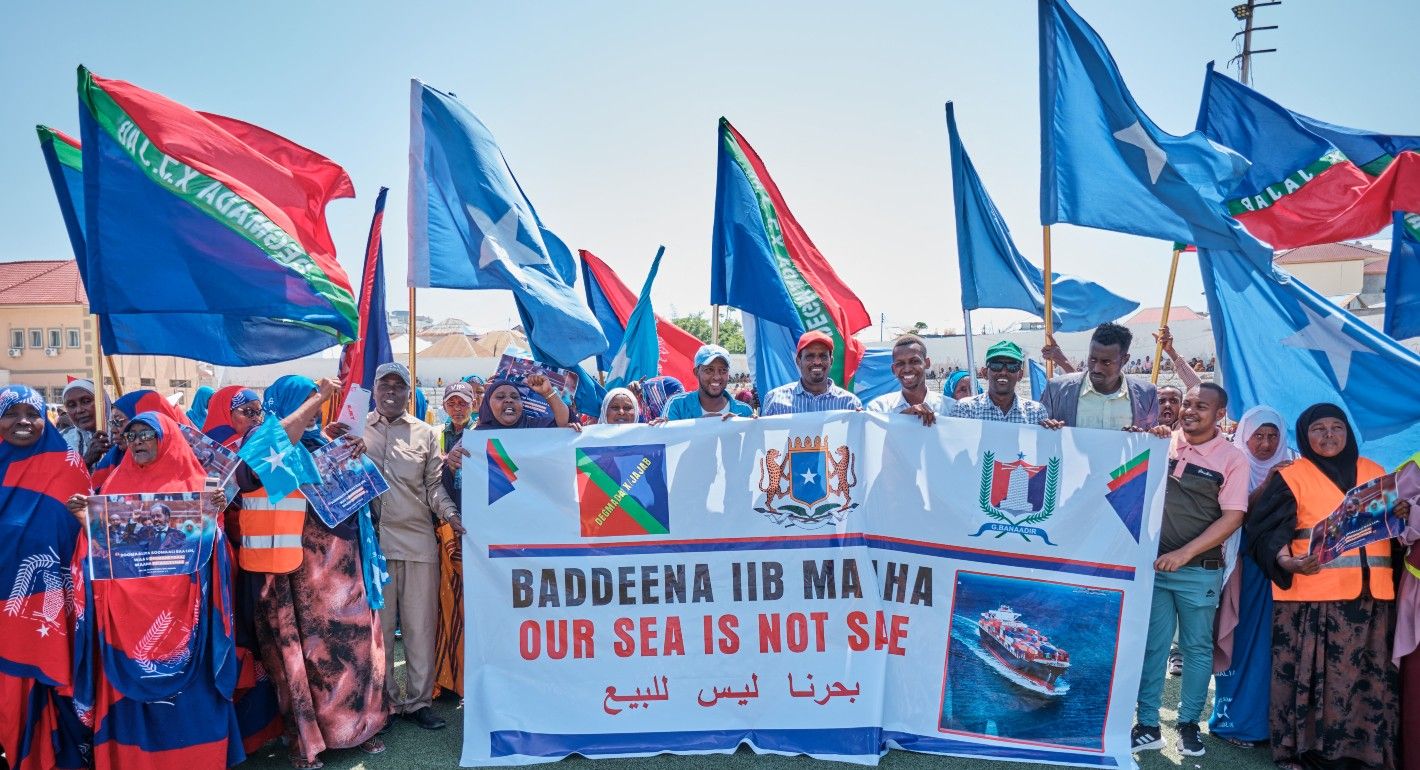
    Somalia’s Strategic Counterbalance to Ethiopian Influence in the Horn of Africa

    As hegemonic Ethiopian ambitions threaten stability in the Horn of Africa, Somalia is building strategic alliances regionally and internationally to counter Ethiopia’s growing political and military influence.

      Hisham Qadri Ahmed

  • Commentary
    Sada
    Morocco’s New Restrictions on Civil Society: A Setback for Anti-Corruption Efforts

    The Moroccan government’s decision to bar civil society from filing public actions in cases of public fund and property offenses has stirred debate, with critics warning it sidelines crucial players in the fight against corruption.

      Hasan Al-Ashraf

  • Commentary
    Sada
    Morocco’s Atlantic Initiative and Potential Challenges to Regional Leadership

    Morocco's Atlantic Initiative seeks to transform the geostrategic landscape of the Sahel and Sub-Saharan regions amid a wave of coups fueled by economic and social decline.

      Abderrafie Zaanoun

Get more news and analysis from
Carnegie Endowment for International Peace
Carnegie global logo, stacked
1779 Massachusetts Avenue NWWashington, DC, 20036-2103Phone: 202 483 7600Fax: 202 483 1840
  • Research
  • Emissary
  • About
  • Experts
  • Donate
  • Programs
  • Events
  • Blogs
  • Podcasts
  • Contact
  • Annual Reports
  • Careers
  • Privacy
  • For Media
  • Government Resources
Get more news and analysis from
Carnegie Endowment for International Peace
© 2026 Carnegie Endowment for International Peace. All rights reserved.