Introduction:
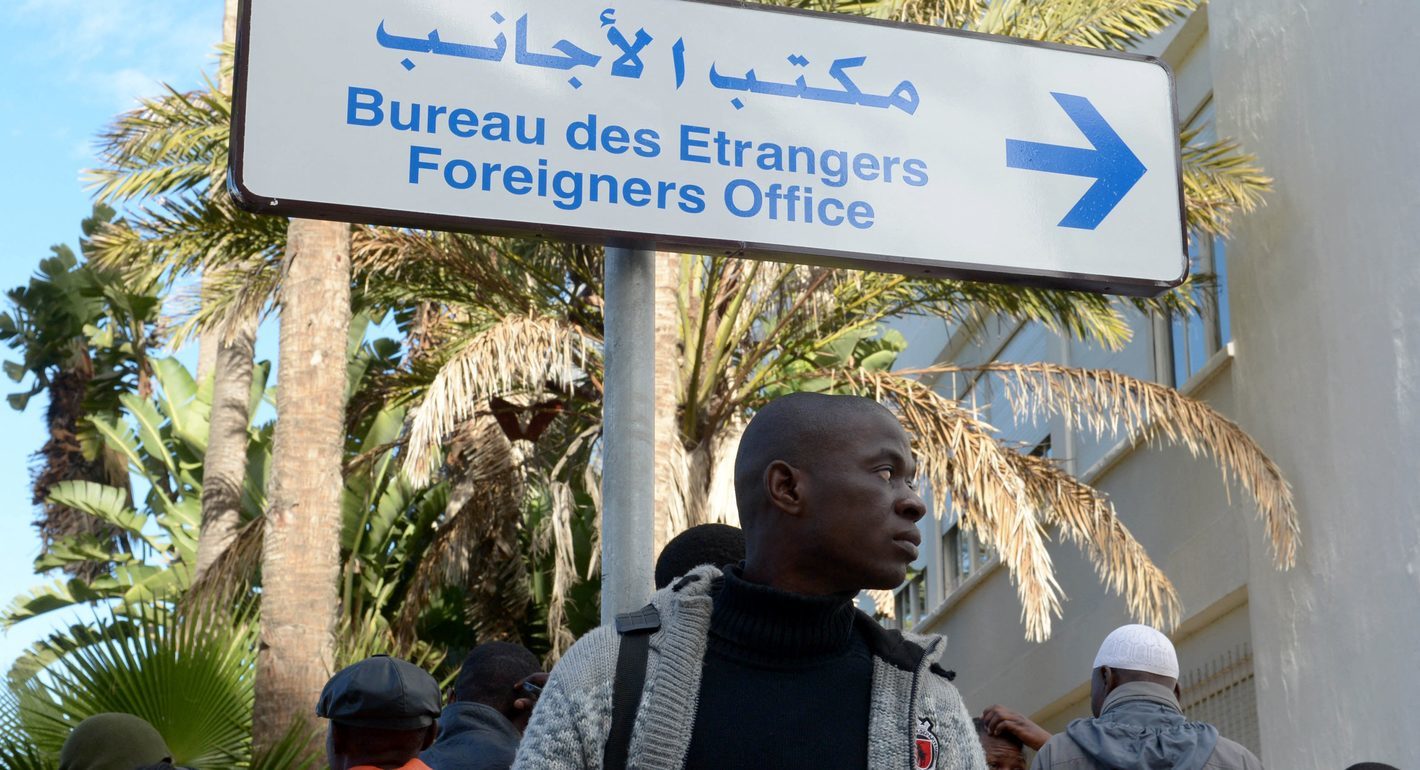
The legal and social status of migrants from sub-Saharan Africa residing in Morocco is closely linked to persistent human rights concerns that continue to feature prominently in public discourse. It is also connected to broader state efforts to improve social and economic conditions for both citizens and migrants, as well as to the need to align national legal frameworks with international migration norms. Within this context, the safe integration of migrants into public life, through migration-sensitive public policies, emerges as both a significant policy challenge and a legitimate objective for state and non-state actors alike.
A series of international and domestic security developments, particularly the September 11, 2001, attacks in the United States and the May 16, 2003, bombings in Casablanca, marked a decisive shift in Morocco’s official approach to migration. In their aftermath, and with regional and international support, the Moroccan state has increasingly framed migration policy through a security lens rather than a human rights one, justified by the need to counter terrorist threats. This shift is reflected in Law No. 02.03 on the entry and residence of foreigners, whose provisions emphasize control measures and impose restrictive conditions on the residence of foreign migrants in Morocco.
As the 2011 Arab Spring receded, a period of heightened official tolerance toward human rights claims emerged in response to sustained popular pressure. Moroccan authorities began to normalize migration as a policy issue by formally acknowledging it within public policy and introducing a set of regulatory and legislative measures. This shift was widely framed as a qualitative leap in the management of migration in Morocco.
However, the initial reform momentum soon revealed persistent gaps in implementation, particularly in areas of human rights protection, political accountability, and social and economic inclusion. These gaps raise questions about whether official government efforts to address the challenges facing migrants from sub-Saharan Africa have translated into substantive improvements in their safety and legal security.
Sub-Saharan African Migrants in Numbers:
A central challenge in both research and field-based engagement with migration in Morocco is the limited availability of reliable and comprehensive data on migrants’ actual conditions, including their numbers, nationalities, geographic distribution, and economic status. This gap stems in part from the difficulty of capturing migration that occurs informally or outside official channels, as well as from the deliberate concealment of identity and personal documentation by migrants seeking to avoid deportation.
This problem is compounded by inconsistencies across official data sources, including those of the Ministry of Interior, the Ministry of Employment, the National Social Security Fund, and the High Commission for Planning, largely due to the absence of a single national institution tasked with systematically monitoring migration dynamics. Data limitations are further caused by a security-driven approach to migration governance, in which quantitative information is used primarily for security surveillance and control rather than as a tool for informing public policy or tracking longer-term social change.
In response to these structural and informational constraints, the Moroccan state has, over the past decade, implemented a migrant regularization program in two phases. The first phase resulted in the regularization of 23,066 migrants out of 27,649 applications, with most beneficiaries originating from Senegal, Congo, and Côte d’Ivoire. The second phase covered approximately 20,000 applications out of a total of 28,400. Migrants granted regular status gained access to basic services, including education for their children and healthcare. These measures led the International Organization for Migration and the World Health Organization to acknowledge Morocco’s efforts toward the gradual integration of migrants into public life.
Recent statistical data published by the High Commission for Planning indicate that, based on the 2024 General Population and Housing Census, the number of migrants in Morocco reached 142,152 individuals, representing approximately 0.4 percent of the total population. Nationals from sub-Saharan Africa constitute the largest share of this population, led by Senegalese migrants, followed by Ivorians, Guineans, and Malians. Together, these groups account for 59.9 percent of all foreign residents in Morocco in 2024.
The same data show that migrants are predominantly concentrated in major urban centers such as Casablanca, Rabat, and Marrakesh. This spatial distribution reflects a broader tendency among sub-Saharan African migrants to settle in areas offering greater social, economic, and educational opportunities, largely driven by livelihood considerations. The report also points to a marked increase in female migration from sub-Saharan Africa, particularly from Côte d’Ivoire, highlighting a growing gender dimension within contemporary migration patterns.
In parallel, irregular migration remains a significant component of Morocco’s migration landscape. A relatively recent research paper estimates that more than 75,000 irregular migrants were present in the country in 2023. According to data from the National Council for Human Rights, 10,280 individuals entered Moroccan territory through irregular means between January and December of the same year. These movements are largely driven by a combination of security instability, economic hardship, and environmental pressures, particularly among migrants originating from countries such as Nigeria and Congo, many of whom aspire to onward movement to Europe via Morocco.
This migration momentum, shaped by Morocco’s strategic geographic position as a gateway to Europe, has placed the country among the leading destinations for migrants, particularly those in irregular situations. According to a 2025 report by an African research center specializing in migration issues, Morocco ranked second at the continental level in hosting irregular migrants originating from sub-Saharan Africa. This position presents the state with a complex set of challenges, most notably its capacity to absorb these populations politically, economically, administratively, and in terms of access to basic services.
Official Normalization of Migration in Government Policy... The Full Story:
Moroccan migration policies cannot be understood without situating them within both their stated and unstated contexts, and without examining their underlying motivations as well as their political and social trajectories and outcomes.
From this perspective, migration policies in relation to migrants from sub-Saharan Africa are best analyzed through the underlying policy calculations and constraints that shape them. These include efforts to consolidate Morocco’s standing within Africa, partly through the pursuit of broader diplomatic support for its position on Western Sahara, alongside attempts to strengthen its negotiating leverage with the European Union on economic issues such as agricultural trade agreements and access to Moroccan fishing waters. These considerations, however, intersect with broader regional dynamics shaped by the nature of the balance between Morocco and its Euro Mediterranean neighbors, particularly the priority these states place on safeguarding national security. It is within this context that the long-standing cooperation agreements between Morocco and the European Union on the management of irregular migration can be understood.
Partly in response to these regional security dynamics and long-standing cooperation frameworks, Morocco adopted a new policy framework for migration management in 2014, with European financial and logistical support, officially designated as the National Strategy for Immigration and Asylum. The strategy aimed to remedy the structural shortcomings of earlier development approaches. It introduced new policy orientations, including humanitarian and rights-based approaches and the principle of shared responsibility, with the stated objective of improving migrant integration while strengthening the governance of migration flows. These objectives were pursued through legal reform, measures to facilitate integration, migration management practices aligned with human rights standards, and the establishment of an appropriate institutional framework.
Despite the adoption of numerous programs and procedural mechanisms aimed at implementing the aforementioned strategy, and despite its relative achievements in shifting from a phase of “denial” of migrants’ realities to a form of “official normalization” with the issue of sub-Saharan African migrants, assessments of its implementation— including testimonies from official institutions— have revealed its limited impact and significant structural shortcomings. Among the most notable of these are the disruption of the work of official committees tasked with regularizing the administrative status of migrants and asylum seekers, the lack of sectoral coordination and a comprehensive vision in migration governance, and the marginalization of elected territorial actors, particularly local authorities, from integrating migration issues into their development plans and programs. This has been compounded by a renewed reliance on bureaucratic approaches to migration management in recent years.
These shortcomings have also generated tangible social and human rights consequences, including the rise of irregular employment among migrants and the associated violations, as well as the state’s failure to allocate sufficient budgets to provide humanitarian services to sub-Saharan African migrants. Furthermore, civil society organizations partnering with the state have proven unable to meet the growing demand for essential services such as healthcare, education, and housing due to insufficient funding. Added to this are emerging challenges related to migrants’ cultural and religious integration, stemming from flaws in the political and legal framework. Addressing these issues requires revisiting—or at the very least improving—Morocco’s migration policy to align it with ongoing transformations and to develop innovative options capable of accommodating migrants in accordance with international human rights standards, rather than narrow political considerations.
The Legal Framework of Migration in Morocco: Textual Complexities and Practical Challenges:
Morocco’s migration policy framework is shaped by an extensive set of international legal commitments. Beyond the bilateral agreements it has concluded, Morocco is legally bound by a range of foundational international instruments. These include the 1951 Geneva Convention relating to the Status of Refugees and its Additional Protocol, the 1990 International Convention on the Protection of the Rights of All Migrant Workers and Members of Their Families, and the 2018 Global Compact for Safe, Orderly, and Regular Migration, as well as several conventions adopted under the auspices of the International Labour Organization. Morocco is also bound by core instruments of international human rights law, including the Universal Declaration of Human Rights, the two International Covenants on Civil and Political Rights and on Economic, Social, and Cultural Rights, and conventions relating to the rights of children and women.
Despite the breadth of these international commitments, important protection gaps remain. Several international conventions to which Morocco is a party do not extend protection to migrants in irregular situations, including the International Convention on the Protection of the Rights of All Migrant Workers and Members of Their Families, even though this group is among the most vulnerable. In parallel, Morocco has concluded readmission agreements with a number of European states that have raised human rights concerns. Under these agreements, each party undertakes to accept individuals who have left its territory irregularly or who are residing unlawfully within the territory of a member state of the Schengen Area, and to return them to their country of origin after apprehension.
Beyond these protection gaps, the scope of Morocco’s treaty commitments also remains incomplete. The multiplicity of Morocco’s national treaty framework does not, in itself, ensure adequate protection guarantees for migrants from sub-Saharan Africa particularly because the kingdom has neither signed nor ratified several key international instruments, including the 1954 Convention relating to the Status of Stateless Persons, as well as International Labour Organization Convention No. 87 on Freedom of Association and Protection of the Right to Organize of 1950 and the International Labour Organization Convention No. 143 concerning Migrant Workers of 1978.
It can therefore be argued that the legal framework governing migration continues to suffer from significant shortcomings that reinforce a regulatory and security-oriented approach while limiting migrants’ access to a range of fundamental human rights. At the constitutional level, these shortcomings are reflected in the limited treatment of migrants’ rights, as evidenced by the Constitution’s preamble, Article 30, which confines foreigners’ political participation to local elections, and the ongoing ambiguity surrounding the hierarchy between domestic law and international conventions.
At the statutory level, these deficiencies are reflected in several legislative and regulatory provisions. Law No. 03.02 on the entry and residence of foreigners, for example, extensively criminalizes irregular migration under the pretext of protecting public order and public security, including asylum seekers and refugees who lack a comprehensive domestic legal framework guaranteeing their legitimate rights. In addition, the regulatory framework governing the employment of foreign migrants remains highly restrictive, granting the governmental authority responsible for labor broad discretionary powers to issue or withdraw work permits at any time. The Labor Code further restricts migrant workers’ rights by excluding them from trade union leadership, while Law No. 00.04 on compulsory basic education imposes discriminatory conditions, such as the requirement of Moroccan nationality, as a prerequisite for state responsibility for children’s education.
An excessive reliance on security-oriented approaches—at the expense of rights-based frameworks—in managing migration issues generates significant legal complexities that undermine the coherence of the regulatory framework. These complexities create substantial legal gaps that enable practices harmful to the rights of migrants, particularly those from sub-Saharan Africa. Such shortcomings are most evident in the difficulties migrants face in renewing residence permits and identification cards, which often place them in a state of prolonged legal precarity, as well as in the overly restrictive legal conditions that limit access to essential education and healthcare services.
The consequences of this approach are also apparent in the obstacles migrants encounter when registering their children in civil status records, and in the widespread prevalence of irregular employment outside legal protections, especially in sectors such as construction and public works. These conditions expose migrants to exploitation and violations of their social and economic rights. Moreover, in certain contexts, the state’s failure to recognize refugee status granted by the Office of the United Nations High Commissioner for Refugees further exacerbates migrants’ legal and humanitarian vulnerability, weakening the fundamental guarantees of protection to which they are entitled.
Taken together, existing legal and institutional arrangements governing migration in Morocco reveal the need for comprehensive reform. Such reform is necessary to align Moroccan laws, including labor, associations, and trade union legislation, with the state’s international human rights obligations. This need is particularly pressing considering the growing influx of both regular and irregular migrants to Morocco, driven by heightened security tensions and worsening social and economic conditions in their countries of origin.
The Rights of Sub-Saharan African Migrants at a Crossroads:
Migration dynamics in Morocco over recent years have contributed to drawing attention to the human rights dimension of migration governance, particularly through the frequent invocation of legal texts that are not aligned with a human rights–based approach, as well as through highlighting the “policing approach” to dealing with sub-Saharan African migrants. This has occurred in the context of violations and abuses committed by public authorities, a reality echoed in the “victimization” discourse advanced by civil society organizations and stakeholders engaged in migration issues. Available data indicate that violence against migrants constitutes one of the most serious violations, as reports by several international non-governmental organizations stated that in 2022 Moroccan and Spanish security forces killed at least 37 people, while 77 others disappeared, and several were arrested during an attempt by a group of sub-Saharan African migrants to cross the border from Morocco into the Spanish enclave of Melilla. The same year also witnessed the prosecution of several migrants in connection with the same incident, resulting in harsh sentences.
The data further point to the growing prevalence of discriminatory and racist discourse, which often takes the form of excluding individuals based on skin color or portraying them as an economic or social burden. Some studies suggest that the intensity of racism varies according to specific factors, such as religion— with Muslims reportedly facing less discrimination than Christians— or nationality, particularly in the case of migrants from countries considered friendly to Morocco, such as Senegal and Mali. In the same vein, migrant women from sub-Saharan Africa are exposed to various forms of violence and sexual exploitation due to their vulnerable status. In this context, violence and discrimination take on an intersectional dimension, where race, gender, and class intersect to produce more complex and compounded forms of abuse.
Violations also extend to the right to freedom of movement, through allegations of arbitrary arrests of irregular migrants and asylum seekers, their unlawful detention, and their subsequent forced transfer either to cities in southern Morocco or to their countries of origin. Additionally, the right to organize remains restricted. Despite the Moroccan Constitution’s guarantee of equality in rights, the Labor Code—specifically Article 416—continues to prohibit foreigners from holding trade union leadership positions by requiring Moroccan nationality, while Article 439 bars them from running in elections for workers’ representatives. Moreover, the Associations Law imposes more restrictive conditions on the establishment of foreign associations compared to national Moroccan ones, in violation of universal standards on freedom of association and the International Convention on the Protection of the Rights of All Migrant Workers and Members of Their Families. In light of the complexities surrounding the employment of regular migrants, the spread of informal employment among irregular migrants, and the resulting rights-related consequences, there is an urgent need for comprehensive reform of the labor system—particularly given Morocco’s commitments linked to hosting the 2030 World Cup and its obligation to uphold human rights standards, including the rights of foreign workers.
Despite the sustained efforts of civil society and human rights actors, including the Moroccan Association for Human Rights, the Moroccan Organization for Human Rights, the Anti Racist Group for the Support and Defense of Foreigners and Migrants, the Beni Znassen Association for Culture Development and Solidarity, the East West Foundation, Caritas, Doctors Without Borders, the Central European Initiative, and the Evangelical Church in Morocco, the effective realization of migrants’ rights remains contingent on a fundamental reassessment of the state’s security centered approach to migration governance. This requires the adoption of a genuinely participatory framework in the state’s engagement with civil society organizations working on migration issues, including those perceived as critical or disruptive, alongside sustained support for their institutional and financial capacities.
At a second level, migrants themselves should be meaningfully involved in the design and formulation of migration policies, given that they are the primary stakeholders affected by such measures. According to a 2021 report by the High Commission for Planning, only around one migrant in six, or approximately 17 percent, was aware of the existence of the National Strategy for Immigration and Asylum. The limited participatory foundations of this strategy may therefore help explain both its constrained scope and the modest outcomes observed in its implementation.
Between Opportunities and Constraints of Migrant Integration: What Future Prospects?
Addressing the challenge of integrating migrants from sub-Saharan Africa in Morocco remains closely tied to the ability to capitalize on existing and potential opportunities while simultaneously overcoming the various constraints and obstacles that persist. Key facilitating factors for integration include the Moroccan state’s official normalization of migration issues at the levels of discourse, public policy, and legal frameworks, as well as the linkage of migration in official awareness to the Western Sahara issue, which confers a particular strategic dimension on the file. These opportunities are further reinforced by constitutional and legal guarantees aimed at protecting migrants, the existence of official institutions tasked with managing migration affairs, and the active engagement of several civil society organizations working on migration-related issues and migrant rights.
Conversely, the integration of migrants into Morocco’s public sphere faces many structural constraints, most notably the recent cooling of official political engagement with migration issues and the shortcomings that continue to characterize the legal framework governing migrants’ status. These challenges are exacerbated by the highly pragmatic approach adopted by Morocco’s European partners toward sub-Saharan African migrants, as well as by the limited material resources allocated to ensuring effective and comprehensive protection for migrants on the ground.
Conclusion and Proposed Pathways:
The opportunities and risks outlined above clearly demonstrate that migrants from sub-Saharan Africa who arrive in Morocco are not consistently in a position of safety, whether in legal, rights-based, political, social, or economic terms. This situation can largely be attributed to the fragility of the legislative environment surrounding migrants, in addition to the limited effectiveness of public policies directed at sub-Saharan African migrants. From this perspective, there is a pressing need to prioritize a rights-based approach in dealing with migration issues, without necessarily abandoning the security approach, provided that the latter is applied within its legitimate limits and strictly according to the logic of necessity.
This also calls for the adoption of an inclusive and participatory approach that involves all relevant stakeholders, including migrants themselves, civil society organizations, political parties, and public actors, while considering international development commitments when designing and implementing migration policies, such as the African migration agenda and the 2030 Sustainable Development Goals. Strengthening Morocco’s migration legal framework is likewise essential, particularly through the adoption of a comprehensive migration code that addresses issues such as migrants’ employment, healthcare, and education, aligns with international standards, and reduces punitive and repressive approaches.
In the same vein, future agreements and partnerships between Morocco and European countries on migration should be tied first and foremost to Morocco’s legitimate national interests, while ensuring the preservation of migrants’ dignity and the protection of their rights. Supporting and enhancing the role of civil society organizations as key actors and partners in addressing migration challenges is equally important, as is shifting from bureaucratic practices toward more democratic governance in the official handling of migration and reducing excessive centralization by involving elected territorial public bodies. Ultimately, effective migration governance depends on strengthening mechanisms of accountability, preventing impunity, and enhancing transparency and integrity through the regular release of accurate quantitative and qualitative data on migrants in general, and sub-Saharan African migrants in particular.
AI was used for editing this article.