

Commentary
From anime heroes to online gaming communities, Morocco’s Gen Z is building a new protest culture. What does this digital imagination reveal about youth politics, and how should institutions respond?
Abdelilah Farah
{
  "authors": [
    "Muriam Haleh Davis"
  ],
  "type": "commentary",
  "blog": "Sada",
  "centerAffiliationAll": "",
  "centers": [
    "Carnegie Endowment for International Peace"
  ],
  "collections": [
    "Arab Awakening"
  ],
  "englishNewsletterAll": "",
  "nonEnglishNewsletterAll": "",
  "primaryCenter": "Carnegie Endowment for International Peace",
  "programAffiliation": "",
  "programs": [],
  "projects": [],
  "regions": [
    "North Africa",
    "Algeria"
  ],
  "topics": [
    "Civil Society"
  ]
}
Source: Getty
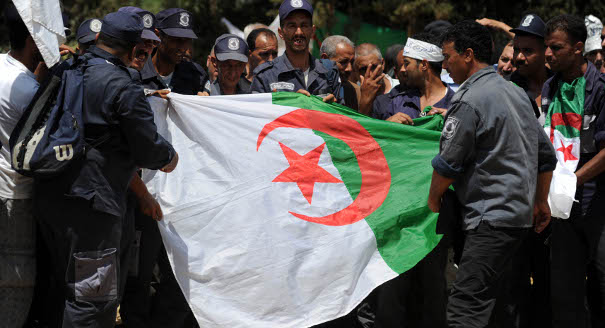
Algeria pulled off elections to international acclaim, but ongoing riots and self-immolations should not be ignored.
Less than a week after Ennahda was declared the winner of Tunisia’s first elections since the fall of Ben Ali, Algeria witnessed a major development of its own: the opening of the Algiers Metro—an event more than 30 years in the making. Indeed, while much of the Arab world has been in a period of upheaval, talk abounds of an “Algerian exception.” As the flurry of January 2011’s protests subsided, Algeria seems to have settled into familiar territory: legislative elections this past May gave the ruling National Liberation Front (FLN) what seemed to be a resounding victory. On July 5, the country celebrated its 50th anniversary of independence—and the official logo for the celebrations feature the metro prominently. But beyond the headlines, Algerians continue to express deep discontent on a daily basis.
Hillary Clinton, Ban Ki-moon, the EU and the Arab League all congratulated Algeria on the transparency and stability of the electoral process. Barack Obama even sent congratulations to Algeria on its 50 years of independence, noting that the country “continues to play a basic role in the combat against terrorism.” Algeria is a key player in the resource-rich Sahel, where Islamists are being supported by al-Qaeda in the Maghreb (AQIM). This nebulous organization is often viewed as an avatar of the GIA (Groupe islamique armé), which was a key terrorist group during the Algerian civil war. Stability is especially important to foreign observers these days because of the events in Northern Mali and Libya, and as the chaotic struggle continues between the Tuareg rebels of the National Movement for the Liberation of Azawad (French acronym, MNLA) and the Islamist Ansar Dine. Undoubtedly, the international community—including bodies like the Economic Community of West African States (CEDEAO) and the African Union—now looks to Algeria for help in resolving the crisis.
Yet what is often lauded abroad as stability is more accurately read domestically as an expression of disillusionment with institutional politics. The legislative elections were decidedly anticlimactic for most Algerians: in addition to widespread accusations of fraud, some analysts have estimated the actual participation rate to be 15 percent—rather than the 42.9 percent claimed by the regime. And despite the birthday wishes sent from Washington, Algerians were less impressed: “I don’t really care about the 50th anniversary; independence is old news,” one Algerian told me. “I’d like the government to do things for us now, I don’t give a damn about what they did 50 years ago.”
The regime has used this disenchantment to question the patriotism of the population rather than question its own legitimacy. Daho Ould Kablia, the country’s Interior Minister, claimed that Algerians in the North didn’t vote in the parliamentary elections because they were less patriotic and would rather go to the beach. The government also regularly conjures the notion of “sacrifice” for the sake of everyday stability, particularly through the historical reference par excellence, the War of Independence (1954–1962). This past May, President Abdelaziz Bouteflika gave a speech at Sétif (the site of a brutal 1945 colonialist massacre) in which he asserted: “The liberty and national sovereignty were regained at the price of enormous sacrifices. This is why the Algerian people, most notably the younger generations, should understand that the liberty, the stability, the progress and the democracy that the country enjoys are the fruit of enormous sacrifices.”
For all the rhetoric though, Algerians are tired of the sacrifices being asked of them, and the frustration is coming out—albeit unfocused. Citizens continue to engage in self-immolation on a tragically frequent basis; the independent paper El Watan reported 20 in the first six months of 2011--and these were only in the Western part of the country around Oran (where the victims were treated). As a result, the minister of religious affairs even issued a fatwa against self-immolation in a bizarre example of using a religious decree to control political dissent. While these acts were not completely unheard of prior to the suicide of Tunisia’s now-famous Mohamed Bouazizi, they became exponentially more common in Algeria in 2011.
But a more long-standing problem is that of the country’s riots; some analysts claim that several hundred occurred in 2011—making l’émeute a key means of contestation for the population. The objects of frustration are not surprising: housing, electricity, unemployment, and hogra (injustice). And while these disturbances occur nationwide, Kabylia and the south seem to be the zones of the most visible unrest.
The organization also varies; many riots tend to flare up spontaneously and defy any logic of central organizational. For example, anniversary celebrations in M’sila turned into a riot when the police prohibited a group of youth from accessing the fields where the fireworks were taking place. Although certain organizations, such as the National Committee for the Rights of the Unemployed (French acronym, CNDDC), actively advocate for a more equitable repartition of economic resources, they are often loathe to any action that would link them to violence (and thus risk backlash from the regime as well as from a population wary of violence).
Additionally problematic are these demonstrations’ dismissal: riots are often written off as a form of “irrational” youth anger and assumed to be apolitical “food riots.” Because they lack a singular political will, they are deemed to be mere “socio-economic grievances,” and enable the discourse of political stability to remain intact. However, the riots and self-immolations are neither entirely random nor completely illogical. There are good reasons why Algerians would chose this form of fragmented expression: the population is deeply divided by a decade of civil war and remains disenfranchised by an elusive networks of entrenched interests often referred to simply as le pouvoir. In addition to corruption and hyper-bureaucratization, infighting among factions of the ruling elite is endemic, and it proves difficult to ascertain the difference between political rumor and reality.
For example, the chief of Algeria’s national police force (The General Directorate for National Security, or DGSN), Ali Tounsi, was shot dead in his office by a trusted colleague in February 2010 in an episode reminiscent of the assassinations of Mohamed Boudiaf and Abdelhaq Benhamouda—two prominent political figures whose assassinations in the nineties still remain mired in conflicting reports and conspiracy theories. Telling, as well, are the uneasy relationships among the president and the extremely powerful intelligence and security services (known as DRS, Département du Renseignement et de la Sécurité). While Bouteflika had once preened his younger brother, Said Bouteflika, to succeed him, the military hierarchy is widely known to be vehemently opposed to this decision. Ultimately, it is not evident to Algerians where to find le pouvoir and even less clear how to effectively protest against it.
Unlike the country’s North African neighbors, Algerians still carry the psychological and political scars of a civil war that divided the population and killed more than 150,000 people. This often makes it seem that the country is willing to bear the enormous costs of corruption and economic dissatisfaction, given that the alternative threatens to bring the country into a renewed state of violence and chaos. Yet ignoring the ongoing riots and self-immolations privileges an official discourse of stability propagated by the regime, and obscures the ways in which Algerians are rejecting the political order. Those who are interested in predicting “the next Tahrir” would do well to track these scattered events rather than wait for action at the Place des Martyrs. After all, the capital’s main public space has been indefinitely under construction. The reason for the closure? Expansion of the metro, of course.
Muriam Haleh Davis is a Ph. D. candidate in the department of history at New York University. Her research interests focus on development and decolonization in Algeria.
Muriam Haleh Davis
Carnegie does not take institutional positions on public policy issues; the views represented herein are those of the author(s) and do not necessarily reflect the views of Carnegie, its staff, or its trustees.
From anime heroes to online gaming communities, Morocco’s Gen Z is building a new protest culture. What does this digital imagination reveal about youth politics, and how should institutions respond?
Abdelilah Farah
While Morocco’s shift to a digitized social targeting system improves efficiency and coordination in social programs, it also poses risks of exclusion and reinforces austerity policies. The new system uses algorithms based on socioeconomic data to determine eligibility for benefits like cash transfers and health insurance. However, due to technical flaws, digital inequality, and rigid criteria, many vulnerable families are unfairly excluded.
Abderrafie Zaanoun
Saudi Arabia’s cautious stance on the Syrian Kurds reflects a delicate balance between leveraging Kurdish autonomy to counter Iran’s influence and managing the risks of destabilizing Syria’s territorial integrity. While Saudi Arabia seeks to safeguard its interests in the region, it remains wary of the potential internal and external consequences of supporting Kurdish autonomy.
Mohammad Salami
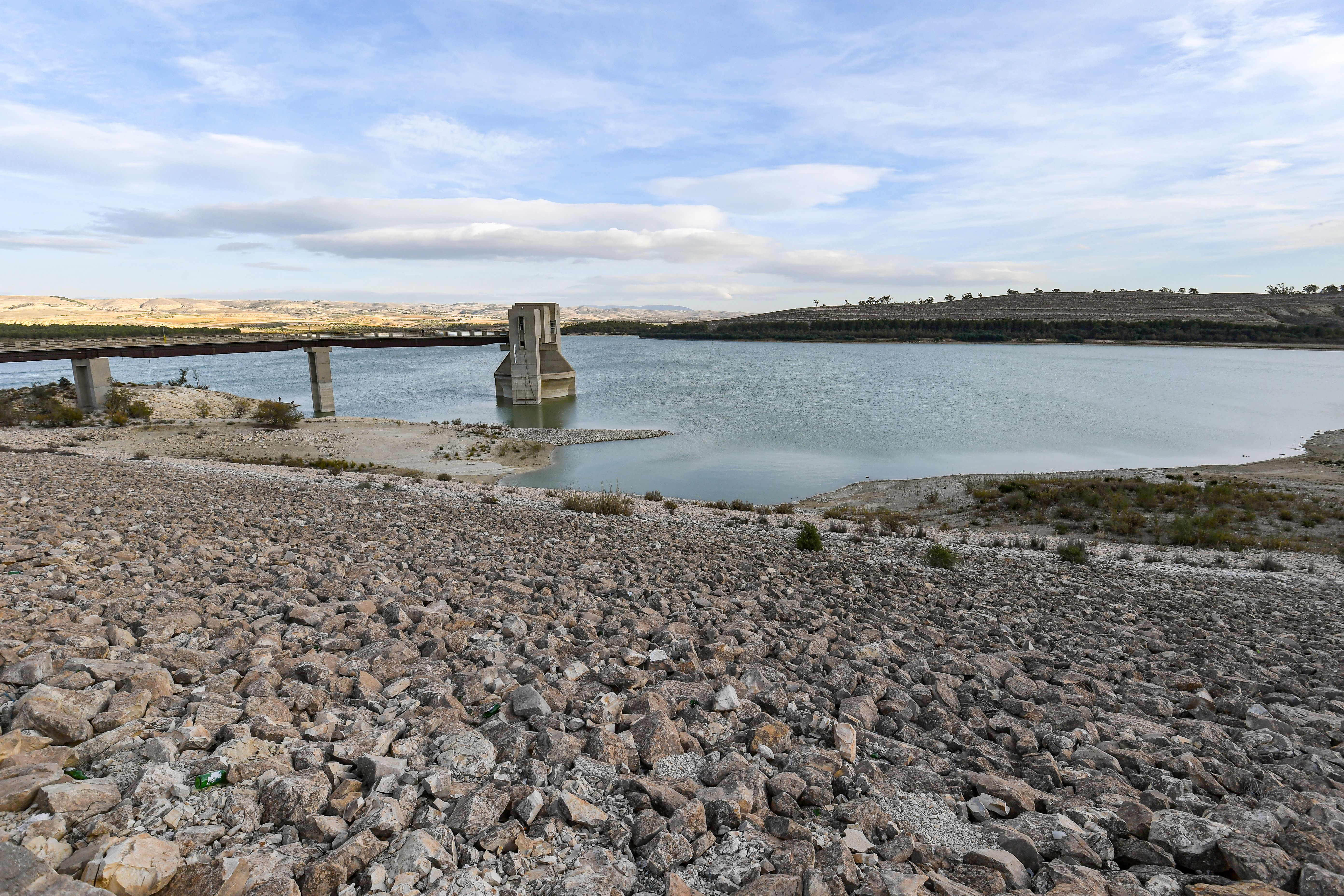
Tunisia is facing a worsening water crisis characterized by widespread protests over access to potable water, particularly in rural areas with underdeveloped supply networks. This situation is exacerbated by climate change, outdated agricultural policies, and industrial water consumption, necessitating comprehensive policy reforms to secure Tunisians’ constitutional right to water and ensure equitable access across the country.
Noura Omar
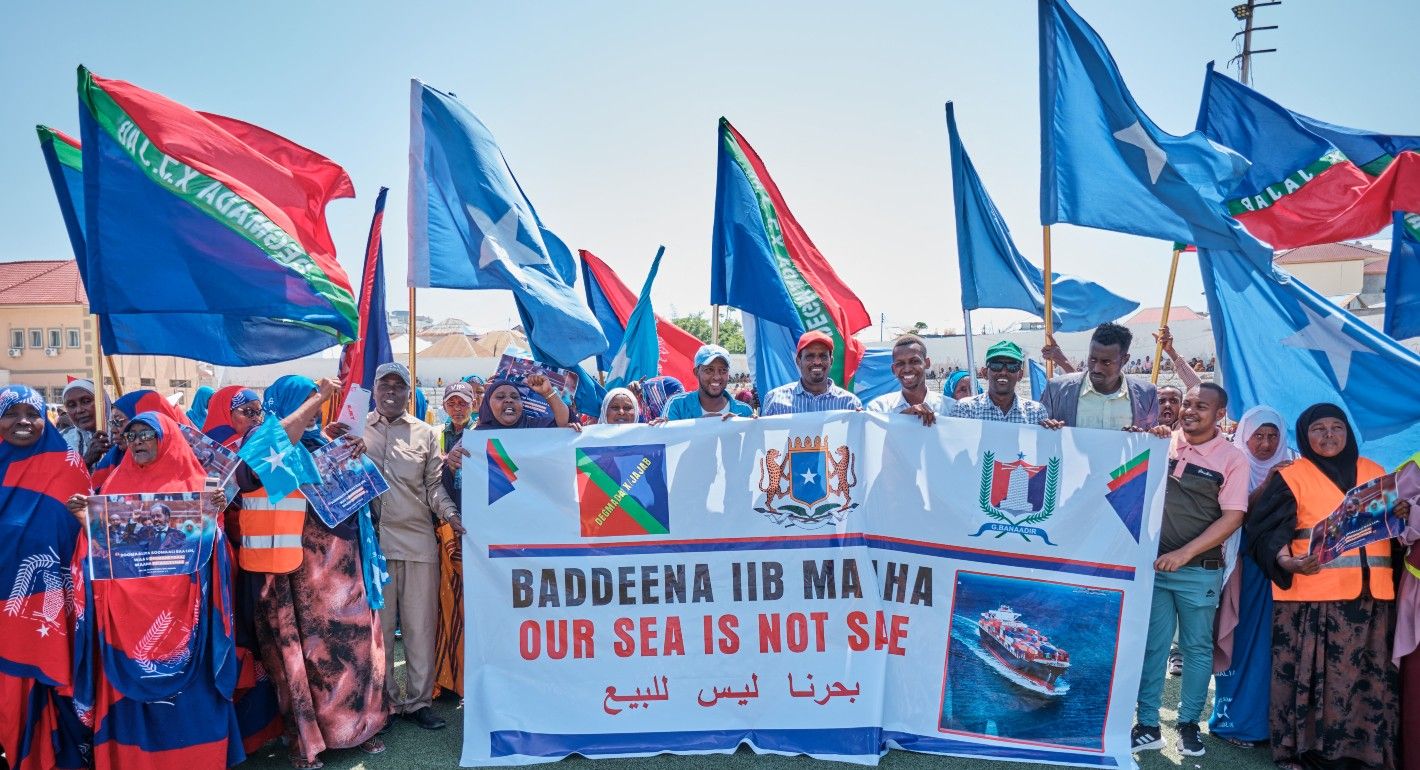
As hegemonic Ethiopian ambitions threaten stability in the Horn of Africa, Somalia is building strategic alliances regionally and internationally to counter Ethiopia’s growing political and military influence.
Hisham Qadri Ahmed