Introduction:
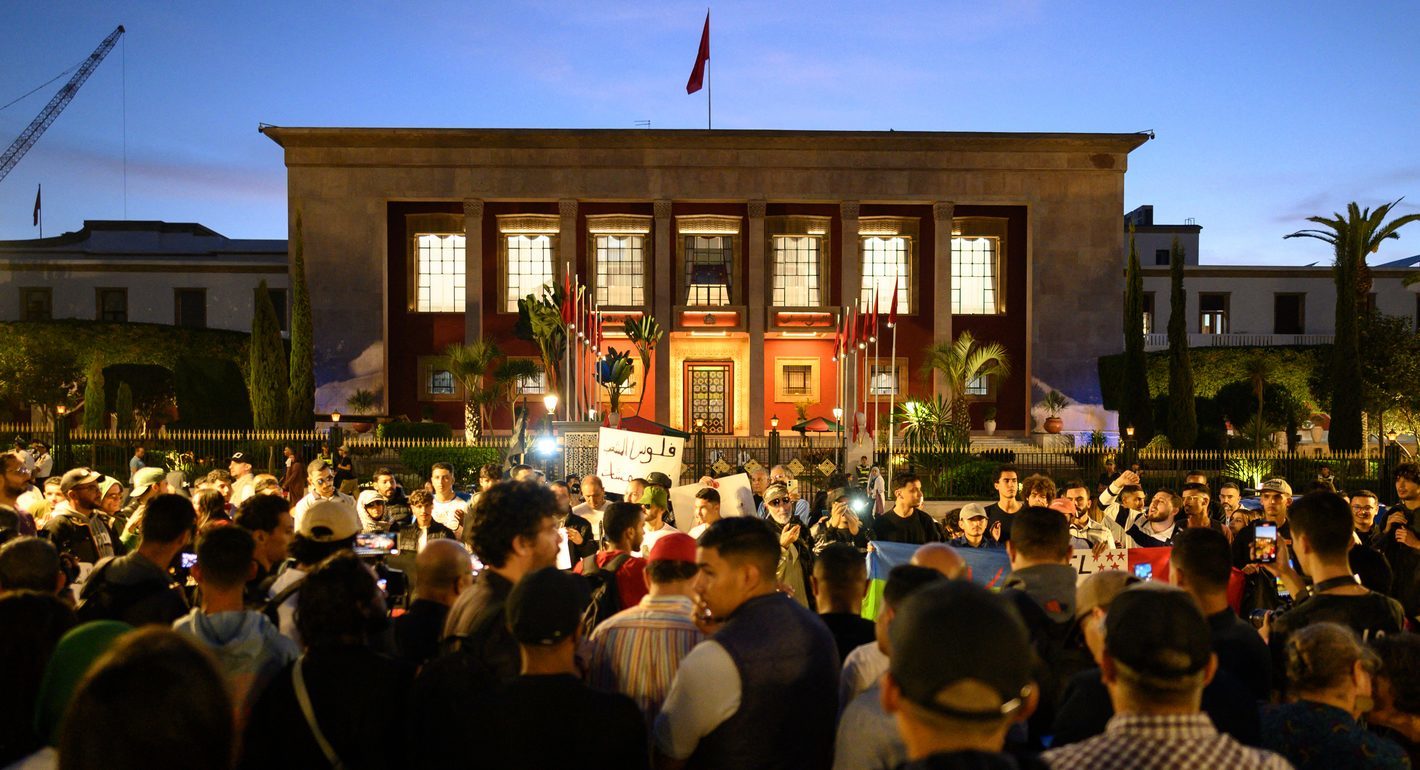
In recent years, Morocco has experienced a resurgence of social protests, driven by deteriorating economic and social conditions, persistent inequalities, and a youth unemployment rate approaching 35.8 percent, according to the High Commission for Planning (2025). These conditions have exposed the fragility of public policies and their inability to meet citizens’ basic needs in key sectors such as education and healthcare, ultimately translating into visible discontent in the streets across the country.
While protest is not new to Morocco’s political landscape, the current wave reflects an important shift in both its actors and its modalities. The mobilizations observed in 2025 have been notably shaped by the emergence of new participants—most prominently, members of Generation Z. Having come of age alongside the rapid expansion of the internet and social media, they developed their political consciousness within a globalized digital environment that enabled them to depart from the traditional modes of protest expression and to draw instead on cultural influences such as anime, video games, and contemporary music.
These influences have contributed to a shift that is fundamentally transforming patterns of social and political action—a transformation that raises an important question: what digital cultural references have shaped the protest movements of Generation Z in Morocco?
It is evident that young people—particularly Gen Z—have increasingly distanced themselves from traditional structures such as political parties and trade unions, opting instead for leaderless, networked forms of mobilization that take shape within the digital sphere. In doing so, they follow in the footsteps of their predecessors from Generation X and the Millennial generation, who spearheaded waves of protest across several Arab countries in the period leading up to and during the 2011 Arab Spring. Prior to these uprisings, those generations had limited means through which to articulate their demands and were frequently subjected to political repression and arbitrary state violence. The emergence of social media platforms, particularly Facebook, provided new avenues for expression, enabling activists to organize, mobilize, and articulate aspirations for political, economic, and social reform. As Manuel Castells observes, “The majority of the population of these countries consisted of people under the age of 30, many of whom were relatively educated, yet fully or partially unemployed, and familiar with the use of digital communication networks.”
In the Moroccan context, familiarity with digital technologies has enabled platforms such as Discord and Facebook to function as virtual arenas for mobilization and the expression of political opinion among Generation Z. Initially, the demands articulated by these youth movements were not primarily political; rather, they focused on social reform in areas such as healthcare, education, and social justice. Over time, however, some of these movements evolved into broader calls for the overthrow of the government, particularly following a tragic humanitarian incident in Agadir, which resulted in the deaths of several pregnant women in a public hospital.This event catalyzed what can be described as a form of digitally mediated collective consciousness—one that challenges entrenched structures of marginalization while embracing a cultural discourse that blends the symbolic and the visual. Within this framework, protest is redefined as an act through which participants assert claims to freedom, dignity, and social justice, independent of the tutelage of political parties and trade unions. This pursuit reflects a recurring dynamic observable across a wide range of social and political movements.
From a sociological perspective, the digital protests of Morocco’s Generation Z can be understood as primarily cultural rather than purely political acts. They seek to redefine the values of dignity, citizenship, and justice through visual symbols drawn from the heart of a globalized culture. Banners that combine musical references, anime imagery, and slogans advocating justice reflect a new language in which political discourse is re-imagined through a blend of irony and aesthetic expression. In this sense, protest becomes a symbolic practice aimed at reshaping meaning and identity.
Cultural globalization has endowed this generation with a dual consciousness: globally connected yet locally grounded in experiences of hardship. It draws on symbols from distant cultures to interpret and articulate its own reality. Consequently, the movement can be seen as an expression of a collective consciousness that interrogates lived conditions through cultural and digital forms of communication.
Generation Z: Digital Formation and the Transformation of Social Identity:
The new forms of protest observed in Morocco cannot be fully understood without accounting for the profound impact of digitization on the formation of Generation Z’s social identity. Born between 1997 and 2012, these youths have been shaped not only within traditional social environments but also within a dense digital ecosystem that has become an integral component of the socialization process. As a result, social identity is no longer solely the product of classical institutions such as the family and the school; rather, it is increasingly constructed through digital platforms and social networks, where local experiences intersect with diverse global cultural influences.
Vivek Pandit argues that for Generation Z has no clear distinction between the physical and digital worlds; rather, the digital sphere operates as an extension of everyday social life, rather than merely a tool for communication. The significance of this observation extends beyond a descriptive account of this generation’s relationship with technology, pointing instead to its transformative implications for patterns of social belonging. Young people increasingly construct their identities beyond the confines of local communities or national institutions, situating themselves within transnational networks organized around shared interests and shaped by a globalized digital culture.
From this perspective, Marc Augé’s concept of “non-places” provides a useful interpretive framework for understanding the transformation of identity among Generation Z. Digital spaces resemble non-places insofar as they are transient and not anchored to specific geographical locations, yet they simultaneously facilitate new forms of social interaction and belonging. Engagement within these environments, however, is not neutral; rather, it is structured by what may be described as a “digital contract,” manifested through the creation of personal accounts and adherence to platform-specific norms and regulations. In this sense, Generation Z’s identity is shaped within a digitally mediated social structure that combines individual self-expression with integration into expansive, networked communities.
This transformation also helps to explain the weakening of this generation’s attachment to traditional political institutions. The digital socialization of young people provides them with immediate access to diverse sources of information and opinion, thereby diminishing the monopoly that such institutions once held over the production of knowledge and symbolic legitimacy. Consequently, younger generations are less inclined to engage with conventional party and trade union frameworks, and are instead more likely to pursue alternative, often informal, modes of political expression and participation.
Recent studies on youth political trust in Morocco corroborate this trend, revealing persistently low levels of confidence in government institutions and political parties, and reinforcing the growing tendency among young people to articulate dissent outside formal institutional channels.
From a sociological perspective, this transformation may further be understood as a shift from relatively stable forms of social identity to more fluid configurations that are continuously reshaped through digital interaction. As Sunil Bhatia and Anjali Pathak-Shilhat argue, identity within the digital generation is not a fixed essence, but rather a form of cultural positioning that evolves across contexts and lived experiences. This perspective helps to explain young people’s capacity to appropriate multiple cultural symbols and to draw on characters and imagery from diverse cultural repertoires—an ability that is clearly reflected in protest practices incorporating elements from anime, video games, and contemporary music.
The predominance of visual culture within the digital sphere further contributes to the reconfiguration of political awareness. Generation Z acquires a significant portion of its information through videos, images, and visual symbols, rendering political expression increasingly visual and symbolic rather than exclusively discursive. Consequently, protest banners and slogans are often saturated with imagery and layered cultural references, reflecting a broader transformation of politics into a domain of cultural and aesthetic expression as much as one of social contestation.
In light of these dynamics, the social identity of Morocco’s Generation Z can be understood as emerging at the intersection of two seemingly contradictory dimensions: a globalized consciousness shaped by digital networks, and a local social reality marked by economic fragility and limited opportunities for social integration. It is precisely this tension that infuses their protest practices with deeper significance. These mobilizations are not merely reactions to immediate social grievances; rather, they express an underlying tension between a global horizon of freedom and justice—continuously constructed within digital spaces—and a local reality that constrains the realization of such aspirations.
For Generation Z, the digital world is not merely a space for entertainment but a vital arena for exercising freedom. Through digital engagement, young people build self-confidence and shape new identities that operate independently of government control and regulatory institutions, and they widely distrust these official establishments.
A recent study measuring political trust among Moroccan youth aged 18–24 found that only 16% express trust in the government, while 80% report complete distrust. Similarly, Parliament received trust from just 21% of respondents, while political parties garnered a mere 15%.
Therefore, the protests of Generation Z cannot be explained merely as conventional political actions; they are, in fact, efforts to redefine the collective identity of this generation within society. These mobilizations represent a demand for recognition as a distinct social actor—equipped with its own cultural language and digital tools—while simultaneously calling for a more equitable distribution of opportunities and rights within Moroccan society.
Shaping Protest Consciousness in Generation Z:
Digitization is a fundamental pillar for understanding Generation Z. It is not merely a tool for expression but a social space where relationships and identities are formed. This generation experiences the digital realm as an existential home—not just a means of communication. Moreover, “their daily lives are deeply influenced by the vast reach of digital media and its role in accelerating the flow of information, ideas, goods, and practices across both transnational and local contexts, especially in cities of the Global South.”
Consequently, it is natural that digital media would serve as a powerful catalyst for protest movements in Morocco. It enables young people to circumvent censorship, freely express their opinions, and build networks of solidarity and support among themselves. Conversely , digitization presents a significant challenge for the state, which must contend with a generation that communicates through new and evolving modes that are difficult to monitor and regulate.
One reason for this challenge is that Moroccan institutions and researchers have yet to give cultural domains such as anime and electronic games the attention and in-depth study they deserve, thereby hindering a comprehensive understanding of their impact on youth. Through these cultural media, children and young people, particularly from Generation Z, acquire sets of beliefs, values, knowledge, skills, and practices that contribute to the formation of their individual and collective identities, as well as shaping how they think and interact with both real and virtual worlds.
Anime holds significant symbolic power in shaping the protest imagination of Morocco’s Generation Z. Japanese anime, with its themes of justice, rebellion, and heroism, has become a key source of political and cultural inspiration for these young audiences. Characters such as Eren Yeager from Attack on Titan embody a conception of freedom grounded in struggle and resistance. In this narrative, freedom is not presented as a static condition, but as an ongoing act of defiance against fate, fear, and authority, and as a revolution against all forms of domination that seek to deprive individuals of their freedom.
Similarly, the character Luffy in One Piece represents resistance to unjust regimes and the pursuit of absolute freedom. These values resonate with what Moroccan youth endure in the face of political and social frustration. As Akos Cooper explains, One Piece “relates to an interactive context in which the symbolism of pirates is rooted as a challenge to the existing order and the supremacy of power. Some pirates are merely ordinary gangs, while others act as agents cooperating with the world government, but there are others like Luffy who fight for higher principles rather than for wealth or booty.”
Within this framework, Luffy can be understood as a cultural symbol of ethical rebellion and the pursuit of justice. More broadly, anime functions as a discursive space in which the political consciousness of Arab and Moroccan youth is reconfigured, enabling forms of imaginative resistance to lived realities. A significant portion of anime content consumed on digital platforms foregrounds the corrupt and manipulative nature of those in positions of power.As a result, young people develop a critical view of their countries’ power structures, seeing them as corrupt systems not unlike the cartoon villains who seek to dominate the world or control individual destinies.
As for digital and electronic games, they have also become central to the social experiences of Generation Z, fostering a strong sense of collective belonging within digital spaces. This development reflects a broader transformation in patterns of social and political participation, particularly in contrast to those observed in offline contexts.
On platforms such as Discord, thousands of players from around the world converge through online games not only for entertainment and interaction, but also to express social and political views. These environments provide opportunities for civic engagement, enabling users to protest in playful yet meaningful ways and to articulate dissent against authoritarian rule and capitalist logics through gameplay.
At the same time, it is important to recognize that such platforms can be exploited by extremist groups, creating potential pathways for radicalization and mobilization against the state.
Video and electronic games have also come to function as formative spaces for cultivating ideas of resistance among Generation Z, providing young players with a tactical imagination for confronting existing political and social structures.Multiplayer games such as Fortnite, Grand Theft Auto V (GTA V), and PUBG: Battlegrounds require players to cooperate, strategize, and navigate complex systems. These games are notable “for their strong emotional resonance and profound psychological impact, as well as their extensive accessibility through the internet.” They encourage thinking of the world as an open arena for creativity, innovation, and competition. Such dynamics are reflected in the flexible, decentralized, and leaderless nature of Moroccan protest movements, which mirror the tactical practices developed within these virtual environments.
Consequently, video gaming experiences have contributed to the formation of distinct behavioral patterns and modes of digital interaction among Generation Z. “Participation—particularly in competitive contexts—entails “entering the game” and implementing a strategic plan that enables players, within the constraints of established rules, to achieve specific objectives. In these virtual contexts, players explore predefined spaces, experiment with multiple roles, assume alternative identities, and collaborate with others to accomplish collective goals.”
Music, particularly rap, is another central element of the expressive repertoire of the patriotic Moroccan youth. Many Moroccan rap artists, including Gnawi and Boz Flo (PAUSE), use music to assert Moroccan identity and national belonging while delivering sharp critiques of marginalization. Their lyrics, often in colloquial language familiar to young audiences, foster a sense of collective belonging and create an emotional convergence between artistic sensibilities and political consciousness.
Within a sociopolitical context that restricts dissenting voices, limits self-expression, and impedes access to basic opportunities such as employment and meaningful civic participation, young people turn to emerging cultural forms—including rap music and digital communication—as innovative tools for creating alternative spaces and practices. These practices serve to challenge, disrupt, or destabilize prevailing power structures across multiple levels.
The convergence of these cultural factors has given rise to a distinct form of protest consciousness in Morocco. Generation Z invokes cultural symbols rather than sectarian slogans, avoiding direct confrontation with authority and using cultural forms as their instruments of resistance. It is a generation that merges digital platforms, imagination, and music to create an aesthetic of resistance—a form of cultural rebellion expressed through media.
Conclusion:
The protests led by Generation Z in Morocco reveal the emergence of a new cultural framework for collective action, one that differs from the political or ideological references that shaped social movements in previous decades. The symbolic sources of inspiration for this movement do not primarily stem from partisan or union-based discourse, but rather from a globalized digital culture formed within online spaces.
In this sense, the digital cultural reference underpinning this movement can be understood as resting on three main pillars: first, the narrative imagination offered by anime culture and stories of heroism and rebellion; second, the interactive imagination produced by video games centered on collaboration and collective strategy; and third, the expressive protest aesthetics enabled by rap music, whose language resonates closely with the everyday experiences of youth. Together, these elements constitute a new symbolic framework through which young people reinterpret their social reality and articulate their rejection of marginalization and exclusion.
The significance of this reference lies not only in its cultural content, but also in how it redefines the relationship between youth and politics. Protest action among Generation Z no longer relies on hierarchical organization or centralized leadership; instead, it takes shape within a flexible networked space grounded in individual initiative and horizontal coordination. This shift reflects a broader transformation of politics from a closed institutional domain into an open digital-cultural sphere, where symbols, images, and cultural products function as tools of political expression as much as they serve as forms of entertainment.
However, this transformation presents a dual challenge for political institutions in Morocco. On the one hand, it highlights a widening gap between traditional structures of political participation and the emerging modes of expression adopted by youth. On the other hand, it underscores the need to develop new analytical approaches that recognize digital culture not merely as a means of communication, but as a space for the production of social awareness. An effective response to these changes therefore requires, first, acknowledging the legitimacy of the digital sphere as a site of expression and participation, and second, working to integrate young people into decision-making processes through more open and flexible participatory mechanisms.
In this context, three key directions may be proposed. The first is investment in the digital economy and in cultural and creative industries, with the aim of transforming youth’s symbolic energy into social and economic resources. The second is the integration of digital culture into educational and cultural policies in order to better understand how the consciousness of new generations is formed. The third is the development of new forms of digital political participation that enable young people to express their demands and contribute to the formulation of public policies.
Accordingly, the protests led by Generation Z in Morocco should not be understood merely as a temporary social crisis, but rather as an indication of a deeper transformation in the very structure of political action in the digital age. Politics is no longer practiced solely within formal institutions; it is increasingly shaped within digital cultural spaces, where young people continually reinvent both the language of protest and their modes of engagement in public life.
AI was used for editing this article.