

Commentary
From anime heroes to online gaming communities, Morocco’s Gen Z is building a new protest culture. What does this digital imagination reveal about youth politics, and how should institutions respond?
Abdelilah Farah
{
  "authors": [
    "Aaron Zelin"
  ],
  "type": "commentary",
  "blog": "Sada",
  "centerAffiliationAll": "",
  "centers": [
    "Carnegie Endowment for International Peace"
  ],
  "collections": [],
  "englishNewsletterAll": "",
  "nonEnglishNewsletterAll": "",
  "primaryCenter": "Carnegie Endowment for International Peace",
  "programAffiliation": "",
  "programs": [],
  "projects": [],
  "regions": [
    "North Africa",
    "Tunisia"
  ],
  "topics": [
    "Civil Society",
    "Religion"
  ]
}
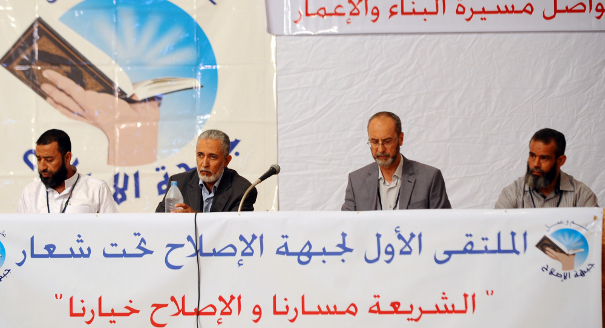
Source: Getty
Tunisia’s Salafis are newly licensed political participants. How have they done so far?
The legalization and participation of Salafi parties in the democratic process is one of the recent trends to emerge from the Arab uprisings. Like Egypt, which legalized three Salafi parties for its elections, and Yemen, which recently legalized its own Salafi party, Tunisia licensed the Tunisian Islamic Reform Front (Hizb Jabhat al-Islah al-Islamiyya al-Tunisiyya; Jabhat al-Islah for short, or JI) on March 29, 2012.
Previously, the transitional government led by former Prime Minister Beji Caid el-Sebsi rejected JI’s demands for official recognition on two separate occasions because of national security concerns. In contrast, the current ruling party, Ennahda, supports the legalization of Salafi groups both because of its own history in the opposition (where it experienced harsh crackdown) and the practical considerations of governing an ideologically polarized country. Ennahda seems to believe that by bringing groups like JI into the system, it can send a clear signal: if one wants to take part in shaping the future of Tunisia, one must buy into the democratic process.
Jabhat al-Islah is clearly attempting to navigate this new terrain and balance Salafi values in simultaneous conformation to new norms. Despite having similar leadership roots to another jabha, the Front Islamique Tunisien (FIT)—which advocated terrorism—JI is not inciting youth to wage wars of jihad abroad, nor are they against participation in democratic elections. In fact, members of JI ran for the Constituent Assembly elections in October 2011 as independents and as members of the Tunisian Labor and Reform Front (Jabhat al-‘Amil wal-Islah al-Tunisiyya). JI leader Muhammad al-Khawjah, a former professor at the University of Tunis, explained: “It is no longer the time for armed jihad…we believe Islam is a religion of democracy and freedom.”
Jabhat al-Islah has since released an official platform that may make many Tunisian liberals bristle, but its itemization presents the party’s keen awareness of their context and country. While vague compared to the Egyptian al-Nour’s outline, Jabhat al-Islah’s platform is a window into the party’s idealized outcome of a future Tunisia—an attempt to negotiate the context of a democratic society while maintaining the prioritization of its Islamist values.
In that context, there are many areas that will undoubtedly need to be further fleshed out within the party platform. For example, JI mentions the importance of Tunisian sovereignty in its general objectives—only to later call for the removal of “artificial borders” in its political program (a likely allusion to a revived caliphate that supersedes local sovereignty—however unlikely its realization). In addition, while calling for shari’a to be applied to all aspects of life, the Front also notes that there are beneficial aspects of civil law that complement Islamic law.
Additionally, the platform emphasizes areas in line with a classical liberal-democratic tradition; particularly, the importance of a separation of powers among different branches of government, as well as the rotation of power and the sanctity of election results. It also calls for guarantees of freedom in thought, expression, political action, and belief, though it qualifies these to be in accordance with Islamic guidelines—again, illustrating tensions for future negotiation or factionalism within itself.
There is nothing specific in JI’s platform about safeguarding rights of the small Berber, Jewish, Christian, and Ibadi Muslim communities, but during the party’s inaugural conference on July 8 party spokesman Saleh Bouazizi mentioned: “Their [minorities’] rights will be guaranteed…In the old Islamic empire, Jews, Christians, and Muslims lived peacefully together” (referencing the dhimma system which did not allot equal rights to non-Muslims). There is also no information about its views on foreign policy aside from explicitly mentioning its rejection of normalization with the “Zionist entity” (Israel) and support for the Palestinian cause.
Beyond the official line, Jabhat al-Islah has been very active in street politics. Pushing back against the alleged claims that Salafis established an emirate in Sijnan in January, there was a party march a few days afterwards, explaining that citizens wanted social development—not an emirate. JI also participated in March and April’s major demonstrations in support of Islam and the Qur’an. Additionally, the Front planned to have been involved with the protests against the controversial art exhibition in La Marsa in June (which it stressed to its followers as peaceful and not to be provoked by security: “do not be lured into the trap of violence”), but cancelled (as did other Islamists) because many believed it might lead to potential violence. It was also involved with a variety of demonstrations and protests over the October 2011 Nessma TV broadcast of the animated film Persepolis. During this protest individuals recited the incendiary chant: “Khaybar Khaybar ya Yihud, Jaysh Muhammad Sawfa ya’ud,” a reference to when the prophet Muhammad defeated Jews in the town of Khaybar.
Jabhat al-Islah has also participated in conferences held in December 2011 and May 2012 on the “Arab Spring Revolutions”—conferences that included more hardline Salafi sheikhs like the Kuwaiti Hamid al-‘Ali, the Saudi Safir al-Hawali, and the Moroccan Muhammad al-Fizazzi. It has also posted content on its Facebook page from the controversial conference that the Salafi-jihadi group Ansar al-Shari‘a in Tunisia (AST) held in al-Qayrawan in May as well as Abu Ayyub al-Tunisi’s recent call for jihad in the aftermath of the La Marsa violence. Al-Tunisi’s call was roundly rejected by political figures—including Ennahda.
Crucially, unlike some other Salafi groups, JI shows no animosity toward Ennahda. During the legislative elections in October, the Front ran some candidates (as independents) in six electoral regions, and told its supporters to vote for Ennahda everywhere else. Jabhat al-Islah has also refrained from commenting on the process of legalization of other Islamist or Salafi parties, most likely to avoid stepping on Ennahda’s toes. Ennahda co-founder Rachid Ghannouchi was also present at the opening of JI’s inaugural congress. At the same time, however, al-Khawaja noted during the conference that “Ennahdha made too many concessions to secular parties and leftist parties to gain power.”
This give-and-take both in the official party line and in its activities on the ground will continue to play out not only in Tunisia with JI, but with other newly formed Salafi parties in the region. Like al-Nour (which many expected to receive, at most, five percent of the Egyptian parliamentary vote—and ended up with a quarter), Jabhat al-Islah hopes to make its mark known and show that it is far more popular than others previously believed. While individuals on its independent lists did not win any seats in the Tunisian constituent assembly, how the Front reacts to future flashpoints and how it performs in the elections in the spring of 2013 will provide further clues as to who Jabhat al-Islah is—and what impact it will have on Tunisia’s future.
Aaron Y. Zelin is the Richard Borow Fellow in the Washington Institute for Near East Policy’s Stein Program on Counterterrorism and Intelligence.
Aaron Zelin
Carnegie does not take institutional positions on public policy issues; the views represented herein are those of the author(s) and do not necessarily reflect the views of Carnegie, its staff, or its trustees.
From anime heroes to online gaming communities, Morocco’s Gen Z is building a new protest culture. What does this digital imagination reveal about youth politics, and how should institutions respond?
Abdelilah Farah
While Morocco’s shift to a digitized social targeting system improves efficiency and coordination in social programs, it also poses risks of exclusion and reinforces austerity policies. The new system uses algorithms based on socioeconomic data to determine eligibility for benefits like cash transfers and health insurance. However, due to technical flaws, digital inequality, and rigid criteria, many vulnerable families are unfairly excluded.
Abderrafie Zaanoun
Saudi Arabia’s cautious stance on the Syrian Kurds reflects a delicate balance between leveraging Kurdish autonomy to counter Iran’s influence and managing the risks of destabilizing Syria’s territorial integrity. While Saudi Arabia seeks to safeguard its interests in the region, it remains wary of the potential internal and external consequences of supporting Kurdish autonomy.
Mohammad Salami

Tunisia is facing a worsening water crisis characterized by widespread protests over access to potable water, particularly in rural areas with underdeveloped supply networks. This situation is exacerbated by climate change, outdated agricultural policies, and industrial water consumption, necessitating comprehensive policy reforms to secure Tunisians’ constitutional right to water and ensure equitable access across the country.
Noura Omar
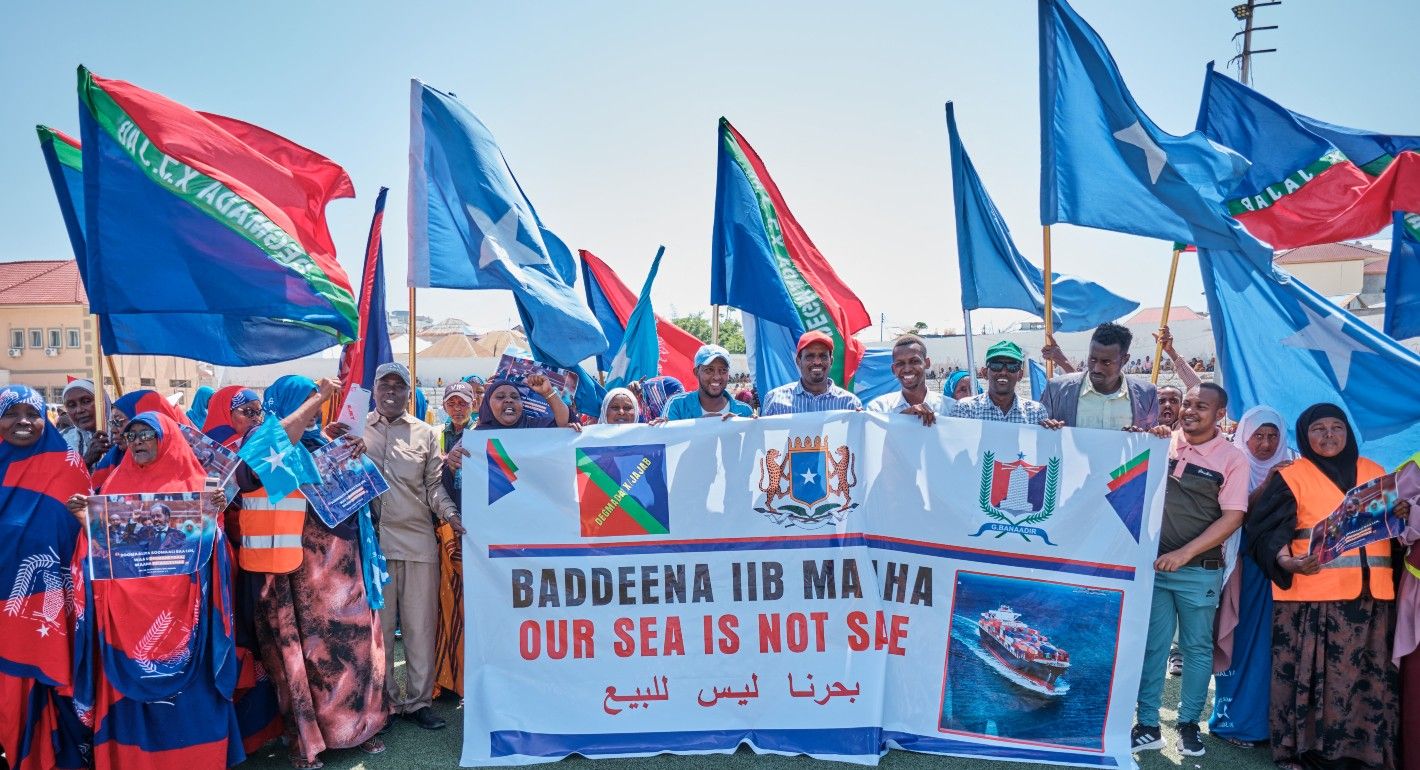
As hegemonic Ethiopian ambitions threaten stability in the Horn of Africa, Somalia is building strategic alliances regionally and internationally to counter Ethiopia’s growing political and military influence.
Hisham Qadri Ahmed