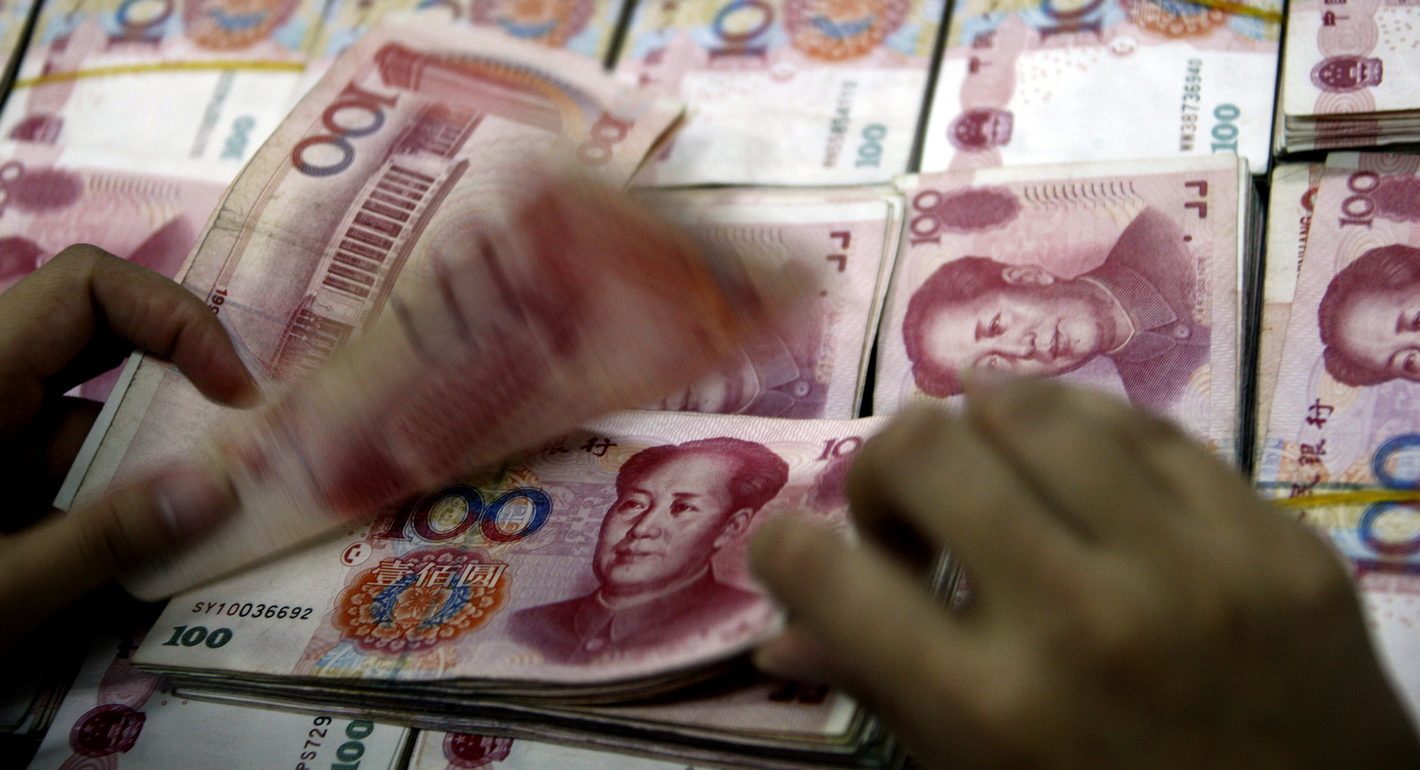
Employees of Lebanon’s public sector may soon stop receiving their paychecks, media reports warned in early August. Precisely at a time when most Lebanese scramble to cover back to school expenses, nearly a fifth of the population (counting dependents) could be left without income. Delays and shortfalls are notorious in the public sector, and with the economy and state revenues crippled by the war in neighboring Syria, public finances may indeed soon fall into disarray. This particular episode, however, is more indicative of self-destructive political brinkmanship and the disregard with which Lebanon’s political leadership exploits the fears of citizens. Both the Lebanese government and the parliament would have to convene to release the funds. Yet the pro-Syria/Iran March 8 alliance is blocking the formation of a new government and sabotaging the current one; while the pro- Saudi/West March 14 alliance is retaliating by boycotting parliament. Once more, ordinary Lebanese may become hostages in a political trench war.
Most likely, the problem will be resolved at the last minute through an administrative shortcut that circumvents the blocked political institutions. Once again, all sides will keep face by acquiescing to yet another breach of due process while continuing their strategies of confrontation, which paralyze the institutions of the Lebanese state at the moment they are needed most. While the involvement of Lebanese non-state actors on opposing sides of the Syrian civil war increasingly threatens internal stability, Lebanese leaders would rather sacrifice their institutions than compromise.
Both political camps in Lebanon have high stakes in the Syrian conflict, which drives them to get entangled ever deeper. For Hezbollah, what is at stake is much more than supply routes and rear bases. If Syria were to fall, the whole ideological project of the party and its patron Iran—building a regional alliance against Israel, the United States, and their Arab clients—would collapse. Contrary to the assertions of its detractors, Hezbollah’s military assets were never tools to achieve a better deal for the Shia in Lebanon’s system of sectarian power sharing. And contrary to the party line, defending Lebanon is not their primary purpose—unless that requires defending Homs and Damascus.
The stakes are equally high, if slightly more convoluted, on the other side. Since its ignominious defeat at the hands of the militias of Hezbollah and its allies in May 2008, the Future Movement and the Hariri family have lost growing numbers of their followers to extremist groups and firebrand clerics. As the conflict in Syria rages, battle-hardened radicals are becoming increasingly prominent in Lebanon’s Sunni neighborhoods. This means that the movement risks either irrelevance or a confrontation with Hezbollah that it cannot win. For the Future Movement, only a rebel triumph in Syria—an outcome it is supporting by mediating transfers of arms and fighters into the country—could tilt the balance back to a more equal relationship with a humbled Hezbollah.
In March, Lebanon’s government was the first casualty of these pressures, and parliament soon followed. Since all attempts to find a consensual formula for an electoral law for the upcoming elections failed. MPs simply opted to postpone the polls and extend their own mandate by seventeen months, but haven’t convened since. Whether a divided parliament of questionable legitimacy will be able to elect a successor to Lebanese President Michel Suleiman after his term expires in May 2014 remains unclear. Already, mouthpieces for Hezbollah are calling for the president’s resignation after he argued that the “resistance” that is dragging Lebanon into the Syrian conflict was losing its raison d’être. In addition, the paralysis of the political institutions has affected the security forces: because the government is unable to compromise on appointees for leadership positions, the retirement of Chief of the Lebanese Army Jean Kahwaji and Chief of Staff Walid Salman has had to be postponed.
Even political actors ostensibly upholding the rule of law and due process are doing so for self-serving reasons, further contributing to the stalemate. The Free Patriotic Movement (FPM), led by Michel Aoun, has rejected all extensions and postponements, including those in the military sector. A retiring Army Chief would have opened his position for General Chamel Roukouz—Aoun’s son in law. Also, active army chiefs are auspicious candidates for president (despite being prohibited from running by the constitution), and retiring the current office holder nine months before elections would weaken him as a potential contender for an office that Aoun wants for himself. Since Aoun is turning 80 this year, it might well be his last shot at the presidency—another good reason he is refusing extensions as a matter of principle, lest anybody think of postponing the presidential elections as well. To uphold this principle, the FPM also boycotts parliament and thus facilitates March 14’s boycott, which would otherwise lack the numbers to paralyze the body. The ministerial ambitions of yet another son in law of Aoun’s, acting Minister of Energy and Water Resources Gebran Bassil, also contribute to the government standstill, making it even easier for March 14 to blame March 8 for lack of progress, and for Hezbollah to deflect the blame for the governmental crisis.
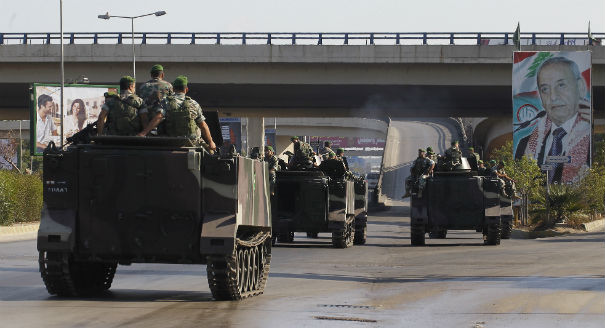
Meanwhile, a permanent army presence is required to prevent fighting between Alawis and Sunnis in Tripoli. The eastern Beqaa valley is caught in an endless cycle of tit-for-tat shootings and kidnappings between Sunni and Shia Lebanese communities, who support their respective factions in Syria and the related warring political camps in Lebanon. Army units deployed in these areas have repeatedly gotten into the line of fire. Late June saw a full-fledged battle between the Lebanese Army and followers of a Salafi cleric that left more than 20 soldiers dead in the mixed southern city of Sidon. On August 15, a car bomb left over 20 dead and 300 injured in one of Hezbollah’s core neighborhoods in the southern suburbs of Beirut, after prior attacks had incurred lesser damage. Only hours after President Suleiman’s proposal that Hezbollah’s militia should become part of the Lebanese Armed Forces (an idea that media close to the party called “outrageous”), missiles of unknown provenance hit the vicinity of the presidential palace and army headquarters. It wasn’t clear if this was a response to the speech, or perhaps a maneuver designed to implicate Hezbollah and in this way validate the president’s point.
There is a growing risk that soon the Lebanese Army—overstretched, underfunded, with increasing losses among elite units and a leadership of shaky legitimacy—will be reduced to an increasingly ineffective buffer between would-be combatants who insist on taking care of their own “security” by means of checkpoints, vigilantes, and militia control. From there, major clashes will only be a matter of time.
Geography and history perhaps dictate Lebanon’s inevitable entanglement in Syria’s civil war. Yet its own leaders are now pushing the country over the brink; they are gambling with the livelihood and safety of their people—with no regard or empathy. If they were to set aside their differences and refrain from putting even more oil on the fire, they could rally around the army—the last institution with a semblance of national integrity—and possibly suspend Lebanon in midair for some time. As things stand, in Lebanon and Syria alike, the fear is that at this point it might simply be too late.
Heiko Wimmen is a research associate in the Middle East and Africa division at the German Institute for International and Security Affairs (Stiftung Wissenschaft und Politik - SWP) in Berlin and a regular contributor to Sada.