

Commentary
Syria's transition promised a fresh start. But are old habits of power making a comeback? This analysis looks at the warning signs and what it will take to build a more accountable state.
Sima Beitinjaneh
{
  "authors": [
    "Tom Westcott"
  ],
  "type": "commentary",
  "blog": "Sada",
  "centerAffiliationAll": "",
  "centers": [
    "Carnegie Endowment for International Peace"
  ],
  "collections": [
    "Arab Awakening"
  ],
  "englishNewsletterAll": "",
  "nonEnglishNewsletterAll": "",
  "primaryCenter": "Carnegie Endowment for International Peace",
  "programAffiliation": "",
  "programs": [],
  "projects": [],
  "regions": [
    "North Africa",
    "Libya"
  ],
  "topics": [
    "Democracy"
  ]
}
Source: Getty
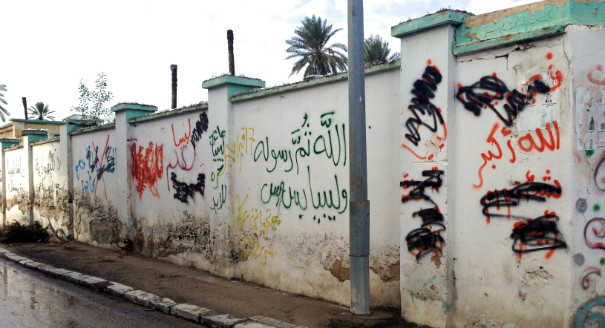
Although Tripoli appears calm, graffiti covering much of the city’s walls hints at the political divisions simmering beneath the surface in Libya’s capital.


Tripoli remains almost eerily quiet as Libya’s civil war rages on in much of the country. But short rants—sometimes misspelled, bearing all the hallmarks of having been sprayed hastily—cover the capital’s walls, which are alive with political comment. They spill across surfaces, occasionally seeping into the murals that appeared after the 2011 revolution, including carefully executed renditions of national hero Omar Mukhtar and caricatures of the country’s former dictator, Muammar al-Qaddafi. These words tell a story of political leanings and ideological beliefs in a country where some have once again become cautious to speak their minds. They also show the country’s shifting politics, charting the unfolding civil war, which has pitted friends against each other, resurrected old tribal allegiances, and forged new partnerships while fracturing old alliances.
This is played out on the side of one small abandoned building in a central Tripoli district. Words sprayed in black and red pledge allegiance to rival governments. Between them, a large poster propped up against the wall bears photos of seven young men killed during the 2011 revolution. The poster depicts a country that united in revolutionary spirit almost four years ago to overthrow Qaddafi. But the spray-painted words suggest Libya is now rife with divisions.
The layering of Tripoli’s recent graffiti—with names crossed through and new allegiances sprayed above or below the original words—mirrors the political divisions. The country has two governments, two parliaments, and even two armies. Both armies are fighting several conflicts—ideological in some areas and political or tribal in others—that comprise Libya’s fractured civil war. For the capital’s graffiti commentators, the names of warring sides are the main focus. Operations Kaswara and Fajr (Dawn) took control of the Tripoli International Airport and the capital itself. They have become synonymous with the Tripoli-based government installed in August by the former Libyan parliament, the General National Congress (GNC). Operation Karama (Dignity) is the name of a military campaign launched by General Khalifa Haftar to wrest control of the eastern city of Benghazi from extremist armed groups. The word has come to represent Libya’s internationally recognized government in Beida and parliament—the House of Representatives (HoR)—in Tobruk. Although Operation Karama was originally condemned by Libya’s official institutions, in November it was sanctioned by the HoR and brought under the Libyan National Army’s control.
“Now you can tell which areas are with Karama by the graffiti,” explained Musbah, a taxi driver. “But it is complicated because some who are against Fajr Libya do not necessarily support Haftar.” Other people, he said, are tired of the instability and political infighting that have characterized post-revolutionary Libya and do not support either side. “To hell with you all,” reads one graffito, echoing words Qaddafi aimed at the international community in one of his televised statements during the revolution. Another tag cautions “real Tripolitanians” against taking any sides. “Death has come to you,” it warns, referring to the battle last summer between armed groups from the city of Misrata and the mountain town of Zintan for control of Tripoli’s international airport. (The clashes left the airport destroyed and paved the way for Fajr Libya to enter the capital.)
Although Fajr Libya is already established in Tripoli and controls key Libyan institutions there, it is now struggling to gain international recognition, even though a recent ruling by the Supreme Court undermined the legitimacy of the HoR, which affiliated with its Karama rival. Despite attempts to lure embassies and companies back with reassurances that the capital is safe, the Italian and Hungarian embassies are the only European countries with a remaining diplomatic presence. The U.S. and British embassies have relocated to Malta and neighboring Tunisia, respectively. Neither shows any imminent plan to return. “Like other embassies which left Tripoli last summer, we continue to have serious concerns about the current unstable security situation,” said Michael Aron, British Ambassador to Libya. “The fact that we do not recognize the ‘Government’ in Tripoli or the GNC is an additional factor.”1
While the capital is undoubtedly calm, with scarcely any visible armed presence on the streets, some residents point out that quiet doesn’t necessarily promise security. “Tripoli is safe, as long as you don’t say anything against the government here,” said Mohammed, a former journalist who stopped working as a reporter because it had become too high-risk. He added that many of his colleagues had fled the country after being threatened or intimidated in the first months of Fajr Libya’s presence in Tripoli. The press freedom NGO Reporters Without Borders (RWB) has documented seven murders, 37 abductions, and 127 acts of harassment or physical violence against journalists since the 2011 revolution. “Covering the ongoing turmoil or even just describing a particular faction’s military progress or political position exposes journalists to great danger. Carrying a camera or a press card now requires considerable courage,” RWB said in an October post. Yet Fajr Libya insists that the situation has now changed. “Some journalists were jailed and others ran away because they were part of media militias that destroyed the fabric of our community, and called for armed demonstrations and chaos,” said its de facto spokesperson, Jamal Zubia. “We don’t care if people don’t support us. We know some people even still support Qaddafi and that’s their right, but they should not try to destabilize the government and create trouble.”
Despite such assurances and the quiet in the capital, Tripoli residents are slow to forget the heavy fighting from the summer. They are also acutely aware of clashes tearing apart towns and cities across Libya. Many worry it is only a matter of time before trouble returns. Such uncertainty has led to self-censorship, explaining why some Tripoli residents have turned to graffiti as a way to express subversive opinions. Under cover of darkness, they can anonymously pledge allegiance to the powers in the east with such phrases as: “Yes to Karama.” Even if these slogans are crossed out and replaced with a show of support for the Tripoli-based government, the original marks almost always remain legible, building a network of words and phrases reminding passersby that the capital is politically divided.
Tripoli’s graffiti also reflects some of the religious ideologies that have thrived in Libya since the ouster of Qaddafi’s, who had formerly kept a tight check on extremist views. Some graffiti equate Fajr Libya with Daash—the Islamic State of Iraq and al-Sham—to which some members of Islamist militias in the eastern town of Derna have publicly pledged allegiance. Fajr Libya, however, says it is a political movement committed to a stable and secure Libya, and rejects terms such as “Islamist” that have sometimes been applied to it. Although Libyan society is deeply conservative and Islamic, extremist ideologies are often mistrusted—especially by those with connections to Benghazi, which has experienced the realities of life under locally imposed Islamist-affiliated militias.
“I still support Operation Karama, although fighting has damaged the city,” said Salah, a local resident whose family remains in Benghazi while he works in Tripoli. “I’m prepared to have nothing—no electricity, gas, or petrol—as long as I never again see those people in balaclavas on the streets of my city.” Such thoughts are echoed in another inscription, which declares: “No to Ansar al-Sharia. Yes to the army and police.” This last phrase depicts the reality for many Libyans. Once full of post-revolutionary fervor and high hopes for the future of the country, their aspirations have been squashed. Exhausted by nearly four years of chaos, fighting, and instability, now most say all they wish for is a return to safety and stability.
Tom Westcott is a British journalist and writer based in Libya.
1. Interview with the author. ↩
Tom Westcott
Carnegie does not take institutional positions on public policy issues; the views represented herein are those of the author(s) and do not necessarily reflect the views of Carnegie, its staff, or its trustees.
Syria's transition promised a fresh start. But are old habits of power making a comeback? This analysis looks at the warning signs and what it will take to build a more accountable state.
Sima Beitinjaneh
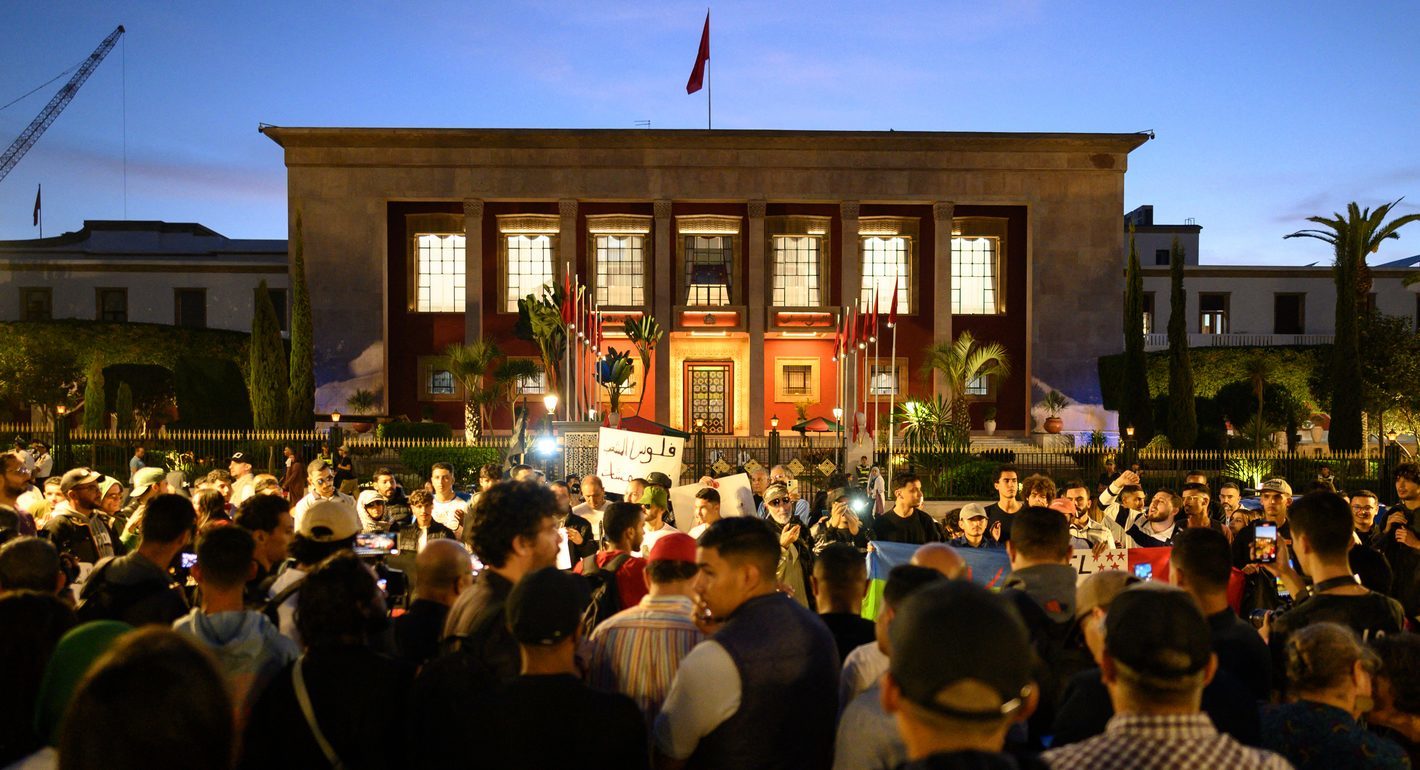
From anime heroes to online gaming communities, Morocco’s Gen Z is building a new protest culture. What does this digital imagination reveal about youth politics, and how should institutions respond?
Abdelilah Farah
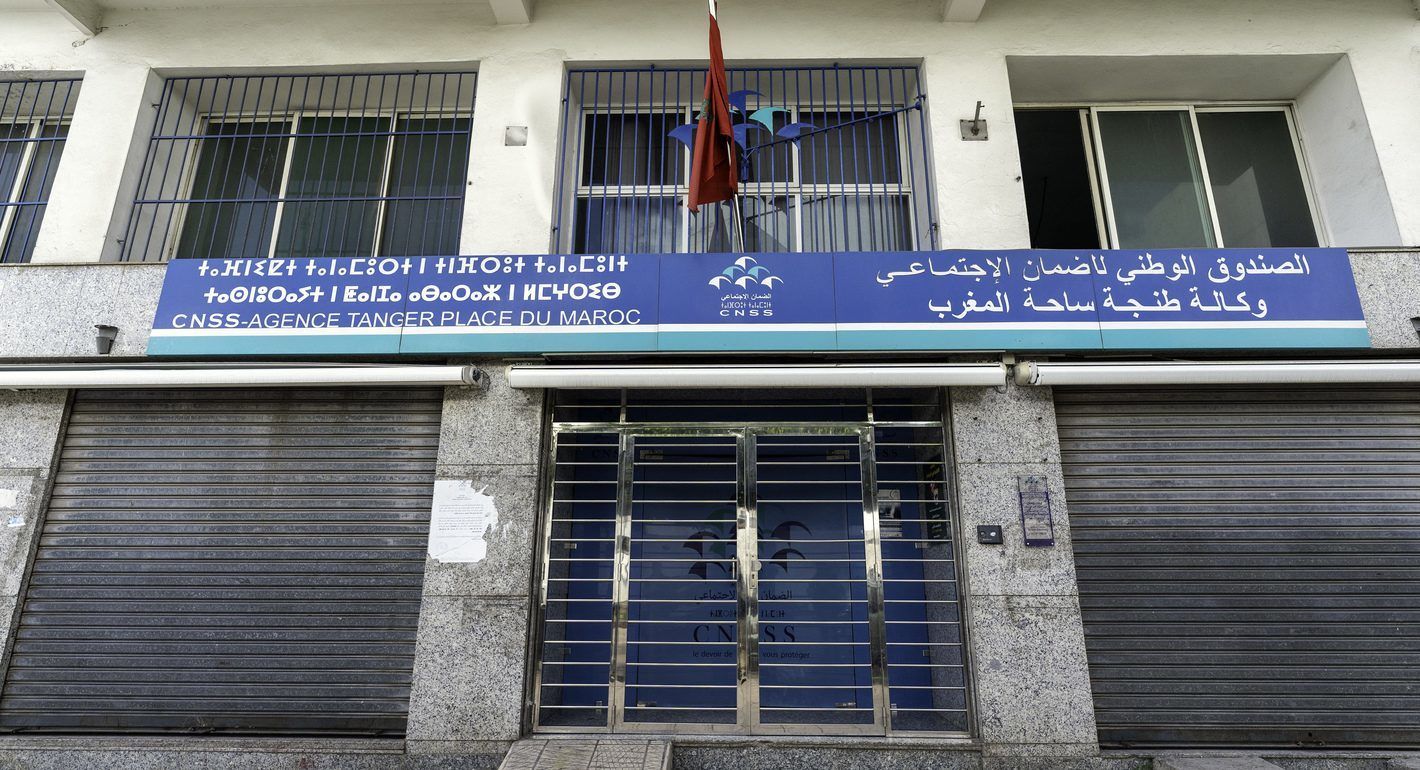
While Morocco’s shift to a digitized social targeting system improves efficiency and coordination in social programs, it also poses risks of exclusion and reinforces austerity policies. The new system uses algorithms based on socioeconomic data to determine eligibility for benefits like cash transfers and health insurance. However, due to technical flaws, digital inequality, and rigid criteria, many vulnerable families are unfairly excluded.
Abderrafie Zaanoun
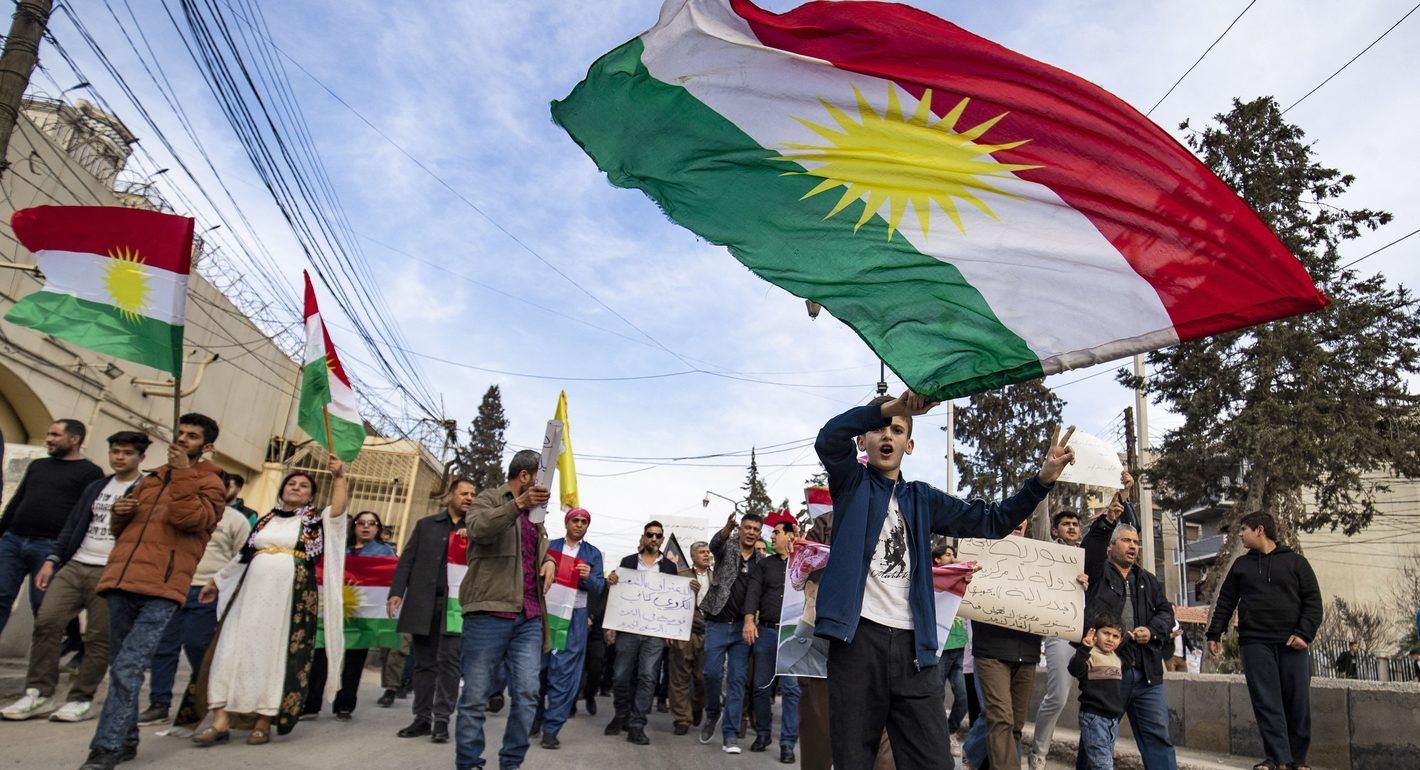
Saudi Arabia’s cautious stance on the Syrian Kurds reflects a delicate balance between leveraging Kurdish autonomy to counter Iran’s influence and managing the risks of destabilizing Syria’s territorial integrity. While Saudi Arabia seeks to safeguard its interests in the region, it remains wary of the potential internal and external consequences of supporting Kurdish autonomy.
Mohammad Salami
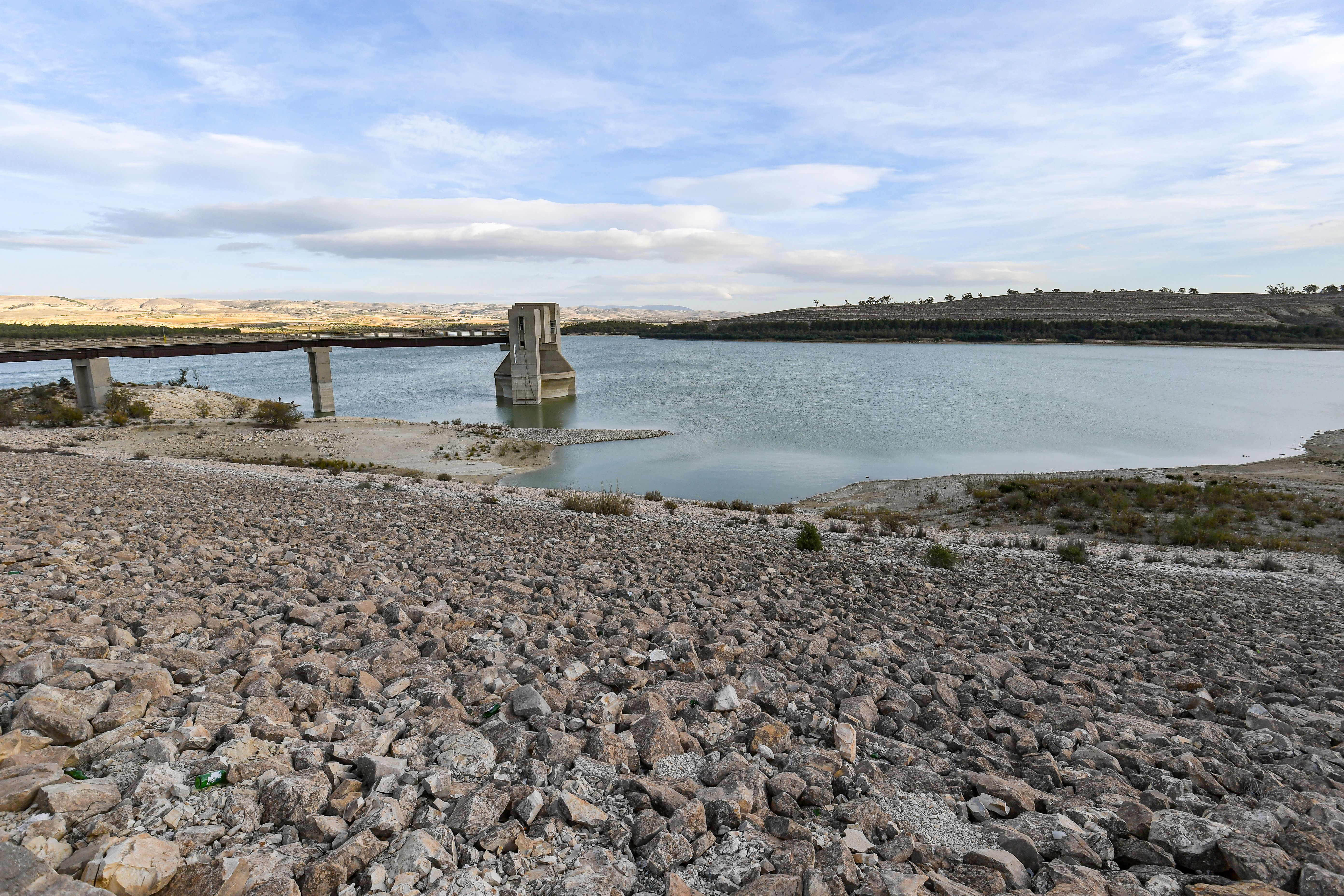
Tunisia is facing a worsening water crisis characterized by widespread protests over access to potable water, particularly in rural areas with underdeveloped supply networks. This situation is exacerbated by climate change, outdated agricultural policies, and industrial water consumption, necessitating comprehensive policy reforms to secure Tunisians’ constitutional right to water and ensure equitable access across the country.
Noura Omar