

Commentary
Syria's transition promised a fresh start. But are old habits of power making a comeback? This analysis looks at the warning signs and what it will take to build a more accountable state.
Sima Beitinjaneh
{
  "authors": [
    "Tom Westcott"
  ],
  "type": "commentary",
  "blog": "Sada",
  "centerAffiliationAll": "",
  "centers": [
    "Carnegie Endowment for International Peace"
  ],
  "collections": [
    "Conflict and Refugees"
  ],
  "englishNewsletterAll": "",
  "nonEnglishNewsletterAll": "",
  "primaryCenter": "Carnegie Endowment for International Peace",
  "programAffiliation": "",
  "programs": [],
  "projects": [],
  "regions": [
    "North Africa",
    "Libya"
  ],
  "topics": [
    "Democracy"
  ]
}
Source: Getty
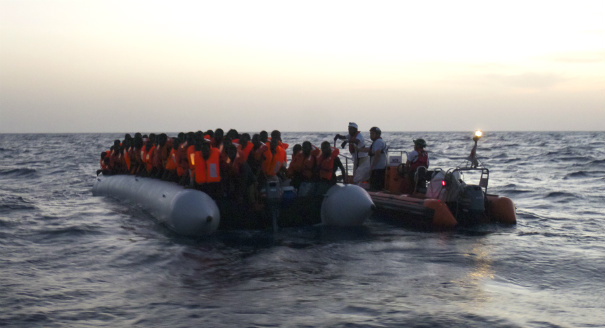
The flow of migrants to Europe has increased dramatically over the past year even as their trips become more dangerous.


Over the last few years, the expanse of Mediterranean Sea stretching between Libya and Italy has become an increasingly dangerous highway used by economic migrants and refugees pursuing a desperate dream of a better and richer—or just safer—future in Europe. “This year has been the worst ever in terms of numbers of migrants and also the number of deaths at sea,” said Libyan Navy spokesman Ayoub Ghassem. “In the last two months alone the Libyan Coast Guard has rescued 2,500 people.” He described how migration had become a “cultural norm” in many sub-Saharan African countries, and claimed the European Union’s anti-people-smuggling initiative Operation Sophia had actually had the reverse effect of its mandate and had encouraged more migrants. “This operation gives a feeling of trust to migrants that, once they are at sea, they will be rescued and cared about, which we see has encouraged more migration,” he said.
Predominantly hailing from sub-Saharan African countries, most migrants traveling the Mediterranean route to Europe are set afloat in dangerously overcrowded and often unseaworthy boats by people smugglers in Libya. Usually equipped with only enough fuel to reach international waters and a satellite phone, along with the contact number of the Italian Coast Guard, the boats are instructed to put out a distress call after several hours at sea and promised they will be rescued. Boats without such devices have to hope they are spotted by occasional aerial missions or a passing ship. When boats are identified, coordinates are given to search and rescue (SAR) vessels, but these are often hours old by the time a vessel can arrive.
Moreover, the scope and capacity of the twelve NGO SAR boats voluntarily operating humanitarian missions in the central Mediterranean is limited. They can only work in international waters, 12 miles from the shores of Libya—a distance many of the migrant boats fail to reach. Some little dinghies merely drift along the coast, and there have been several reports of people coming ashore on Libyan beaches mistakenly believing that, after several hours at sea, they had reached Europe, only to be captured and thrown into one of Libya’s overcrowded detention centers.
Even when a boat is spotted, the process of rescuing large numbers of people from an unseaworthy vessel is an unpredictable and dangerous operation, which sometimes has to be undertaken at night, carrying greater risk. Rescues from wooden fishing vessels are particularly challenging, not least because these are more prone to capsizing, either because of bad weather or the unpredictable behavior of panic-stricken passengers, according to Doctors Without Borders (MSF) project coordinator Ferry Schippers, speaking from the MV Aquarius—an SAR vessel operated by SOS Mediterranee in partnership with MSF. “We have to be very careful on our first approach to wooden boats because if everyone goes to one side, there is a big danger it will capsize,” he said. “These are very stressful rescue operations because there are factors we can’t control. And we have to be fast because, with every passing minute, there is a greater risk of instability and the boat capsizing.”
Volunteer rescuers on the Aquarius generally deal with rubber boats carrying around 140 people but, with the wooden boats, the figure is sometimes over 700, all of whom have to be transferred via the SAR vessel’s two small rescue boats in operations that can take hours to complete. “The worst, most intense recent rescue was a wooden boat carrying 726 people, and our rescue boat can only transfer around 20 at a time,” said Deputy SAR coordinator and rescue boat leader Max Orlando Avis. “There were 300 people on the deck alone and hundreds more below but, after we distributed lifejackets, it took a lot of time even to get two people safely off, and at one point I became very concerned, thinking if it takes this long to rescue two people, how are we going to manage?” He said that great teamwork and the assistance of another SAR vessel partway through the operation made the rescue successful, and after six hours all the passengers were taken to the safety of the Aquarius.
The number of known deaths on this route has already reached 4,220 this year alone, meaning every rescued boat is fortunate. Unknown numbers of other boats disappear without a trace in the vast expanse of the Mediterranean. The increase in the number of migrants and the deaths along the route are driven primarily by the illusion of safety that Operation Sophia has provided, but also by Libya’s dire security situation, which is encouraging more economic migrants to continue to Europe rather than seek work in Libya. In previous years, people smugglers in Libya generally restricted movement of migrants to the summer months of warm weather and calm seas, but this year high demand for passage to Europe means, as of November, hundreds of people are still being packed into unseaworthy vessels on any fall day when sea conditions are auspicious. SAR teams say they anticipate this trend continuing throughout the winter, putting still more lives at risk. The International Organization for Migration (IOM) said October 2016 saw a new record for arrivals in Italy—27,388 compared to 8,915 in October 2015.
“Smugglers were a bit more humane before and weren’t so selfish. They were very selective with the weather and only worked until September,” said MSF’s multilingual cultural mediator and translator Amani Teklehaimanot, an Eritrean who himself made this same sea crossing fifteen years ago. “The wooden boat I used had 190 people on board but now the same boat carries over 500—now they pack people into the boats like chickens.” On the inflatable dinghies more often favored by people smugglers in Libya, up to 150 men, women, and children are crammed into boats designed to hold a dozen people at most. According to SAR staff, people smugglers also exhibit a reckless disregard—or total lack of understanding—for the realities of the sea journey by overloading boats, providing limited fuel and water, selling ineffective lifejackets for extra cost, and assuring people they will be rescued within a few hours of being at sea.
They also pack women and children into designated “safe” areas of the boat—the center of rubber boats and beneath the deck on wooden boats—which are in fact the most high-risk. “The middle is usually the most dangerous part of the boat because if there are big waves the wooden base often breaks, pushing the boat down into a V-shape,” Schippers explained. In this scenario, some passengers in the center of the boat are plunged underwater while others, trying to scramble away from the crack toward the edges of the boat, inadvertently use their heads as stepping stones.
This was the experience of Amegah, 30, from Togo, who was crammed into an inside place on a rubber boat toward the end of October. “The waves were too much, the boat was going up and down, and then water started leaking in. We tried to bail out the water, but as fast as we tried more water came in,” he said. “Then we saw the rescue ship and a lot of people on our boat suddenly stood up, waving.” The sea-soaked wooden floor of the boat collapsed, and Amegah and others in the center of the boat found themselves plunged beneath the waves. He described a terrifying ordeal in which people pushed and trod on him in the semi-submerged dinghy before he managed to struggle to the surface and grab a life jacket thrown into the sea by the SAR rescue team. “I thank God that I survived. Others did not, and one of my friends died in the boat, with his wife and two children,” he said. “After my experience I realize people are dying like flies out here in this sea.”
Speaking from the safety of the deck of the Aquarius, Amegah showed how his legs were bandaged from hip to ankle, with dressings covering extensive burns caused by a lethal mix of leaked oil and sea water mixing in the bottom of the boat. According to Schippers, this is a common injury. “They travel with canisters of petrol, often open. And in rough seas, this spills, mixing with the salt water, which gives nasty skin burns—and we see these a lot, especially on women and children who were in the middle of the boat,” he said.
As those working on the frontline of the migrant crisis become increasingly frustrated by their inability to effectively manage either prevention or rescues, they say investment is needed, not so much in the rescue operations at sea but rather through long-term investment strategies in the home countries of migrants and smugglers alike. Volunteers working on the SAR vessels described their work as a “Band-Aid” that failed to address any root causes behind mass migration. “The only long-term solution is to build up these people’s home countries,” said SOS Mediterranee SAR coordinator Matthius Menge, helping 521 rescued migrants disembark from the Aquarius in Italy.
Back in Libya, Ghassem called for urgent international support, admitting that both the coast guard and the country’s Department for Combating Illegal Immigration were overwhelmed by the magnitude of the problem. “New strategies need to be found. It is a fact that people won’t stop coming to Libya, so we need support in securing the country’s southern borders and also establishing a system of punishment for smugglers,” he said. According to smugglers and immigration officials in the country, after 2011 anti-smuggling security systems—established by former Libyan leader Muammar Qaddafi—completely collapsed, allowing smugglers to operate with impunity for the last five years. “Local development would be key to stopping the smuggling industry in Libya,” said Ghassem. “There needs to be investment in key smuggling regions to create different opportunities and job prospects for smugglers, but we need proper support on the ground to achieve this.”
Tom Westcott is a British journalist and writer based in Libya.
Tom Westcott
Carnegie does not take institutional positions on public policy issues; the views represented herein are those of the author(s) and do not necessarily reflect the views of Carnegie, its staff, or its trustees.
Syria's transition promised a fresh start. But are old habits of power making a comeback? This analysis looks at the warning signs and what it will take to build a more accountable state.
Sima Beitinjaneh
From anime heroes to online gaming communities, Morocco’s Gen Z is building a new protest culture. What does this digital imagination reveal about youth politics, and how should institutions respond?
Abdelilah Farah
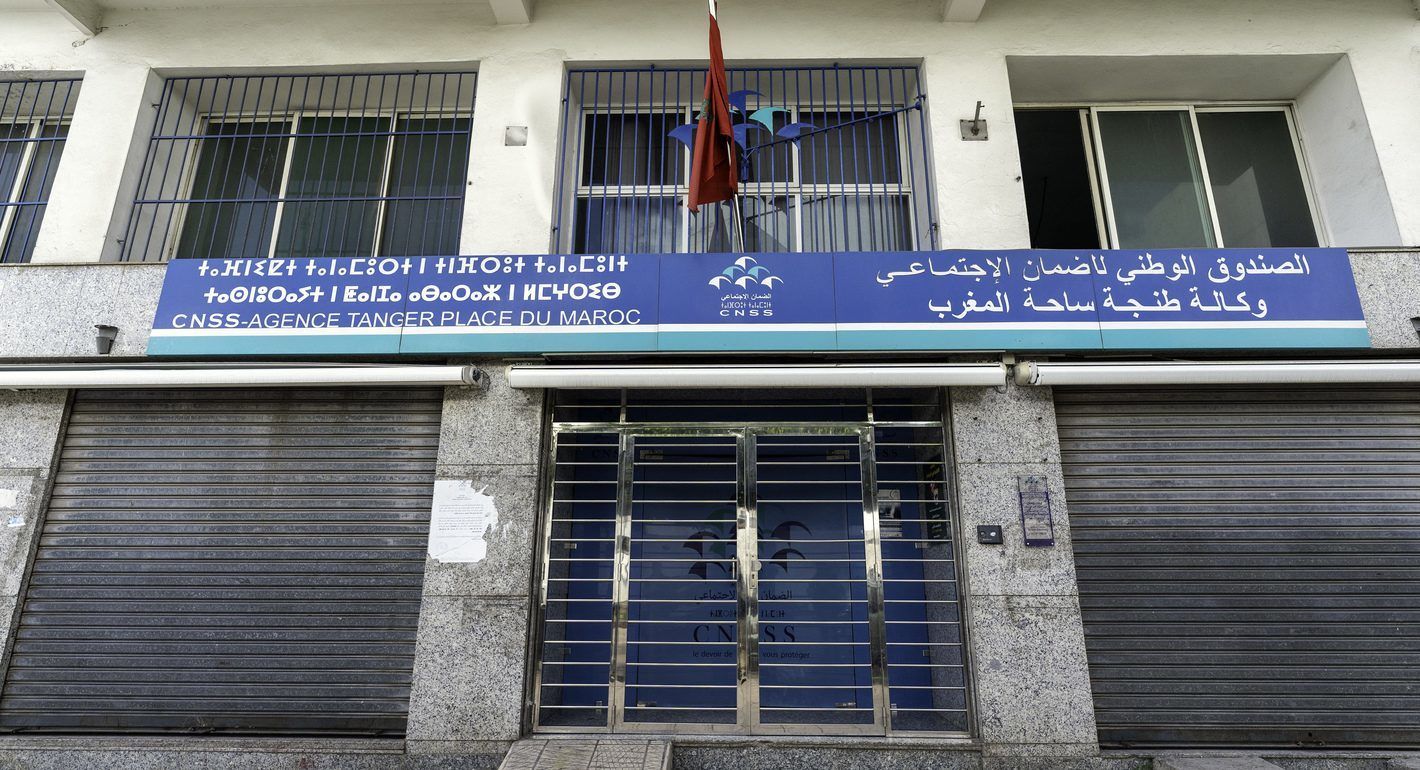
While Morocco’s shift to a digitized social targeting system improves efficiency and coordination in social programs, it also poses risks of exclusion and reinforces austerity policies. The new system uses algorithms based on socioeconomic data to determine eligibility for benefits like cash transfers and health insurance. However, due to technical flaws, digital inequality, and rigid criteria, many vulnerable families are unfairly excluded.
Abderrafie Zaanoun
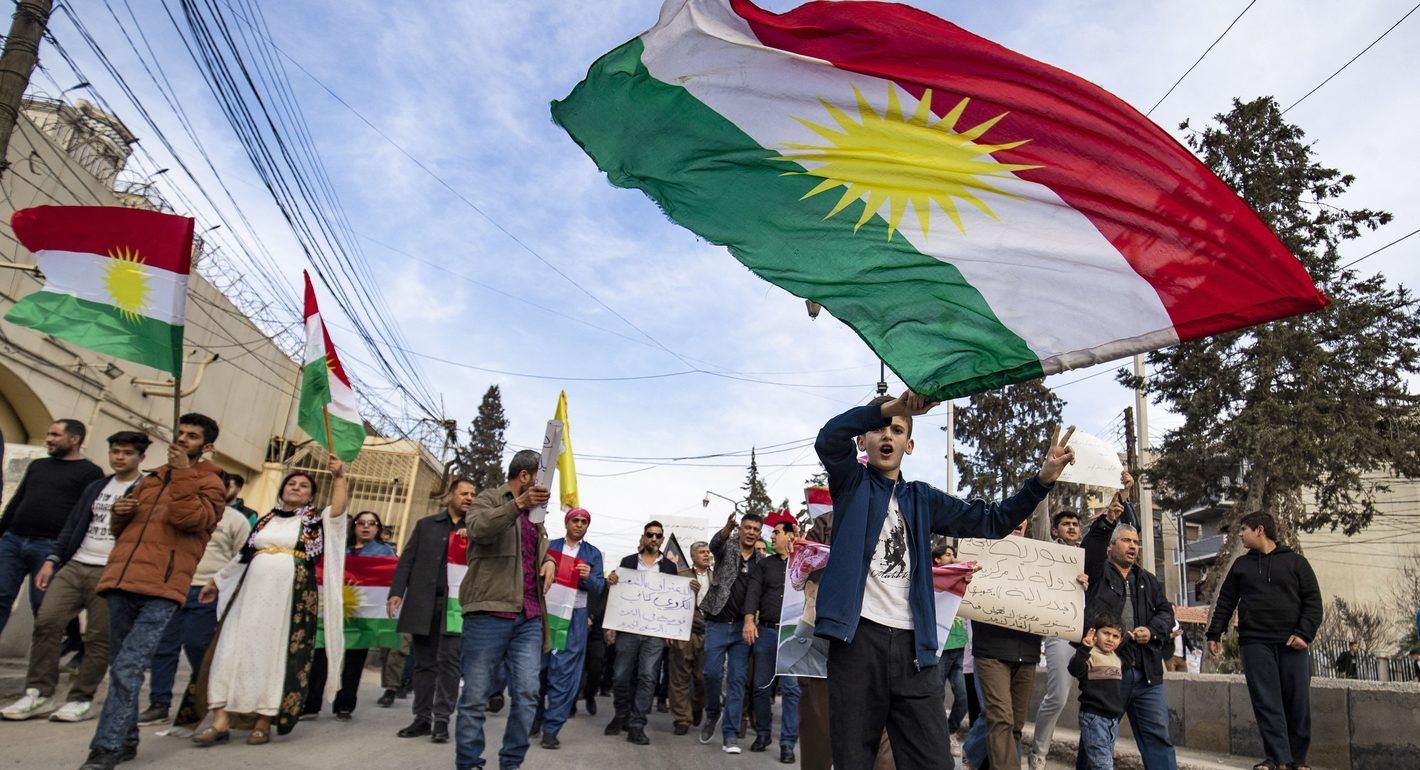
Saudi Arabia’s cautious stance on the Syrian Kurds reflects a delicate balance between leveraging Kurdish autonomy to counter Iran’s influence and managing the risks of destabilizing Syria’s territorial integrity. While Saudi Arabia seeks to safeguard its interests in the region, it remains wary of the potential internal and external consequences of supporting Kurdish autonomy.
Mohammad Salami
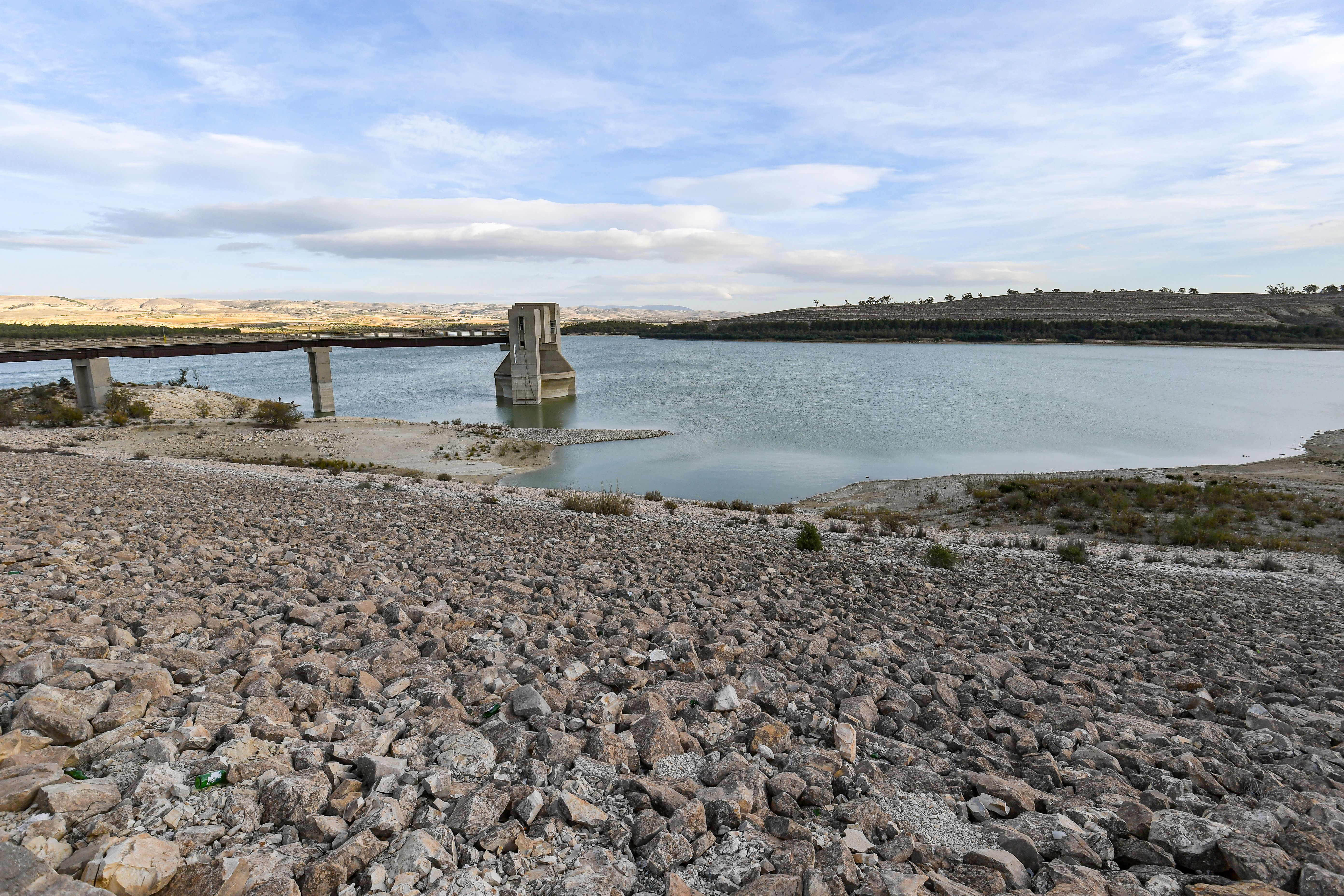
Tunisia is facing a worsening water crisis characterized by widespread protests over access to potable water, particularly in rural areas with underdeveloped supply networks. This situation is exacerbated by climate change, outdated agricultural policies, and industrial water consumption, necessitating comprehensive policy reforms to secure Tunisians’ constitutional right to water and ensure equitable access across the country.
Noura Omar