

Commentary
From anime heroes to online gaming communities, Morocco’s Gen Z is building a new protest culture. What does this digital imagination reveal about youth politics, and how should institutions respond?
Abdelilah Farah
{
  "authors": [
    "Idriss Jebari"
  ],
  "type": "commentary",
  "blog": "Sada",
  "centerAffiliationAll": "",
  "centers": [
    "Carnegie Endowment for International Peace"
  ],
  "collections": [],
  "englishNewsletterAll": "",
  "nonEnglishNewsletterAll": "",
  "primaryCenter": "Carnegie Endowment for International Peace",
  "programAffiliation": "",
  "programs": [],
  "projects": [],
  "regions": [
    "North Africa",
    "Algeria"
  ],
  "topics": [
    "Civil Society"
  ]
}
Source: Getty
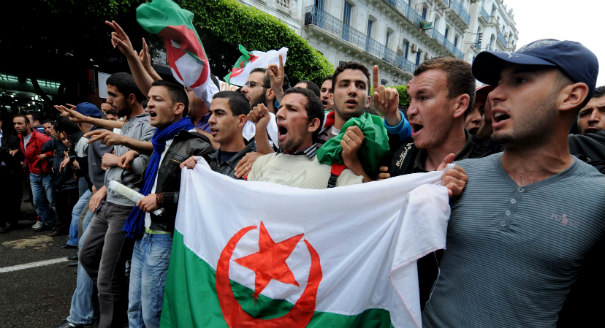
Algeria’s youth are increasingly turning to social entrepreneurship to find creative solutions to persistent unemployment and an austerity economy.
As Algeria enforces austerity measures in response to declining oil-related revenues, it is unable to comfortably drown social contestation with handouts and a generous welfare program. These cuts to education, housing, and health programs risk spurring violent and overwhelming standoffs with the authorities—particularly among Algeria’s youth, who represent around 60 percent of the population of 40 million. Algerian youth are unemployed at nearly three times the national average (30 percent versus 10 percent) and are used to protesting to secure public goods (as the October roadblocks around Bejaia attest). Official strategies to address youth unemployment, such as granting small loans to entrepreneurs, have performed poorly because of the economy’s structural issues and its incomplete transition from a centralized socialist economy to a liberal private sector. However, youth social entrepreneurship shows encouraging potential to integrate youth, address some of the country’s issues without relying exclusively on the state, and possibly stimulate the Algerian system’s overall reform.
The Algerian state’s approach to the long-standing issue of youth unemployment has been symptomatic of the ongoing transition of its economic and political model. Official statistics released in July 2016 reveal a slightly improving picture, despite the ongoing austerity: unemployment has fallen from 11.2 to 9.9 percent over the past year, and around 10.9 million Algerians are currently employed. Youth unemployment (for ages 16 to 24) has fallen from 30 to 25 percent. In contrast, the mood among the population is more pessimistic. Algerian families share countless stories of the obstacles faced by young men and women to find a job in their field despite their best efforts, insisting that corruption and pulling strings (piston) play a crucial role in securing any job. Frustrated youth often find temporary employment in the informal sector and below their qualifications—or simply abandon their search. Meanwhile, public sector employment remains a privileged pursuit due to the stability it seems to offer: in March, the state announced it received 180,000 applications to the 28,000 teaching positions it was recruiting for.
Youth unemployment (or precarious employment) obstructs youth social integration by delaying both marriage and moving out of the crowded family home. These three factors interplay with each other and reinforce their negative impact: savings and a job are necessary to get married and settle elsewhere, especially as Algeria continues to face an acute housing crisis in which the construction of state-built homes continues to see major delays. Combined with changing social norms among genders (what Algerian writer Kamel Daoud referred as sexual “frustration” and “misery”), it explains why today the average age of marriage in Algeria is at an unprecedented high: age 30 for women and 33 for men.
Algeria’s support mechanisms for youth highlight the complicated transition from a socialist welfare model to a market economy. Among these initiatives is the National Agency for the Support of Youth Employment (Agence Nationale de Soutien à l’Emploi des Jeunes, ANSEJ), which provides young people (ages 19 to 35) micro-credit and other forms of support for small projects. ANSEJ funded around 41,000 projects in 2014 and 24,000 in 2015, and expects to fund another 60,000 in 2016. Mourad Zemali, its current director, has reordered its priorities to encourage more funding for strategic sectors—such as agriculture, industry, construction, and new information technologies—and expand efforts to support young unemployed graduates. Yet this institution relies extensively on the availability of state funds: in February, Zemali claimed the government had spared the agency from its austerity measures due to its positive social impact, but news confirmed on October 27 that 64 ANSEJ activities were suspended—including in agriculture, plumbing, and electricity, all popular sectors for employment—causing concern in the national media and among the public.
While examples of successful young entrepreneurs in the Algerian private sector exist, “youth entrepreneurship” suffers from the private sector’s same structural challenges: administrative red tape, difficult access to capital, obstacles to banking and payment, and a lack of political support. In fact, Algeria was ranked an abysmal 156 out of 190 countries in the World Bank’s annual Doing Business report, released on October 25, despite its repeatedly stated ambitions to attract investments as a way out of austerity. In this challenging economic climate, new economic entrants such as youth are more vulnerable, hence the limited success of initiatives such as ANSEJ to economically integrate youth.
Instead of waiting for structural state reforms to transform the country’s private sector and economic environment, Algerian youth are increasingly turning to social entrepreneurship to seek creative solutions to unemployment and the pessimistic economic climate.
These days, most media coverage of Algerian youth focuses on instances of violence (for example, at football stadiums or between neighborhood gangs), the increase in drug consumption, and the trend of unemployed and disenfranchised youth emigrating to Europe or joining radical jihadi groups. This public narrative has broadened the inter-generational gap as youth construct their own narratives: a new generation of cinema producers and other cultural actors from Algeria’s underground scene continue to portray today’s youth as energetic and optimistic despite lagging structures and a stifling atmosphere.
Similarly, social entrepreneurship has emerged from this challenging context as a practice of resilience and creativity. For one of its pioneers, Yanis Bouda, social entrepreneurship means creating small companies that seek positive social impact rather than economic profit. It allows youth to use their innovation and knowledge of new technologies to act on their desire for involvement by identifying a need, imagining solutions, and putting them in practice. Bouda adds that as opposed to “social volunteering,” “social entrepreneurship” is a full-time occupation that can ensure a sufficient living income. His experience is corroborated by Kamilia Izzrech, who frames youth entrepreneurship as a “knowledge-intensive factory” that provides an opportunity for hands-on experience and learning while slowly eroding the country’s “anti-entrepreneurial culture.”
This sector has recently seen several exciting developments. Together with Meriem Benslama and other collaborators, Yanis Bouda established the Algerian Center for Social Entrepreneurship in 2013, an incubator for new projects that organizes frequent workshops and trainings. In 2010, Toufik Lerari and Marhoun Rougab, two successful Algerian entrepreneurs in their thirties, launched the Fikra Conference in a TED-like setting that featured panels of prestigious speakers like Algerian businessman Issa Rebrab to engage youth and lend an optimistic tone to the national atmosphere. Finally, UNESCO’s Networks of Mediterranean Youth Project (NET-MED Youth) has given focus and support to such initiatives in order to promote the empowerment of young women and men and prompted the authorities to launch a study of multi-sectoral youth policy, led by Algerian professor Mohamed Saib Musette.
Despite these positive developments, youth social entrepreneurship may not be the miracle solution that ensures Algeria’s successful economic transition. The sector faces several challenges, including how to ensure large-scale impact (especially among youth who do not have training and marketable skills), how to facilitate access to funds and training, and how to sustain these initiatives so they can become larger companies. Youth entrepreneurship is also still vulnerable because it depends on the state for small grants, to reform the academic sector, and to legally recognize this new sector of activity and facilitate the delivery of administrative paperwork. Like civil society organizations, such opportunities risk being unfairly targeted by the authorities (as with recent attacks on independent media outlets), captured by a small fringe of beneficiaries, or made to serve regime interests.
Despite these challenges, youth social entrepreneurship deserves a second look because it provides hope that Algerians will overcome the current system’s limitations and transition to market economy without ditching the country’s historic concern for social welfare. It can mobilize marginalized youth and provide new visions for growth and social cohesion. For youth, it represents an opportunity to be creative and take risks while taking ownership of their projects. Thus it represents one of the few sources of optimism that there can be harmonious structural reforms in Algeria.
Idriss Jebari is a postdoctoral research fellow with the Arab Council for Social Sciences working on social and cultural change in North Africa.
Idriss Jebari
Idriss Jebari is a postdoctoral research fellow at the Arab Council for Social Sciences in Beirut.
Carnegie does not take institutional positions on public policy issues; the views represented herein are those of the author(s) and do not necessarily reflect the views of Carnegie, its staff, or its trustees.
From anime heroes to online gaming communities, Morocco’s Gen Z is building a new protest culture. What does this digital imagination reveal about youth politics, and how should institutions respond?
Abdelilah Farah
While Morocco’s shift to a digitized social targeting system improves efficiency and coordination in social programs, it also poses risks of exclusion and reinforces austerity policies. The new system uses algorithms based on socioeconomic data to determine eligibility for benefits like cash transfers and health insurance. However, due to technical flaws, digital inequality, and rigid criteria, many vulnerable families are unfairly excluded.
Abderrafie Zaanoun
Saudi Arabia’s cautious stance on the Syrian Kurds reflects a delicate balance between leveraging Kurdish autonomy to counter Iran’s influence and managing the risks of destabilizing Syria’s territorial integrity. While Saudi Arabia seeks to safeguard its interests in the region, it remains wary of the potential internal and external consequences of supporting Kurdish autonomy.
Mohammad Salami

Tunisia is facing a worsening water crisis characterized by widespread protests over access to potable water, particularly in rural areas with underdeveloped supply networks. This situation is exacerbated by climate change, outdated agricultural policies, and industrial water consumption, necessitating comprehensive policy reforms to secure Tunisians’ constitutional right to water and ensure equitable access across the country.
Noura Omar
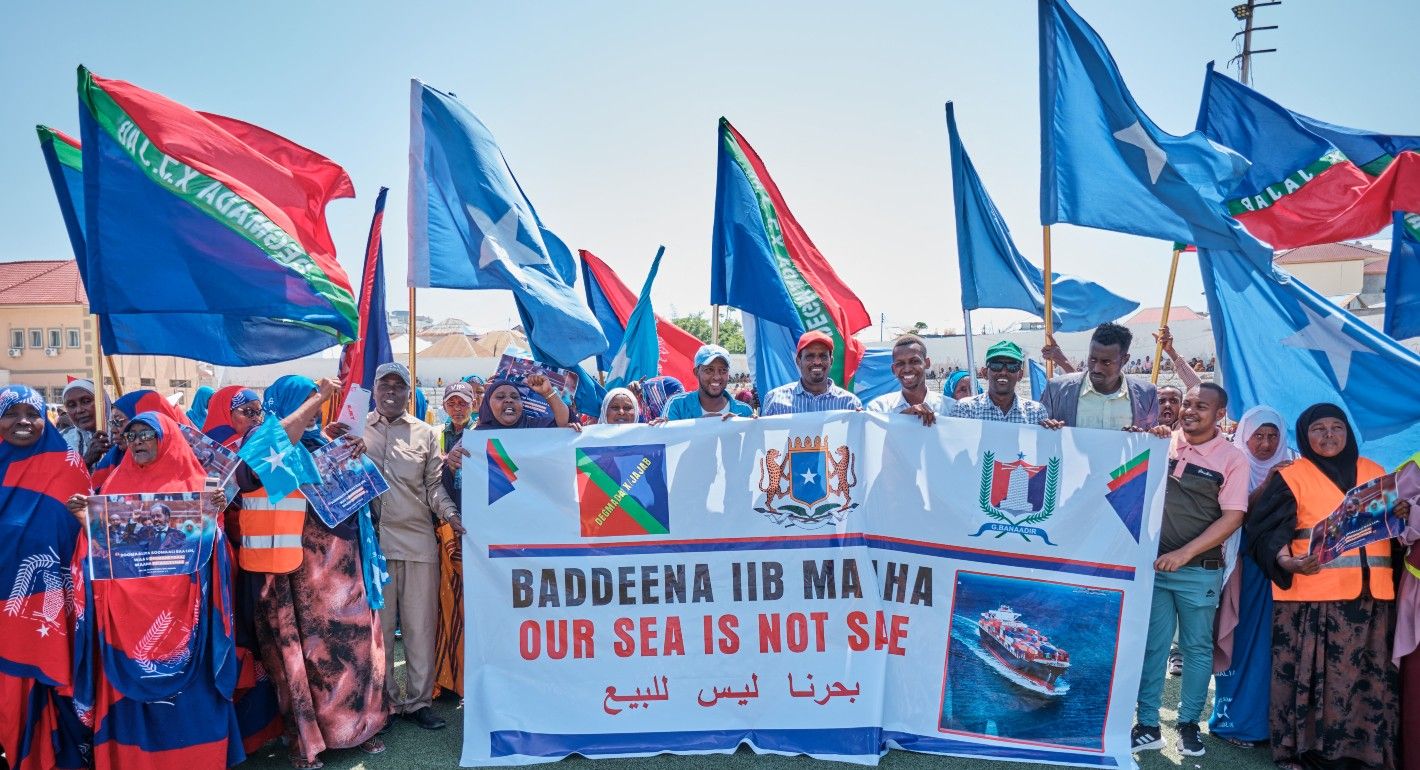
As hegemonic Ethiopian ambitions threaten stability in the Horn of Africa, Somalia is building strategic alliances regionally and internationally to counter Ethiopia’s growing political and military influence.
Hisham Qadri Ahmed