On November 15, Egypt’s Supreme Council for Media Regulation (SCMR) presented a list of 50 ulema exclusively appointed to issue fatwas on television. Though the SCMR has since said it could expand the list in the future, this move by the independent albeit pro-regime body is unprecedented in Egypt, where ulema had previously not needed any such authorization. The list, jointly compiled by al-Azhar and Dar al-Ifta, excluded members of the Ministry of Religious Endowments (Awqaf). The ministry responded the next day by issuing its own two recommended lists for the SCMR: one comprised of 21 ulema who should be allowed to pronounce fatwas and one of 115 ulema who should be able to present “general” religious programming short of fatwas.
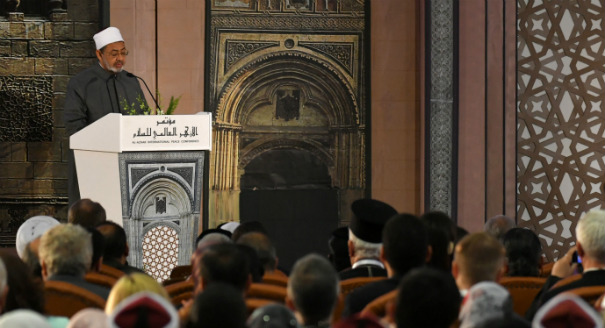
The restriction of the right to issue fatwas on television—which means more media exposure and domination over religious discourse—to a few ulema has exacerbated preexisting antagonism between al-Azhar and the Ministry of Religious Endowments, which compete for religious authority. Whereas the ministry controls mosques and religious endowments and is part of the regime’s executive branch, al-Azhar, Egypt’s leading institution for Islamic teaching and preaching, is eager to maintain some autonomy from the state.
In the list it drew up with Dar al-Ifta—Egypt’s official body tasked with issuing fatwas, whose Grand Mufti is elected by al-Azhar—al-Azhar omitted a number of ulema who are close to the regime. For instance, President Abdel Fattah el-Sisi’s advisor for religious affairs, Usama al-Azhari, and senior officials of the Ministry of Religious Endowments, including Minister Mohamed Mokhtar Gomaa, were all excluded. Usama al-Azhari in particular was deemed unfit to deliver fatwas because his doctorate is in principles of faith (usul al-din) and not in Islamic law (sharia) or comparative jurisprudence (fiqh muqaran)—even though some individuals who did make al-Azhar’s list do not hold any doctorate at all. The Ministry of Religious Endowments responded by putting Gomaa and al-Azhari on its own fatwa list. Remarking that “al-Azhar’s list did not include anyone from the Ministry of Religious Endowments,” the head of the ministry’s religious sector, Gaber Taye, stressed that “it would have been better, more appropriate, and more decent to have complete cooperation between the three institutions [al-Azhar, Dar al-Ifta, and the Ministry of Religious Endowments].” He also said that there is no need for any lists at all, implying that the ministry’s lists were merely necessary to obstruct what it views as al-Azhar’s attempt to dominate religious discourse.
The SCMR’s attempt to regulate fatwa issuance seems to respond to Sisi’s call for a “renewal of religious discourse,” which al-Azhar perceived as an encroachment by the president on its prerogatives. Sisi appointed the members of the SCMR, which was created by parliamentary legislation and signed into law by the president in December 2016. The head of the SCMR, Makram Mohamed Ahmed, justified its move to restrain the ulema’s access to television as a necessary measure to promote “moderation” over “extremism,” adding that “we cannot accept that some of our ulema, used by the Muslim Brotherhood, control the nation’s mind.” Although Ahmed insinuated that the list targets the Brotherhood, the SCMR’s move instead specifically targets ulema who issue controversial fatwas. Ahmed provided the examples of a fatwa from September 2017 allowing a man to be intimate with his wife after her death, and of another fatwa issued in November permitting a marriage between a man and his daughter if she was born of an illicit relationship. In this context, each religious institution has seized the opportunity created by the SCMR’s restriction of access to television to promote its own position in the religious public space.
Al-Azhar has so far been reluctant to comply with the regime’s wish that it fully endorse the president’s religious initiatives and reform its religious curricula accordingly. Minister of Culture Helmy al-Namnam complained in August 2016 that “nothing has been done since the president called for renewing religious discourse.” Sisi himself tacitly criticized al-Azhar for not supporting him. In different speeches advocating a “religious revolution” and reforming the Islamic divorce procedure, the president told al-Azhar’s ulema and Grand Imam Ahmed al-Tayyib, “I will argue with you before God,” “you torture me,” and “you wear me out.”
Despite the regime’s pressure, however, the one-thousand-year-old institution has so far been able to preserve some of its autonomy. Al-Azhar insists that religious reform can only be induced by ulema, not politicians. In February, al-Azhar successfully opposed Sisi’s request to ban the practice of verbal announcement of divorce in favor of a formal legal procedure. In April, pro-Sisi parliamentarian Mohamed Abu Hamed proposed a draft law that aimed to restructure al-Azhar and bring it under closer state control, which Al-Azhar successfully lobbied parliamentarians to reject. Were it adopted, the law would have weakened al-Azhar’s Grand Imam by capping his tenure, currently unlimited, at twelve years and introducing a mechanism to sanction and impeach him for misconduct. In addition, the law would have increased the president’s leverage over al-Azhar by giving him the authority to appoint five members of its Supreme Council, a body that designs the institution’s strategy for preaching and religious teaching.
The rift between al-Azhar and the regime also manifests in the former’s relationship with the Ministry of Religious Endowments. In July 2016, the ministry proposed imposing uniform written sermons on mosques across the country with a view to combat “extremism,” but al-Azhar’s Council of Senior Ulema categorically rejected it, as did other al-Azhar ulema who deemed the idea to be “creativity-killing” and “humiliating.” However, the ministry went on issuing uniform written sermons, reaffirming that mosques fall under its authority—although some imams affiliated with al-Azhar have not been using the ministry’s sermons consistently. Similarly, al-Azhar and the ministry battled over who would control the proposed Academy of Preachers, which would have provided training in preaching (dawa) but was never formed due to these disagreements.
In this race for dominance over religious media discourse, each party has held on to its authority. Yet the rift between the regime and al-Azhar is not being made obvious. President Sisi’s comments directed at al-Azhar’s Grand Imam Ahmed al-Tayyib are camouflaged under outward friendliness. “I love you, I respect you, and I admire you,” Sisi told al-Tayyib. Similarly, despite his measured criticism of al-Azhar, Gaber Taye, a senior official at the Ministry of Religious Endowments, affirmed that “al-Azhar is the direction to which we turn [our qibla], and al-Azhar’s sheikh is our sheikh.” Al-Azhar’s strategy is resistance, not confrontation: it wants to protect what it considers to be its domain, while avoiding forceful reforms and expanded control by Sisi. As for the regime, it likewise does not want a full-scale conflict with al-Azhar: not only does it lack the necessary religious legitimacy that al-Azhar enjoys, but it fears that delegitimizing al-Azhar would leave a vacuum in religious authority that “extremist” ulema would surely want to fill.
Karim El Taki is a PhD student in Politics and International Studies at the University of Cambridge. Follow him on Twitter @karimeltaki.