

Article
Леонид Гозман, Michael McFaul
{
  "authors": [
    "Michael McFaul"
  ],
  "type": "legacyinthemedia",
  "centerAffiliationAll": "dc",
  "centers": [
    "Carnegie Endowment for International Peace"
  ],
  "collections": [],
  "englishNewsletterAll": "ctw",
  "nonEnglishNewsletterAll": "",
  "primaryCenter": "Carnegie Endowment for International Peace",
  "programAffiliation": "russia",
  "programs": [
    "Russia and Eurasia"
  ],
  "projects": [],
  "regions": [
    "Caucasus",
    "Russia"
  ],
  "topics": [
    "Political Reform",
    "Democracy",
    "Economy",
    "Security",
    "Military"
  ]
}
REQUIRED IMAGE
Source: Carnegie
Reprinted with permission from The Washington Post, Saturday,
September 22, 2001
Since Sept. 11, we have deployed dozens of analogies -- Pearl Harbor, the war
on drugs, the battle against mosquitoes -- to help make sense of these new times
in international politics. Paradoxically, however, lessons from the Cold War
and its end may provide the best clues for how to frame the new era.
Above all else, we must remember that the battle against communism, like our new struggle against extreme strains of Islamic fundamentalism, was a war of ideas. By framing our new battle as "a war on terrorism," we set out to do battle with a "means" and not the people, ideologies and causes that deploy this weapon. A war against terrorism is like a war against violence, which cannot be won. A war against a new "ism" will be long and difficult, but can be won.
Communism, like extreme versions of Islamic fundamentalism, provided a set of beliefs that explained everything in the world. Communism framed world politics as a Manichean struggle between the forces of good and evil. Radical communists did not seek a resolution of grievances with the West, be it Namibian independence or higher wages for Italian workers. Rather, the mission was total destruction of the United States, its allies and its way of life.
The battle against communism therefore was a worldwide, multifaceted campaign that included military action and deterrence against communist states and non-state actors, economic support for countries threatened by communist takeover and an ideological counteroffensive. The century-long campaign ended only when the war of ideas, not a battle of tanks, was won.
In spearheading this struggle against communism, the United States made mistakes that must be avoided in the new campaign. Oftentimes we confused means and ends, so that all users of violence against noncommunist states and actors were considered part of the world communist movement. Not long ago, Nelson Mandela was labeled a "communist terrorist." So too were many anti-colonial movements whose real aim was sovereignty, not world revolution.
Distinguishing between those focused on territorial or ethnic disputes and those dedicated to a global messianic mission is critical in the next war. During the battle against communism, we initially treated the entire communist world as monolithic, a mistake we cannot repeat with the Islamic world. We must learn the differences between Sunni and Shi'ite, Ghilzai and Pushtun, moderate and radical. Our overzealous search for enemies from within in the 1950s and its tragic consequences must be remembered and not repeated.
Yet the United States also pursued some successful innovations during the Cold War that are relevant to the new campaign. Especially after the fall of Czechoslovakia in 1948, the United States learned the importance of international allies. Complementing our military strategy against communism were new weapons against the last "ism," including the Marshall Plan, the World Bank, AID, the Peace Corps, Radio Free Europe and the National Endowment for Democracy. Over time, the Western alliance developed a more sophisticated understanding of the threat, making distinctions among different strands of communism, recognizing the difference between dangerous communist cells and legitimate mass-based movements and differentiating between communist leaders and the captive nations they subjugated.
At crucial moments, American leaders even learned the importance of letting old anticommunist allies fall and new democratic forces prevail. Democratic ideas proved to be one of our best counter-communist weapons.
These are valuable lessons for today's campaign. To fight a sustained battle against communism, the United States also invested billions in education and intelligence about the enemy. The U.S. government sponsored centers for Soviet studies, provided foreign-language scholarships, offered dual competency grants to compel graduate students to gain expertise in both security issues and Russian culture.
Such programs aimed to combat the new "ism" exist today but are underdeveloped. We lack "human intelligence" -- covert agents, spies and informants -- in the Middle East. But we also suffer from shortages of NSA linguists, academic scholars and senior policy-makers trained in the languages, cultures, politics and economics of the Middle East.
The endgame of the Cold War also must be remembered. It did not terminate on the battlefield or result from a successful counterintelligence sting. Rather, it ended after people, even in Russia, stopped believing in communism and then mobilized to overthrow the Soviet communist regime. The Cold War victory will be secured only when democracy consolidates within Russia.
Obviously, promoting regime change in Pakistan or Saudi Arabia is dangerous, difficult and cannot happen in the near future. Promoting new forms of governance in a country such as Afghanistan, where only 30 percent of the men and 15 percent of the women are literate, seems futile. Yet a long-term strategy for combating radical Islamic fundamentalism must include policies that promote new government and new development in the region and end a decade of neglect. Democracy and economic growth may be the enemies of Osama bin Laden, but they are not the enemies of Islam.
The battle against communism took more than a century. This new battle against a new "ism" could take longer. Yet the West eventually did win the war against communism, an outcome that few predicted just a few decades ago. The strong support for democracy among Russians today -- more than two-thirds of the population in most polls -- suggests that no culture, regime or "ism" is immune from change.
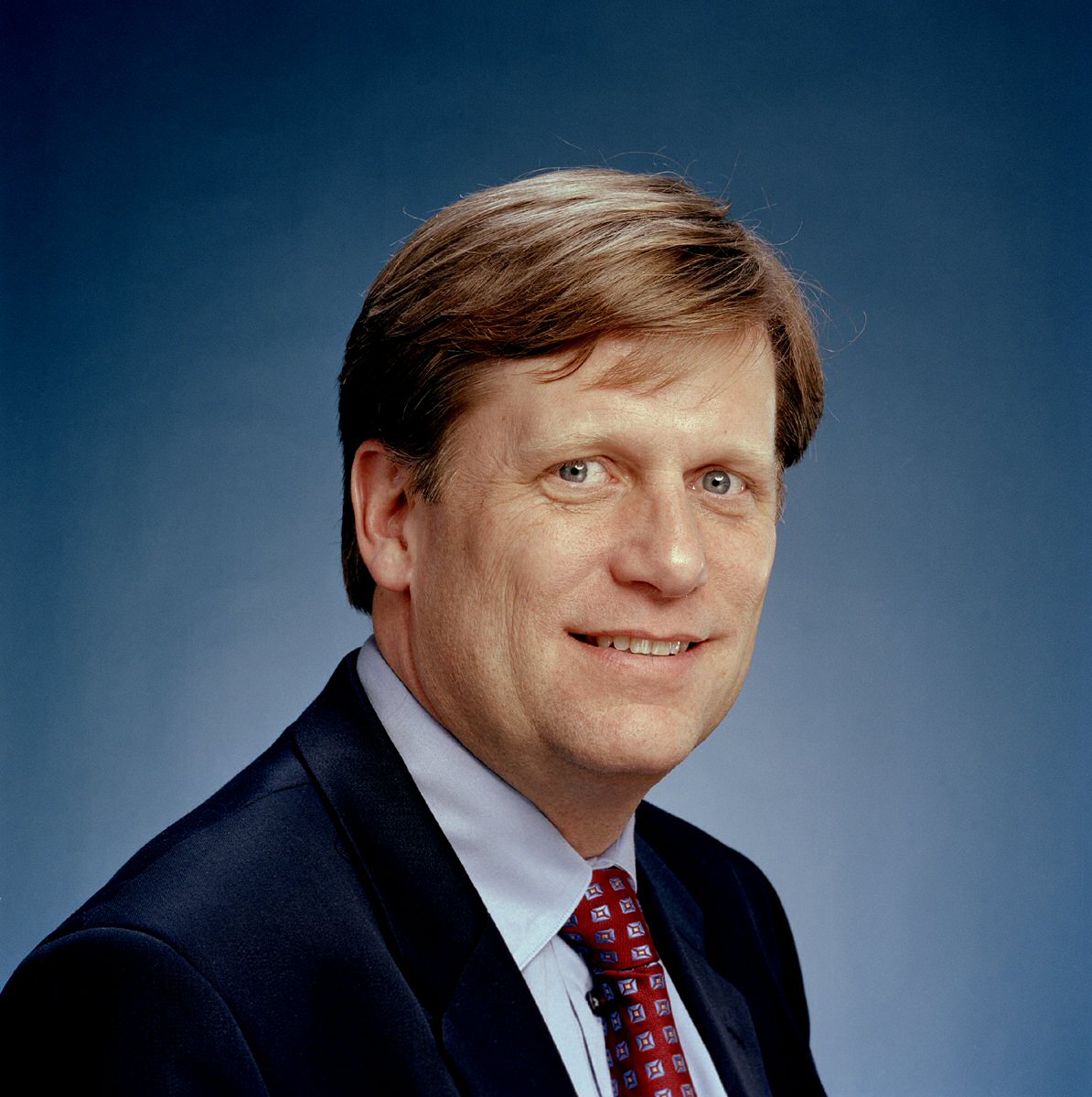
Former Senior Associate
In addition to his role at Carnegie, McFaul is Peter and Helen Bing Senior Fellow at the Hoover Institution and associate professor of political science at Stanford University.
Recent Work
Леонид Гозман, Michael McFaul
Michael McFaul, Sanja Tatic

Before the next wave of EU enlargement takes place, the union needs to grapple with thorny questions of how power is distributed among its members.


Emil Sondaj Hansen, Ditte Brasso Sørensen

The Horn of Africa countries are among those facing a new security calculus.


Andrew Leber, Lesley Anne Warner

The European far right might fail to steer EU policy in the direction Russia wants, but they will create enough chaos inside Europe to benefit the Kremlin.

Dimitar Bechev

The new U.S.–Denmark–Greenland agreement will help Washington exert political, economic, and financial dominance under the guise of security. Yet, it acknowledged Copenhagen’s and Nuuk’s sovereignty on the island.

Marc Pierini

A summer of escalation in the Black Sea has hurt Ukraine economically and is exacerbating world food security. A truce is needed—as is a broader reframing of Europe’s Ukraine strategy.

Thomas de Waal