Other
Anders Aslund
{
  "authors": [
    "Anders Aslund"
  ],
  "type": "legacyinthemedia",
  "centerAffiliationAll": "dc",
  "centers": [
    "Carnegie Endowment for International Peace"
  ],
  "collections": [],
  "englishNewsletterAll": "ctw",
  "nonEnglishNewsletterAll": "",
  "primaryCenter": "Carnegie Endowment for International Peace",
  "programAffiliation": "russia",
  "programs": [
    "Russia and Eurasia"
  ],
  "projects": [],
  "regions": [
    "Ukraine"
  ],
  "topics": [
    "Political Reform",
    "Economy"
  ]
}
REQUIRED IMAGE
Source: The Weekly Standard
Donetsk, Ukraine
ON THE FIFTEENTH DAY of Ukraine's orange revolution, I arrived in Kiev. My car got stuck in a traffic jam caused by a demonstration at the parliament. I abandoned the car and joined the rally. The demonstrators' determination was stunning. The sea of people was perfectly orderly and calm. Two slogans predominated: "Yushchenko is our President" and "Do not stop our Freedom!" A third line ran "East and West together!"
This was a call for law and order, freedom, and national unity. Some groups marched under Ukrainian flags, some under the orange flags of opposition candidate Viktor Yushchenko emblazoned with the name of their town or village. The demonstration didn't seem to have any class identity at all. Hardly any names of businesses, parties, or organizations were to be seen. No one talked about social or economic issues. This was pure politics. Ukraine's orange revolution is a classical liberal revolution, like 1848, or the Velvet Revolution in Prague in 1989. This rising against lawlessness and repression, for democracy and freedom, is a true bourgeois revolution.
Half in jest, people call it a revolt of the millionaires against the billionaires. Three of the revolutionary leaders are very wealthy businessmen (Yulia Tymoshenko, Oleksandr Zinchenko, and Petro Poroshenko). They criticize not big business, but "bandits." The incumbent candidate, Prime Minister Viktor Yanukovich, gets his key support from the three most prominent oligarchic groups, which between them reportedly put up $300 million for his campaign. But overwhelmingly the Ukrainian business community supports the challenger, Yushchenko, in protest against the capture of the state by these three.
Ukraine's presidential election also reflected a sharp regional divide. Yushchenko won big in 17 western and central districts. They are predominantly Ukrainian-speaking, though several are Russian-speaking. Yanukovich won equally massively in 10 Russian-speaking eastern and southern districts, scaring voters with the specter of western Ukrainian nationalism.
To get a better idea of what was going on, I traveled to Donetsk, Prime Minister Yanukovich's stronghold in the east, to talk to business leaders, especially some of the steel barons. I was impressed. These self-made billionaires are as smart as they are dynamic. To them, politics is a means of advancing their business. They have bought up old Soviet steelworks and turned them around. One has opted for upstream vertical integration in raw materials (iron ore and coal), while another has concentrated on downstream purchases of steelworks in New Europe.
At present, they sell most of their steel to China and quite a lot to the Middle East, but they are painfully aware that the Chinese bonanza won't last long. Then they will have to sell more to Europe, which protects itself against Ukrainian steel. In order to break down that barrier, they want to buy downstream companies in Europe, have Ukraine join the World Trade Organization, and develop a free trade agreement with Europe.
I asked them about their business interests in Russia. Nobody seemed to own any significant assets there. Nor do they have any real Russian partners, though they sell a bit to their big neighbor. Energy they acquire on a free market, whereas the Russian steel companies are their severest competitors. However geographically close they are to Russia, the Donetsk steel barons long for Europe.
One had been a major supporter of Yanukovich. Another had maintained his neutrality, but appeared to prefer Yushchenko as a way of leveling the playing field with his bigger competitor. Not even big businessmen dare speak their minds in the authoritarian eastern Ukrainian regions of Donetsk and Lugansk. My interlocutors spoke with great respect of Yushchenko, who has carefully avoided insulting the east. Now all they want from the election is a clear result--contrary to President Leonid Kuchma, who appears to be working for a prolonged political crisis, which would destabilize the Ukrainian economy and thus hurt the opposition.
But what about the calls for separatism coming from some eastern officials? All my interlocutors got excited when I asked about secession, and declared this idea absolutely intolerable. The business leaders in eastern Ukraine had told their regional officials that they had no right to talk secession, and the officials had shut up. Separatism was no threat, I was told, nor would the business community allow it to develop.
Pleased by all this, I went back to Kiev. If they meant what they told me, the big Ukrainian businessmen are not prepared to accept a protracted political crisis, because it would cost them too much. They are willing to accept a Yushchenko presidency, and they are concerned about their reputation in the West so that they can purchase more companies in Europe. They are adamantly in favor of keeping Ukraine intact, because any breakup would disrupt their business empires. Their prime contacts are in the Ukrainian elite.
The political crisis in Ukraine is a natural result of President Kuchma's policies. On the positive side of the ledger, he has allowed a dynamic and competitive market economy to develop, but on the negative side, a handful of companies have been unfairly favored. Now, the very rich want to level the playing field with the super-rich, while ordinary Ukrainians are fed up with corruption, lawlessness, and repression. The east-west tension seems to be a secondary issue.
Russia's extensive meddling in the Ukrainian election is curious, considering that eastern Ukraine is already longing for Europe. The best explanation seems to be President Putin's dislike for democracy, and his fear that democracy could spread from Ukraine to Russia. It is also possible that President Kuchma used Putin for his own purposes, as he schemes to play everybody off everybody else.
Ukraine is knocking on the door of the European Union. It needs help as it endeavors to clean up corruption and lawlessness. But most of all it needs access to travel, markets, and education in its beloved Europe--and the prospect of membership in the European Union. For the E.U., it will be no small challenge to welcome the Ukrainian nation that is finally being born.
Anders Åslund is director of the Russian and European program at the Carnegie Endowment for International Peace.
Former Senior Associate, Director, Russian and Eurasian Program
Recent Work
Anders Aslund
Anders Aslund
Carnegie does not take institutional positions on public policy issues; the views represented herein are those of the author(s) and do not necessarily reflect the views of Carnegie, its staff, or its trustees.
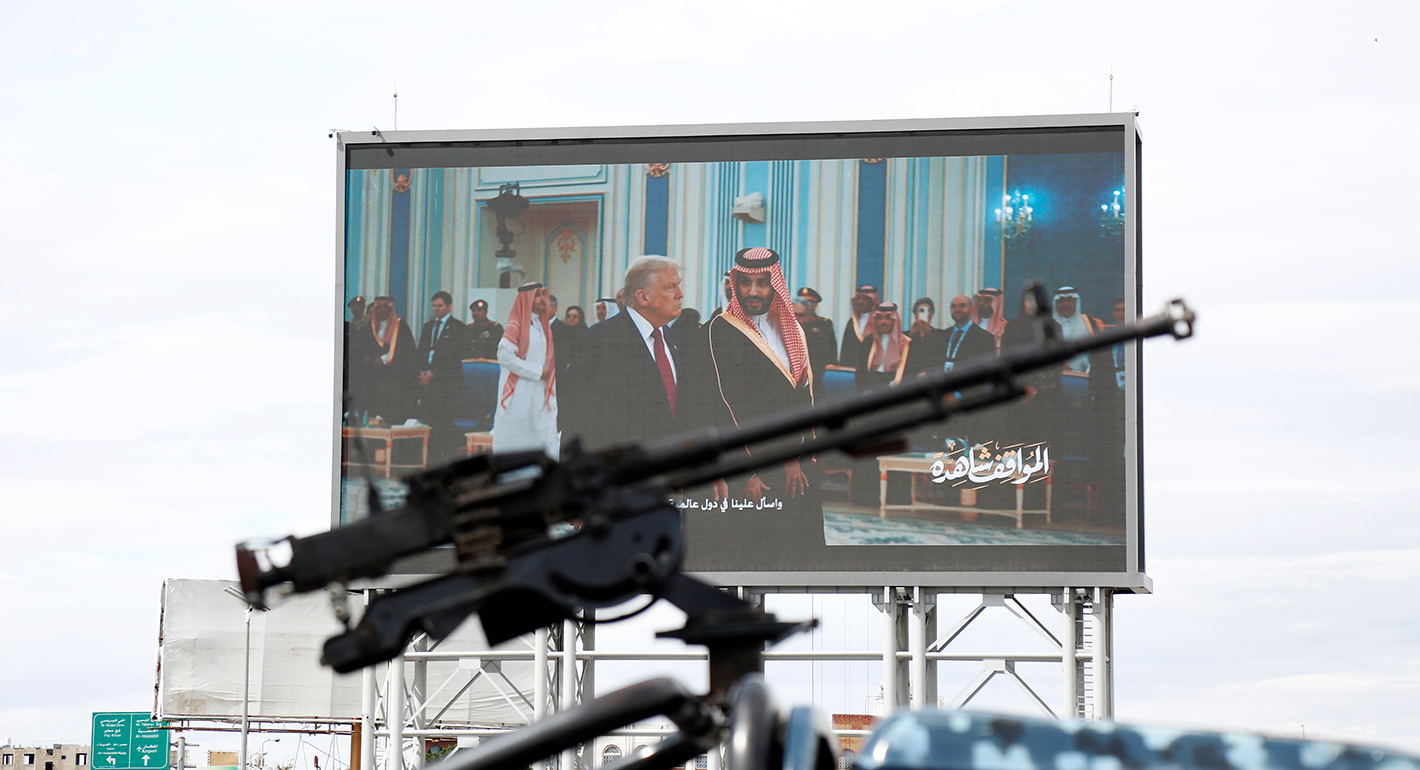
As the war between the United States, Israel, and Iran continues, Carnegie scholars contribute cutting-edge analysis on the events of the war and their wide-reaching implications. From the impact on Iran and its immediate neighbors to the responses from Gulf states to fuel and fertilizer shortages caused by the effective shutdown of the Strait of Hormuz, the war is reshaping Middle East alliances and creating shockwaves around the world. Carnegie experts analyze it all.
The return of war as the organizing factor in Middle Eastern politics has predictable consequences: governments are prioritizing regime stability and becoming averse to political and social reform.

Sarah Yerkes, Amr Hamzawy
Putin’s blunder has created new and enduring security challenges for Russia and Europe.
Eugene Rumer
The full-scale invasion cemented Ukraine’s determination to sever its ties with Russia; reimagining the Poland-Ukraine partnership can accelerate Kyiv’s westward alignment and improve the security of both countries.
Eric Green
There is no better time for the countries of Southeast Asia to reconsider their energy security than during this latest crisis.
Gita Wirjawan