

Paper
Ashley J. Tellis
{
  "authors": [
    "Ashley J. Tellis"
  ],
  "type": "other",
  "centerAffiliationAll": "dc",
  "centers": [
    "Carnegie Endowment for International Peace"
  ],
  "collections": [],
  "englishNewsletterAll": "ctw",
  "nonEnglishNewsletterAll": "",
  "primaryCenter": "Carnegie Endowment for International Peace",
  "programAffiliation": "SAP",
  "programs": [
    "South Asia"
  ],
  "projects": [],
  "regions": [
    "North America",
    "United States",
    "Afghanistan",
    "Pakistan"
  ],
  "topics": [
    "Foreign Policy"
  ]
}
Source: Getty
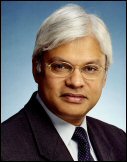
Many blame the Musharraf regime for not doing more to combat terrorism, despite receiving significant U.S. aid, but in a new report Ashley J. Tellis contends that if the United States wants a stronger Pakistani commitment to the “War on Terror,” it must first recognize that Pakistan’s poor performance cannot be attributed simply to malfeasance by Pakistan’s military elite.
Source: Carnegie Endowment

In Pakistan—Conflicted Ally in the War on Terror, Tellis argues that Pakistani counterterrorism efforts have been impeded by Islamabad’s military ineptitude, Pakistan’s political deterioration, a lack of public support for “Washington’s war,” and the ineffective Afghan government. He says that the majority of Pakistani military officials, despite fears over domestic repercussions and long-term U.S. interests in the region, support operations aimed at defeating terrorism.
Tellis presents a number of policy recommendations to strengthen counterterrorism efforts, including:
• Convince Pakistanis of their own self-interest to defeat terrorism,
• Demand the systematic targeting of the Taliban leadership within Pakistan,
• Assist Pakistan with technology and training to monitor critical border crossing points,
• Link counterterrorism support funds to specific tasks, rather than simply reimbursing Islamabad,
• Double U.S. aid to Afghanistan, and
• Challenge NATO to meet its security obligations and commit to combat operations in southern and eastern Afghanistan.
Making U.S. aid conditional on Pakistan’s performance in the war on terror would only inflame Pakistani public opinion and embarrass moderate Pakistanis who cooperated with the United States, says Tellis, while recent suggestions by U.S. presidential hopefuls for unilateral military action could re-cast Pakistan an adversary.
“If unilateral military action were to become the announced policy of the United States, such a policy would likely conclude eventually in the designation of Pakistan as an adversary of the United States. Whatever Islamabad’s failings may be, the prospect of having to treat a large and precariously poised Muslim state, armed with nuclear weapons and with an unsavory record of proliferation, as a mortal adversary should give pause to even the most jaded politician.”
Click on the link above for the full text of this Carnegie publication.
A limited number of print copies are available.
Request a copy
About the Author
Ashley J. Tellis is a senior associate at the Carnegie Endowment, specializing in international security, defense, and Asian strategic issues.
Former Senior Fellow
Ashley J. Tellis was a senior fellow at the Carnegie Endowment for International Peace.
Recent Work
Ashley J. Tellis
Ashley J. Tellis
Carnegie does not take institutional positions on public policy issues; the views represented herein are those of the author(s) and do not necessarily reflect the views of Carnegie, its staff, or its trustees.

Japan’s long-term security policy is driven by concerns about China, and there is little appetite for (or interest in) pursuing a confrontation with Moscow.

James D.J. Brown

Russia is testing the waters of NATO’s mutual defense clause. What do strikes in Romanian territorial waters mean for the alliance’s posture toward Moscow?

Dimitar Bechev
Why Pakistan, Saudi Arabia, and Turkey are joining forces on regional security.


Alper Coşkun, Amr Hamzawy

Despite public disputes over trade and immigration, the strategic partnership’s foundations remain sturdy.

Sameer Lalwani
It signals a new era of tech diffusion and warfare.

Steve Feldstein