
• Research
  • Emissary
  • About
  • Experts
Carnegie Global logoCarnegie lettermark logo
DemocracyIran
  • Donate
{
  "authors": [],
  "type": "pressRelease",
  "centerAffiliationAll": "dc",
  "centers": [
    "Carnegie Endowment for International Peace"
  ],
  "collections": [],
  "englishNewsletterAll": "menaTransitions",
  "nonEnglishNewsletterAll": "",
  "primaryCenter": "Carnegie Endowment for International Peace",
  "programAffiliation": "MEP",
  "programs": [
    "Middle East"
  ],
  "projects": [],
  "regions": [
    "Yemen"
  ],
  "topics": [
    "Democracy",
    "Security"
  ]
}
REQUIRED IMAGE

REQUIRED IMAGE

Press Release

Security and economic challenges could overwhelm Yemen government

A confluence of looming challenges—economic ruin, an emerging water shortage, violent extremism, and a growing secessionist movement—threaten to overwhelm the Yemeni government, provide a breeding ground for terrorists, and destabilize the region.

Link Copied
Published on Sep 10, 2009
Program mobile hero image

Program

Middle East

The Middle East Program in Washington combines in-depth regional knowledge with incisive comparative analysis to provide deeply informed recommendations. With expertise in the Gulf, North Africa, Iran, and Israel/Palestine, we examine crosscutting themes of political, economic, and social change in both English and Arabic.

Learn More

WASHINGTON, Sept 10—A confluence of looming challenges—economic ruin, an emerging water shortage, violent extremism, and a growing secessionist movement—threaten to overwhelm the Yemeni government, provide a breeding ground for terrorists, and destabilize the region. Yemen has survived past crises but the current risks are unprecedented in their scope and interconnectivity, warns a new paper by Christopher Boucek.

Key Conclusions:

  • There are increasing indications that al-Qaeda is regrouping in Yemen. Recent counterterrorism measures in Saudi Arabia have forced extremists to seek refuge elsewhere, with a steady flow relocating to Yemen’s under-governed areas.
  • The ceding of authority by the weak central government to local government has proved counterproductive by limiting control over volatile under-governed territories.
  • The security situation is rapidly deteriorating. Fighting with Shi’i rebels in north Yemen has strained the army, and Yemen is unable to protect its coast from the recent surge in piracy.
  • The poorest in the Arab world, with unemployment at 35 percent, Yemen’s economy has been severely effected by the dramatic fall in oil prices and has few sustainable, post-oil, economic options.
  • Yemen is running out of water. Rising domestic consumption, poor water management, corruption, the absence of resource governance, and wasteful irrigation techniques are creating frequent and widespread shortages.
  • Yemen’s lack of food and water is complicated by the population’s dependence on qat, a quick-cash crop that requires heavy irrigation to thrive. Farmers devote so much land to qat production that Yemen is now a net food importer.

Recommendations:

  • Yemen must build local capacity in law enforcement and its legal and judicial systems by enacting counterterrorism legislation, passing terror finance laws, improving police training, and professionalizing the prison service.
  • The Gulf states should make Yemen’s membership in the Gulf Cooperation Council contingent on tough steps, including progress on curbing government subsidies, addressing corruption, and enacting measures to curtail security concerns.
  • U.S. aid to Yemen is disproportionately small given its importance to U.S. national security. Development assistance, education and technical cooperation, capacity building, institution strengthening, and direct financial assistance can better address the interconnected challenges facing Yemen than military and security aid.

Boucek concludes:

“If left unaddressed, Yemen’s problems could potentially destabilize Saudi Arabia and the other Gulf states. The inability of the Yemeni central government to fully control its territory will create space for violent extremists to regroup and launch attacks against domestic and international targets. The international community must be realistic about the limitations of intervention in Yemen. In the near term, however, inaction is not an option.”

###


NOTES

  • Click here to read the paper
  • Christopher Boucek is an associate in the Carnegie Middle East Program and an associate fellow with the Royal United Services Institute for Defense and Security Studies in London. Previously, he was a postdoctoral researcher at Princeton University and lecturer in politics at the Woodrow Wilson School, and a security editor with Jane’s Information Group.
  • The Carnegie Middle East Program combines in-depth local knowledge with incisive comparative analysis to examine economic, socio-political, and strategic interests in the Arab world. Through detailed country studies and the exploration of key cross-cutting themes, the Carnegie Middle East Program, in coordination with the Carnegie Middle East Center, provides analysis and recommendations in both English and Arabic that are deeply informed by knowledge and views from the region. The program produces the Arab Reform Bulletin, a monthly analysis of political reform in the Middle East.
  • Press Contact: David Kampf, 202/939-2372, dkampf@ceip.org
DemocracySecurityYemen

Carnegie does not take institutional positions on public policy issues; the views represented herein are those of the author(s) and do not necessarily reflect the views of Carnegie, its staff, or its trustees.

More Work from Carnegie Endowment for International Peace

  • Commentary
    Carnegie Politika
    In the Kremlin’s AI Propaganda Blitz, the Noise Is the Signal

    Russia’s AI-driven propaganda campaigns operate in a fragmented, chaotic, and often illogical manner. That’s not necessarily a problem for the Kremlin, though: It’s much easier to mimic genuine public debate that way.

      Ilya Klishin

  • Commentary
    Carnegie Politika
    Stalled at the Front, Russia Seeks to Undermine Ukraine’s Economic Capacity

    Russian strikes are weakening the economy sustaining Ukraine’s war effort. Closing the growing funding gap will require more European support and politically contentious reforms in Kyiv.

      Balázs Jarábik
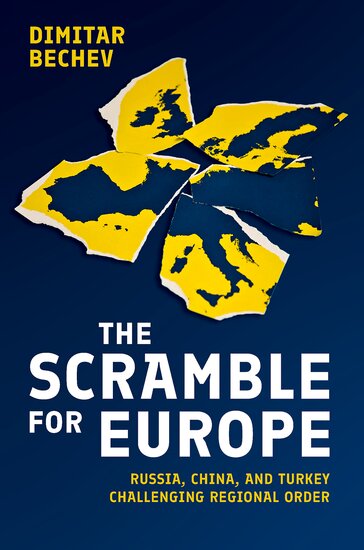
  • The Scramble for Europe. Russia, China, and Turkey Challenging Regional Order
    Book
    The Scramble for Europe. Russia, China, and Turkey Challenging Regional Order

    Europe is facing rising populism internally as well as external pressures from Russia, China, Turkey, and the United States.

      Dimitar Bechev
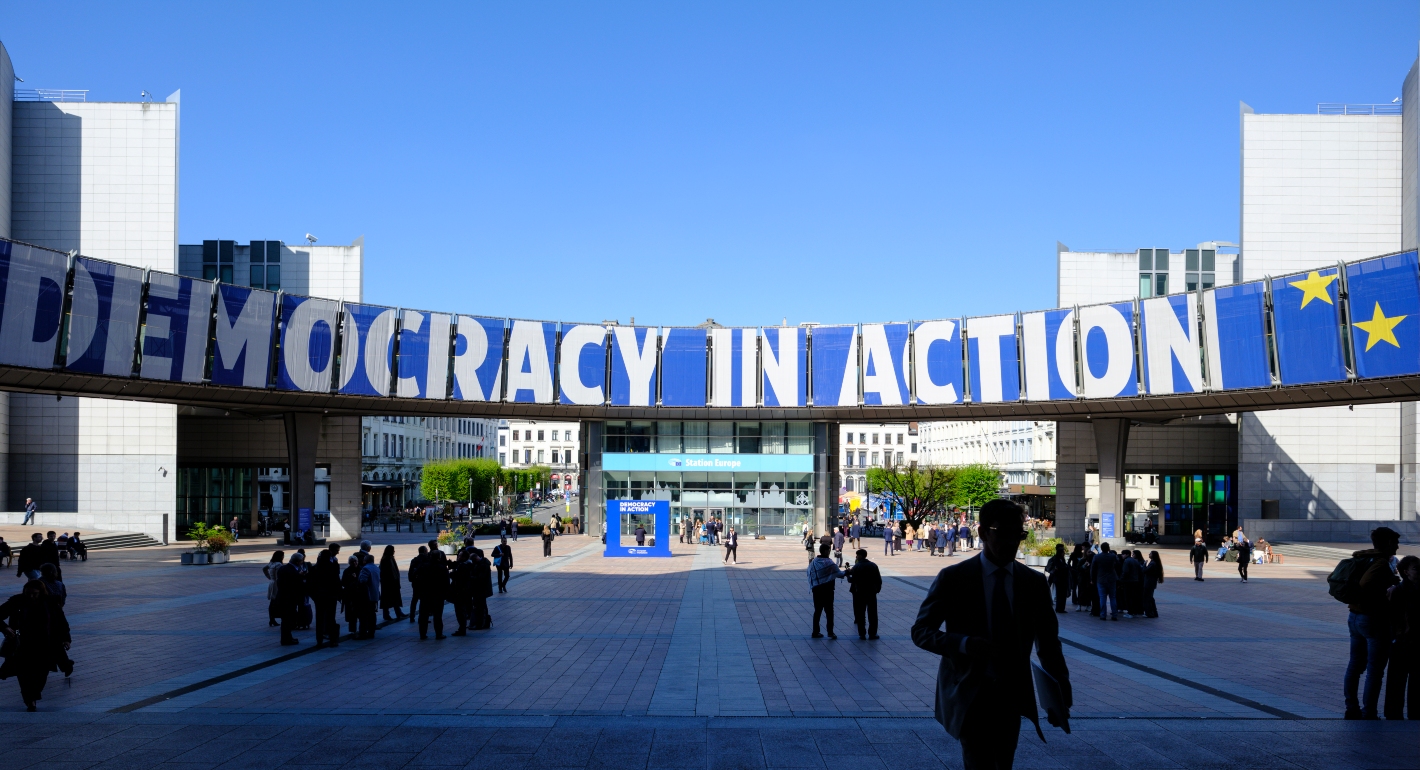
  • European Union EU democracy Parliament citizens assembly
    Article
    Europe’s Tide of Citizen Assemblies: Unsung Success or Anticlimax?

    A notable degree of participative democracy has firmly arrived in Europe. But to have more far-reaching impact, democratic deliberation needs to move into a radically new phase.

      Richard Youngs
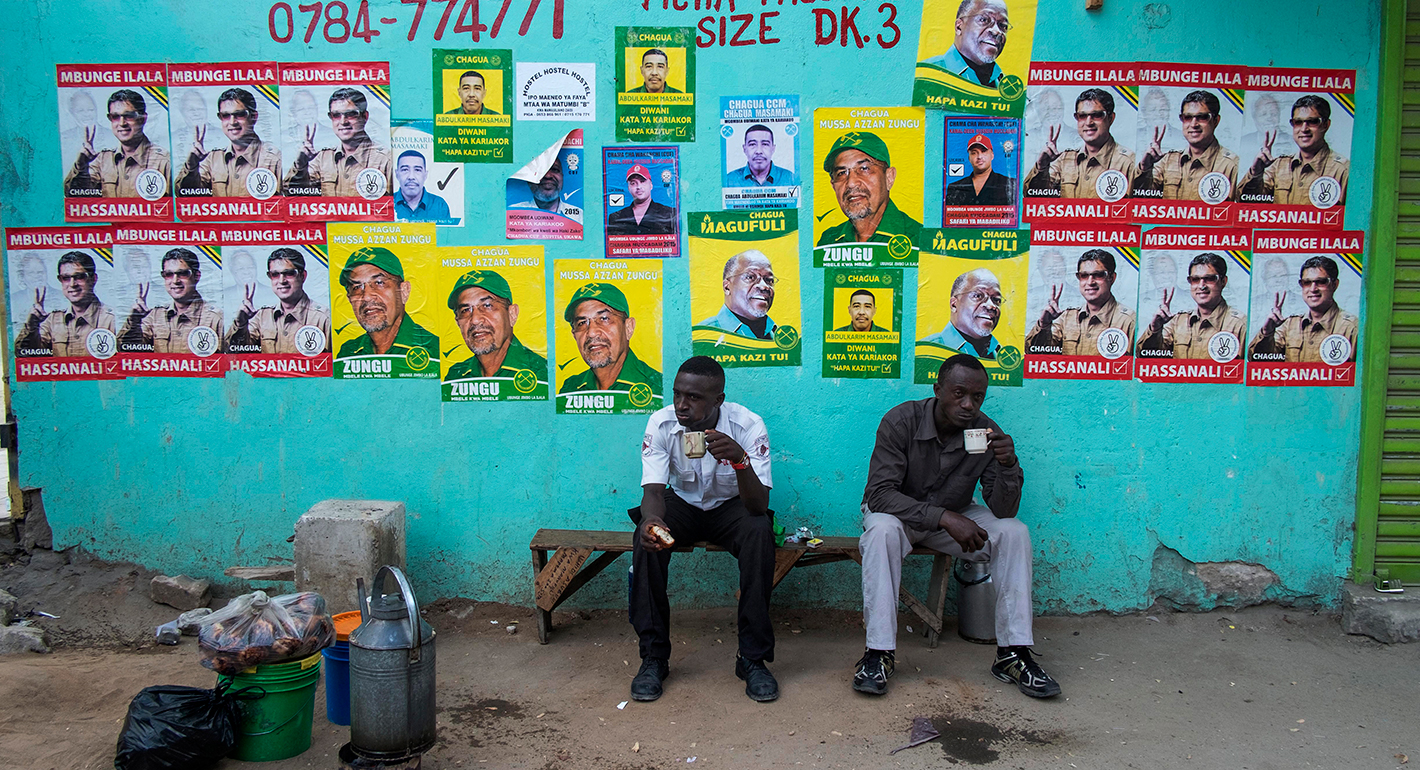
  • Men take a tea break in front of a wall with election posters near a polling station in Dar es Salaam on October 25, 2015, during the Tanzanian presidential election.
    Paper
    Governance Compared: Autocracy and Democracy in Africa

    Today’s global democratic recession is partly rooted in a common perception that democracies have a delivery problem, with many citizens in both autocracies and democracies alike now believing that strongmen can achieve better governance outcomes. But a study of four countries in Africa reveals that democratic-leaning governments have demonstrated better governance performance than autocratic governments.

      • Sarah Yerkes

      Sarah Yerkes, Natalie Triche, Amr Hamzawy

Get more news and analysis from
Carnegie Endowment for International Peace
Carnegie global logo, stacked
1779 Massachusetts Avenue NWWashington, DC, 20036-2103Phone: 202 483 7600
  • Research
  • Emissary
  • About
  • Experts
  • Donate
  • Programs
  • Events
  • Blogs
  • Podcasts
  • Contact
  • Annual Reports
  • Careers
  • Privacy
  • For Media
  • Government Resources
Get more news and analysis from
Carnegie Endowment for International Peace
© 2026 Carnegie Endowment for International Peace. All rights reserved.