

Paper
Douglas H. Paal
Source: Getty
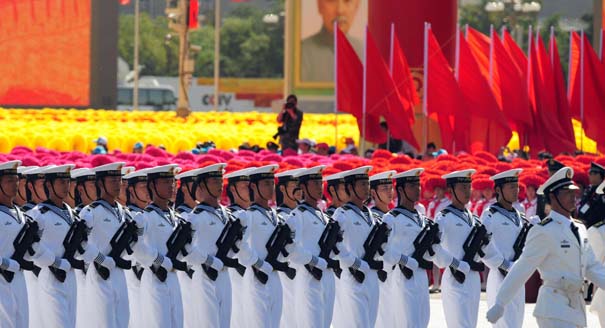
While the PRC’s sixtieth birthday military parade is primarily intended to stir domestic political support, it also sends a strong international message by showcasing the nation as a modern military powerhouse.
Tonight China will broadcast a military parade intended to mark formally the sixtieth anniversary of the founding of the People’s Republic. The term “broadcast” is appropriate, because the ordinary of people of China will be banned from the parade route along Changan Boulevard. They have been advised to stay home and watch it on TV.
Extraordinary security measures have been put in place to ensure nothing mars this show of the might of the Communist Party. The primary audience is domestic, not foreign, and the party can ill afford to demonstrate any form of weakness in a year of heightened sensitivity that has already been marred by unanticipated uprisings in Tibet and Xinjiang.
To understand the historical roots in China of this sort of triumphal display, the current issue of The New Yorker magazine has an interview on the subject between reporter Evan Osnos and Geremie Barme, perhaps the best western scholar of Chinese culture. In short, such triumphal marches go back to the pre-Christian era, continued through the failed modern republics, right up to today.
Emperors previously stood where or near where Mao Zedong proclaimed the People’s Republic, shouting in his high-pitched voice that the “Chinese people have stood up!” On the thirty-fifth anniversary of the founding, in 1984, Deng Xiaoping stood on the same spot and used a similar parade to demonstrate his preeminence, on his birthday no less. In 1989, the regime passed on such a parade, as it lurked in the shadows of the June 4 Tiananmen massacre, and held a more restrained fest.
In 1999, Jiang Zemin rekindled the tradition with a parade that marked his own ascendancy, and that set an example that subsequent leaders apparently feel and will continue to feel compelled to follow. So, tonight’s parade will celebrate current leader Hu Jintao’s seventh year in power.
This makes it interesting to speculate that not sharing that power publicly tonight may have been behind the failure to promote his heir apparent, Xi Jinping, to Vice Chairman of the Central Military Commission at the recent fourth plenum of the 17th Central Committee. Xi could well be appointed soon at a separate Military Commission meeting, and if not, his future ascendancy will be in great doubt, as that appointment in 2003 marked Hu Jintao as the definitive heir to Jiang Zemin.
While the parade is justified for domestic political reasons, it also has international implications. The most important of these is that Beijing is reminding the world that it remains unabashedly communist, and is not bowing to foreign conventions or pressures to change its political system. If goose-stepping troops and high tech weaponry remind foreigners of Hitler’s military extravaganzas and the annual May Day parades in the Moscow of the Soviet era, since rejuvenated by Vladimir Putin and Dimitri Medvedev, so be it.
Second, Beijing wants its neighbors and potential adversaries to know that it is not the supine China of ancient days, but a modern military powerhouse. A spokesman for the People’s Liberation Army asserted that more than fifty new weapons systems will be on display in the parade, feeding foreign military intelligence agencies with plenty of work to analyze China’s new capabilities.
Seasoned military observers warn (see Dennis Blasko in the Jamestown Foundation's China Brief, Volume 9, Issue 19) that China’s having a new weapon or capability does not demonstrate that it knows how to use it effectively. The history of the PLA suggests jumping to wild conclusions could be a mistake. Nonetheless, China’s leaders have undoubtedly judged that it is better for them to have the world see China’s rising power on display than not. Any cost to the image of “peacefully rising China” is worth paying for the additional benefits described above.
For a planned 66 minutes, all of the precision the world witnessed at the Beijing Olympics will be presented in a martial form, with none of the charm and cultural touches. For ordinary Chinese and their leaders, after two centuries of self-described “humiliation” and thirty years of revolutionary isolation, they will now celebrate thirty years of “reform and opening up” that have produced the vaunted “wealth and power” dreamed of through all those years and unobtainable until now.
Distinguished Fellow, Asia Program
Paal previously served as vice chairman of JPMorgan Chase International and as unofficial U.S. representative to Taiwan as director of the American Institute in Taiwan.
Recent Work
Douglas H. Paal

Douglas H. Paal, Tong Zhao, Chen Qi, …
Carnegie does not take institutional positions on public policy issues; the views represented herein are those of the author(s) and do not necessarily reflect the views of Carnegie, its staff, or its trustees.

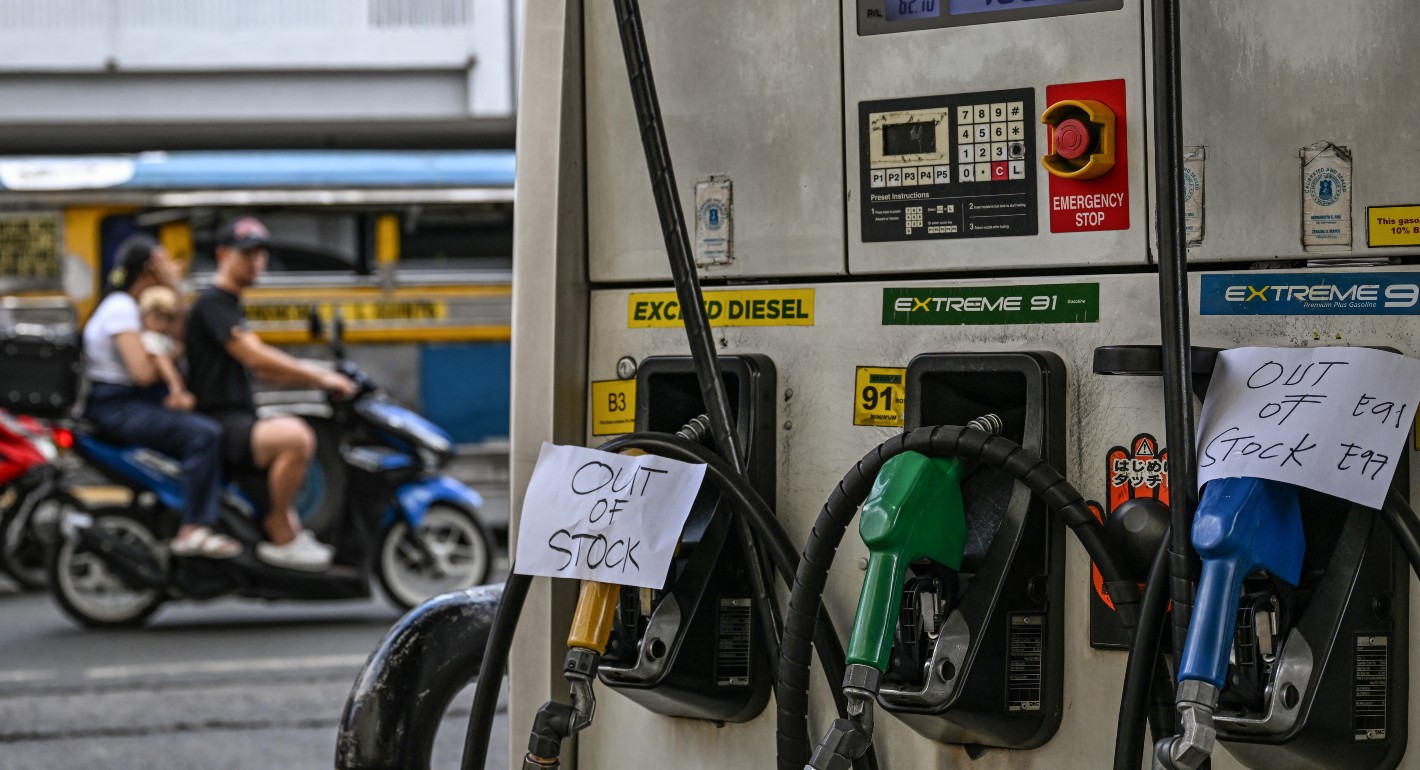
Across Asia, China is better positioned to withstand energy shocks from the fallout of the Iran war. Its abundant coal capacity can ensure stability in the near term. Yet at the same time, the country’s energy transition away from coal will make it even less vulnerable during the next shock.

Damien Ma
Putin’s blunder has created new and enduring security challenges for Russia and Europe.
Eugene Rumer
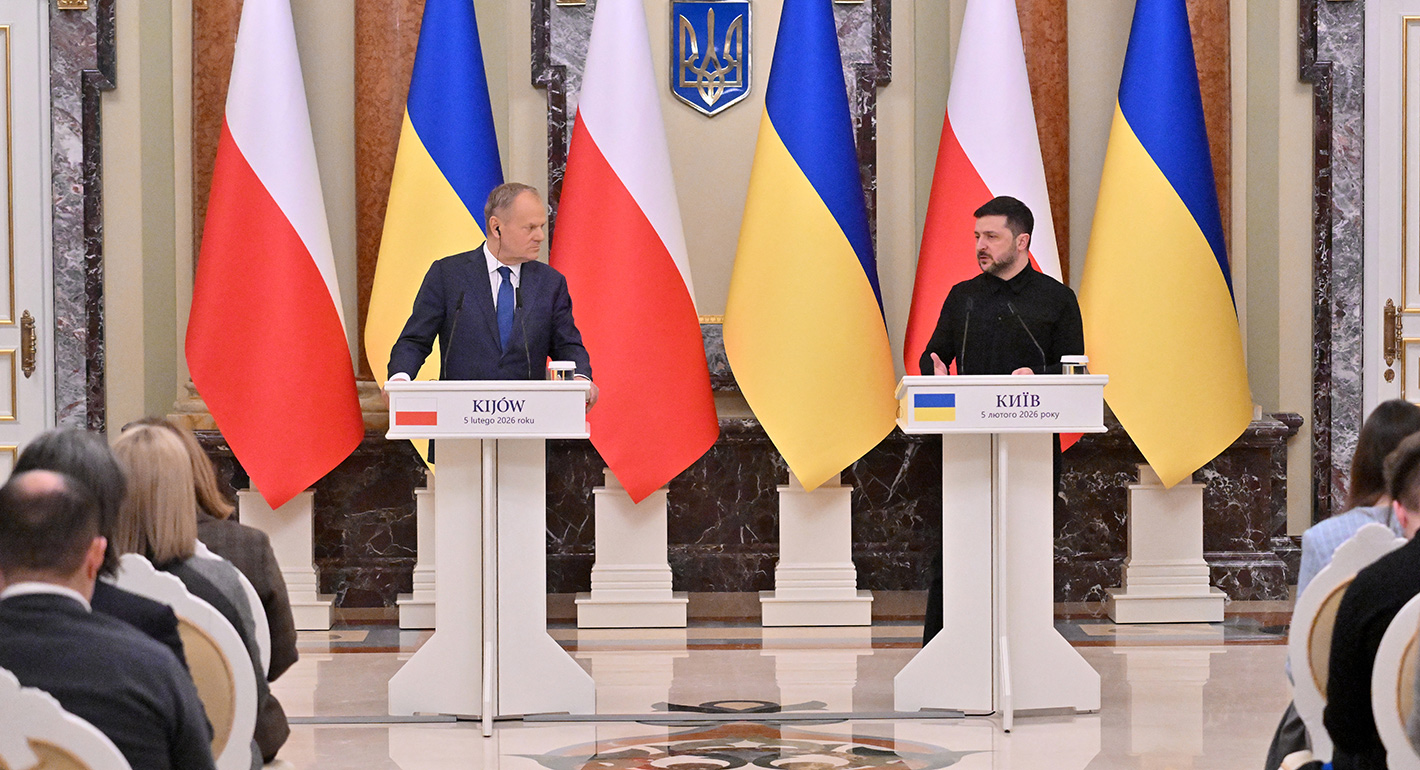
The full-scale invasion cemented Ukraine’s determination to sever its ties with Russia; reimagining the Poland-Ukraine partnership can accelerate Kyiv’s westward alignment and improve the security of both countries.
Eric Green
The United States ignores the region’s lived experience—and the tough political and social trade-offs the war has produced—at its peril.

Evan A. Feigenbaum

The GDP measure is an attempt to measure value creation in an economy. This measure, however, can vary greatly between economies that have disciplinary mechanisms that force them to recognize investment losses quickly and economies that don’t, and can postpone this recognition for many years.

Michael Pettis