• Research
  • Emissary
  • About
  • Experts
Carnegie Global logoCarnegie lettermark logo
DemocracyIran
  • Donate
{
  "authors": [
    "Michael D. Swaine"
  ],
  "type": "legacyinthemedia",
  "centerAffiliationAll": "dc",
  "centers": [
    "Carnegie Endowment for International Peace"
  ],
  "collections": [],
  "englishNewsletterAll": "asia",
  "nonEnglishNewsletterAll": "",
  "primaryCenter": "Carnegie Endowment for International Peace",
  "programAffiliation": "AP",
  "programs": [
    "Asia"
  ],
  "projects": [],
  "regions": [
    "Middle East",
    "Iran",
    "East Asia",
    "China"
  ],
  "topics": [
    "Political Reform",
    "Security",
    "Military",
    "Nuclear Policy"
  ]
}
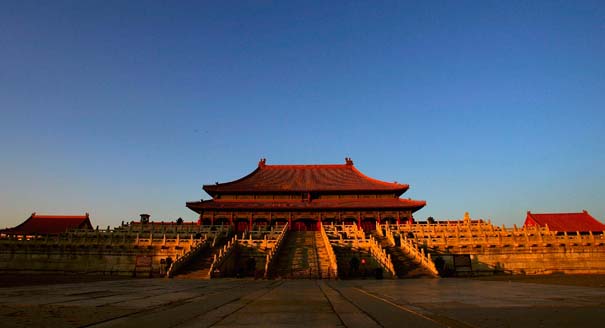
Source: Getty

In The Media

Beijing's Tightrope Walk on Iran

China must walk a tightrope in its policies toward Iran, cultivating useful economic and strategic ties with Tehran while also supporting nonproliferation efforts and maintaining friendly relations with Washington.

Link Copied
By Michael D. Swaine
Published on Jun 28, 2010
Program mobile hero image

Program

Asia

The Asia Program in Washington studies disruptive security, governance, and technological risks that threaten peace, growth, and opportunity in the Asia-Pacific region, including a focus on China, Japan, and the Korean peninsula.

Learn More

Source: China Leadership Monitor

Beijing's Tightrope Walk on Iran
In dealing with the Islamic Republic of Iran, as with the Democratic People’s Republic of Korea, China confronts yet another exquisite dilemma, albeit of a somewhat different type. Unlike Pyongyang, Tehran is not a long-time ally and critical security buffer along the Chinese border. It is, however, a major political and economic player in a region of increasing importance to Beijing, a significant source of vital oil supplies, and a close friend among developing nations. Unfortunately, as with Pyongyang, it is also most likely acquiring nuclear weapons capabilities in defiance of most of the international community and directly threatening the vital interests of the United States and the West. Hence, as with North Korea, the Chinese leadership must walk a diplomatic and political tightrope in its policies toward Iran, in this instance seeking to maintain increasingly lucrative and strategically useful economic and political ties to a major power and friend in a critical region of the world. At the same time, it must support international efforts to sustain the global nonproliferation regime, prevent the further destabilization of a highly volatile and critical region, and avoid antagonizing the United States and other key powers. 
 
This essay first examines China’s interests and policies toward Iran, especially as they affect the United States. It then takes a close look at the lines of apparent debate within China on the Iran nuclear issue and Chinese policy, and concludes with a few general observations.

About the Author

Michael D. Swaine

Former Senior Fellow, Asia Program

Swaine was a senior fellow at the Carnegie Endowment for International Peace and one of the most prominent American analysts in Chinese security studies.

    Recent Work

  • Other
    What Kind of Global Order Should Washington and Beijing Strive For?

      Michael D. Swaine

  • Commentary
    A Smarter U.S. Strategy for China in Four Steps

      Michael D. Swaine

Michael D. Swaine
Former Senior Fellow, Asia Program
Michael D. Swaine
Political ReformSecurityMilitaryNuclear PolicyMiddle EastIranEast AsiaChina

Carnegie does not take institutional positions on public policy issues; the views represented herein are those of the author(s) and do not necessarily reflect the views of Carnegie, its staff, or its trustees.

More Work from Carnegie Endowment for International Peace

  • Commentary
    Carnegie Politika
    Parliamentary Elections in Occupied Ukraine Risk Backfiring for the Kremlin

    Despite unhappiness on the ground, Moscow is determined to use both carrot and stick to ensure there is record support for United Russia in occupied Ukraine.

      Konstantin Skorkin

  • Paper
    Egypt’s Military Landlord Economy and its Limitations

    The armed forces champion a form of capitalism that is generating revenue, but its reliance on rent faces diminishing returns, leaving the country with massive sunk costs and deferred returns, deepening dependency on external borrowing.

      Yezid Sayigh

  • Article
    From Hormuz to the Maghreb: The Geopolitical Reach of a Gulf Crisis

    Morocco and Algeria, each in its own way, are having to navigate the global economic fallout of the U.S.-Israeli military campaign against Iran.

      Yasmine Zarhloule

  • Commentary
    Emissary
    Nolan’s "The Odyssey" Has a Colonialism Problem

    Despite Morocco’s hopes that its film industry would reap rewards, the blockbuster’s success will be tainted by controversy surrounding filming in occupied Western Sahara.

      • Sarah Yerkes

      Sarah Yerkes

  • Iranian President Mahmoud Ahmadinejad (C) visits the Natanz uranium enrichment facilities April 8, 2008
    Paper
    Demystifying the Nuclear Threshold

    The nuclear weapons threshold is increasingly important for proliferation strategy and policy. Policymakers should better understand the implications of the threshold phenomenon in the current international security environment and plausible strategies to deal with the growing challenge that it presents.

      Ariel (Eli) Levite, Toby Dalton

Get more news and analysis from
Carnegie Endowment for International Peace
Carnegie global logo, stacked
1779 Massachusetts Avenue NWWashington, DC, 20036-2103Phone: 202 483 7600
  • Research
  • Emissary
  • About
  • Experts
  • Donate
  • Programs
  • Events
  • Blogs
  • Podcasts
  • Contact
  • Annual Reports
  • Careers
  • Privacy
  • For Media
  • Government Resources
Get more news and analysis from
Carnegie Endowment for International Peace
© 2026 Carnegie Endowment for International Peace. All rights reserved.