{
  "authors": [
    "Henri J. Barkey",
    "Morton Abramowitz"
  ],
  "type": "legacyinthemedia",
  "centerAffiliationAll": "dc",
  "centers": [
    "Carnegie Endowment for International Peace",
    "Carnegie Europe",
    "Malcolm H. Kerr Carnegie Middle East Center"
  ],
  "collections": [
    "Turkey’s Transformation"
  ],
  "englishNewsletterAll": "menaTransitions",
  "nonEnglishNewsletterAll": "",
  "primaryCenter": "Carnegie Endowment for International Peace",
  "programAffiliation": "MEP",
  "programs": [
    "Middle East"
  ],
  "projects": [],
  "regions": [
    "Middle East",
    "Türkiye",
    "Iraq",
    "Levant",
    "Europe"
  ],
  "topics": [
    "Security"
  ]
}
Source: Getty
In The Media
Turkey's Other War
While Turkey, led by Prime Minister Erdogan, pursues an activist foreign policy in the Middle East, troubles with an insurgent Kurdish minority threaten the stability of the AKP’s leadership.
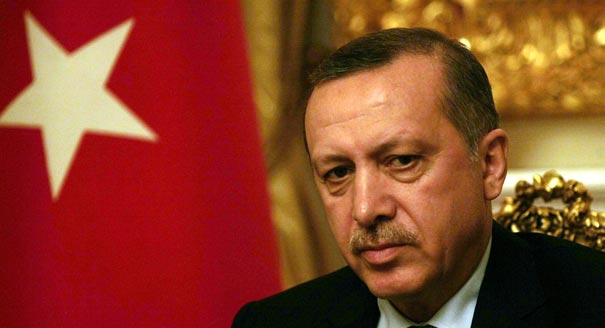
Turkey's Other WarWhile Turkish Prime Minister Recep Tayyip Erdogan was extolling his activist Middle East diplomacy and winning the adulation of the Arab street; antagonizing Arab governments, failing in his Iran and Armenia initiatives, and antagonizing his best ally - the United States - Turkey's most fundamental internal problem - its Kurds - came back to bite him. A bloody war with the Kurdistan Workers' Party (PKK) has erupted again in Turkey, many Turkish soldiers have been killed, and Erdogan is feeling the political heat. If the fighting worsens, it could generate serious problems for the U.S.-Turkey relationship and even undermine the Iraqi withdrawal timetable.
The renewed PKK war in Turkey has its irony. More than any other Turkish leader, Erdogan began a serious effort to deal with the Kurdish problem last August when he unfurled (with great public fanfare) a Kurdish opening designed to address the needs and long-time demands of Turkey's Kurdish minority. Erdogan's efforts proved unpopular in traditional Turkish areas, and when Turkish nationalists and his party opponents strongly attacked him, Erdogan ultimately reversed course, putting on the brakes and arresting hundreds if not thousands of activists.
With impending elections and increased violence, the temptation to treat the problem as a military one is again becoming stronger. Erdogan has ended up antagonizing both Turkey's nationalists and Kurds who feel let down. One day he is a wartime leader intent on eradicating the PKK in Iraq and Turkey; the next day he is promising to carry out his Kurdish initiative. The current wave of violence may be a taste of things to come.
Mr. Erdogan wants more American help against the PKK in northern Iraq. American-Turkish dealings on this issue have been frequently stormy. The Bush administration fell asleep over Turkey's concerns, and only an urgent visit by Erdogan to Washington in 2007 produced an American promise to provide Turkey "actionable intelligence" on PKK activities in Iraq. That quieted things until the recent outburst. Ankara's current battle with the PKK and its domestic Kurds poses two dangers for the United States.
With the PKK's rear bases situated in northern Iraq (territory controlled by the U.S.-allied Kurdistan Regional Government or KRG) Ankara's relations with the KRG could become the first casualty. Turkish anger at the KRG's lackadaisical efforts to contain the PKK could grow. A deepening rift between the KRG and Ankara would undo four years of painstaking work by unheralded Turkish officials to complete a 180-degree turnabout in Turkey's Iraq policy. Whereas previously Ankara tried to undermine the KRG and resist U.S. efforts in Northern Iraq, in tandem with its Kurdish opening Ankara embraced the KRG and provided critical support to the U.S. in Iraq. Perhaps more important to the rapprochement, Turkish economic interests in Iraqi Kurdistan have matured significantly.
An escalation in tensions with Iraqi Kurds, including a Turkish military intervention in the KRG in pursuit of PKK fighters on a larger, wider and more regular basis, could unintentionally set the stage for clashes with KRG and Iraqi forces. This happened in 1995 with American support when Iraqi Kurds informally controlled the area, but the very large Turkish incursion accomplished little. Any significant incursion now would augment KRG insecurities and demands for an American commitment to their defense, potentially undermining the withdrawal efforts.
The second danger to Turkish-American relations is the proclivity of the Turkish public and leaders, egged on by their government and press, to blame "foreign powers" for the upsurge in PKK violence or more recently even domestic opponents. The foreign culprits are easy to finger: Israel because of Ankara's spat over the flotilla debacle, the United States for not living up to its commitments on actionable intelligence and not pressing the KRG hard enough to stop the PKK in their territory, and the Europeans for not clamping down sufficiently on their Kurdish émigré populations and their funding for the PKK.
The search for external causes for its profound domestic shortcomings will complicate Turkey's relations with friend and foe alike. Turkish-American relations are already being severely tested over the Iranian nuclear program. Blaming Israel makes it more difficult to deescalate the continuing mutual acrimony, although, to be fair to the Turks, Jerusalem has done little to confront the issue of Turkish hurt and anger over the death of its citizens in the flotilla.
Prime Minister Erdogan, like President Obama, wants to see that the progress made in northern Iraq with Turkish assistance is not dissipated. The Turkish government and military are not eager for a major military effort in northern Iraq. But frustration is rising and voices in Turkey are calling for such an attack, comparing it to U.S. effort in Afghanistan against al-Qaida.
The U.S. is once again trapped in the middle with a difficult problem. It needs to help the Turks against the PKK in Iraq and put pressure on the KRG to do more on the PKK. What that actually means will be difficult to work out: the U.S. has multiple equities in this issue. On the other hand, Turkey must recognize that its domestic Kurdish problem is beyond a military solution as it has been for decades. This is one area where Ankara might find some foreign help useful if unappealing.
This episode brings home an increasingly familiar lesson. Life has changed with a more vibrant, dynamic and self-confident Turkey. It remains an ally but our relations are far more ramified, more complex, and recently more difficult. Finding a comprehensive American approach is increasingly challenging.
Barkey served as a member of the U.S. State Department Policy Planning Staff, working primarily on issues related to the Middle East, the Eastern Mediterranean, and intelligence from 1998 to 2000.
Carnegie does not take institutional positions on public policy issues; the views represented herein are those of the author(s) and do not necessarily reflect the views of Carnegie, its staff, or its trustees.
More Work from Carnegie Endowment for International Peace
As the war between the United States, Israel, and Iran continues, Carnegie scholars contribute cutting-edge analysis on the events of the war and their wide-reaching implications. From the impact on Iran and its immediate neighbors to the responses from Gulf states to fuel and fertilizer shortages caused by the effective shutdown of the Strait of Hormuz, the war is reshaping Middle East alliances and creating shockwaves around the world. Carnegie experts analyze it all.
The return of war as the organizing factor in Middle Eastern politics has predictable consequences: governments are prioritizing regime stability and becoming averse to political and social reform.
Donald Trump has repeatedly bashed NATO and European allies, threatening to annex Canada and Greenland and deploring their lack of enthusiasm for his war of choice in Iran. Is this latest round of abuse the final straw?