• Research
  • Emissary
  • About
  • Experts
Carnegie Global logoCarnegie lettermark logo
DemocracyIran
  • Donate
{
  "authors": [
    "Matthew Rojansky"
  ],
  "type": "legacyinthemedia",
  "centerAffiliationAll": "dc",
  "centers": [
    "Carnegie Endowment for International Peace"
  ],
  "collections": [],
  "englishNewsletterAll": "ctw",
  "nonEnglishNewsletterAll": "",
  "primaryCenter": "Carnegie Endowment for International Peace",
  "programAffiliation": "russia",
  "programs": [
    "Russia and Eurasia"
  ],
  "projects": [],
  "regions": [
    "Eastern Europe",
    "Belarus"
  ],
  "topics": [
    "Political Reform",
    "Democracy"
  ]
}
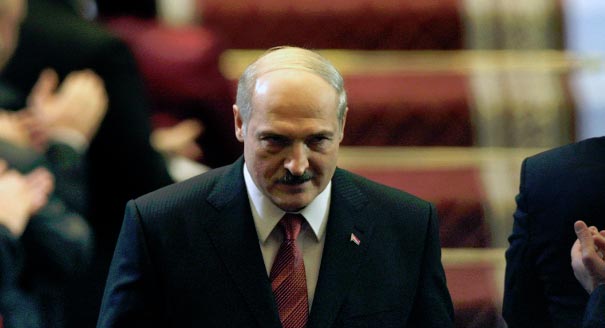
Source: Getty

In The Media

Europe Closes the Door on Belarus

With the latest round of sanctions and the decision to recall ambassadors from Minsk, the European Union has effectively closed the door on Belarus.

Link Copied
By Matthew Rojansky
Published on Feb 29, 2012
Program mobile hero image

Program

Russia and Eurasia

The Russia and Eurasia Program continues Carnegie’s long tradition of independent research on major political, societal, and security trends in and U.S. policy toward a region that has been upended by Russia’s war against Ukraine.  Leaders regularly turn to our work for clear-eyed, relevant analyses on the region to inform their policy decisions.

Learn More

Source: Voice of Russia

Since the controversial re-election of Belarusian President Alexander Lukashenka in December 2010—and the accompanying crackdown on many protestors and opposition candidates—relations between Belarus and the European Union have deteriorated. In an interview with Voice of Russia, Carnegie’s Matthew Rojansky argued that the latest round of European Union sanctions on Belarus and the decision to recall EU member states’ ambassadors from Minsk clearly signal that “Europe has closed the door” on Belarus. Although European Union officials—most notably Polish Foreign Minister Sikorski – have traditionally adopted a “soft power approach” toward Belarus, Rojansky noted that Lukashenka has rejected the carrot of European integration and “really spat in their faces.” Rojansky described the pattern in relations between Belarus and the West as one in which “Belarus escalates and the West responds.” As a result, “Lukashenka made himself totally vulnerable and totally exposed to Moscow because he has no friends left in the West,” Rojansky concluded.

About the Author

Matthew Rojansky

Former Deputy Director, Russia and Eurasia Program

Rojansky, formerly executive director of the Partnership for a Secure America, is an expert on U.S. and Russian national security and nuclear-weapon policies.

    Recent Work

  • Paper
    An Opportunity for Ambition: Ukraine’s OSCE Chairmanship

      Matthew Rojansky

  • In The Media
    Presiding Over the OSCE: Challenges and Opportunities

      Matthew Rojansky

Matthew Rojansky
Former Deputy Director, Russia and Eurasia Program
Matthew Rojansky
Political ReformDemocracyEastern EuropeBelarus

Carnegie does not take institutional positions on public policy issues; the views represented herein are those of the author(s) and do not necessarily reflect the views of Carnegie, its staff, or its trustees.
More Work from Carnegie Endowment for International Peace

  •  A machine gun of a Houthi soldier mounted on a police vehicle next to a billboard depicting the U.S. president Donald Trump and Mohammed Bin Salman, the Crown Prince and Prime Minister of Saudi Arabia, during a protest staged to show support to Iran against the U.S.-Israel war on March 27, 2026 in Sana'a, Yemen.
    Article
    Amid Iran War, Gulf Countries Slow the Pace of Reforms

    The return of war as the organizing factor in Middle Eastern politics has predictable consequences: governments are prioritizing regime stability and becoming averse to political and social reform.


      • Sarah Yerkes

      Sarah Yerkes, Amr Hamzawy

  • A person faces away from the camera wearing a yellow jacket with "PRESS" printed across the back
    Paper
    The Impact of Ending U.S. International Media Assistance

    The future looks bleak for independent media worldwide, but there is a robust infrastructure of knowledge, organizations, and people to build upon.


      Daniel Sabet, Susan Abbott
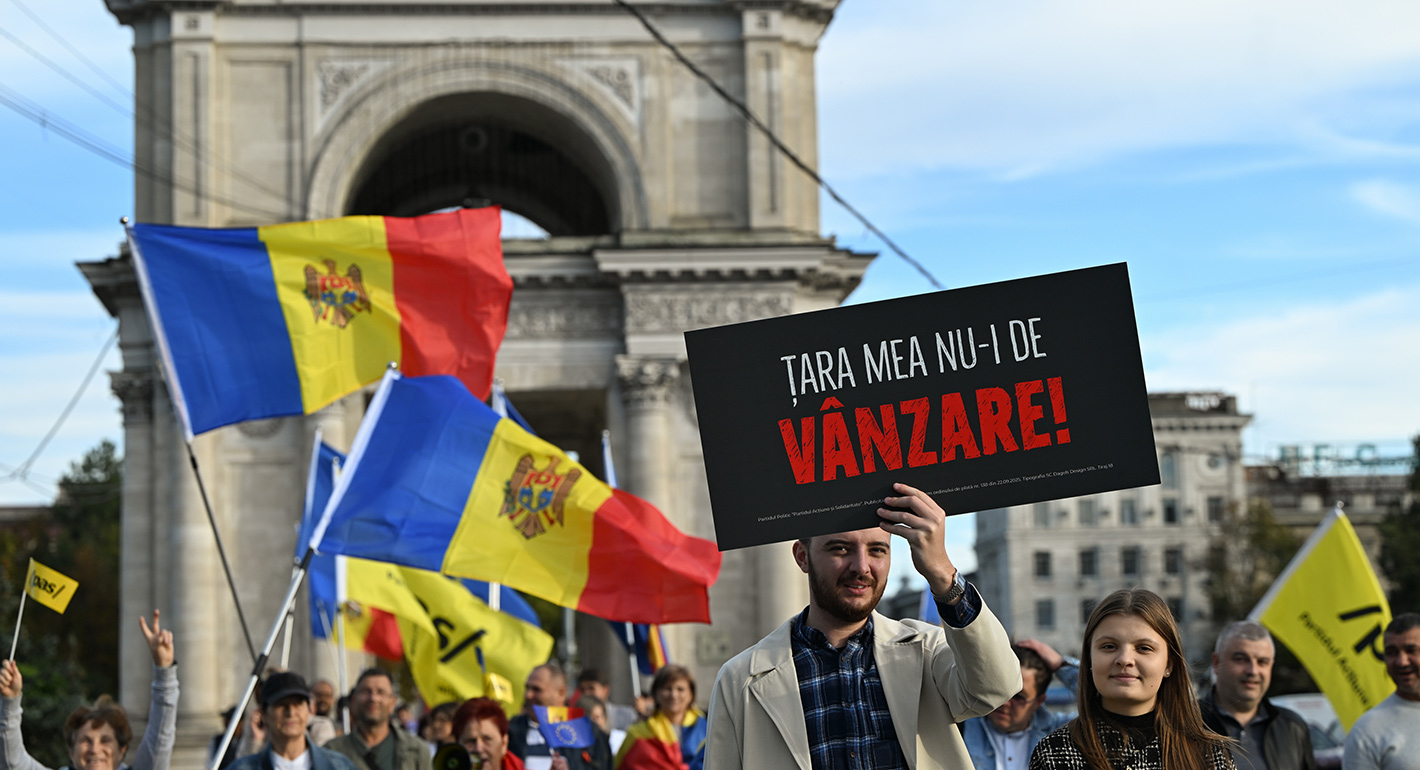
  • Hundreds of members and supporters of the ruling Party of Action and Solidarity (PAS) join Prime Minister Dorin Recean during a pro-EU rally on the final day of the electoral campaign in Chisinau, Moldova, on September 26, 2025.
    Paper
    Alarm or Caution? Defending Democracy During Backsliding

    Defenders of democracy often split over perceptions, methods, urgency levels, and priorities.
      • Murat Somer

      Murat Somer, Jennifer McCoy

  • Ukraine's President Volodymyr Zelensky (R) and Poland's Prime Minister Donald Tusk attend a press conference at the Mariinskyi Palace in Kyiv on February 5, 2026, amid the Russian invasion of Ukraine.
    Article
    Kindred Nations, Uneasy Neighbors: Polish-Ukrainian Relations in the Crucible of Russia’s War

    The full-scale invasion cemented Ukraine’s determination to sever its ties with Russia; reimagining the Poland-Ukraine partnership can accelerate Kyiv’s westward alignment and improve the security of both countries.
      Eric Green

  • The tops of people's heads. Raised above their heads are "No Kings" signs, an upside-down American flag, and a rainbow flag.
    Commentary
    Emissary
    Protests Like No Kings Can Only Go So Far to Stem Authoritarianism

    Lessons from other backsliding democracies show that mass mobilization needs to feed into an electoral strategy. 

      Saskia Brechenmacher, Shreya Joshi

Get more news and analysis from
Carnegie Endowment for International Peace
Carnegie global logo, stacked
1779 Massachusetts Avenue NWWashington, DC, 20036-2103Phone: 202 483 7600Fax: 202 483 1840
  • Research
  • Emissary
  • About
  • Experts
  • Donate
  • Programs
  • Events
  • Blogs
  • Podcasts
  • Contact
  • Annual Reports
  • Careers
  • Privacy
  • For Media
  • Government Resources
Get more news and analysis from
Carnegie Endowment for International Peace
© 2026 Carnegie Endowment for International Peace. All rights reserved.