

Q&A
Milan Vaishnav, Ila Patnaik
{
  "authors": [
    "Ila Patnaik"
  ],
  "type": "legacyinthemedia",
  "centerAffiliationAll": "dc",
  "centers": [
    "Carnegie Endowment for International Peace"
  ],
  "collections": [],
  "englishNewsletterAll": "ctw",
  "nonEnglishNewsletterAll": "",
  "primaryCenter": "Carnegie Endowment for International Peace",
  "programAffiliation": "SAP",
  "programs": [
    "South Asia"
  ],
  "projects": [],
  "regions": [
    "South Asia",
    "India"
  ],
  "topics": [
    "Economy"
  ]
}
Source: Getty
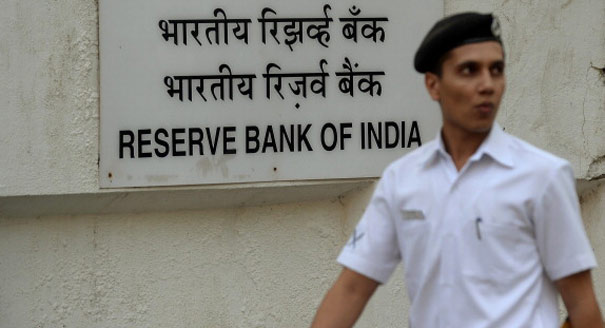
The RBI has asked the finance minister to amend the Reserve Bank of India Act, to allow it to supervise non-bank subsidiaries of banks.
Source: Indian Express
The RBI has asked the finance minister to amend the Reserve Bank of India Act, to allow it to supervise non-bank subsidiaries of banks. The other regulators should, according to the RBI, be relegated to advisory functions. Doing this would constitute a major change to existing financial laws. This financial reform would be a significant step in moving India towards a single financial regulator, and towards making the RBI that regulator.
While there is a strong case for a unified regulator, the task of financial regulation should be separated from the job of conducting monetary policy. This would give an independent central bank doing monetary policy (and nothing else), and a unified second agency doing all financial regulation and supervision.The present regulatory architecture in India consists of multiple sectoral regulators who each regulate banks, securities, pensions, insurance and commodity derivaties. The RBI has argued that while a bank is regulated by the RBI, its subsidiary a brokerage, its insurance arm or its pension business, bring risk onto its balance sheet. As financial firms have become larger and more complex, it is necessary for the bank regulator to control the balance sheet of the entity as a whole, including its subsidiaries. It has cited turf conflicts with SEBI on treatment of a brokerage subsidiary of a bank.
If the regulation and supervision of banks and all bank subsidiaries were done by the RBI,this would make it the single unified regulator of Indian finance, to a substantial extent. This is unlikely to go down well with other regulators or with the government. The RBI does not have skills required to regulate other sectors,and is treading on turf that others covet. The finance ministry, meanwhile, has set up the Financial Sector Law Reforms Commission (FSLRC), headed by Justice Srikrishna,to propose changes to financial sector laws including issues of regulatory architecture. The pre-emptive move by the RBI to usurp the powers of other regulators and make itself a super-regulator is, hence, inappopriate.
What is the appropriate regulatory architechture of the Indian financial sector? Should we continue to have sectoral regulators? Should we give one regulator some powers to regulate other sectors, effectively creating a unified regulator, but leaving the other regulators in advisory roles, as the long-term solution? Or, should there be an interim arrangement and finally move towards a unified regulatory model?
The growth of modern complex financial institutions and markets with inter-related businesses, where risks spill over from one activity and market to another makes a strong case for a single, unified regulator. This regulator can look at the full picture for each entity, including all its different businesses. Indeed, in that situation,financial firms will not have to break themselves up into an insurance subsidiary, a brokerage subsidiary, a pension subsidiary and so on, that have come about because of the sectoral regulatory silos that we have created. The unified regulator can then supervise the firm as a whole.
Regulating firms engaged in different businesses requires the regulator to understand those businesses and have the skills to supervise them. Today,the RBI has certain human skills in thinking about 19th century banks (to quote an RBI deputy governor). It will not be easy for it to obtain skills in other fields,such as securities,pensions and insurance.
The path to assembling those skills lies in a full fledged merger of government agencies (or departments of government agencies). Other countries that have moved towards unified supervision have done this with a well thought-out transition path where first the different sectoral reguators become departments in the unified regulator,and then were slowly reorganised to rise above sectoral perspectives. The unified regulator is generally a brand new agency, to avoid the sense of one organisation having conquered another.
If India is to make the transition to a single unified regulator, then the best option may be to create a new regulator, rather than giving powers to any existing one, and relegating the others to an advisory function. If the RBIs proposal goes through, it would lack the ability to think about other sectors, and the skilled staff of other agencies would be reduced to advisers.
The second big consideration is about whether financial regulation/supervision and monetary policy should be housed in the same agency. The capabilities and skills required are drastically different. Monetary policy is about looking at the economy, forecasting the business cycle, and making one a policy decision about whether to raise or cut the policy rate. There are very few transactions where the central bank interacts with the economy. This primarily requires a small organisation, with expertise in macroeconomics. The staff of this organisation advises a monetary policy committee, which should ideally consist of the best economists of the country.
Financial regulation/supervision requires knowledge of finance. What is more, it is an intricate process of detailed interactions with financial firms. There are a large number of transactions. This involves the problems of rule of law,controlled discretion with principles-based regulation, problems of corruption in front-line supervision and enforcement, etc.
Regulation/supervision is about the puzzle of supporting innovation and Indias evolution into becoming a mature market economy, while preventing theft and cheating and fraud. It requires a large organisation, which will understand the market, draft regulations, inspect, enforce and fight cases in court. This is a very different skill set from that required in a central bank. The best example today of a financial regulation/supervision agency in India is SEBI.
In summary, there is some merit in RBIs arguments, even though the position is self-serving. In the modern world of finance, demarcating pieces of the financial system into sectors is a poor way to get the job of financial regulation done. Unification into a single regulator would make sense. However, the right structure is one where all financial regulatory/supervisory personnel of various agencies (SEBI,RBI,FMC,etc.) are merged into a single financial regulatory agency,and monetary policy is placed in a separate monetary authority.
This article was originally published in the Indian Express.

Former Nonresident Senior Associate, South Asia Program
Patnaik, an expert on India’s economy, was a nonresident senior associate in Carnegie’s South Asia Program.
Recent Work

Milan Vaishnav, Ila Patnaik
Ila Patnaik, Ajay Shah
Carnegie does not take institutional positions on public policy issues; the views represented herein are those of the author(s) and do not necessarily reflect the views of Carnegie, its staff, or its trustees.

The Bureau of Industry and Security needs to adjust its focus and practices to maintain its position as the U.S. government’s primary champion of international technological competition.

Geoffrey Irving

Depleted financial reserves and a shrinking tax base mean it is no longer possible to simultaneously deliver high defense spending, price stability, and economic growth.

Alexandra Prokopenko

U.S. trading partners in Asia are closely watching the dispute for signs of how it may affect their own interests.

Barbara Weisel

With the growth in points of friction between the great powers, organizations like the SCO will continue to play a role in the strategic adaptation of the smaller powers caught between them.

Temur Umarov

Amid celebrations of bilateral ties was a deeper focus on stability in the Middle East.

Amr Hamzawy